Want to hike the W Trek in Torres del Paine National Park but don’t want to pay an expensive tour package to do so? Don’t worry, doing the W Trek self guided is completely possible! With the right planning, you can book your own refugios or camping sites, organize transportation, choose the best itinerary, and confidently complete the W Trek on your own.
But here’s the reality: organizing the W Trek independently can feel overwhelming at first.
Between booking campsites through different operators, understanding the route layout, arranging buses and ferries, budgeting for food and park fees, and packing for Patagonia’s unpredictable weather, there are a lot of things to consider. And mistakes can be expensive, especially in peak season.
To help you, I have planned a step-by-step guide to show you how to plan the W Trek without a tour, stress, confusion, or overpaying.
TABLE OF CONTENTS
IS IT POSSIBLE TO DO THE W TREK WITHOUT A TOUR?
Absolutely! Thousands of independent travelers complete the route every year without joining a guided tour. You do not need a guide to access the trails, and the park infrastructure makes self guided hiking realistic even for first-time Patagonia visitors.
Tha said, doing the W Trek on your own requires planning. Unlike many long-distance hikes, you cannot just show up and camp anywhere. Every overnight stay must be reserved in advance, and spaces sell out months ahead during high season. Transport to and within the park also runs on fixed schedules. With a tour, all this is handled for you. When you are self guided, you are responsible for the logistics.
GUIDED VS. SELF-GUIDED: WHAT IS THE DIFFERENCE?
A guided W Trek usually includes accommodation, some meals, transportation, and a certified guide who hikes with your group. It removes planning stress and gives you local insight along the way. This option works well for travelers who do not want to think about reservations and schedules.
A self guided W Trek gives you complete flexibility. You choose your direction, your daily pace, your budget level, and whether you camp or sleep in refugios. You hike independently on clearly marked trails, and carry only what you decide to bring.
The trails are well signposted, popular, and easy to follow. They are so well marked that I actually didn’t look at my downloaded maps on my phone once throughout the whole trail. You do not need technical mountaineering skills. What you do need is organization before you arrive.re you arrive.
IS SELF-GUIDED CHEAPER?
In most cases, yes. Booking the W Trek on your own will be cheaper but you have to know that Patagonia is not really a budget destination. However, when you organize the trek yourself, you can control your expenses by:
Camping instead of sleeping in the refugios.
Bringing some of your own food.
Selecting only the transport you need.
You will still have to pay for park entrance fees, accommodations, and transport but you wil have transparency and flexibility over where your money goes.
STEP 1 - DECIDE WHEN TO DO THE W TREK
The best time to hike the W Trek depnds on what you value the most: stable weather, fewer crowds, or slightly lower prices. The hiking season typically runs from November through March, which is late spring to early autumn in Patagonia.
Outside these months, most refugios and campsites close, services are limited, and winter conditions make the route far more demanding.
HIGH SEASON: dECEMBER TO FEBRUARY
December, January and February are peak season in Patagonia. These months bring the warmest temperatures and the longest daylight hours. This gives you flexibility if you want to start early, hike slowly, or spend more time at viewpoints like the Base Torres or Mirador Britanico.
The tradeoff is crowds and higher prices. Refugios book out months in advance, campsites fill quickly, and the famous viewpoints can feel busy during midday. Prices are also at their highest.
We did the W Trek between end of January and beginning of February and even though it was high season the trails did not feel too crowded. The only place where we noticed the crowds was at the refugios during the evenings. During the day, the crowds spread out. Some people start early, others hike at a faster pace and like to begin later in the day.
SHOULDER SEASON: NOVEMBER & MARCH
November and March are the best option if you are looking for quieter trails. Accommodation is still open, but availability is better than in the other months. Prices can also be marginally lower depending on the provider.
The main difference is the weather. Temperatures will be cooler, and storms may happen more quickly. You need to prepared for a wider range of conditions, especially in November when the season is just beginning.
WIND IN PATAGONIA
No matter what you choose, you have to accept tha wind will be present. And you should never underestimate the wind in Patagonia.
Strong gusts are common throughout the hiking season and can reach impressive speeds, particularly on exposed sections of the trail. During high season, you may get more stable weather, but that doesn’t mean calm conditions. Even on sunny days, you can get strong winds.
The key is to be prepared for it. Don’t forget to pack a windproof jacket and something to protect your ears from the wind.
STEP 2 - W TREK DIRECTION: WEST → EAST VS. EAST → WEST
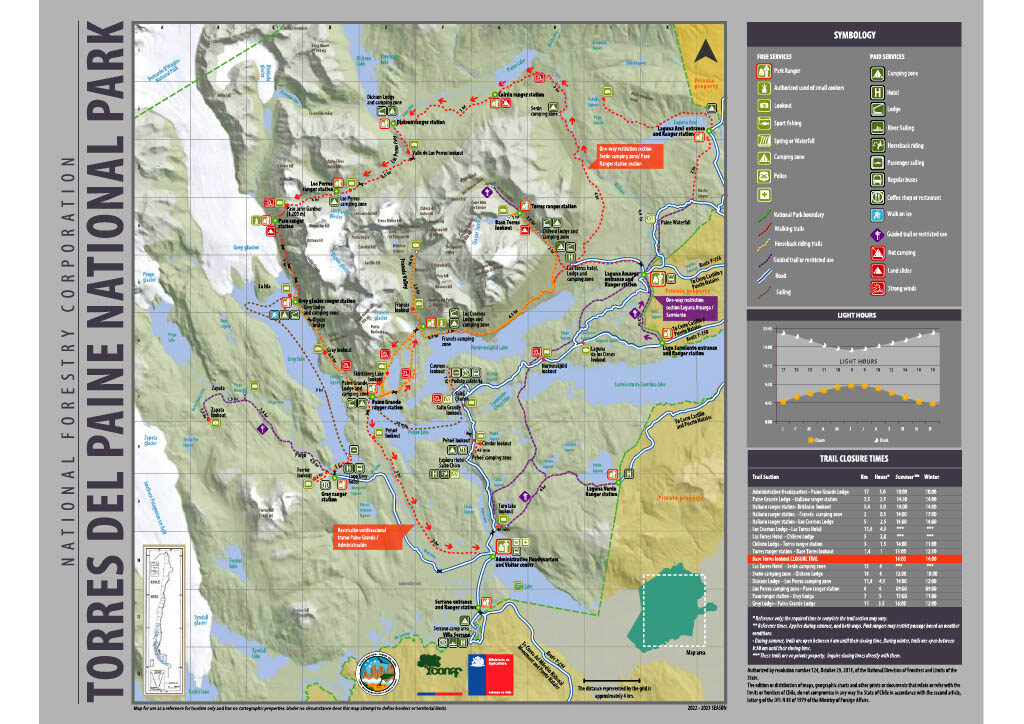
The second decision you have to make when planning the W Trek is the direction of your hike. You can go west to east or east to west across Torres del Paine National Park. Both directions cover the same highlights of the W-shaped route, but the order of the viewpoints and the logistics are different.
Your choice will affect your transport, where you sleep each night, and when you visit some of the most famous viewpoints in the park.
EAST → WEST
Hiking East to West, means you will start your hike at Torres del Paine Welcome Center, which is easily accessible from Puerto Natales by bus.
From here, the route typically looks like this:
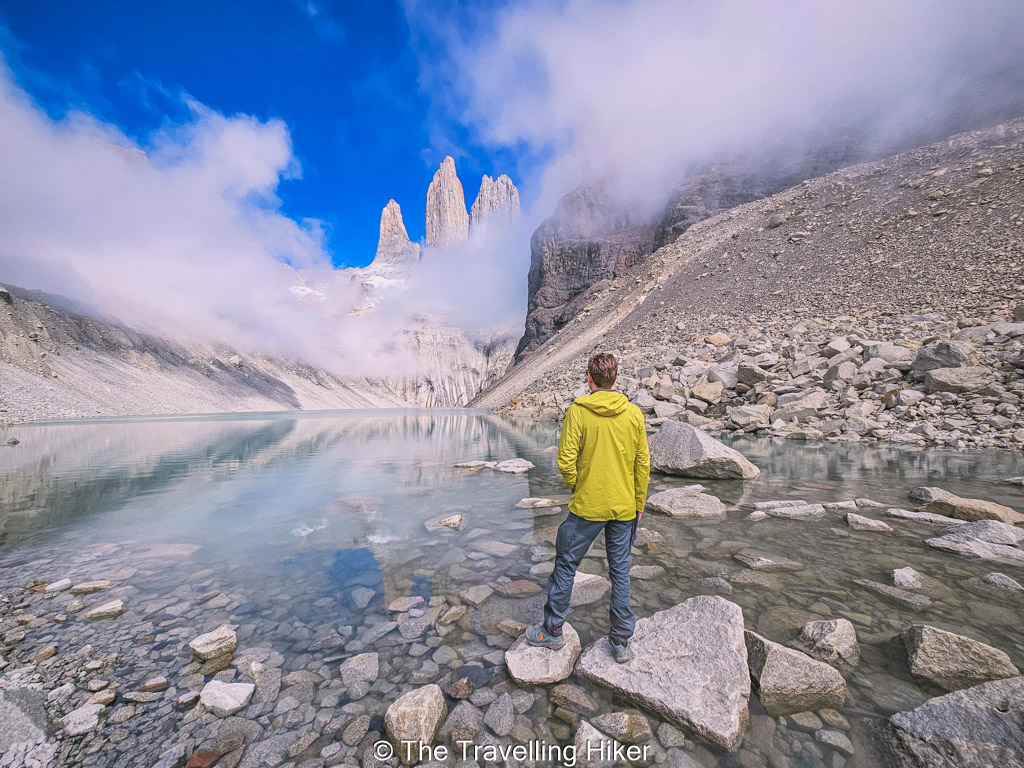
Hike up to Base Torres
Hike between Refugio Chileno or Central to Refugio Frances
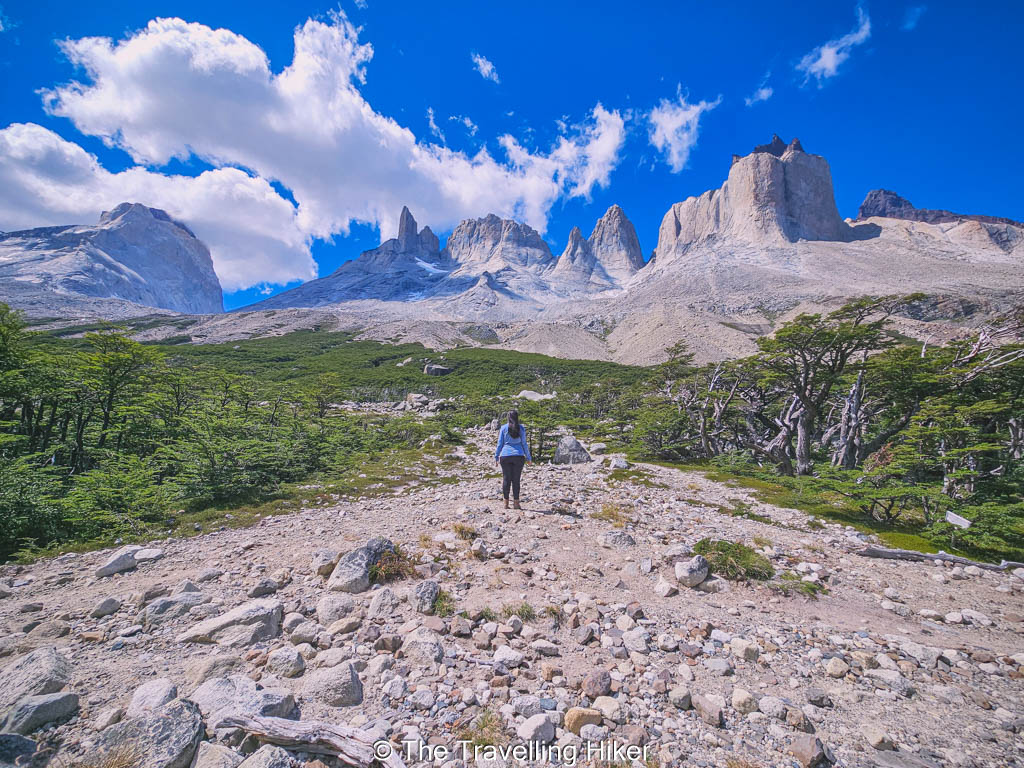
Continue to the French Valley and reach Paine Grande
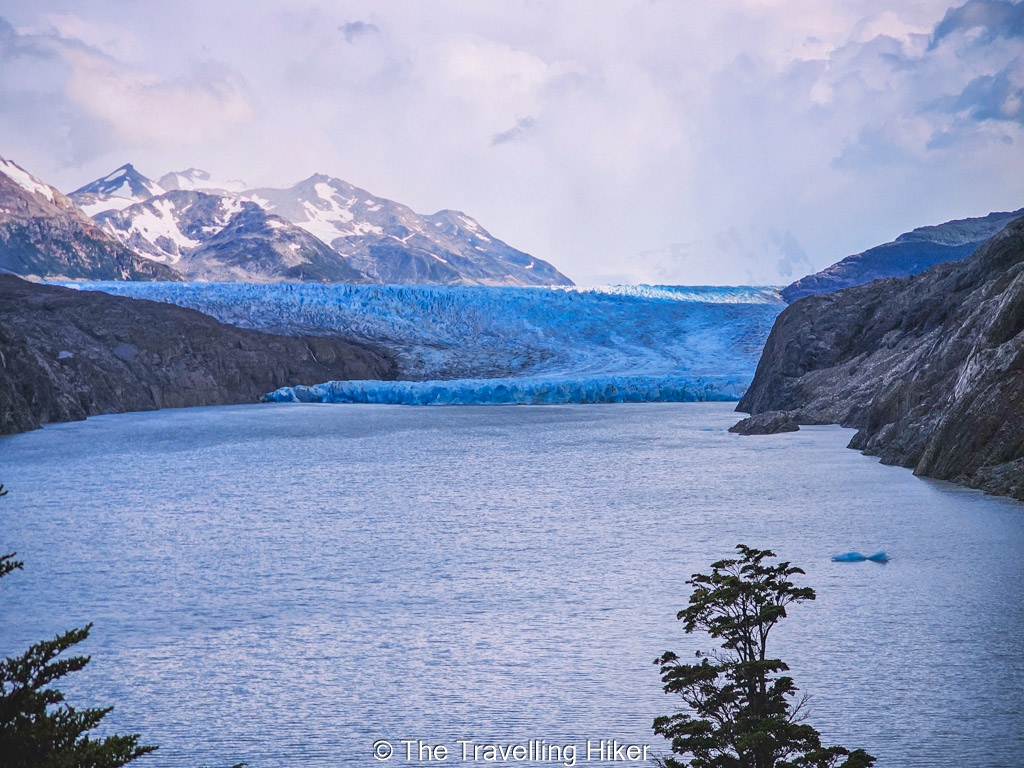
Hike into the Grey Glacier valley
Return to Paine Grande
This option has easier logistics to get to the park but the return logistics are a bit more complicated. Additionally, if you hike east to west, you will start your hike with the Base Torres hike which is the most streneous part of the hike so the rest of your hike will feel easier and relaxed. There will also be less crowds in the later part of the trail because the Base Torres is the busiest part of the trail as it is done by both people completing the W and O Trek, but it is also done as a day hike.
In my opinion, the biggest downside of this direction is that you will mostly be hiking with the wind on your face. The wind usually blows west to east on the park and since I mentioned before, the wind in Patagonia can be no joke.
WEST → EAST
If you choose to hike West to East, you will start your hike on the western side of the park at Refugio Paine Grande. To reach this point, you will have to take a catamaran across Lago Pehoé (Lake Pehoe).
From here, the route typically looks like this:
Hike into the Grey Glacier valley.
Return to Paine Grande
Continuer toward the French Valley
Hike to Refugio Chileno or Refugio Central
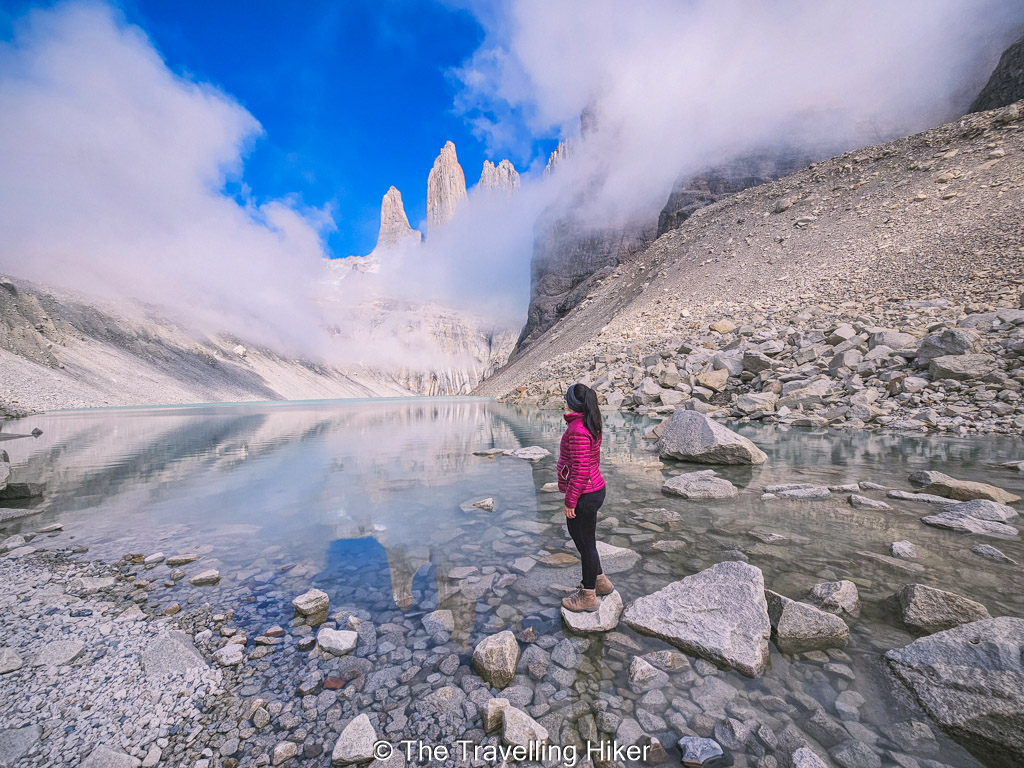
Finish with a sunrise hike to Base Torres.
Choosing to hike west to east, basically reverses the pros and cons of east to west. The return logistics are easier but they will be more complicated at the beginning of the hike. On the other hand, this hiking direction will build up to the grand finale at Base Torres. However, you will have the most demanding part of the hike on your last day.
WHICH DIRECTION IS BETTER?
There is no correct answer to this question. Both direction include the same landscapes, valleys, and viewpoints. Whichever direction you choose, the W Trek delivers incredible scenery from start to finish.
We choose to hike West to East mainly because of the wind factor and logistics but, in all honesty, I would have been happy both ways.
STEP 3 - HOW MANY DAYS DO YOU NEED TO COMPLETE THE W TREK?
Most hikers complete the W Trek in four of five days. Both options allow you to see the main highlights of Torres del Paine National Park. The main difference is how much you want on the trail each day and how relaxed you want the experience to feel.
THE W TREK IN 5 DAYS
Five days is the most common option to hike the W Trek.
The 5 day itinerary is as follows if you are hiking west to east. For the other direction, just inverse your days.
Day 1: Hike from Paine Grande to Grey (12 km)
Day 2: Hike from Grey back to Paine Grande (12 km)
Day 3: Hike from Paine Grande to Camping Frances or Camping Los Cuernos (21 or 23 km)
Day 4: Hike from Frances or Los Cuernos to Refugio Chileno or Refugio Central (16 or 18 km)
Day 5: Hike to Base Torres (16 or 21 km)
THE W TREK IN 4 DAYS
If you are short on time, you can always opt for the 4 days version of the trail. However, to complete it in 4 days I recommend you that you are in a decent fitness level and already have some experience with multiday hiking.
The 4 day version of the trail is as follows if you are hiking west to east.
Day 1: Hike from Paine Graine to Grey and return to Paine Grande for the night (23 km)
Day 2: Hike to Paine Grande to Frances or Los Cuernos (21 or 23 km)
Day 3: Hike from Frances or Los Cuernos to Chileno or Central (16 or 18 km)
Day 4: Hike to Base Torres (16 or 21 km)
WHICH OPTION SHOULD YOU CHOOSE?
For most travelers, five days is the ideal balance. It will allow you to enjoy the landscapes, take photos, and manage the unpredictable weather that Patagonia is known for.
I would only recommend choosing the four day option if you already have some experience in multiday hiking.
We chose to hike the trail in 5 days and after completing it, I can only think it was the good decision for us. We have completed many hikes that are around 20 km in distance but we have always done them as day hikes. This means at the end of the day, we always returned either back home or to a comfortable hotel for the night. Going on a multiday hike means you will either be camping or sleeping in a shared room in a refugio. Rest conditions are not as optimal in these case and after a few days of hiking, fatigue builds up.
If you have an extra day, I would even recommend doing this hike on 6 days instead of 5. Not to split one of the days into two days but to have a full day to hike from Grey to the different hiking bridges north of Refugio Grey. We did this on our second day on the trail but due to time constraints we were not able to hike the three hanging bridges. If you have an extra day, you can do so and get really close to Glacier Grey.
STEP 4 - BOOK YOUR W TREK REFUGIOS & CAMPSITES
It’s time to take care of one of the most important planning the W Trek on your own: booking your accommodation. Unlike many long distance hikes, wild camping is not allowed in Torres del Paine National Park. All hikers must stay at designated campsites or refugios along the trail, and every overnight stay needs to be reserved before entering the park.
REFUGIOS OR CAMPSITES?
Accommodation on the W Trek falls into two main categories but both options are located at the same main stops along the trail. Depending on your choice, the price will definitely change.
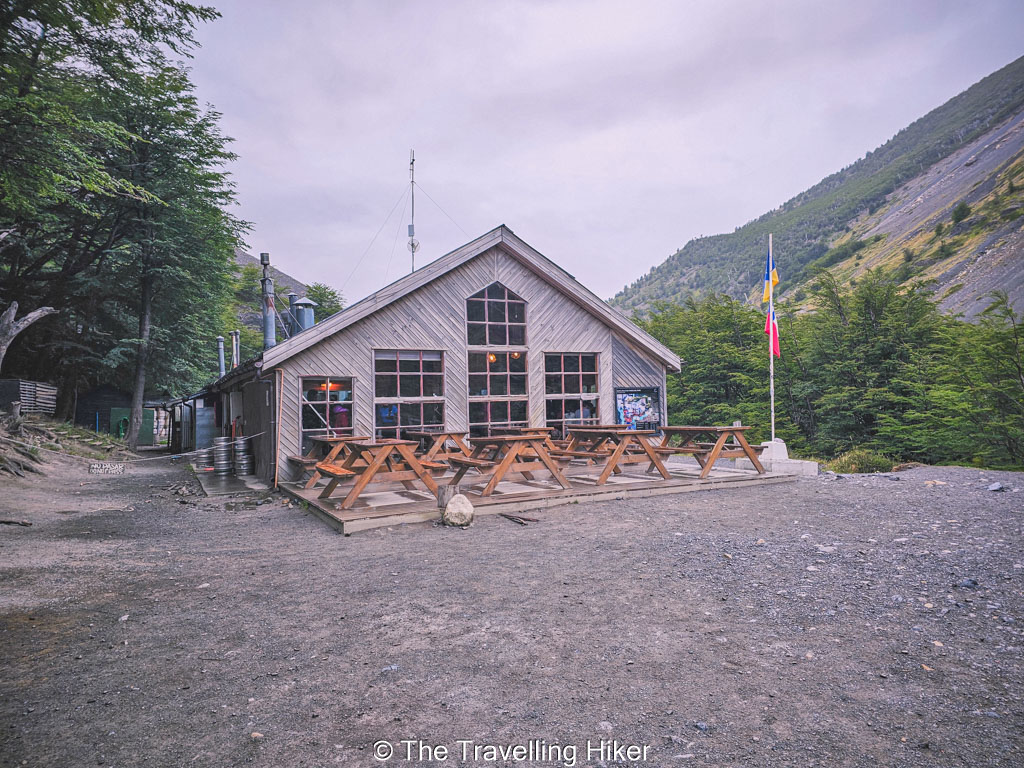
Refugios: Mountain lodges with dorm-style beds
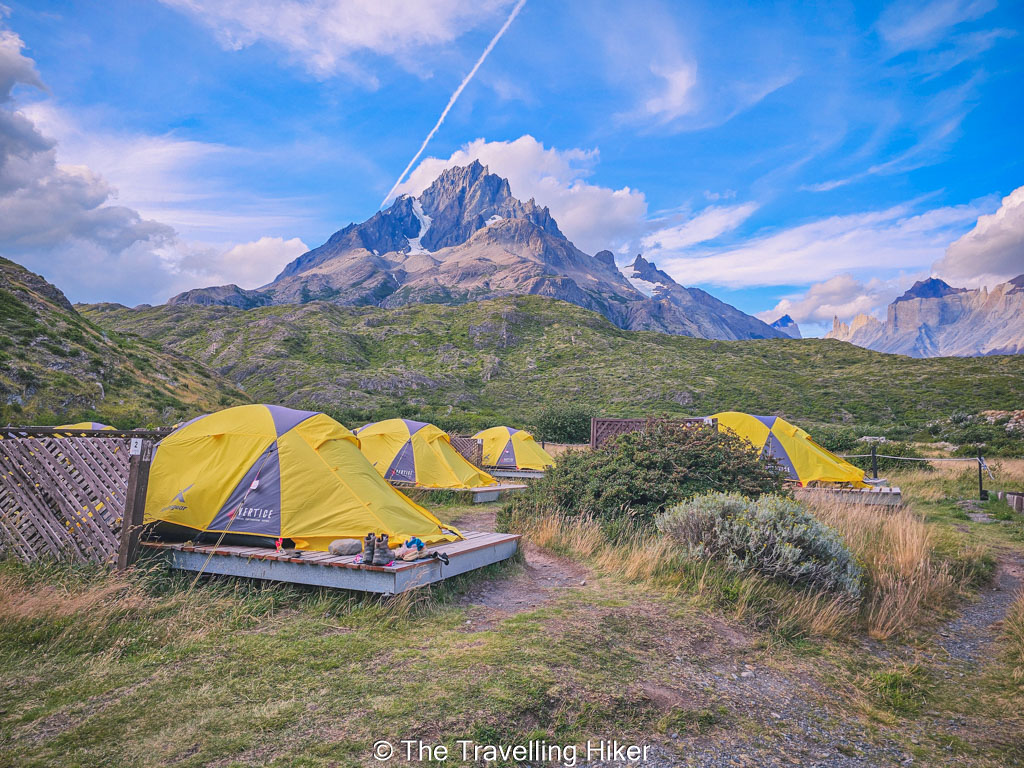
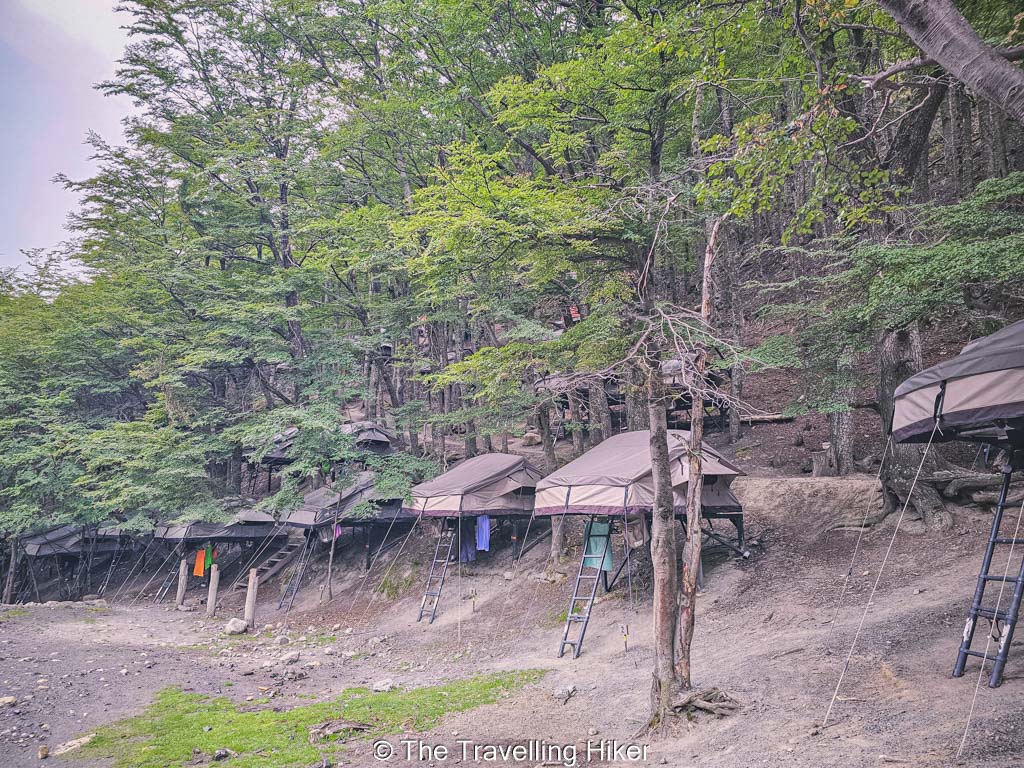
Campsites: Sleeping in your own tent or a pre-pitched rental tent.
Additionally, all refugios and campsites offer the possibility of full board, half-board, just breakfast, or no meals included.
ACCOMMODATION OPERATORS
Accommodation along the W Trek is managed by two different concession operators inside the park . Because the W Trek crosses both concession areas, when planning your route you will have to make reservations on two separate websites.
The western section of the route, including campsites near Grey Glacier and Paine Grande, is operated by Vertice Travel.
The eastern side of the trek, including the campsites Frances, Los Cuernos, Chileno and Central, is operated by Las Torres Patagonia.
Personally, I found the booking experience more user-friendly on the Vertice website but none of them are really difficult. All you have to do is choose the dates you’ll be staying at each site, the number of people, your accommodation option (refugio or campsite), and meals.
If you opt to camp, you will have to choose between bringing your own tent or renting one of the pre-pitched tents. Both Vertice and Las Torres offer the possibility of just renting a tent or sleeping bags and pillows as well. This way you can fully customize your experience according to your preferences and budget. Just remember that whatever you don’t reserve, you’ll have to bring yourself!
BOOKING TIMELINE
Accommodation for the W Trek usually opens several months before the trekking season. Exact dates change each year, but reservation typically become available around April when the hiking season ends.
If you plan to hike between December and February, it is best to book as early as possible. The refugios and campsites can fill up quickly, especially for Camping Chileno which allows you to get a head start to Base Torres before the day hikers arrive.
For November and March, availability is often better, but it is still wise to reserve early to secure the dates and direction you want.
STEP 5 - ORGANIZE TRANSPORTATION TO TORRES DEL PAINE
Getting to Torres del Paine National Park is relatively straightforward, but it does require a few steps.
You’ll basically have to think about transport in three stages: getting to Puerto Natales, traveling from Puerto Natales to the park, and moving within the park itself.
GETTING TO PUERTO NATALES
Puerto Natales is the closest city to Torres del Paine National Park, making it the gateway to the park. Most travelers travel to it from Chile’s capital, Santiago by plane.
The easiest and most convenient way to reach Puerto Natales is with a domestic flight from Santiago to Puerto Natales. Teniente Julio Gallardo Airport is located just outside the city.
Flights operate regularly between November and March. From the airport, it is a short taxi or shuttle ride into town.
Fly to Punta Arenas
An alternative option is flying to Presidente Carlos Ibañez Airport in Punta Arenas, a larger city about three hours south of Puerto Natales. To get from Punta Arenas to Puerto Natales, you have two options.
First option is to rent a car and drive to Puerto Natales. The drive is relatively straight forward and this will give you a lot of flexibility in terms of stops and your later visit to Torres del Paine.
Alternatively, you can also get a bus from Punta Arenas to Puerto Natales. Buses leave from Punta Arenas bus terminal, make a stop at the airport and then continue to Puerto Natales. The bus ride takes approximately 3 hours.
If you have rented a car, then getting to Torres del Paine National Park is easy. All you have to do is drive there yourself. This is an excellent option if you want to have flexibility with your departure times. Driving time will be approximately 1 hour and 30 minutes.
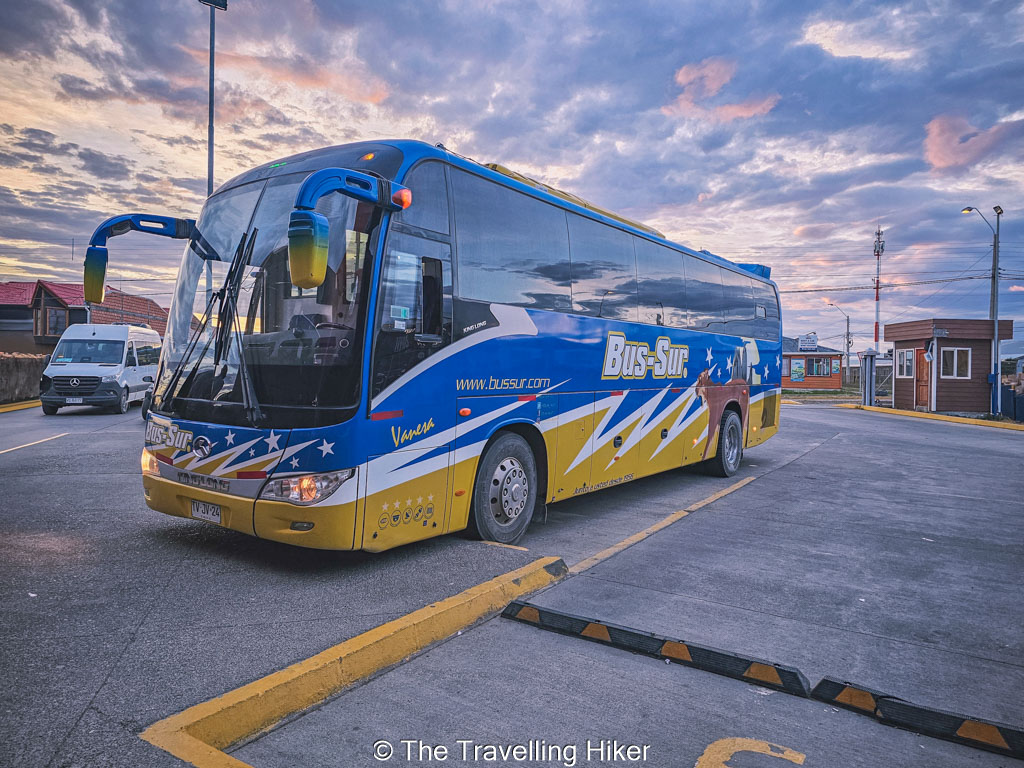
If you chose to use public transportation, then there are several bus companies that run daily services to the park during hiking season. The journey usually takes about two hours depending on which entrance you are heading to.
Buses typically stop at a few key location inside the park, including Laguna Amarga, where you will have to show your tickets to the Park Rangers. During peak season, it is recommended to book your bus tickets in advance. You can do so via Busbud.
TRANSPORTATION WITHIN THE PARK
After a quick stop at Laguna Amarga, you’ll either go to Torres del Paine Welcome Center or Pudeto Pier. This will depend on whether you are hiking east to west or west to east.
Shuttle bus to the Welcome Center
If you’re hiking east to west, at Laguna Amarga, you will get off the bus and transfer to a shuttle bus that will take you to the Welcome Center. This bus ride only takes 10 minutes and it will save you 7 km of walking.
The shuttle bus costs approximately 4500 CLP and can either be bought directly at the park (cash only) or online.
The shuttle bus schedule is planned to match the arrivals and departures of the bus from Puerto Natales.
Bus to Pudeto
If you’re hiking west to east, after the rangers have validated your tickets, you will stay in the same bus and continue until you reach Pudeto pier. The bus ride will take another 45 minutes until you reach the pier.
Bus tickets are bought directly from Puerto Natales or online. If you’re going to Pudeto, all you have to do is book a bus ticket between Puerto Natales and Pudeto.
Good to know: During high season, they might combine two buses at Laguna Amarga to optimize transportation to Pudeto. This is what happened to us. We arrived at Laguna Amarga and after the ranger had checked everyone’s tickets, he asked those going to Pudeto to step off of the bus and wait for the next one.
Catamaran ride across Lago Pehoé
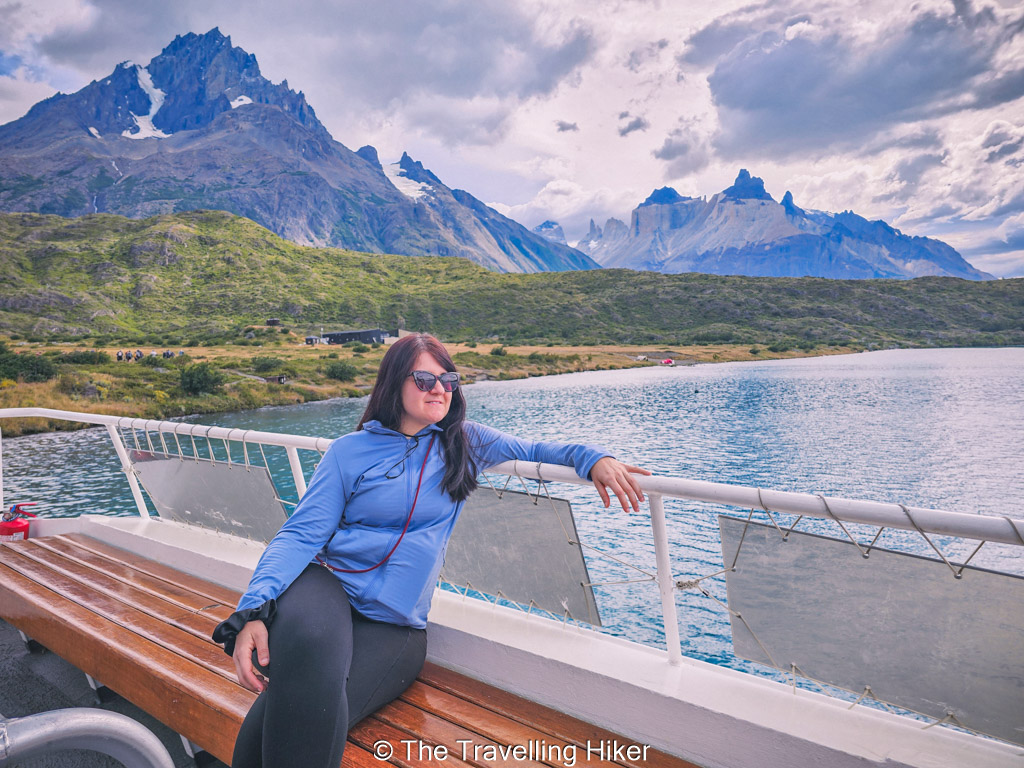
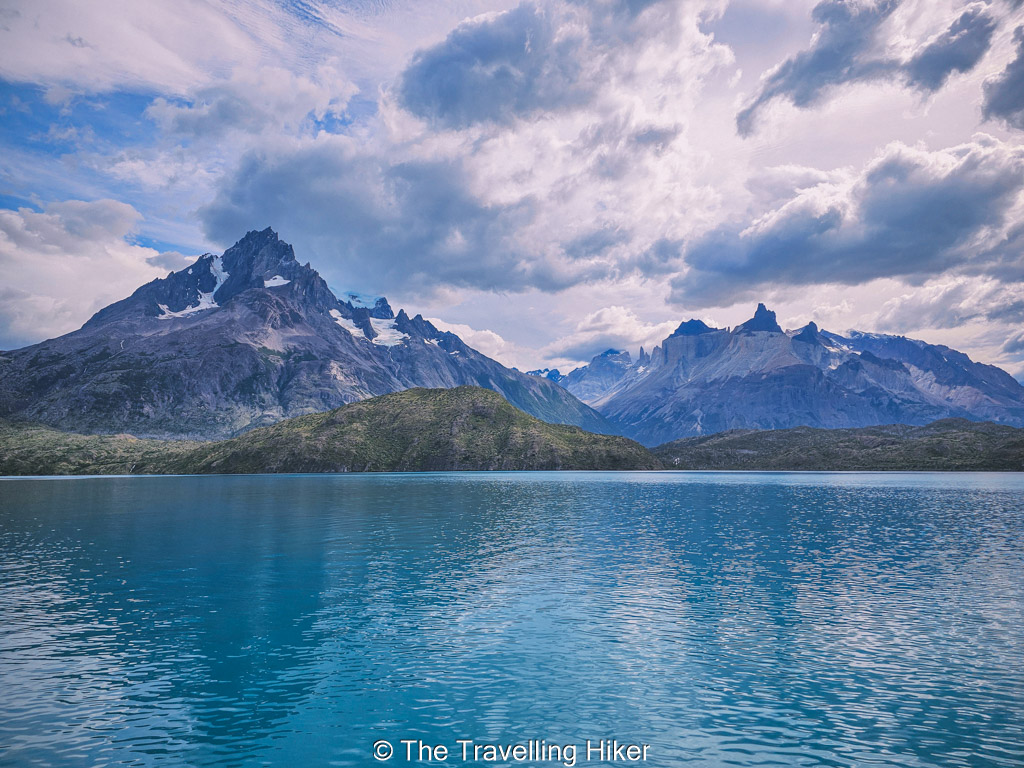
To reach Paine Grande, the starting point for the west to east hike, you’ll have to board a catamaran at Pudeto pier that crosses the lake. The boat ride takes around 45 minutes and offers beautiful views of the surroundign mountains.
The catamaran tickets can be bought directly at the boat (cash only) or online. I highly recommend buying thetickets online in advance. This way, you will be one of the first persons to board the catamaran, which means you will get to pick the best spots for your boat ride.
The catamaran schedule is fixed, so it is important to plan your arrival accordingly. Most buses form Puerto Natales are timed to connect with the boat departures so this will not be an issue if you’re starting the W Trek at Paine Grande. However, if you are ending the trek at Paine Grande (east to west hike), it is very important that you are at Paine Grande pier on time.
You can find the catamaran timetables at this website.
RETURNING TO PUERTO NATALES
Returning to Puerto Natales will again depend on the direction of your hike.
Hiking east to west. At Paine Grande you hop on the Catamaran that crosses Lake Pehoé until Pudeto pier. Then you will get on a bus back to Puerto Natales. This is route requires some more logistics as you need to ensure that you are at Paine Grande in time to not miss the last catamaran ride. Bus departures at Pudeto are timed to match the arrival of the catamaran.
Hiking west to east. At the Welcome Center, hop on the shuttle bus to Laguna Amarga, where you will catch a return bus to Puerto Natales. Shuttle buses are scheduled to match the bus departure to Puerto Natales.
Important: During high season (December to February), it is highly recommended that you book your bus and catamaran tickets in advance. You can book the bus tickets via Busbud and the catamaran through the official site.
STEP 6 - ACCOMMODATION IN PUERTO NATALES
Once you have your transportation all figured out, you need to focus on your stay in Puerto Natales. At a minimum, you will need to spend the night before starting and the night after finishing the W Trek in Puerto Natales.
In practice, it is a good idea to plan an extra preparation day in Puerto Natales before entering the park. This will give you enough time to organize everything you need for the hike without feeling rushed. Trust me, we didn’t plan this extra day and our evening before the hike was super stressfull.
WHERE TO STAY IN PUERTO NATALES?
Puerto Natales has a wide range of accommodation options, from budget hostels to boutique hotels. Here are a few well-known options.
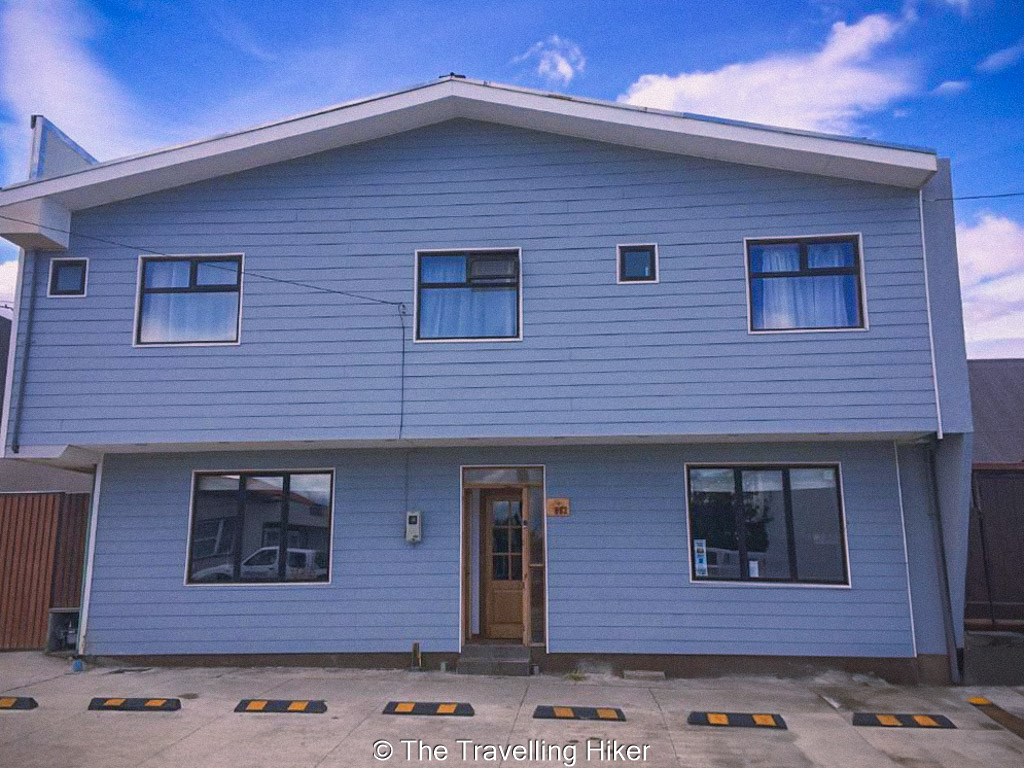
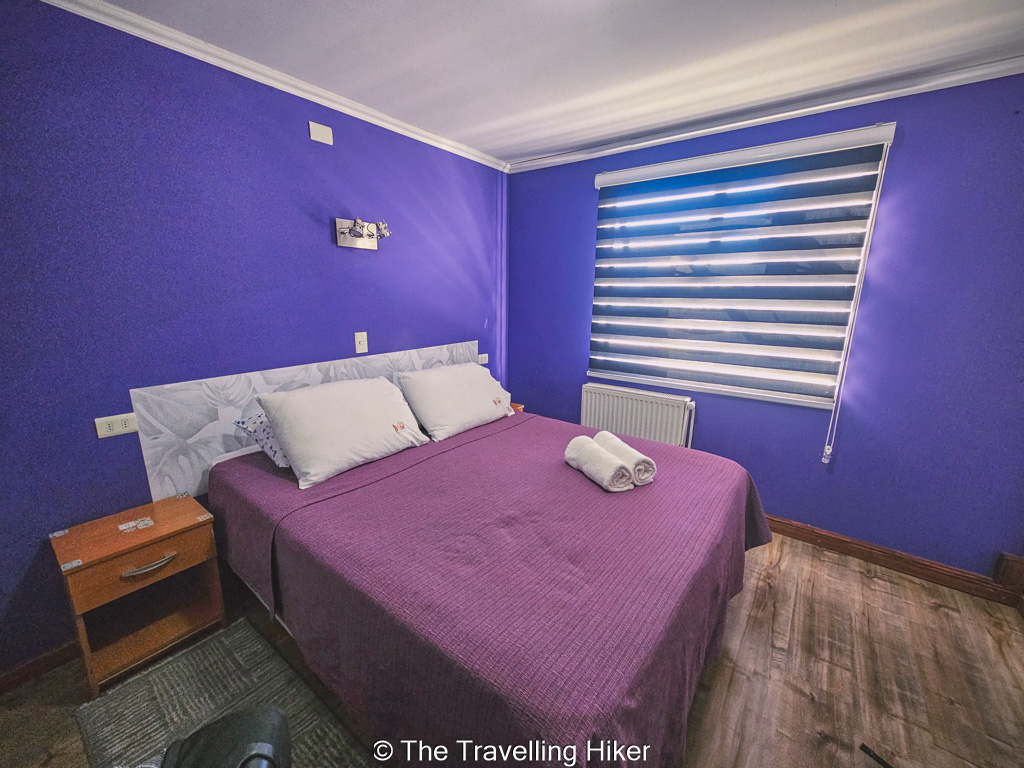
Hostal La Base
This is the hostel where I stayed before and after hiking the W Trek. It is a cozy and comfortable hostel, located just 500 meters away from the bus station. The staff was really welcoming and helpful with trek logistics. They also offer early breakfast so that you can leave early for the park.
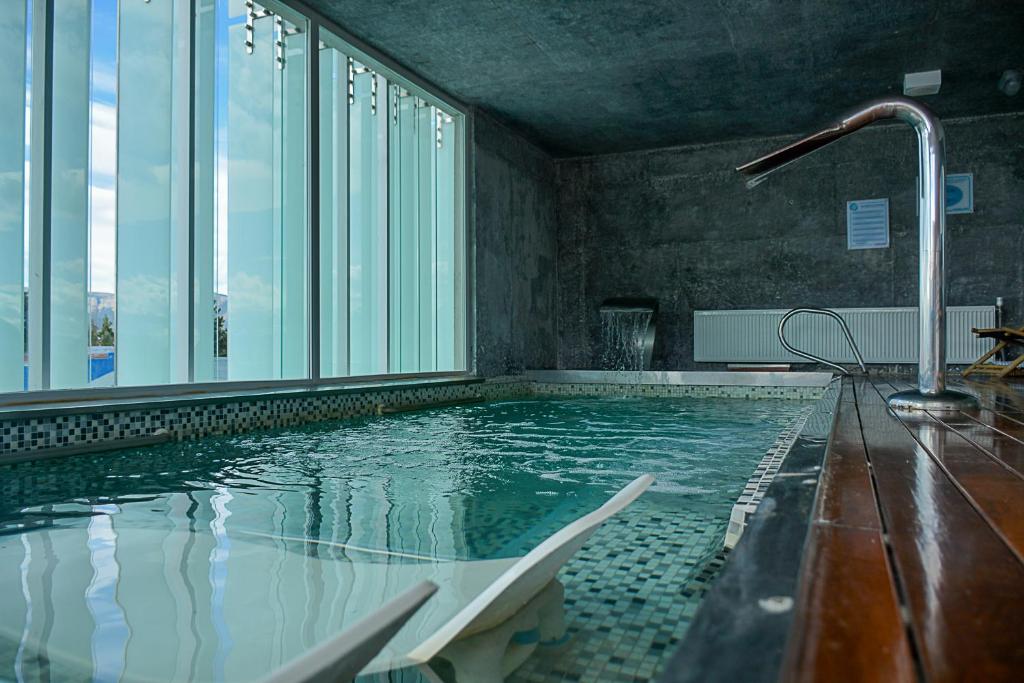
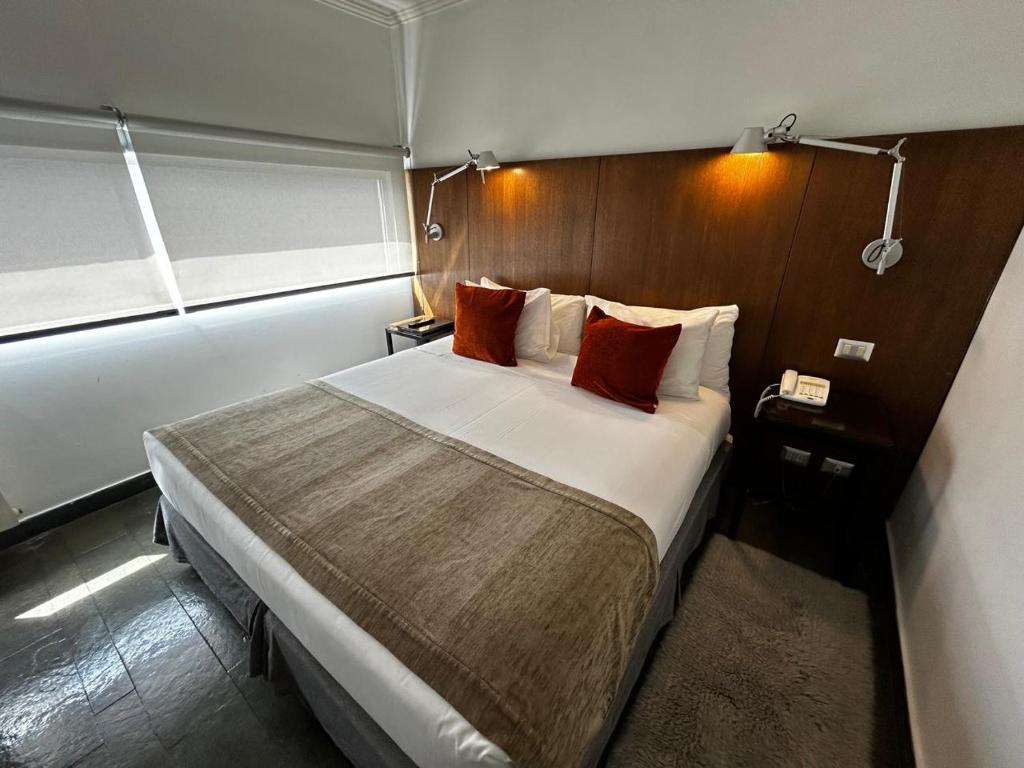
If you’re looking for a more upscale hotel in Puerto Natales, then you have to stay at Natalino which offers comfortable and modern private rooms. This hotel also offers a rooftop swimming pool, as well as an indoor pool and spa facilities. There is no better place to relax after 5 days of hiking.
Most travelers travel to Patagonia with more gear than they want to carry on a multi-day hike.Or at least this was our case, we had two suitcases to carry what we needed for three weeks in Patagonia.
Fortunately, most accommodation in town offer free luggage storage while you are trekking in Torres del Paine. You can leave your larger suitcase or backpack safely at your hostel or hotel and only take what you need for the trail.
sPEND A DAY PREPARING FOR THE TREK
The W Trek requires a bit of preparation before you head into the park. Even if you have followed all the steps in this guide, spending a full day in Puerto Natales before the trek makes the process much easier.
This extra day will allow you to:
Pack and organize your trekking backpack.
Buy food and snacks for the first hiking day. Even if you have booked to have a full board during your stay, this will only be effective as of the first dinner so you need to plan what you’ll eat on the first day of hiking.
Double check reservations and transport schedules. You don’t want any bad surprises once you enter the park.
Download offline maps and have an offline copy of all your reservations. There is absolutely no network in the park so having offline copies of everything is a must.
Rent any missing gear you may need such as trekking poles or sleeping bags.
Enjoy a relaxed day before the sportive days ahead of you.
This extra day in Puerto Natales is not mandatory but I highly recommend it. We didn’t plan for it and really regret not doing it. Due to some delays in our transportation, we only arrived in Puerto Natales at 18:00 the day before we started the trek. It was a really stressful evening with packing our backpacks, getting food for our first day and getting dinner.
Do yourself a favor a plan this extra day in Puerto Natales. Being stressed during your holidays is no fun at all!
STEP 7 - BUYING TORRES DEL PAINE NATIONAL PARK TICKETS
One of the last things you need to do is purchase the Torres del Paine National Park tickets. If you’re planning to hike the W Trek, these are mandatory in addition to your refugio or campsite reservations.
Unlike in the past, it is no longer possible to buy park tickets at the entrance gates or at the ranger stations. Tickets must be purchased online in advance through the official booking platform managed by CONAF, the government agency responsible for Chile’s national parks.
When buying your ticket, you will need to buy a multi-day pass and select the number of days you plan to spend inside the park.
After completing the purchase, you will receive a digital ticket. It is a good idea to download it to your phone and keep a printed copy, as park rangers may ask to see it at checkpoints.
STEP 8 - PACKING FOR THE W TREK
Packing properly for the W Trek is essential. Weather in Torres del Paine National Park can change quickly, and you will like experience sun, rain, and strong winds during your hike. Maybe even during the same day! Having the right gear will make the hike much more comfortable and safe.
The goal is to pack light but prepared. Everything you bring will be carried on your back for several days, so it is important to focus on the essentials.
The essentials that need to be in your backpack are:
Clothing: Layering is key to be prepared for all types of weather.
Toiletries & Firs-aid kit: We will be hiking for 5 days so you will need some basic hygenic things and similars.
Hiking gear: This is not a simple day hike, the correct hiking gear is a must.
Food and Snacks: If you have not booked full board meals at the refugios, then you’ll need to take food into consideration.
This is just a short list of what you need to focus on. If you want a detailed breakdown and a complete checklist, make sure to read my full blog post about “Packing for the W Trek“.
COMMON MISTAKES TO AVOID
Hiking the W Trek in Torres del Paine National Park is easily possible for independent hikers, but a few common mistakes can make the experience more stressful than it needs to be. Most of these issues are easy to avoid with a bit of preparation beforehand.
Here are some of the most common pitfalls you can run into when planning the W Trek self guided.
Booking refugios too late. Accommodation along the W Trek is limited, and it often sells out montsh in advance during peak season. If you are planning to hike between December and February, try to reserve your accommodation as soon as bookings open for the season.
Underestimating Patagonia Weather. Don’t assume that because you are going in the summer it will be warm and calm. A proper waterproof jacket, wind protections, and warm layers are essential on the W Trek. During our hike we had 2 days in which it was 2 degrees at night.
Not planning transportation carefully. Transport schedules inside Torres del Paine are fairly straightforward, but they still require a bit of coordination. Buses to and from Puerto Natales, the shuttle from Laguna Amarga, and the catamaran across Lago Pehoé all run on fixed timetables. Missing a connection can completely derrange your hike.
Carrying too much weight. It is tempting to bring extra clothes or gear “just in case”, but every extra gram makes the hike more tiring. A lighter backpack makes a noticeable difference, especially on the longer hiking days.
Skipping preparation in Puerto Natales. I suffered from this one myself and really recommend adding one day of preparation in Puerto Natales before the hike. It might feel like a “lost day” in your holidays but you will be happy for it when you are there.
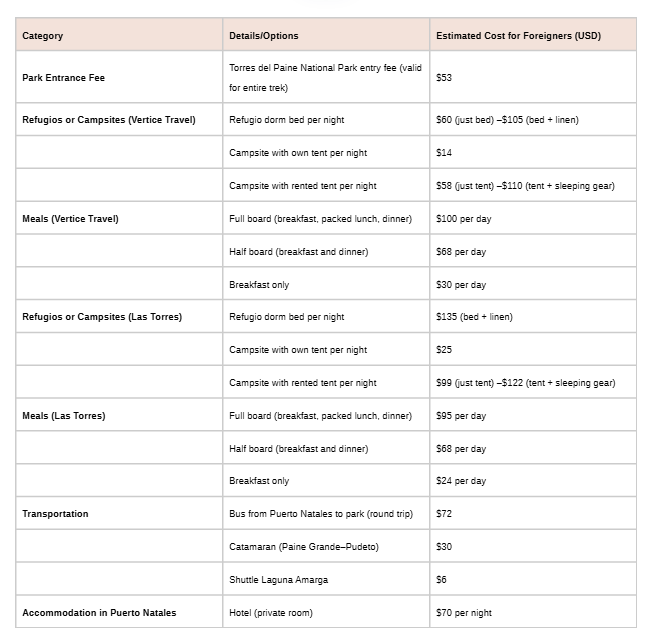
COST BREAKDOWN
Let’s be honest, the W Trek is one of the most famous hikes in Patagonia, but it is not a budget destination. Even when planning the W Trek self-guided, you will have to take quite a few costs into consideration.
The good news is that organizing the trek yourself gives you flexibility. You can tailor the experience to your tastes and control how much you spend overall.
The prices can vary between camps and the month you hike but these were the estimated prices in January/February 2026. For the latest updated prices, always check the official websites. You’ll find the links throughout this blog.
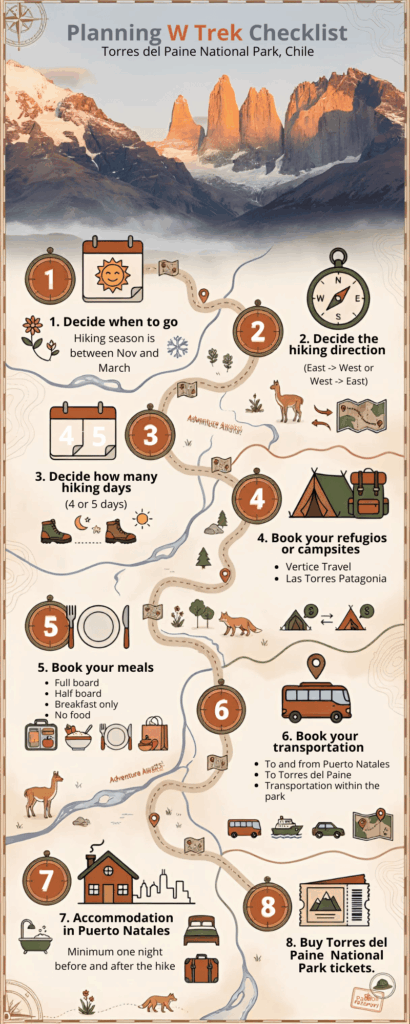
FINAL PLANNING CHECKLIST
To make things even easier, I have created a visual checklist that summarizes everything you need to organize before your hike. Save it to your phone so you can quickly review it while preparing your trip.
FINAL THOUGHTS
Planning the W Trek self-guided might seem complicated at first, but once you break it down step by step, the process becomes much more manageable. Hopefully this guide will help you easily plan this amazing multiday hike. Honestly, I wish I had had something like this when I was planning my holidays. It would have saved me so much time in research!
Hiking through Torres del Paine National Park is an unforgettable experience. Over the course of a few days, you will walk past glaciers, turqouise lakes, dramatic granite towers, and some of the most iconic landscapes in Patagonia. It is no surprise that the W Trek has become one of the most famous hikes in South America.
DISCLAIMER: Did you know? This blog uses affiliate partnerships. When you click and book or make a purchase through one of my blog posts, I may receive a small commission (at no extra cost to you). Thank you for supporting The Travelling Hiker!


Te lo has currado Seguro que te llevo mucho más tiempo que la duración de tu viaje Enhorabuena