SUKHOTHAI HISTORICAL PARK GUIDE: THE PERFECT ONE DAY ITINERARY + THINGS TO DO IN NEW SUKOTHAI
July 5, 2026
If you’re planning a trip to Thailand, and you want to visit Sukhothai, this Sukhothai Historical Park Guide will help you make the most of one unforgettable day exploring the country’s first capital. In Sukhothai you’ll find a different experience from other bustling cities in Thailand: magnificient ancient temples, giant Buddha statues, peaceful cycling paths and authentic local food.
Although many travelers skip Sukhothai in favor of Bangkod or Chiang Mai, I think it’s one of the countries most rewarding cultural destinations. The UNESCO-listed historical park is easy to explore in a half day, and its relaxed atmosphere makes it a refreshing stop on any Thailand itinerary. After visiting the ancient ruins, don’t miss the chance to spend some time in New Sukhothai, where you’ll find excellent local restaurants, lively markets, and a glimpse into every day life.
Int this guide, I’ll share everything I did during our visit to Sukhothai as well as some practical tips for planning your visit, the the best things to do in New Sukhothai.
TABLE OF CONTENTS
DISCLAIMER: Did you know? This blog uses affiliate partnerships. When you click and book or make a purchase through one of my blog posts, I may receive a small commission (at no extra cost to you). Thank you for supporting The Travelling Hiker!
SUKHOTHAI, THE FIRST CAPITAL OF THAILAND
Before exploring the ancient temples, it’s worth taking a moment to understand why Sukhothai is such an important place in Thai history.
Founded in the 13th century, Sukhothai was the first capital of the Kingdom of Siam and is widely regarded as the birthplace of Thai civilization. It was during the Sukhothai Kingdom that many of the country’s cultural foundations were established, including the Thai alphabet, which was created by King Ramkhamhaeng the Great. The kingdom also played a key role in shaping Thai art, architecture, and Theravada Buddhism, influences that can still be seen throughout the country today.
Even the city’s name has a beautiful meaning. Derived from the Sanskrit words sukha (happiness) and udaya (rise or dawn), Sukhothai translates into English as “The Dawn of Happiness“. I couldn’t think of a more fitting name for a place where centuries-old temples, lotus ponds, and peaceful gardens create such a calm atmosphere. This is actually one of the things I loved the most about Sukhothai, how peaceful it was!
IS SUKHOTHAI HISTORICAL PARK WORTH VISITING?
Absolutely. In my opinion, Sukhothai Historical Park is one of the most underrated destinations in Thailand.
If you’re traveling between Bangkok and Chiang Mai, spending one day in Sukhothai is, in my opinion, one of the best cultural detours you can make.
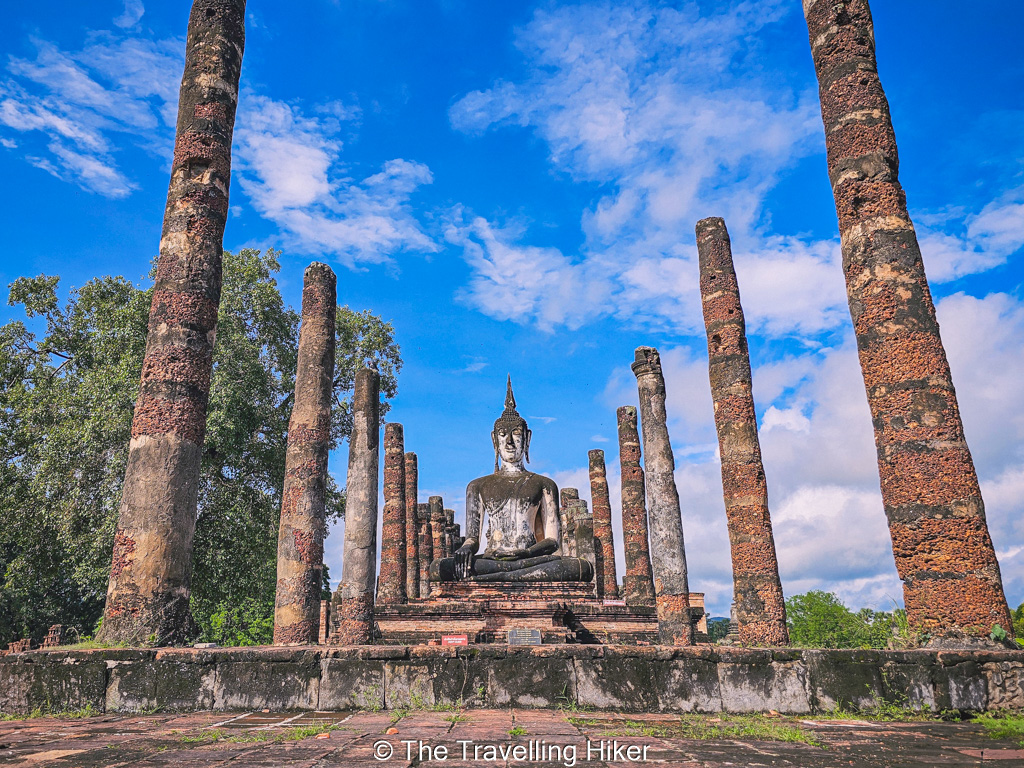
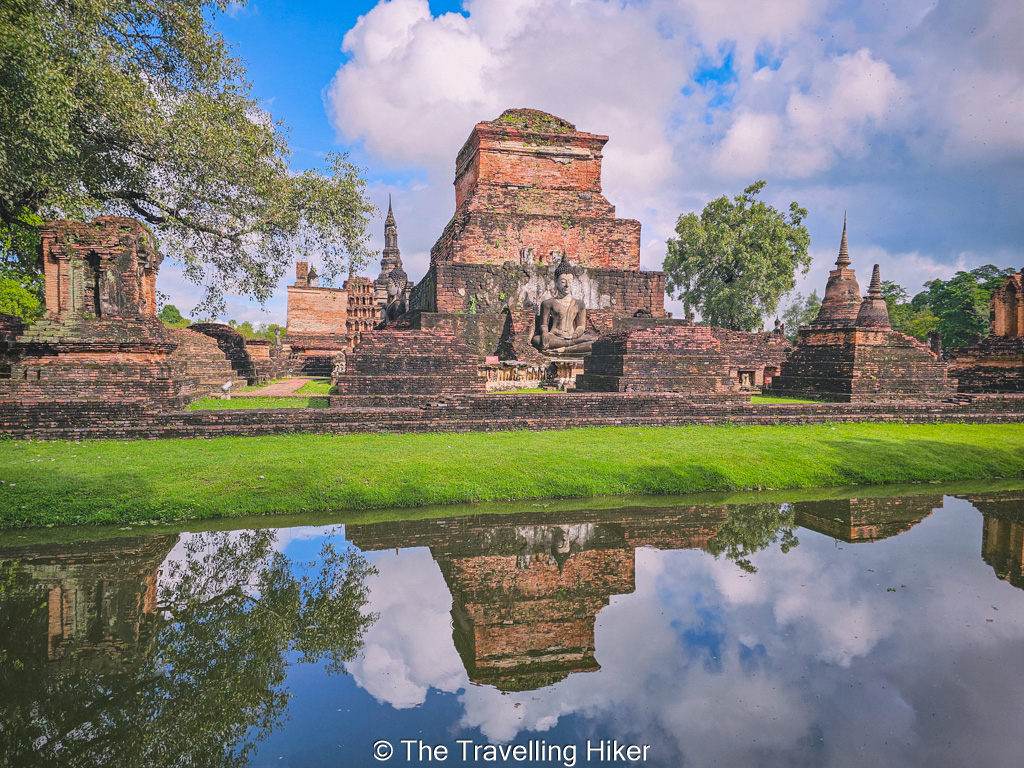
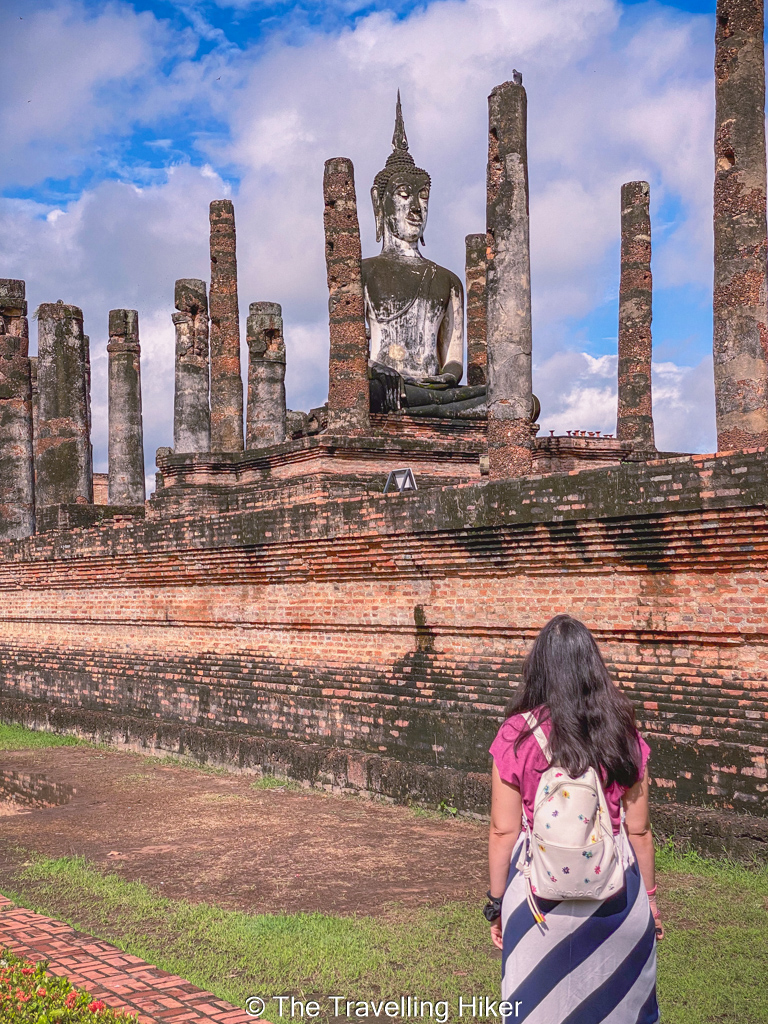
Sitting Buddha in Wat Mahathat
HOW TO GET TO SUKHOTHAI?
Althought Sukhothai isn’t as well connected as other cities in Thailand, getting here is relatively straightforward. It doesn’t matter if you’re traveling from the north or the south, you can reach Sukhothai by plane, bus, train, or private car.
We traveled to Sukhothai from Bangkok and continued our journey to Chiang Mai afterwards. If you’re following a similar route, I think it’s a fantastic stop to break up the journey and experience a completely different side of Thailand.
GETTING TO SUKHOTHAI BY PLANE
The fastest way to reach Sukhothai is by flying from Bangkok. Sukhothai Airport is located about 30 km from New Sukhothai and around 40 km from Sukhothai Historical Park. There are usually a few daily direct flights from Bangkok, with a flight time of approximately one hour.
Once you arrive, you can take a shuttle bus (cheapest option), taxi, or arrange a transfer with your hotel. We took the shuttle bus directly at the airport, and it was very convenient.
Flying is the quickest option, but it is also the most expensive.
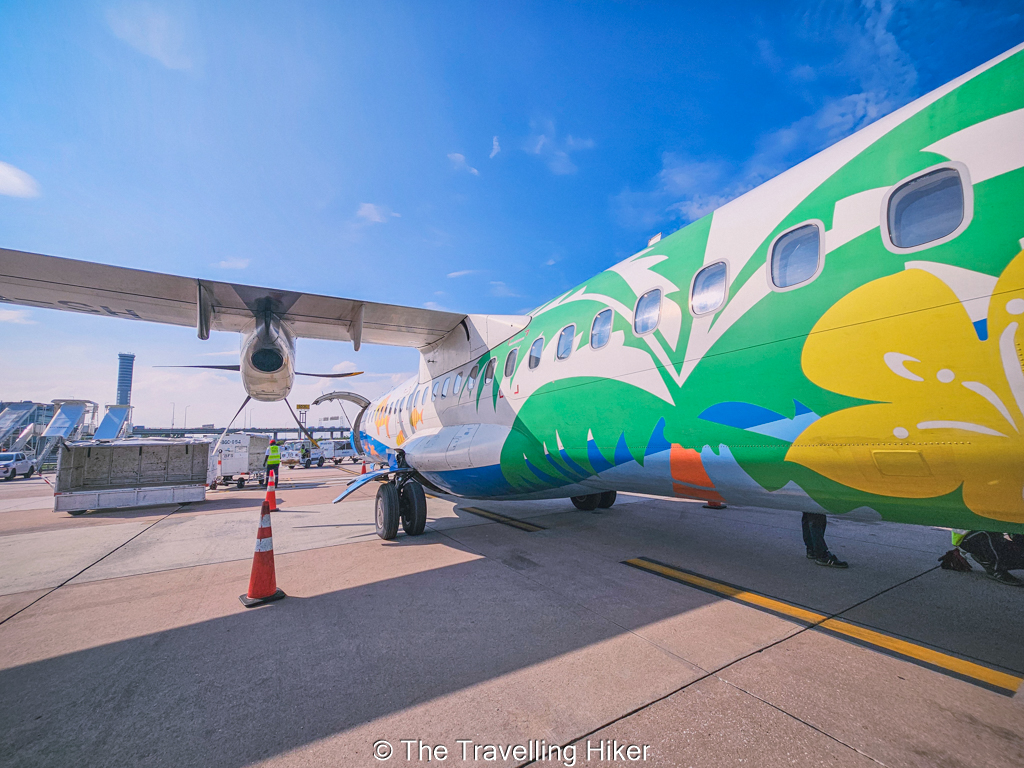
Plane to Sukhothai
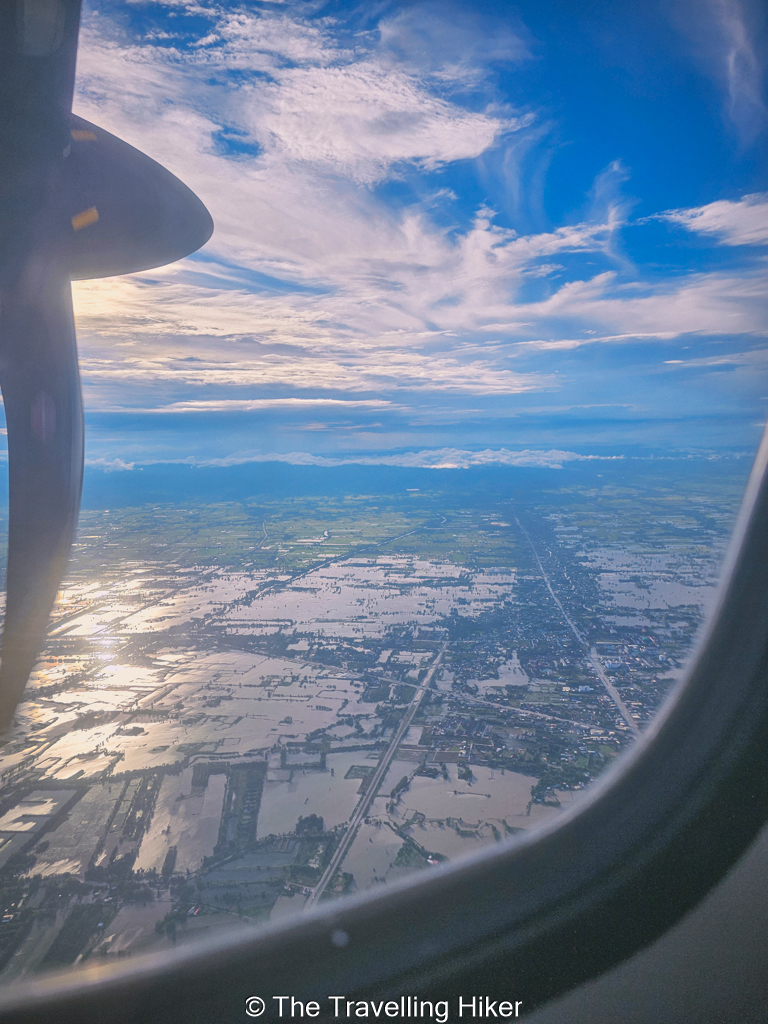
View from the plane to Sukhothai
Welcome to Sukhothai
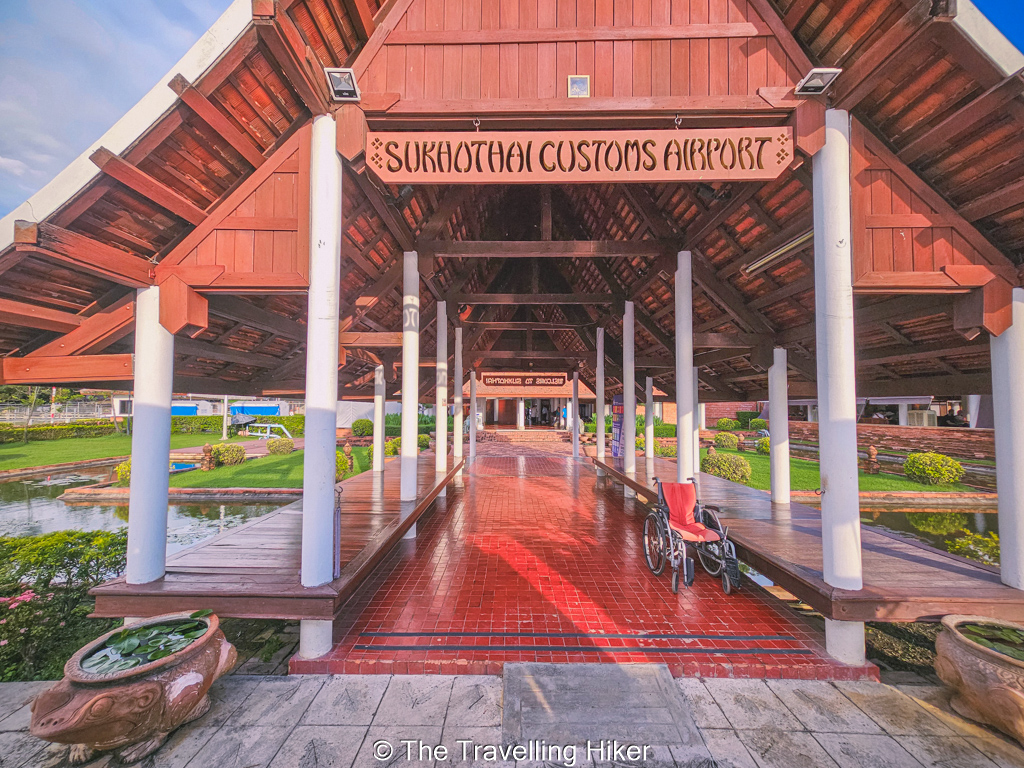
Sukhothai Airport
GETTING TO SUKHOTHAI BY BUS
For most travelers, the bus is the best balance between cost and convenience.
There are regular buses connecting Sukhothai with Bangkok, Chiang Mai, Phitsanulok, and several other cities acros northern Thailand.
From Bangkok: approximately 7 to 8 hours.
From Chiang Mai: approximately 5 to 6 hours.
From Phitsanulok: about 1 hour.
Most buses arrive or depart from the bus terminal in New Sukhothai although some routes stop at the entrance of Sukhothai Historical Park too. From there, you can easily catch a songthaew (a shared local truck that runs regurlarly), a tuk-tuk, or a taxi to your accommodation.
We traveled by bus to go from Sukhothai to Chiang Mai, since there is no direct flights running between these two cities and this was the fastest way to get there. We booked our tickets with 12Go Asia and everything went smoothly.
GETTING TO SUKHOTHAI BY TRAIN
There isn’t a train station in Sukhothai itself. The closest railway station is in Phitsanulo, about 60 km away.
If you’re traveling by train from Bangkok or Chiang Mai, you’ll first need to get off in Phitsanulok and then continue to Sukhothai by bus or taxi.
GETTING TO SUKHOTHAI BY CAR
Renting a car gives you the greates flexibility, especially if you’re planning a road trip through northern Thailand.
However, you should know that in Thailand, they drive on the left side of the road, so I would only rent a car if you’re familiar with driving on this side of the road.
The driving times are a bit shorter than if you use the bus but not too much, since Thai roads are not always in the best conditions.
GETTING AROUND SUKHOTHAI
Sukhothai is divided into two main areas: New Sukhothai, where most hotels, restaurants, and bus connections are located, and Sukhothai Historical Park, about 12 km away.
They easiest way to travel between the two is by songthaew. Alternatively, you can take a taxi or tuk-tuk.
HOW TO VISIT SUKHOTHAI HISTORICAL PARK?
Sukhothai Historical Park is surprisingly easy to visit on your own. The park is well maintained, mostly flat, and connected by quiet roads and cycling paths.
THE DIFFERENT AREAS OF SUKHOTHAI HISTORICAL PARK
Sukhothai Historical Park is quite large. Rather than being one single archaeological site, it’s divided into five different zones:
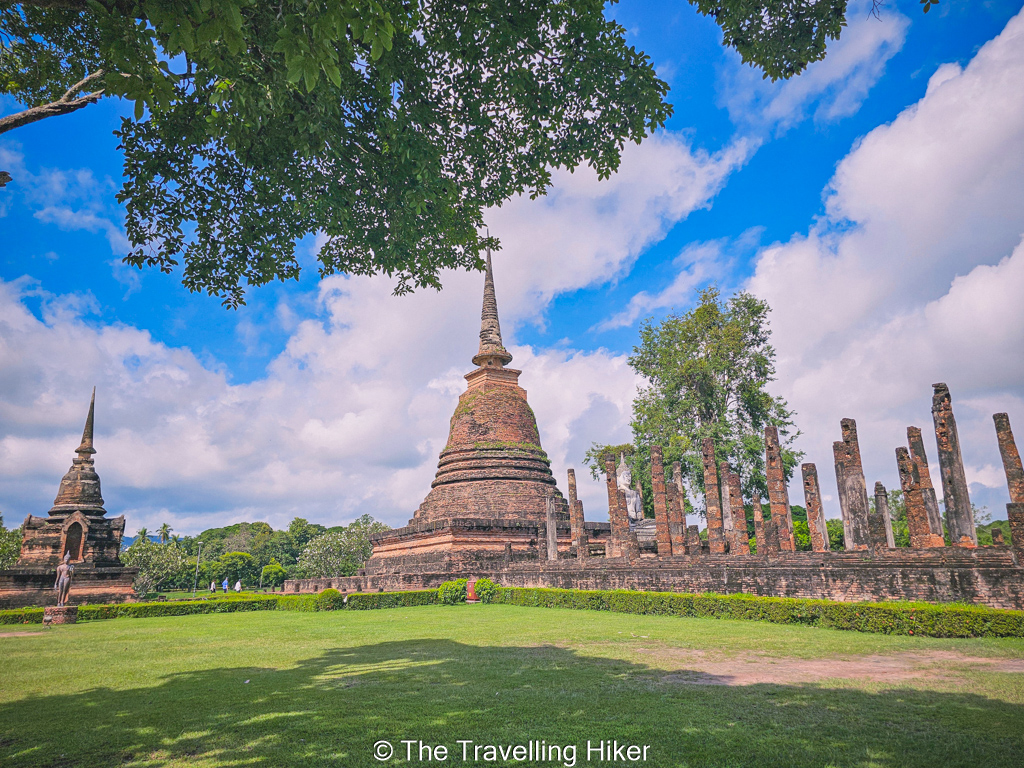
Central zone. The heart of the ancient city and by far the most visited area. This is where you ‘ll find the most iconic temples such as Wat Mahathat and Wat Sa Sing, along with the city walls and many of the park’s most important ruins.
Northern Zone. Home to the impressive Wat Si Chum, famous for its enormous seated Buddha (an absolute must-visit).
Western Zone. A quieter area with temples nestled among hills and forest, including Wat Saphan Hin, which rewards visitors with beautiful views.
Southern Zone. Contains several lesser-visited temple ruins that could be worth exploring if you have some extra time.
Eastern Zone. The least visited section of the park, featuring a handful of smaller archaeological sites.
I recommend focusing on the Central, Northern and Western Zones, as they contain most of the park’s highlights.
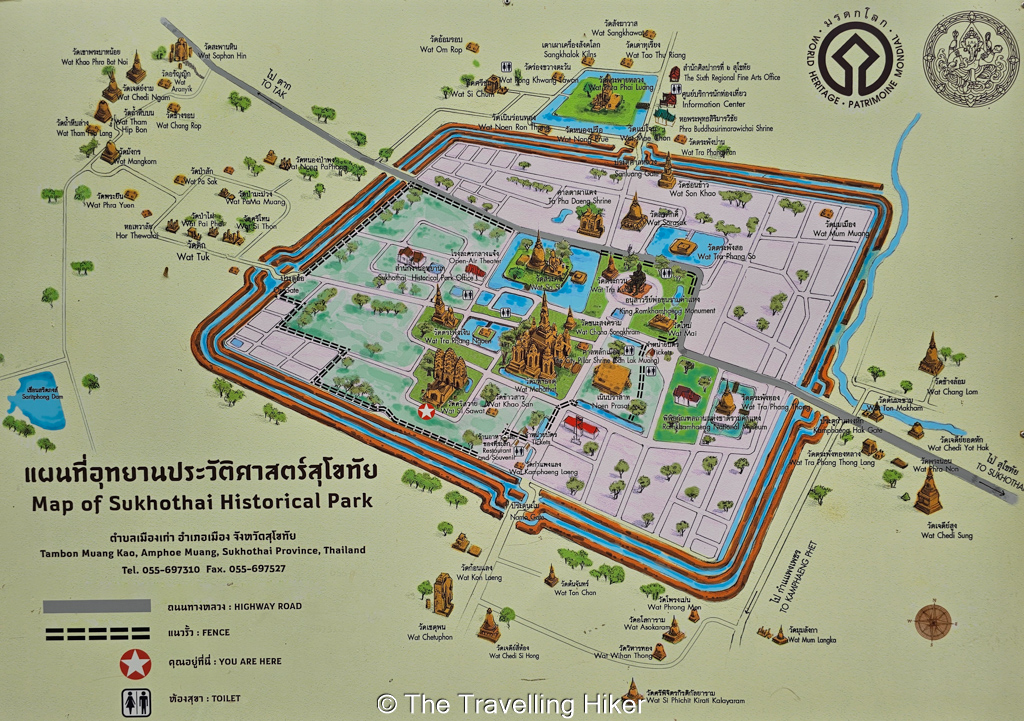
Map of Sukhothai Historical Park
HOW MUCH TIME DO YOU NEED TO VISIT SUKHOTHAI HISTORICAL PARK?
From my personal experience, I found that half a day was more than enough to visit the main temples at a relaxed pace. If you want to visit absolutely everything, then I would schedule a complete day.
In around 4 hours you’ll have plenty of time to visit the main temples, stop for photos, and simply enjoy the peaceful surroundings without feeling rushed. This also leaves you plenty of time to cool down at your hotel’s pool (don’t underestimate the heat in the afternoon), and explore New Sukhothai.
GETTING AROUND THE PARK
Because the different zones are spread out, walking between them isn’t practical. Fortunately, the roads inside the park are quiet, well maintained, and very easy to navigate.
There are several ways to explore Sukhothai Historical Park:
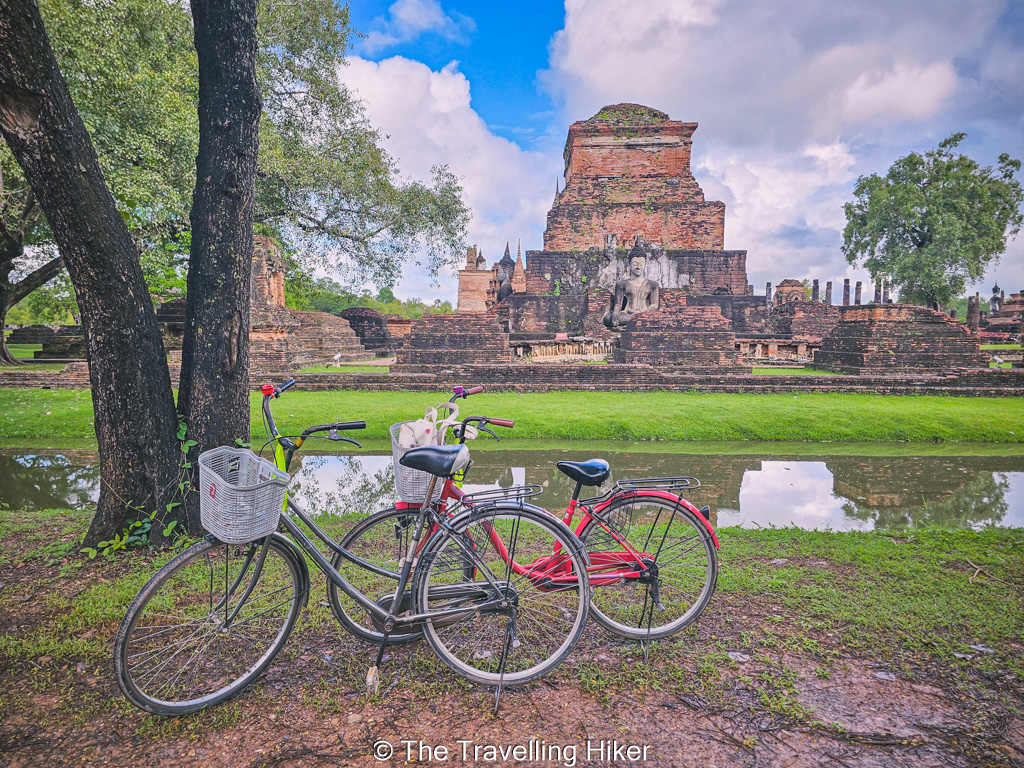
Rent a bicycle (my recommended option)
Rent a scooter outside the park
Hire a tuk-tuk driver for a few hours
Join a guided tour
Personally, I think cycling offers the perfect balance between flexibility and comfort. You can stop wherever you like and spend as much time as you want in each temple.
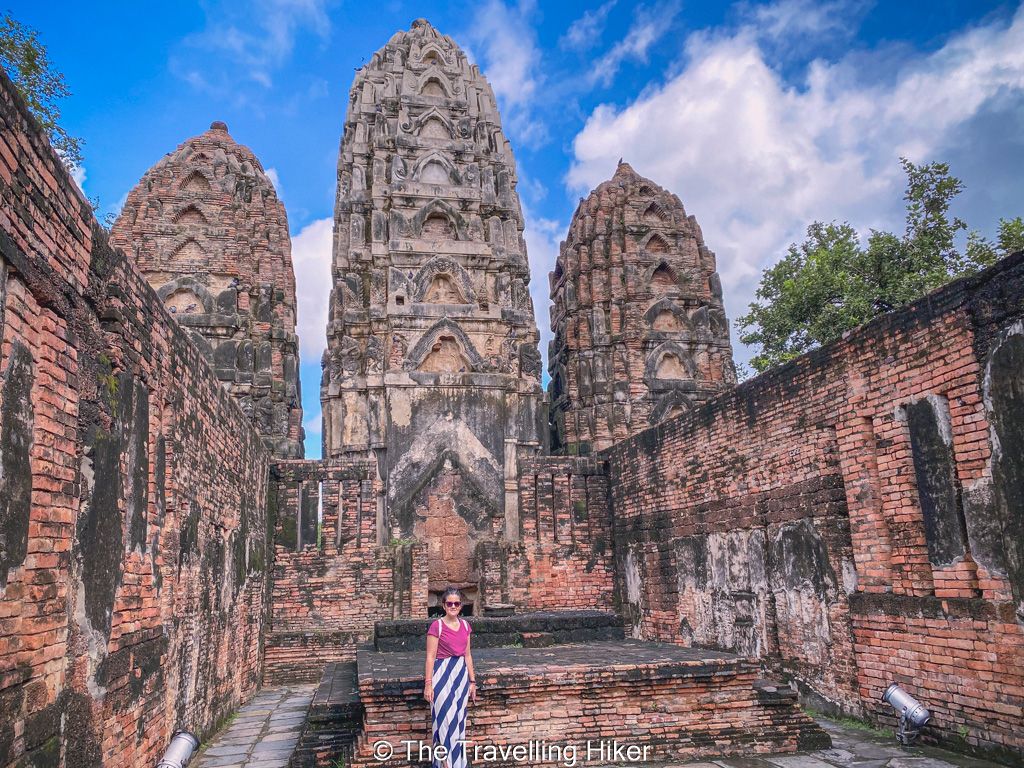
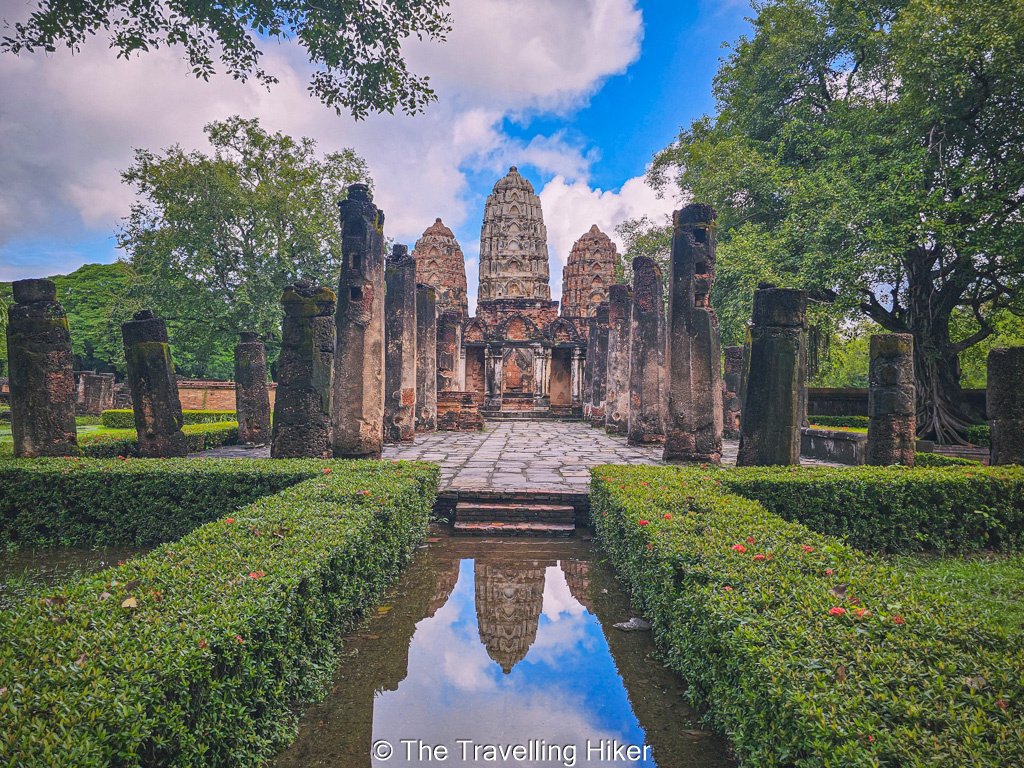
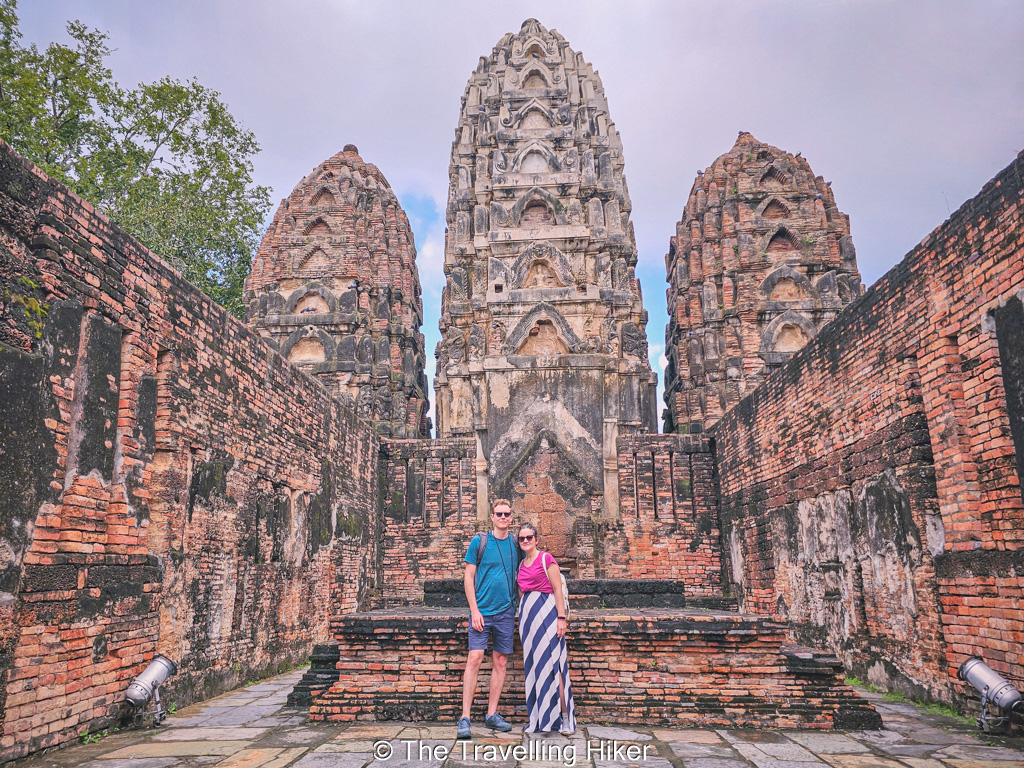
In front of the three prangs of Wat Si Sawai
BIKE RENTAL
Renting a bicycle is the best way to explore Sukhothai Historical Park.
Bike rental shops are located just outside the main entrance, and many hotels in both Old and New Sukhothai also rent bicycles. Rental prices are very affordable, usually around 60 THB per day. I have pinned the one where we rented our bikes (OR Bikes) on the map at the end of this blog, but you can choose whichever you want since they are all more or less the same.
The park is almost completely flat, so you don’t need to be particularly fit to cycle around. Trust me, biking around Sukhothail will be one of your highlights in Thailand!
Our rental bikes in front of Wat Mahathat
ENTRANCE FEE
Each zone of Sukhothai Historical Park has its own entrance ticket.
The Central Zone costs 200 THB per person, while the Northern, Western each cost 120 THB per person separately. The Southern and Eastern Zones are free to visit.
If you’re entering with your own bicycle, there is a separate additionnal fee of 10 THB per bicycle.
All prices mentioned here are the applicable prices in 2026.
OPENING HOURS
Sukhothai Historical Park is open daily from 6:30 to 18:00.
I recommend arriving as early as possible, especially if you’re visiting during the hotter months. Not only will you avoid the midday heat, but you’ll also enjoy the temples in a much quieter atmosphere and with softer light for photography.
Wat Sorasak
SUKHOTHAI ONE-DAY ITINERARY
This is the exact itinerary I followed during my day in Sukhothai, and I think it’s the perfect way to experience both the ancient city and modern-day Sukhothai. The morning is dedicated to exploring the incredible tempes of Sukhothai Historical Park before the afternoon heat sets in. After lunch and a refreshing break by the pool, head to New Sukhothai to discover a quieter side of the city before finishing the day with delicious street food at the night market.
MORNING: SUKHOTHAI HISTORICAL PARK
I recommend arriving at the park as close to opening time as possible. The temperatures are much more pleasant, the temples are quieter, and the morning light is perfect for photography.
Rent a bicycle near the entrance and start exploring the park form the Central Zone before making your way to the Western and Northern Zones.
Historical Park Central Section
The Central Zone is the heart of ancient Sukhothai and contains many of the kingdom’s most important monuments.
Wat Mahathat
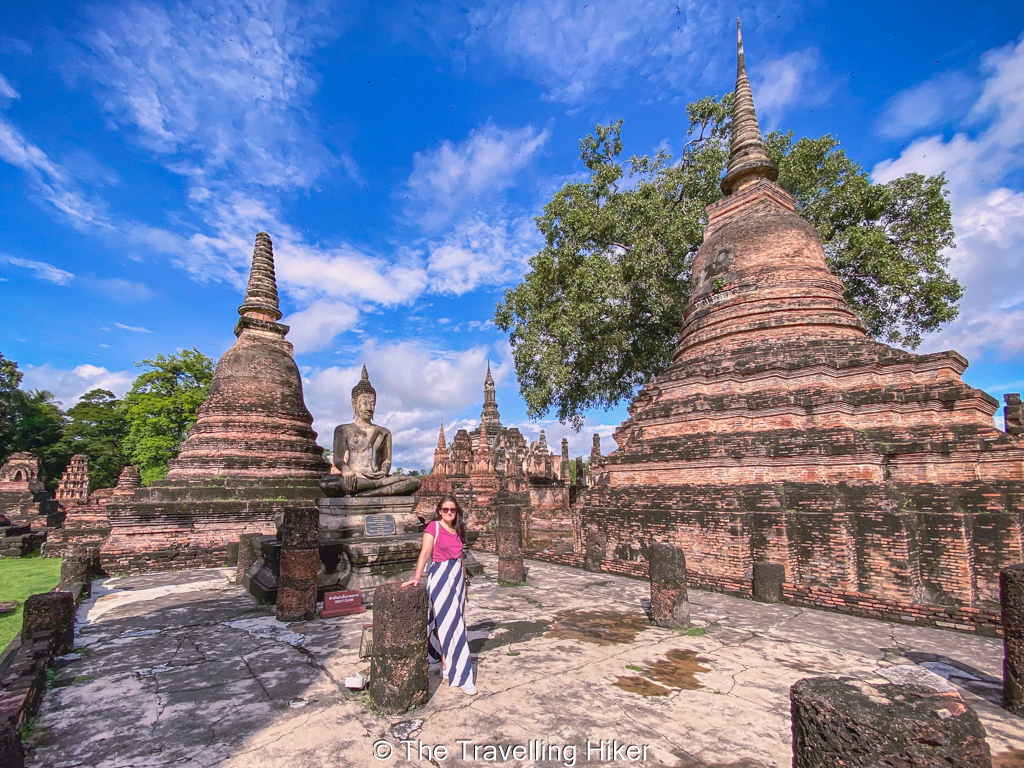
This is the most important temple in Sukhothai Historical Park and should be your first stop. Built in the 13th century, Wat Mahathat was the spiritual center of Sukhothai Kingdom and is famous for its lotus-bud chedi, beautiful Buddha statues, and rows of columns.
We spent quite a while wandering around this temple, and it’s easy to see why it’s considered the hightlight of the park.
In front of one of the many Buddha statues in Wat Mahathat
Walking through Wat Mahathat
Another angle of Wat Mahathat
Wat Si Sawai
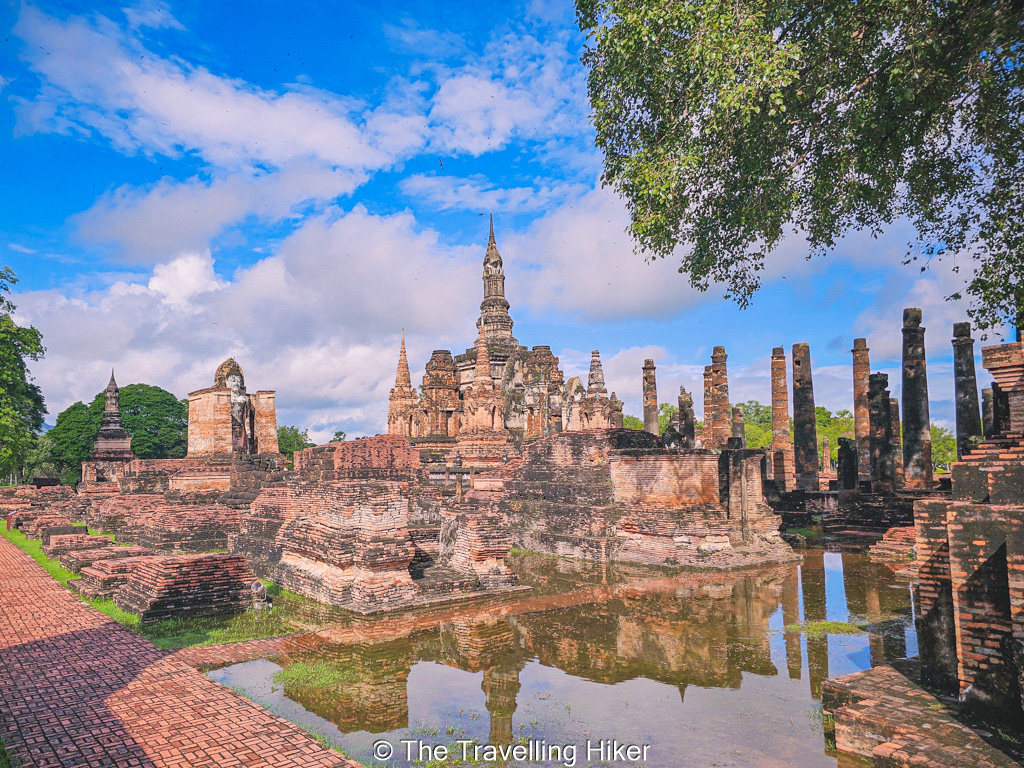
From Wat Mahathat, we rode our bikes to Wat Si Sawai. The bike ride was super nice since you pass next to the pools and canalizations next to Wat Mahathat and you get some nice reflections of the temple on the water.
Wat Si Sawai is one of the most unique temples in the Central Zone of the Sukhothai Historical Park. It was originally built as a Hindu shrine, most likely dedicated to the god Shiva, before later being converted into a Buddhist temple. Its three distinctive prangs reminded me a bit to the temples at Angkor Wat in Cambodia.
Wat Si Sawai is a stop that shows the Khmer influence on the region before the rise of the Sukhothai Kingdom.
Water reflection of Wat Si Sawai
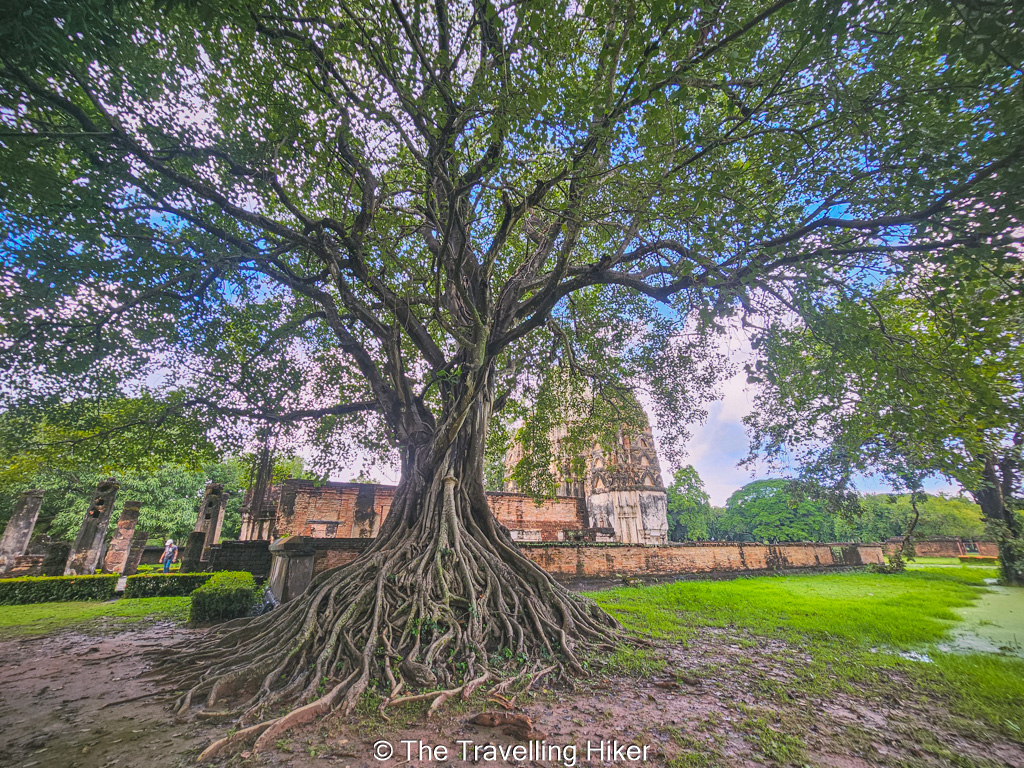
Loved this tree next to Wat Si Sawai
David and myself in front of the three prangs
Wat Traphang Ngoen
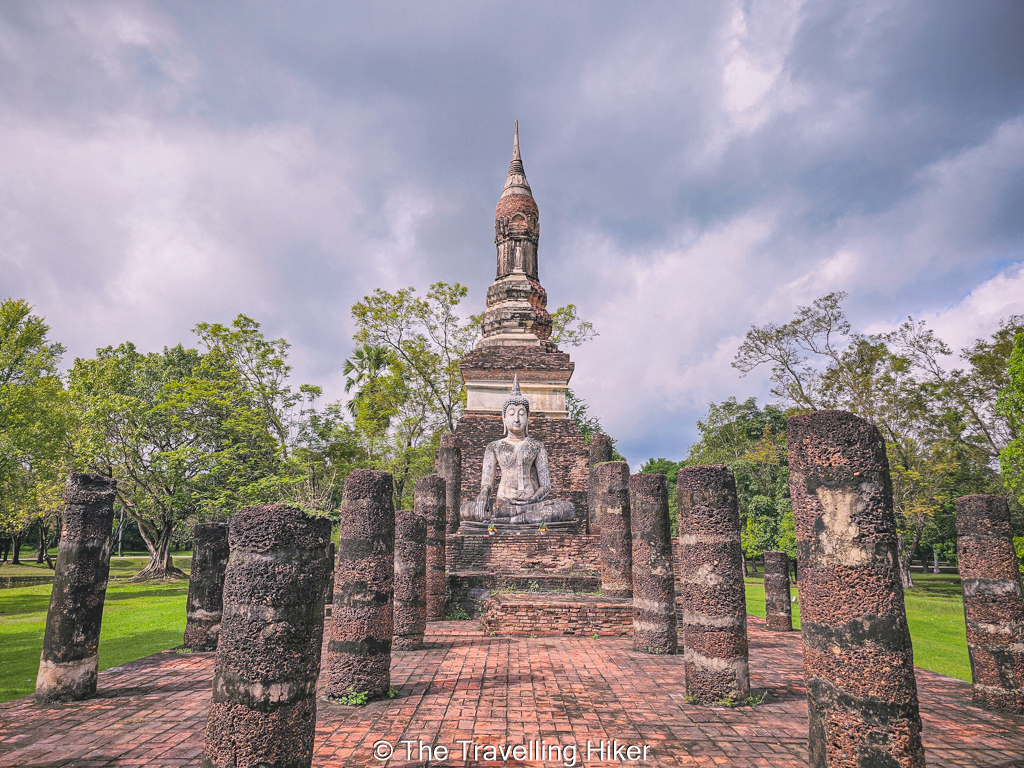
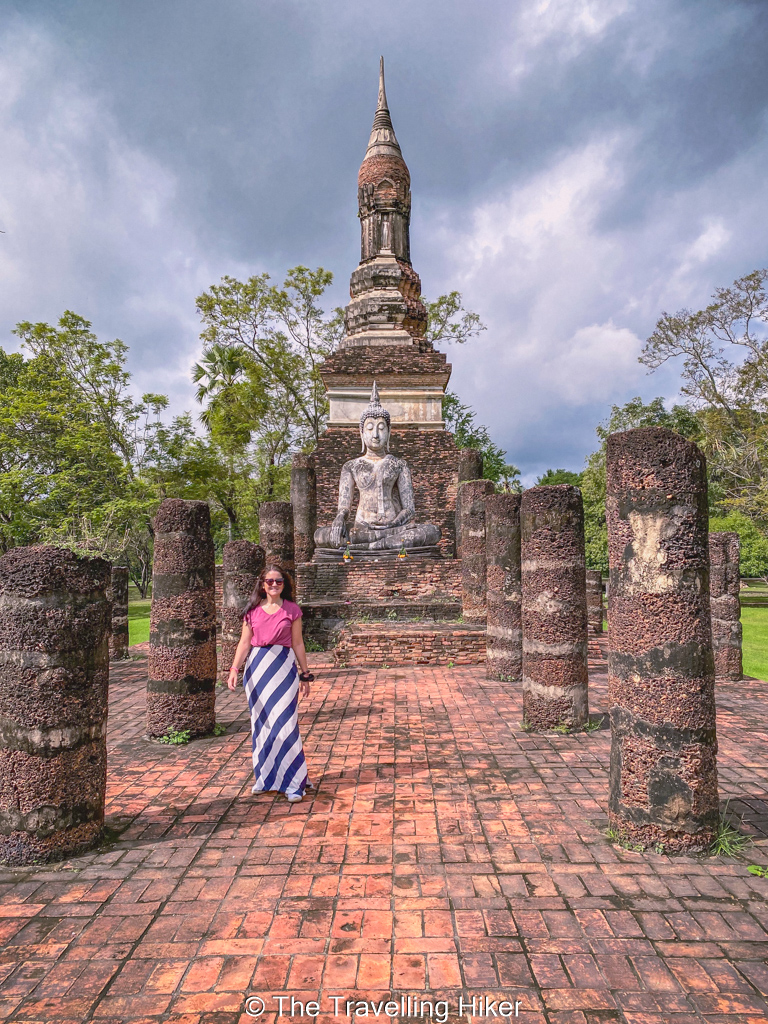
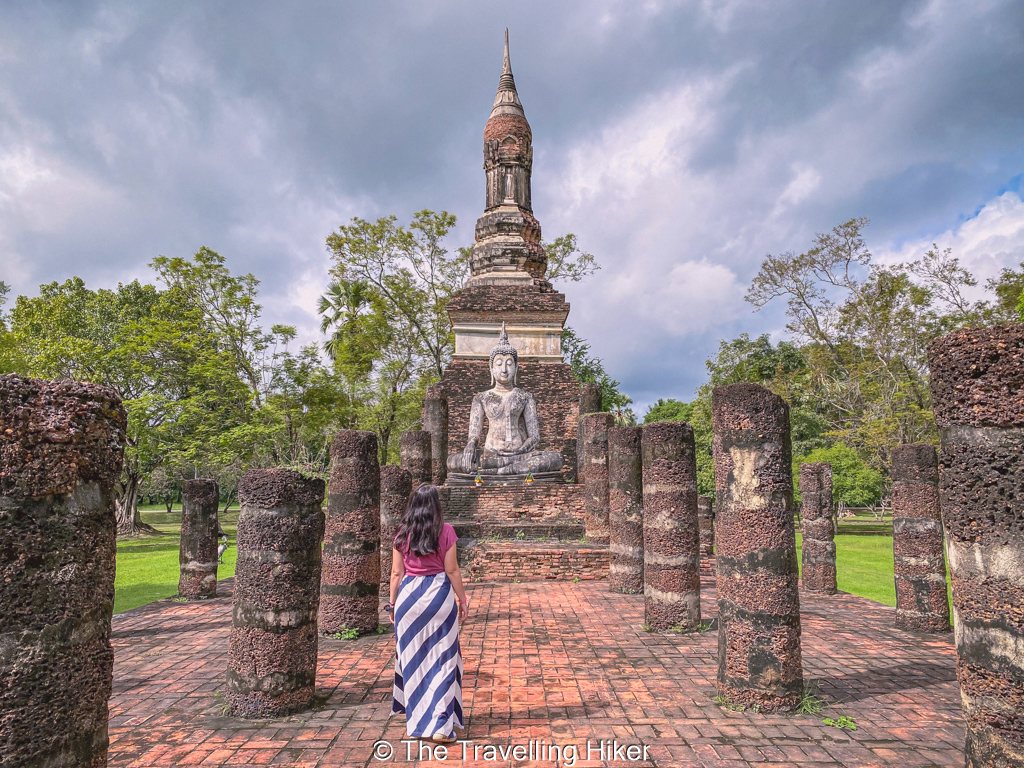
Just a short bike ride away, Wat Traphang Ngoen is another beautiful temple set beside a lotus pond. This small temple has a sitting Buddha with a cheddi behind it, built in the shape of lotus bud with 4 niches that enshrine standing and walking Buddhas.
Wat Traphang Ngoen is not as impressive as Wat Mahathat, but it has its special charm.
Sitting Buddha at Wat Traphang Ngoen
Beautiful Wat Traphang Ngoen
Wat Sa Si
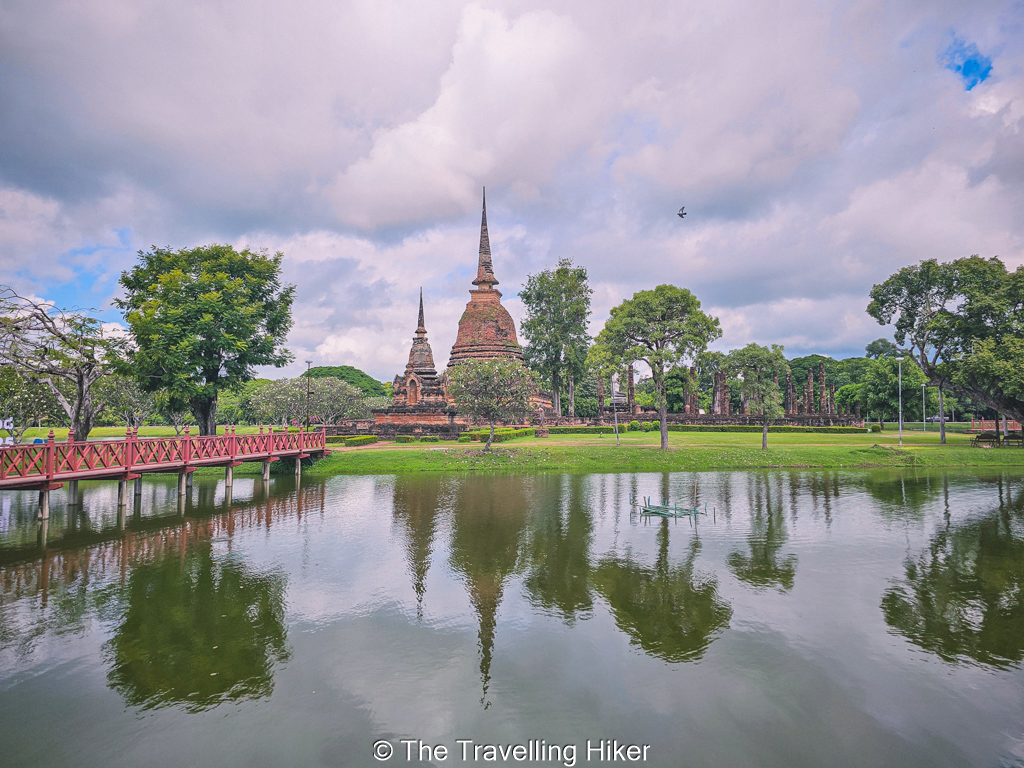
Wat Sa Si is one of the most photogenic temples in Sukhothai Historical Park. Located on a small island surrounded by a tranquil lake, it is only accessible by a wooden bridge. The reflections of this temple in the early morning are what makes Sukhothai so special.
We were completely alone here and it was so peaceful to visit this temple.
Wat Sa Si surrounded by a lake
Wat Sa Si main stupa
King Ramkhamhaeng Monument
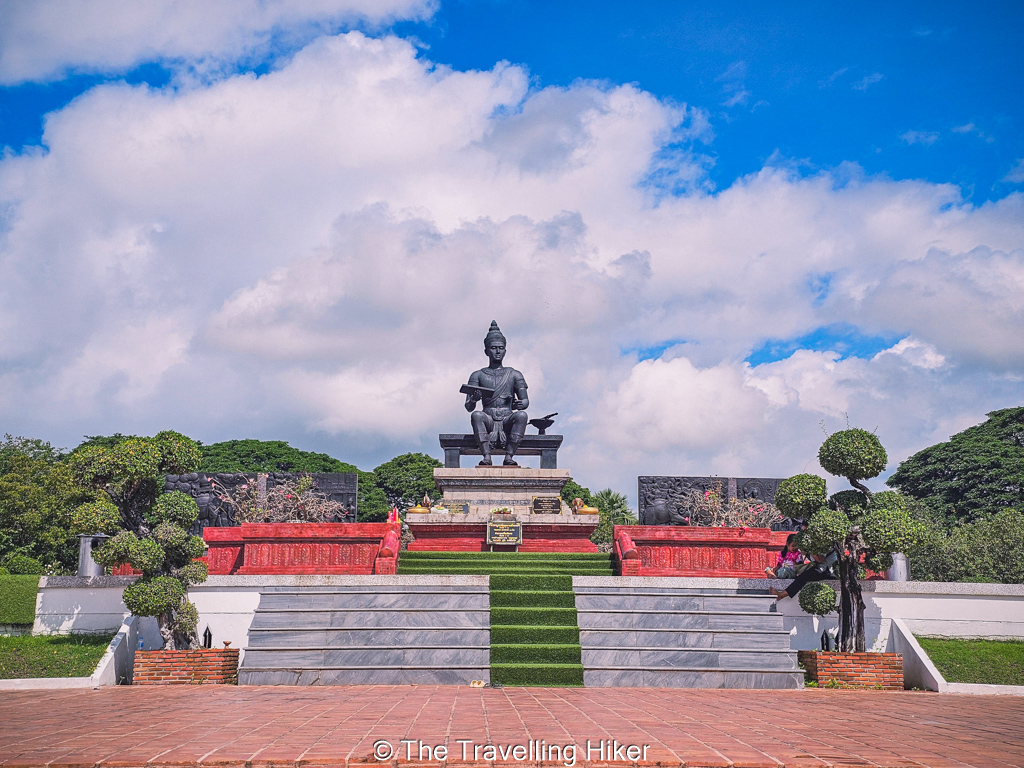
Another important spot within the central zone is the monument dedicated to King Ramkhamhaeng the Great, the ruler who led Sukhothai Kingdom during its golden age. It is said that during its time, the Thai alphabet was created.
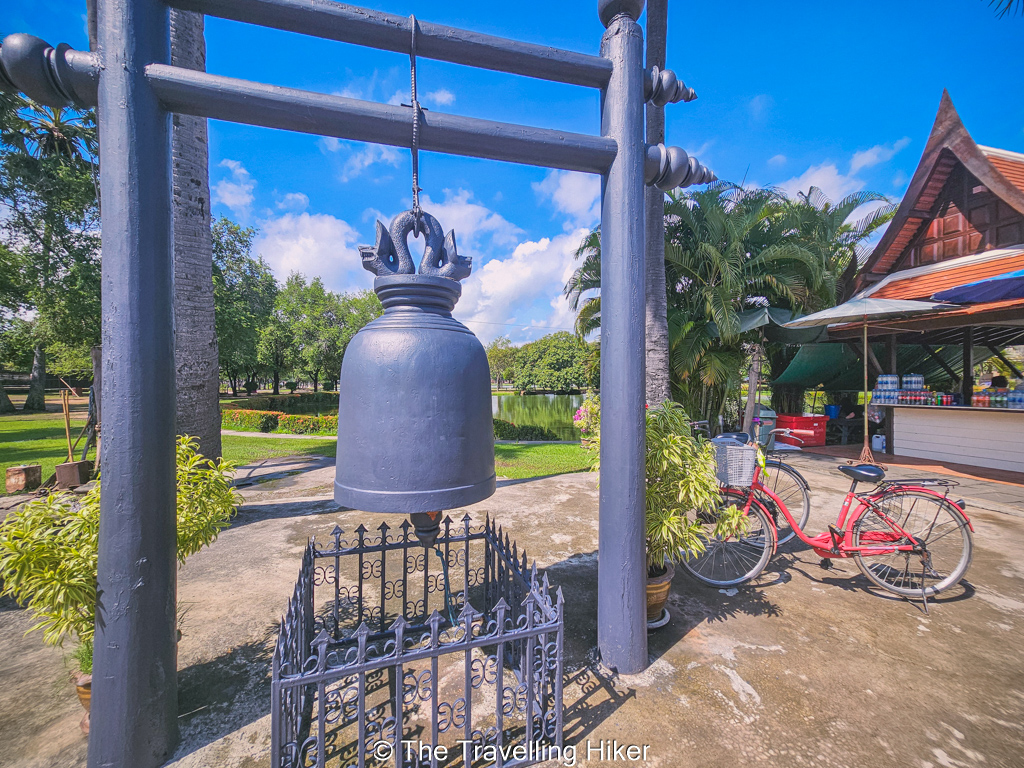
Next to it, you will also find The Bell of King Ramkhamhaeng, which was also built in his honor. The bell is supposed to symbolize happiness and it is believed that the Thailand will be peaceful as long as the bell chimes.
Monument to King Ramkhamhaeng the Great
The Bell of King Ramkhamhaeng
Wat Sorasak
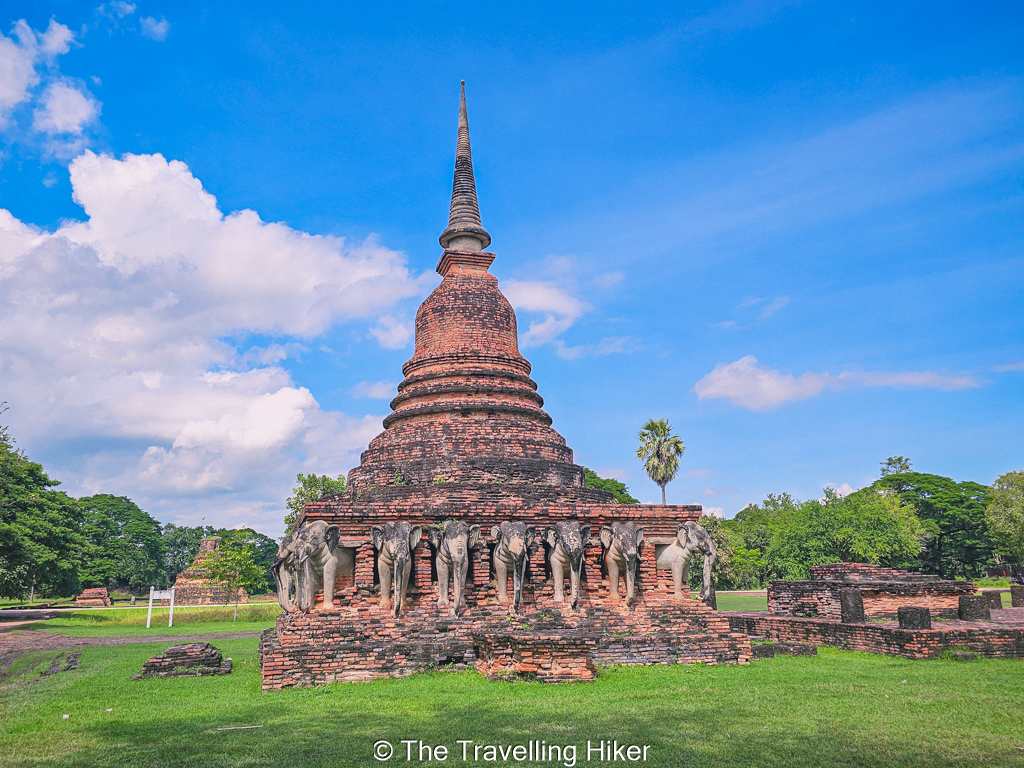
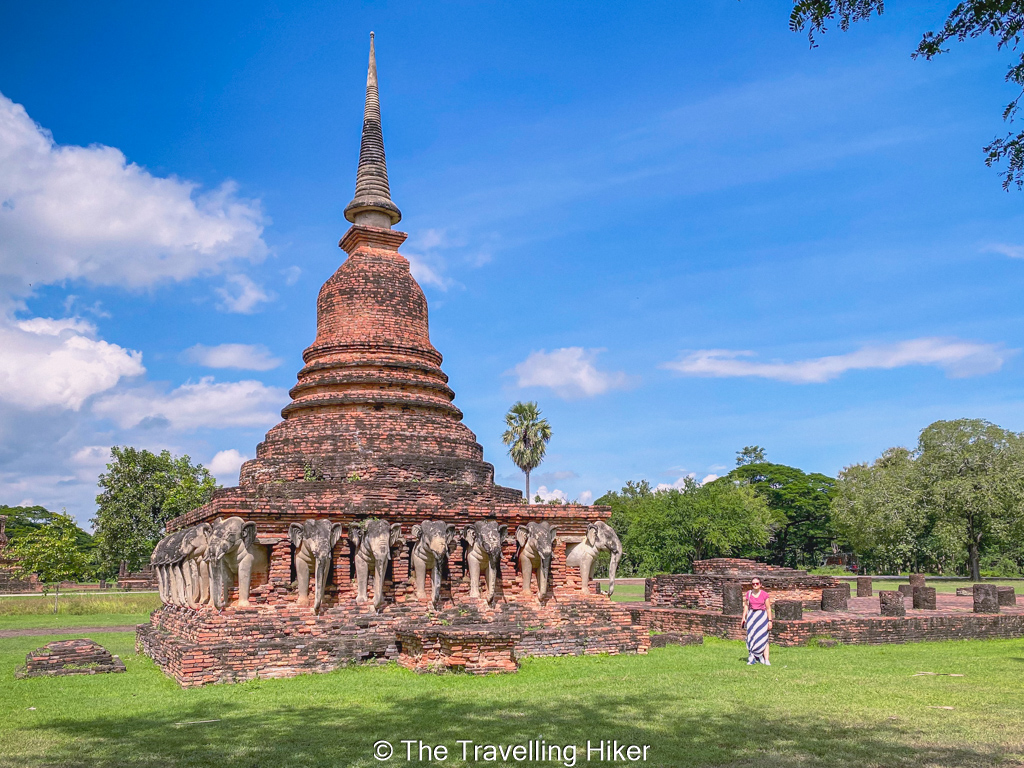
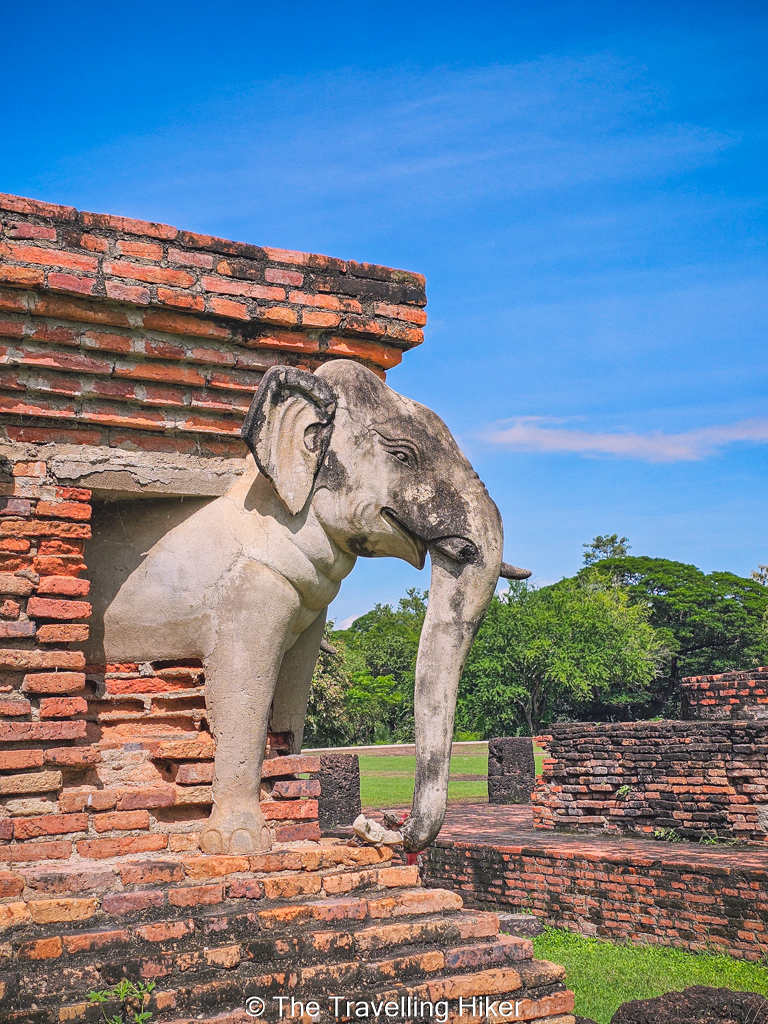
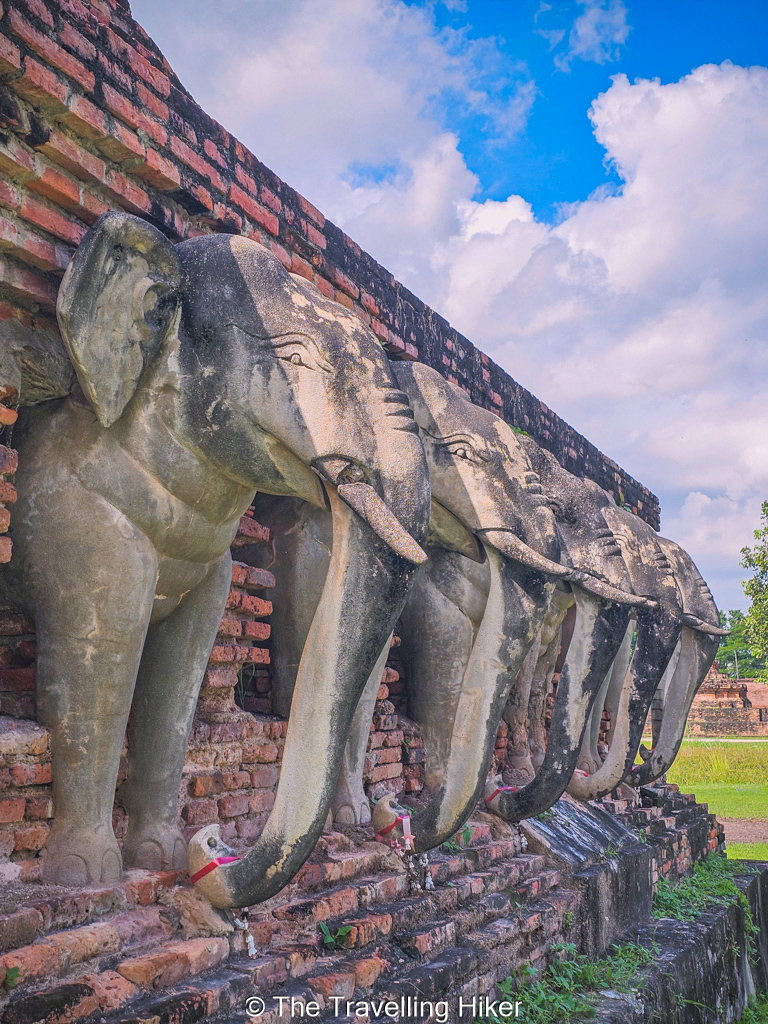
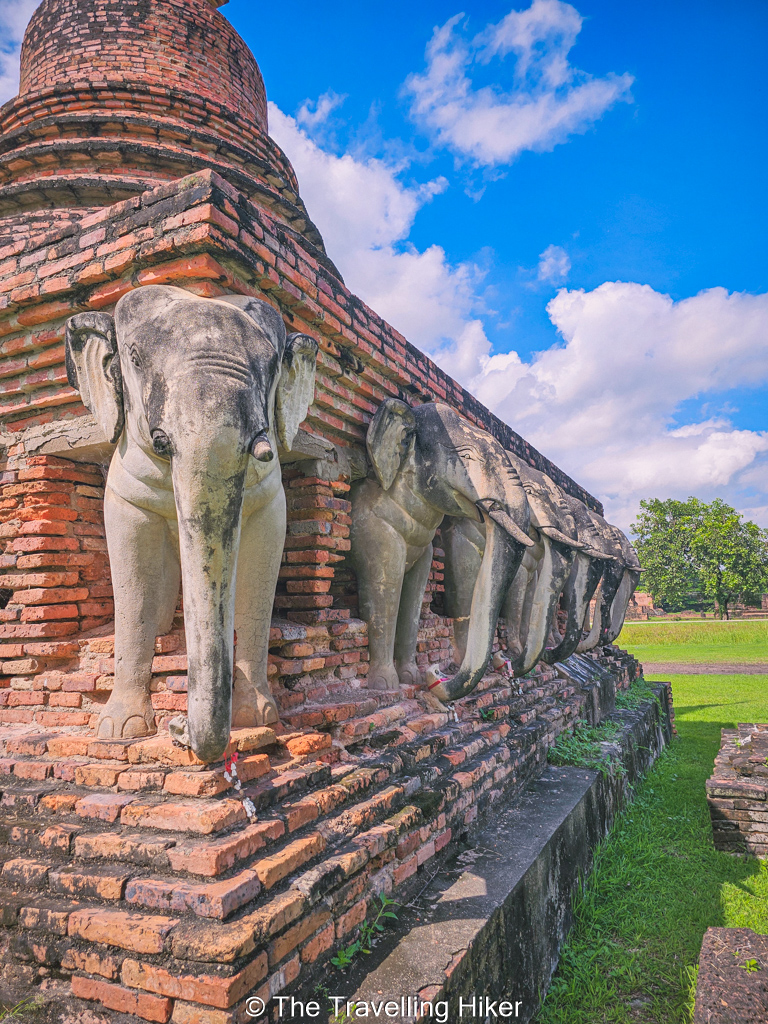
Our last stop within the central area of the park is Wat Sorasak. This temple is not as famous as the previous ones, but in my opinion it’s definitely worth a quick stop. The temple’s most distinctive feature is the bell-shaped stupa, which is supported by 24 beautifully carved elephant sculptures emerging from the base.
Some elephants have been damaged over time but it is still an impressive sight and it is a nice way to end our visit to the Central Zone of Sukhothai Historical Park.
Wat Sorasak with its beautiful elephants
Elephant Sculpture in Wat Sorasak
Details of the elephants
Another angle of the elephant statues
Historical Park Northern Section
The Northern Zone is home to one of the most iconic temples in all of Thailand.
Wat Phra Phai Luang
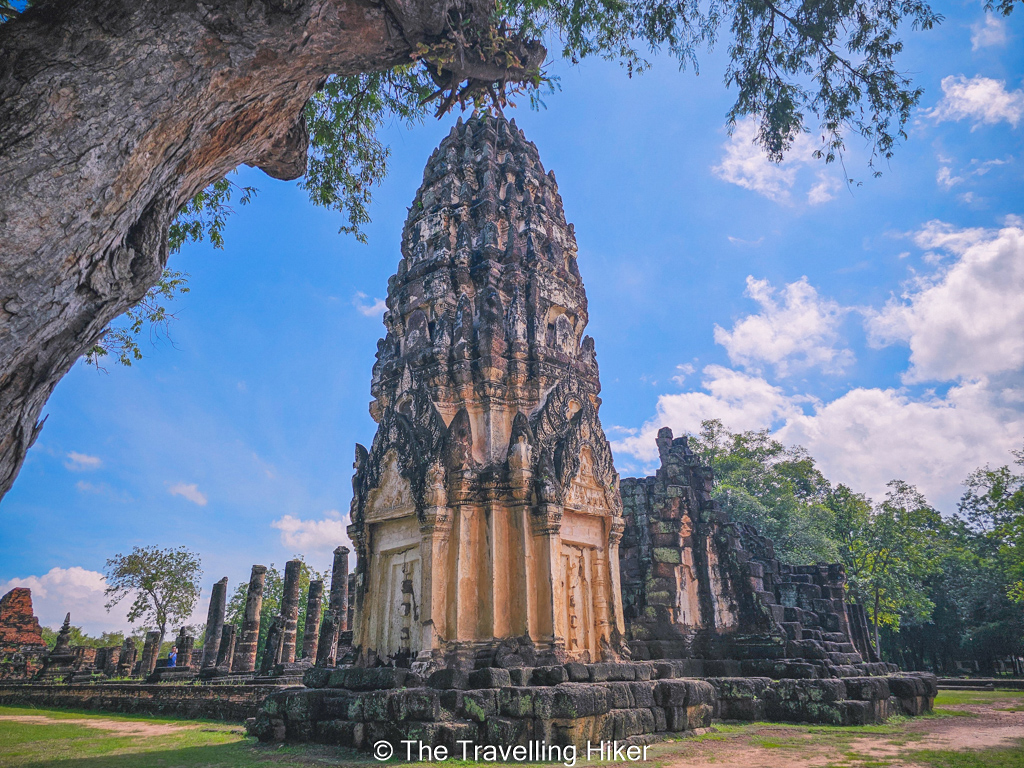
Wat Phra Phai Luang, is one of the oldest temples in Sukhothai Historical Park. Originally built during the Khmer period, the temple is best known for tis large prang, which reflects the Hindu architectural style that existed before the rise of the Sukhothai Kingdom.
Although only one of the original three prangs remains standing today, it’s an interesting reminder of the region’s Khmer heritage.
Remaining Prang in Wat Phra Phai Luang
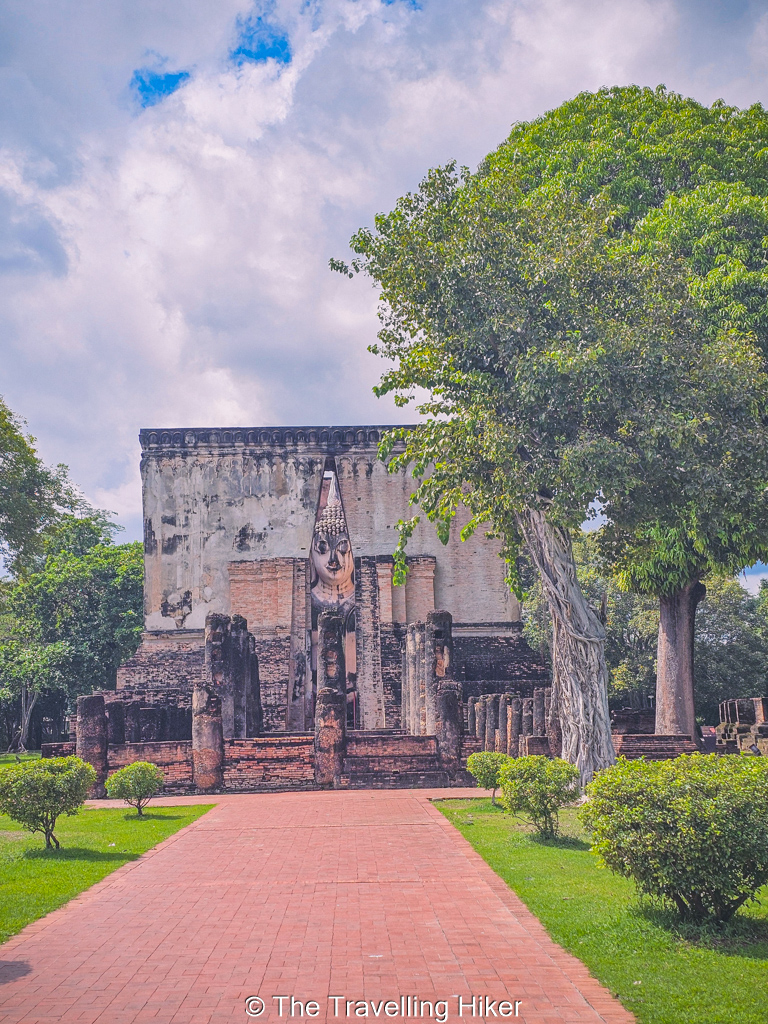
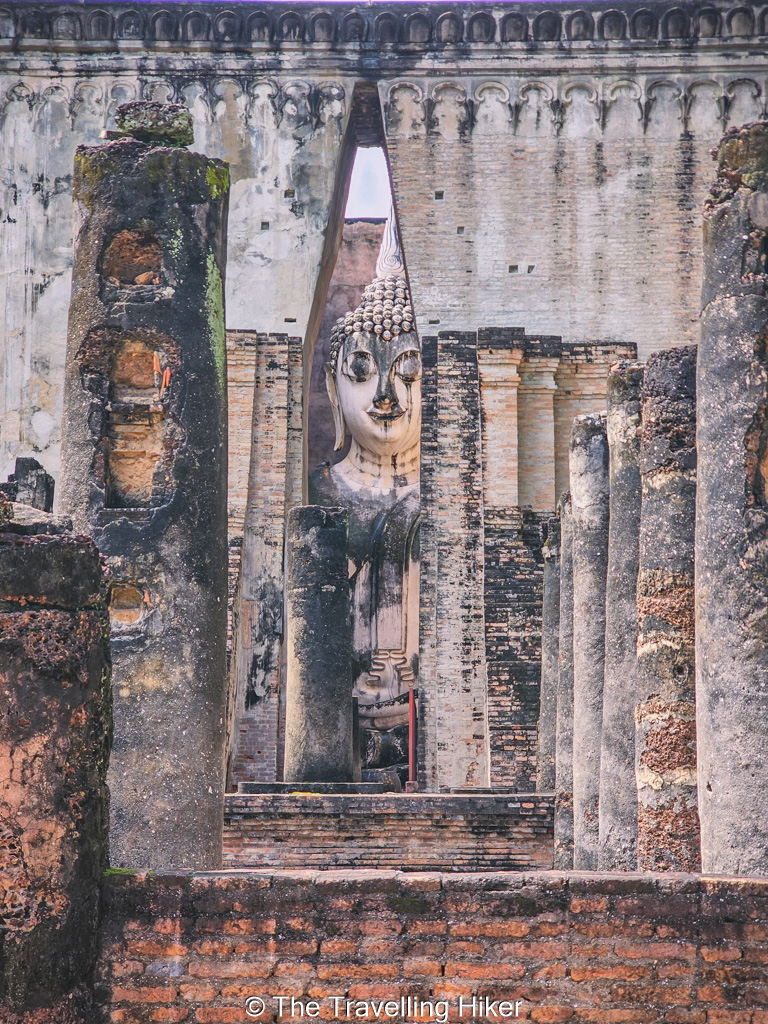
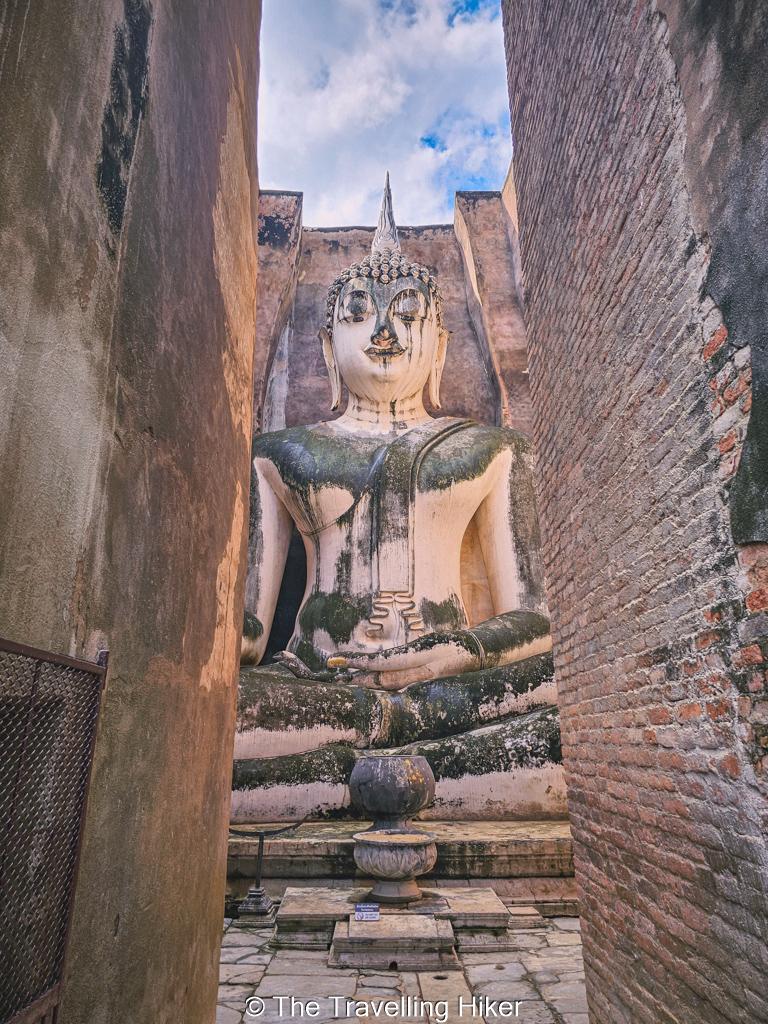
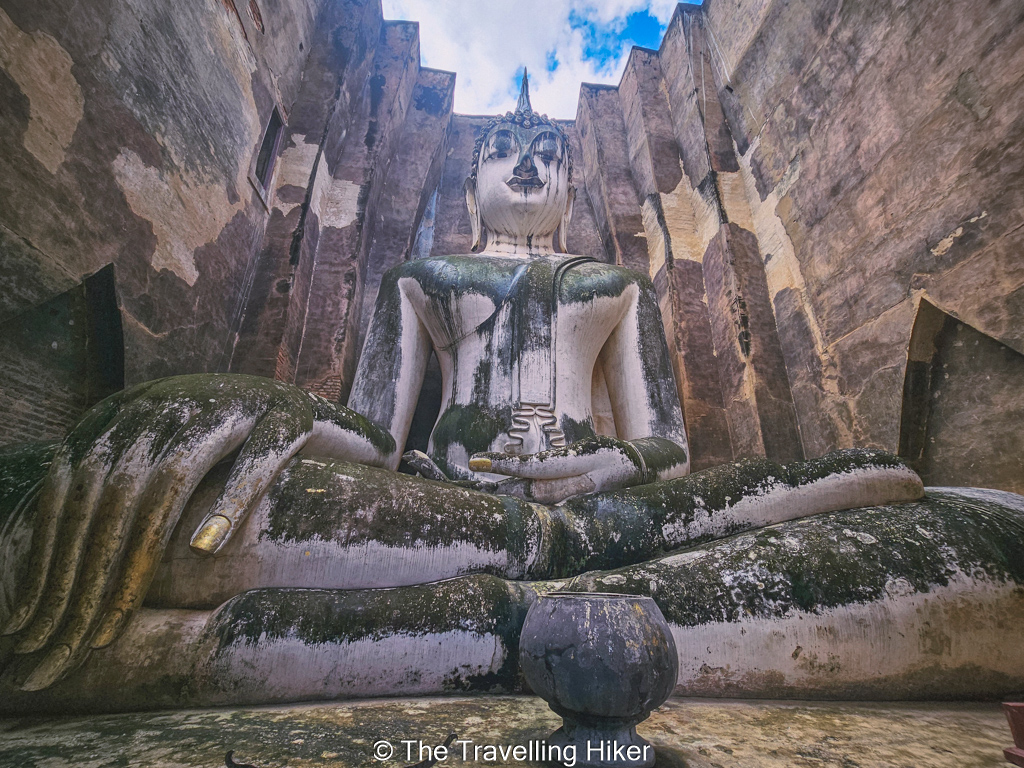
Wat Si Chum
If there is one temple you shouldn’t mis in Sukhothai, it’s Wat Si Chum.
The temple is famous for it massive square structure with a gigantic 15-meter-tall seated Buddha inside. It is really impressive, photos don’t make it justice. Take your time to enjoy the area and admire this beautiful Buddha.
Approaching the square structure
Close up of the seating Buddha inside
Entering the hall with the Buddha
Seating Buddha of Wat Si Chum
Historical Park Western Section
The Western Zone receives far fewer visitors than the Central and Northern areas but it is worth the extra effort if you enjoy quieter temples and scenic viewpoints.
Tip: When purchasing your ticket to the Western Zone, make sure to check the date stamped on your ticket. We bought the tickets exiting to this area while exiting the Central section and didn’t pay attetion to this. When we arrived at the checkpoint where you have to show your ticket, they didn’t want to let us through because of this and want to have us buy a second ticket. We had to argue for a long time with the person in the checkpoint (using Google translate of course because his English was not very good) and have him call this other person at the different checkpoint to confirm we had just bought it 10 minutes before. Now we just laugh about it, but we didn’t find it funny at all on that day.
Wat Saphan Hin
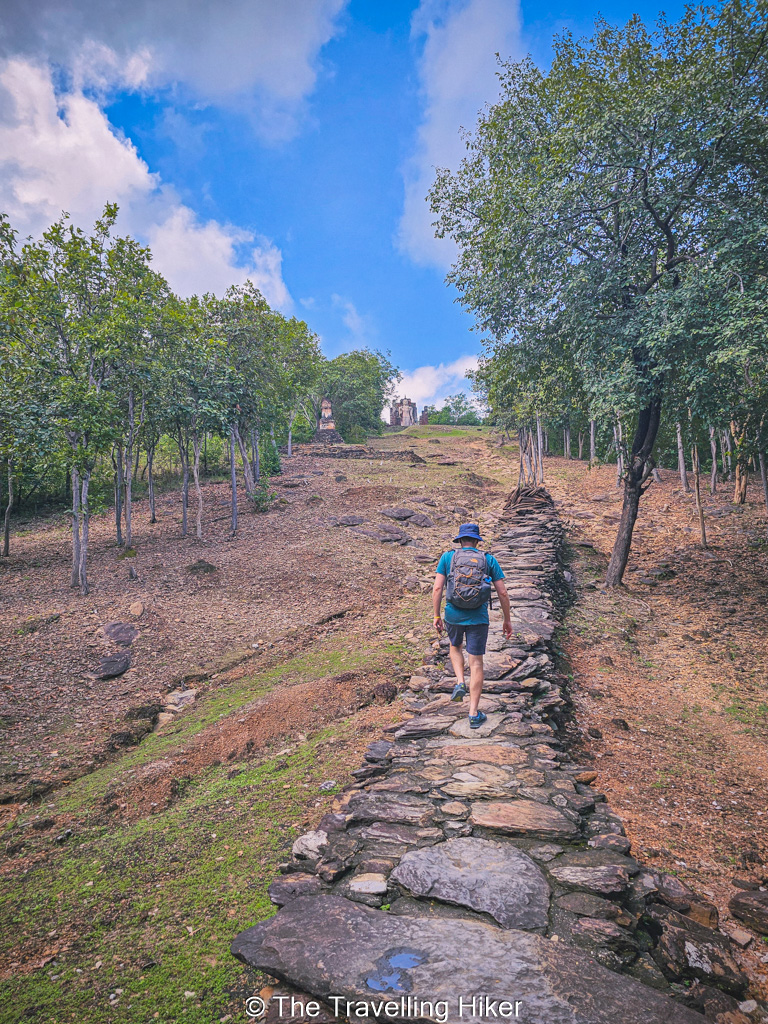
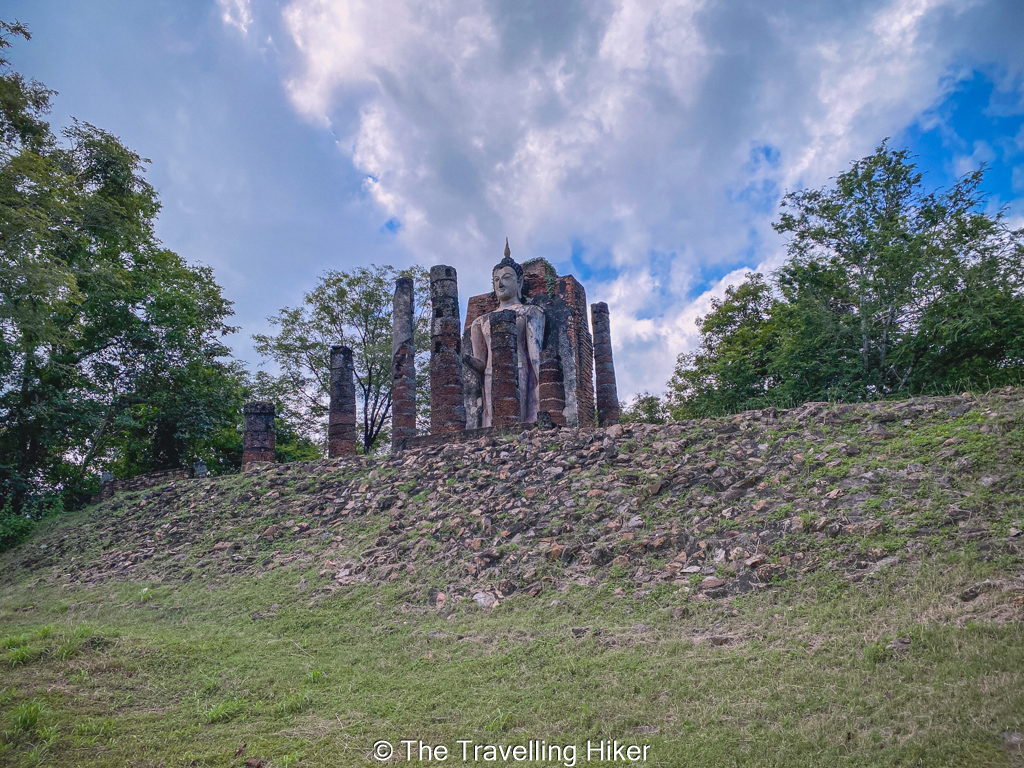
The most important temple in the Western section is Wat Saphan Hin. This temple is located on a small hill at 200 meters height overlooking the surrounding plains, so if you want to visit it, you will have to go on a short uphill walk. The uphill is not too difficult, especially if you’re used to hiking like we are, but the humidity and heat do make it a bit more challenging.
David walking up to Wat Sahan Hin
Amost at the top
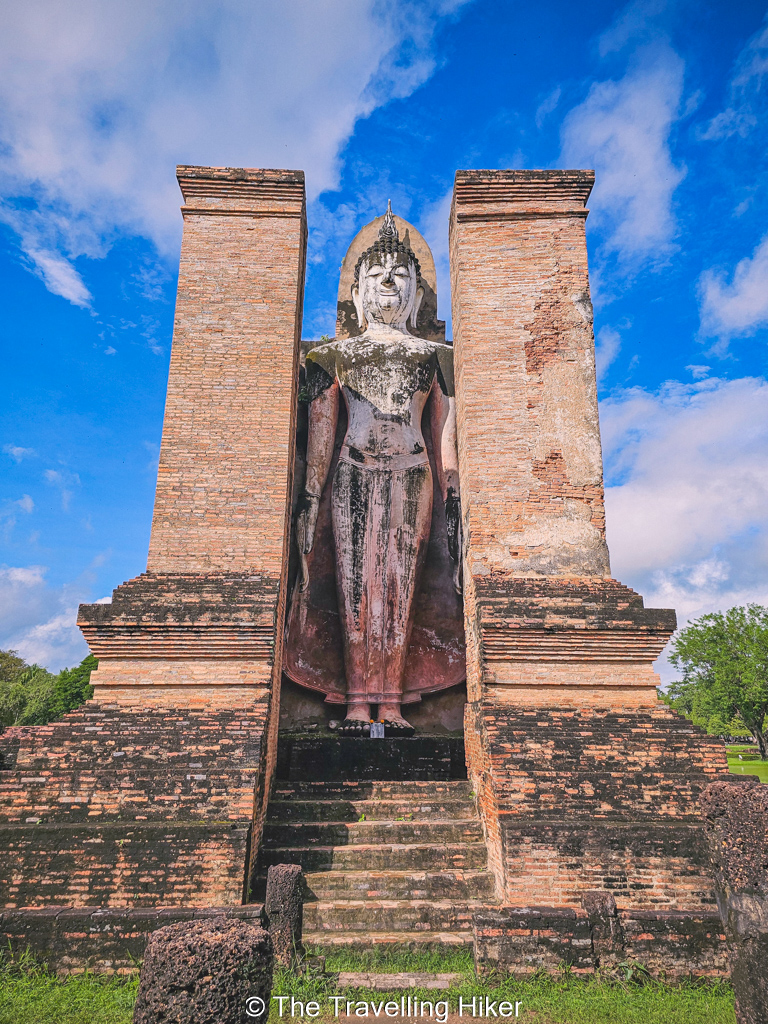
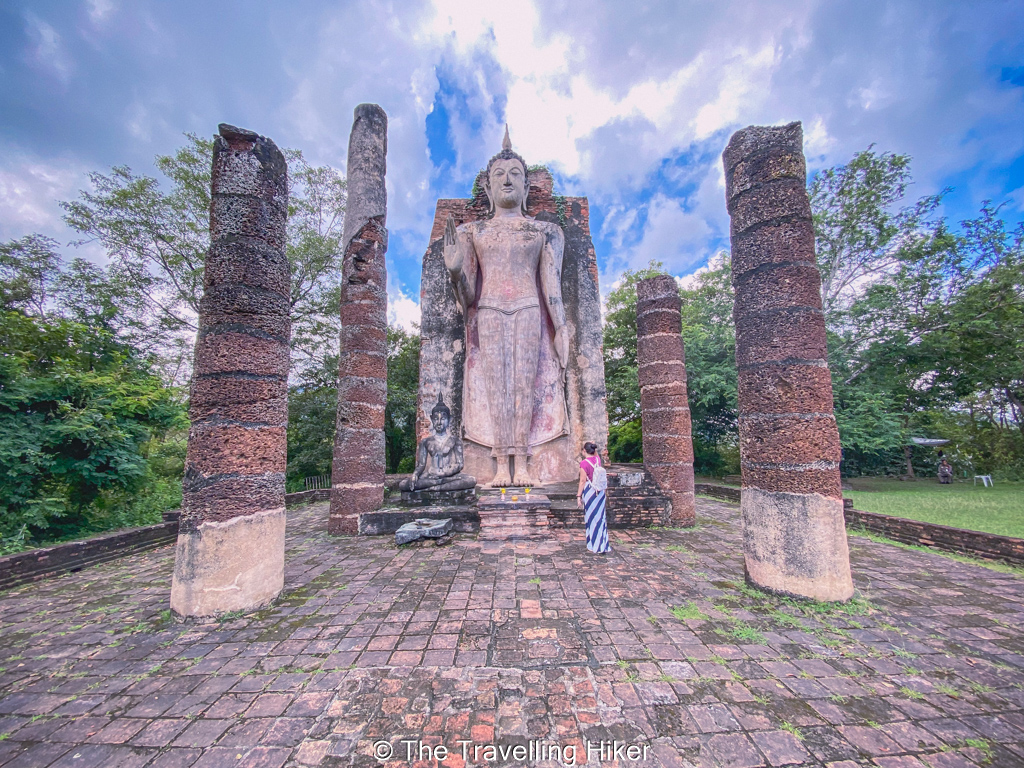
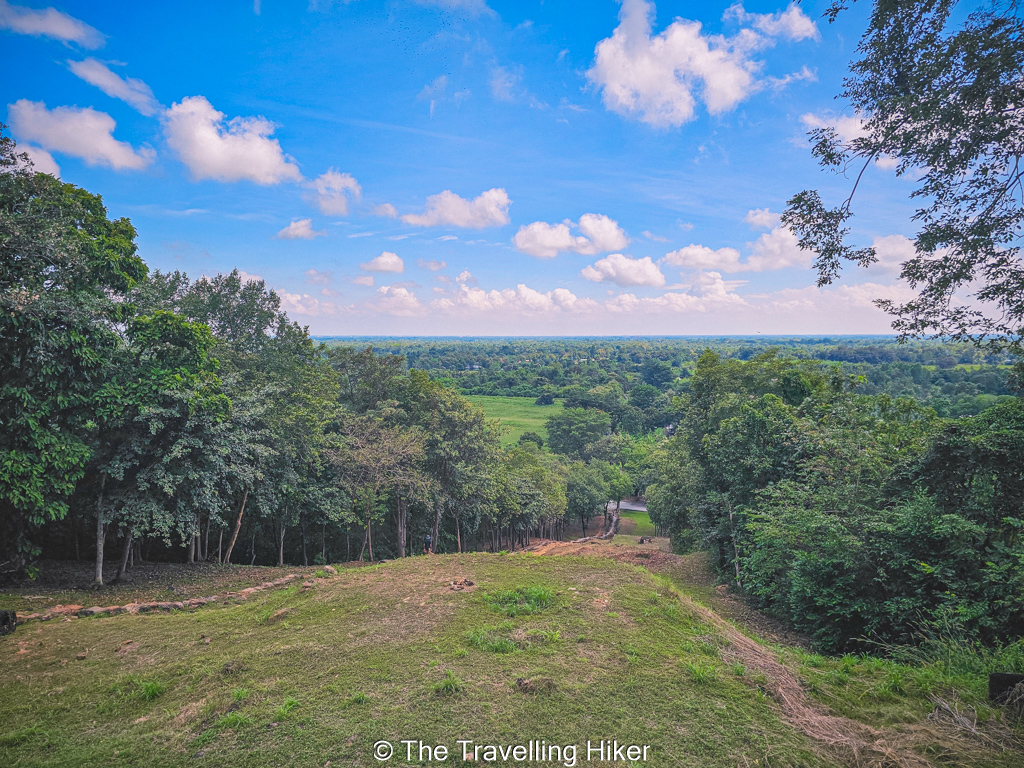
Once at the top, you will see a large standing Buddha in the position of giving pardon. This statue is impressive and it is worth the effort of walking uphill. If you turn around, you can also enjoy panoramic views of Sukhothai Historical Park.
Standing Buddha at Wat Saphan Hin
View from Wat Saphan Hin
MIDDAY: LUNCH AND COOL DOWN BY THE POOL
At this point, it is probably midday and the tropical heat is getting intense, so I recommend taking a break before continuing your day.
The best possible thing you can do is find a cool restaurant to have lunch, and if your hotel has a pool, head by to your hotel and relax and cool down next to it. Taking a couple of hours to recharge will make the afternoon much more enjoyable.
In our case, we had lunch in one of the restaurants near the entrance of Sukhothai Historical Park and then, we headed back to our hotel in New Sukhothai and chilled by the pool.
AFTERNOON: NEW SUKHOTHAI TOWN
While most visitors come to Sukhothai for its ancient ruins, New Sukhothai offers a glimpse into everyday life in the city. It’s much quieter than Thailand’s larger cities, but that’s exactly what makes it so charming.
Wat Ratcha Thani
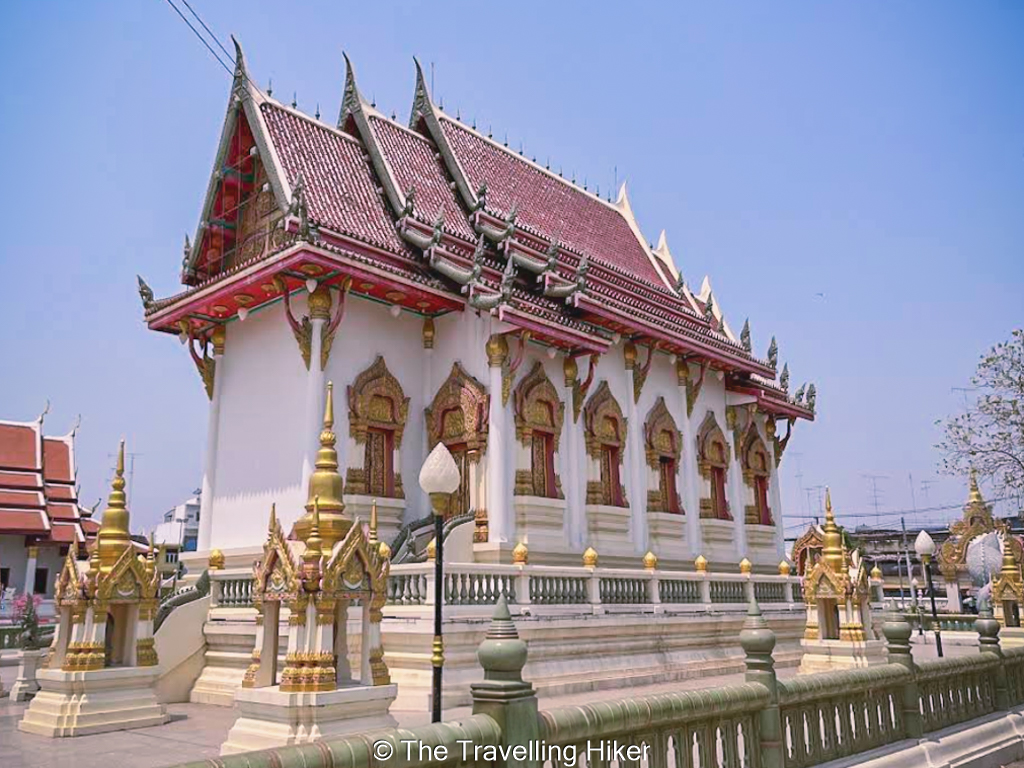
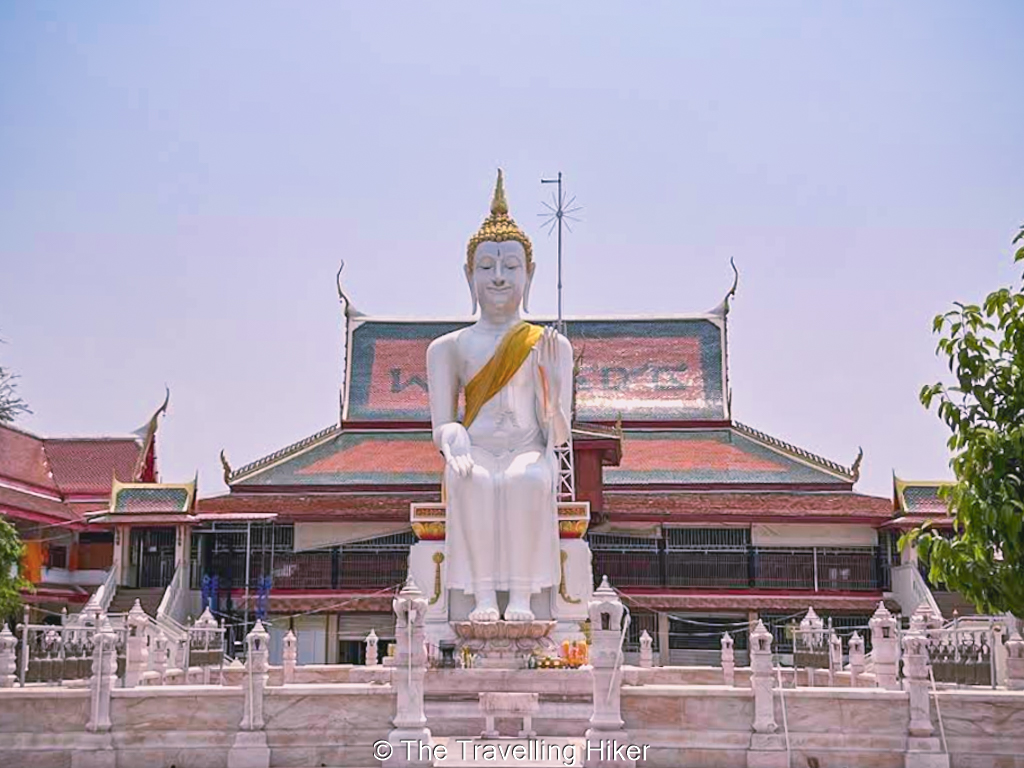
Wat Ratcha Thani is one of the most important temples in New Sukhothai and features a beautiful white halls with colourful roofs. Unlike the temples we visited in the morning, this one is an active place of worship, offering a completely different atmosphere.
One of the halls in Wat Racha Thani
Seating Buddha in Wat Ratcha Thani
Wat Thai Chumphon
Wat Thai Chumphon is another lovely temple worth visiting. It has paceful grounds and since it’s less visited by tourists, it feels much more local.
Stop at a Local Café
New Sukhothai has several cosy cafés that are perfect for escaping the heat. Whether you’re craving an iced Thai tea, or coffe with a sweet treat, it’s a great excuse to slow down for an hour.
We tried Maipradit Coffee and Bistro and were quite happy with our choice.
NIGHT: SUKHOTHAI NIGHT MARKET
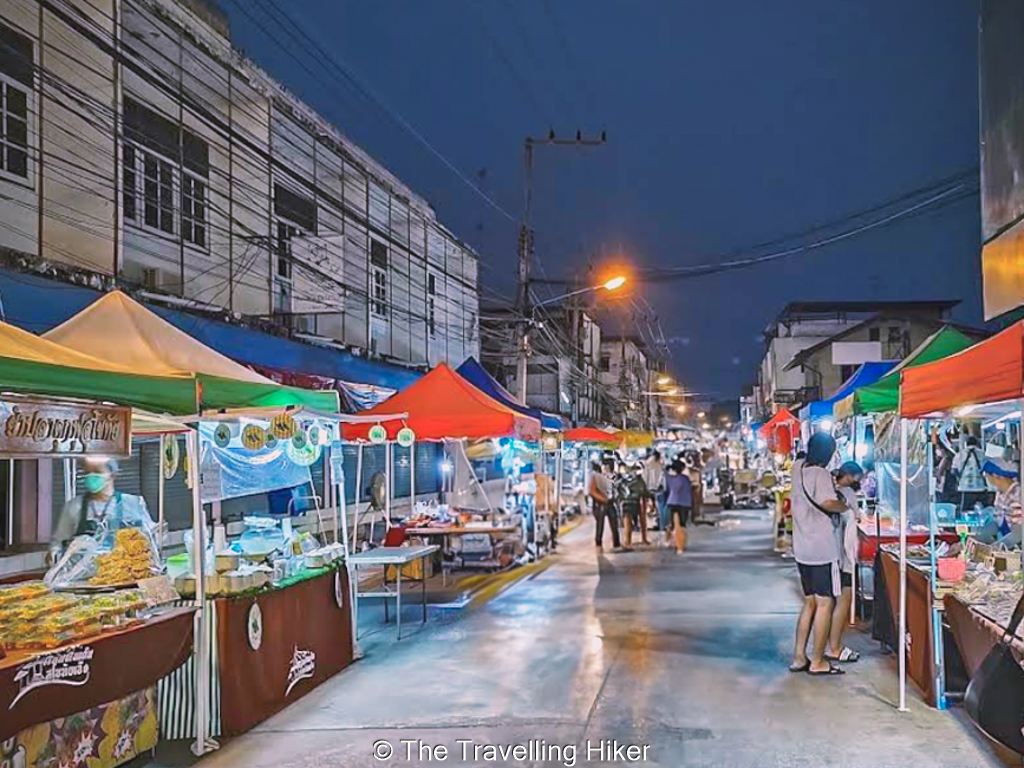
End your day at the Sukhothai Night Market, one of my favorite places in the new town.
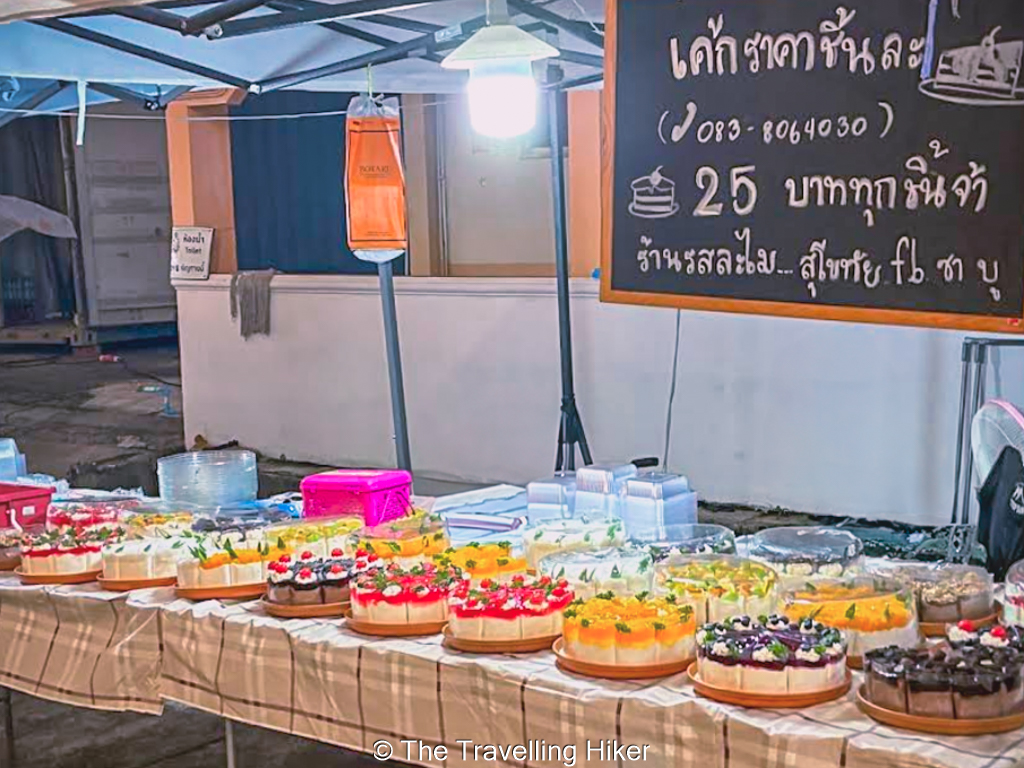
The market isn’t huge, but that’s part of its charm. You’ll find plenty of delicious local dishes, grilled meats, noodle soups, fresh fruit, and traditional Thai desserts at very affordable prices.
Good to know: This market is only open on Friday and Saturday night, so you’ll only be able to visit it if you’re in town in one of those days.
Sukhothai Night Market
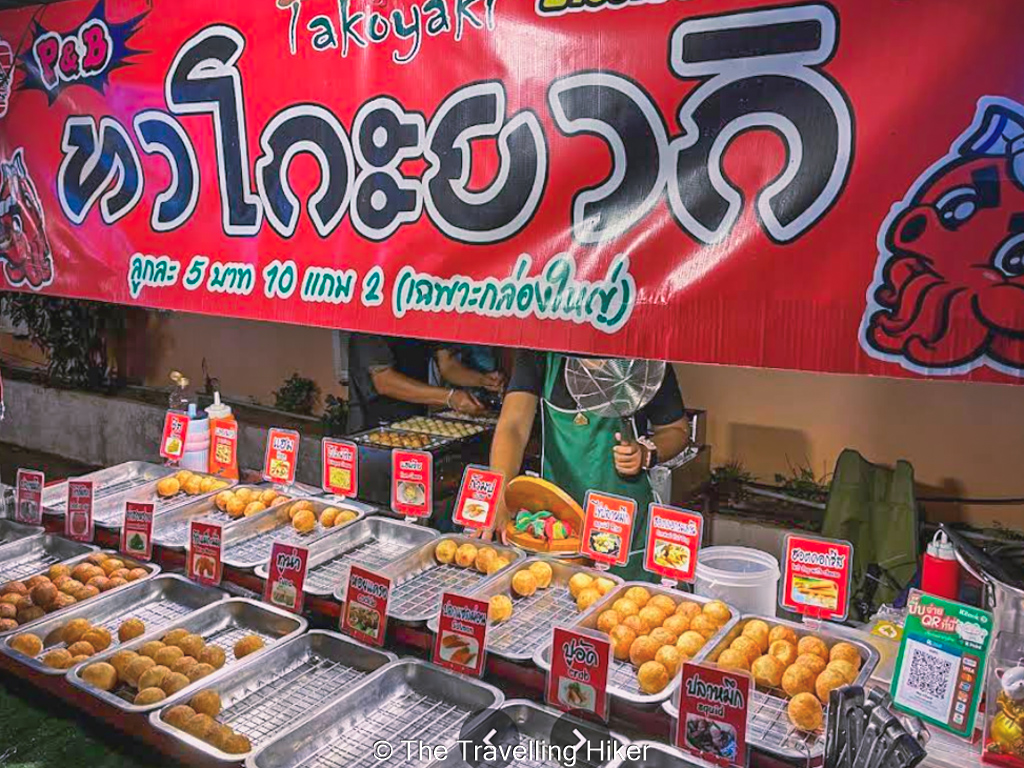
Takoyaki Stall
OTHER THINGS TO DO IN SUKHOTHAI
Do you have some extra time, or do you want to adapt our itinerary? Here are some other possibilities that we didn’t do, but that are also possible at Sukhothai.
Visit more in detail every section of the Historical Park. We mainly focused on the most important and interesting temples but if you want, it is possible to spend a complete day exploring the park.
Visit Ramkhamhaeng National Museum. If you want to learn a bit more about the history of Sukhothai, you should visit Ramkhamhaeng National Museum. It is also a good activity to do during the most warm hours of the day, since it has air conditioning. Tickets to visit the museum cost 150 THB (price in 2026) and it is open between 9:00 and 16:00.
Go on a day trip to the nearby city Phitsanulok. It is located just one hour away from Sukhothai by bus and it has a lot of interesting temples to visit.
WHERE TO STAY IN SUKHOTHAI: OLD TOWN VS. NEW TOWN?
When booking your accommodation in Sukhothai, you’ll have to decide whether you want to stay in Old Sukhothai or New Sukhothai. I’ve actually stayed in both, since I have visited this town twice and each has its own advantages depending on your travel style.
Personally, if you’re only staying one night in town, I would recommend staying at New Sukhothai. Old Sukhothai is just a short ride away and, you will be able to explore the new town during the evening.
STAYING IN OLD SUKHOTHAI
Old Sukhothai is the best option if you want to be as close as possible to the Historical Park. Most hotels are within walking or cycling distance of the main entrance, allowing you to arrive early before the tour groups and the midday heat. The downside is that there are only a handful of restaurants, cafés, and small shops catering mainly to visitors.
Ruean Thai Hotel
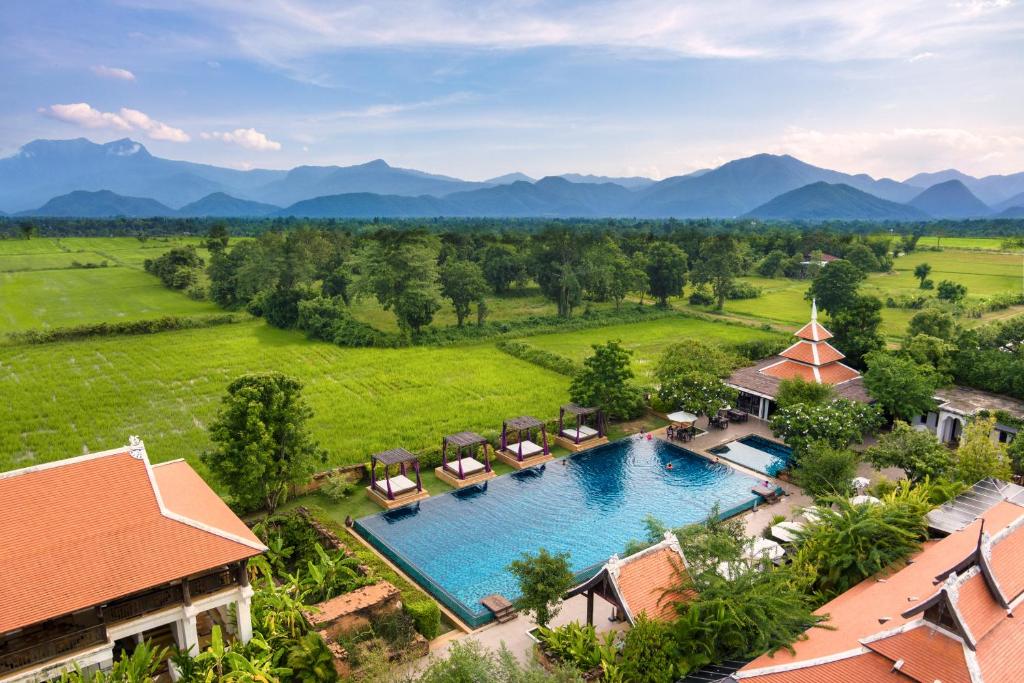
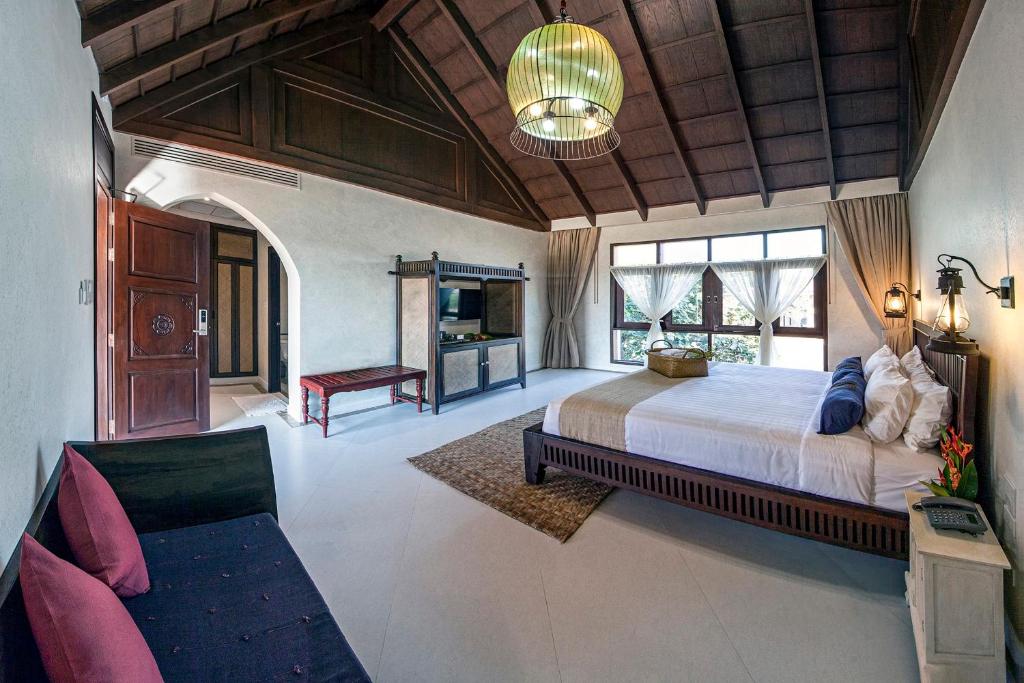
During my first visit to Sukhothai, I stayed at Sriwilai Resort & Spa, and it was really comfortable. The hotel is just a few minutes from the historical park and features spacious rooms, beautiful rice fiels views, an outdoor swimming pool and an excellent restaurant. The staff was super friendly and helpful.
New Sukhothai is about 12 km from the historical park and is where most locals live. It’s the better choice if you enjoy being close to restaurants, cafés, markets, and public transport. Accommodation here is generally a little more affordable.
Foresto Sukhothai Guesthome
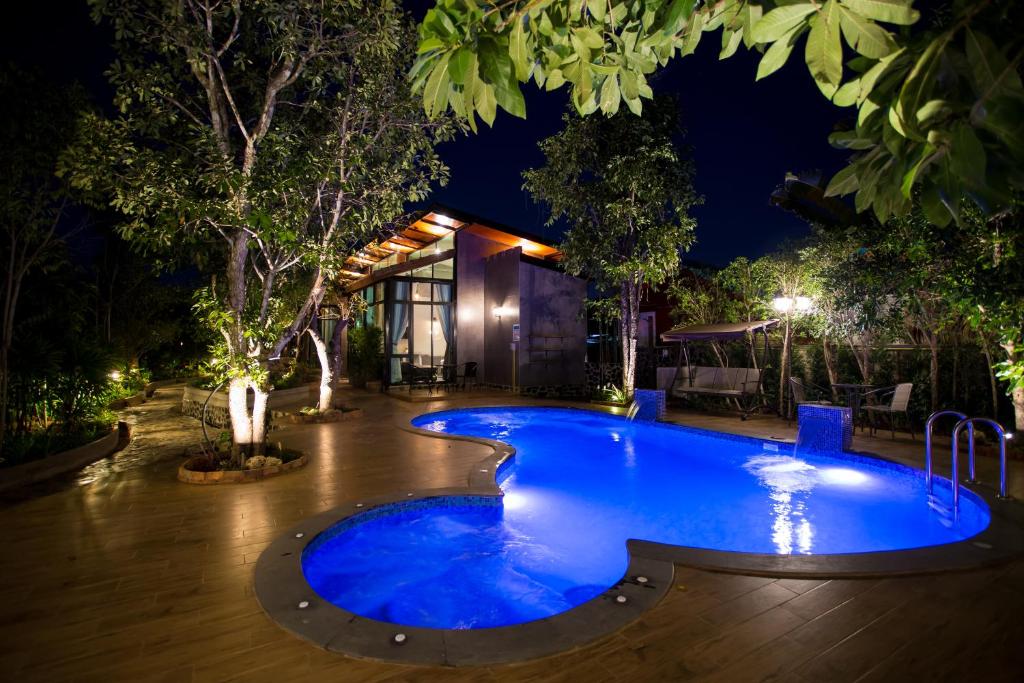
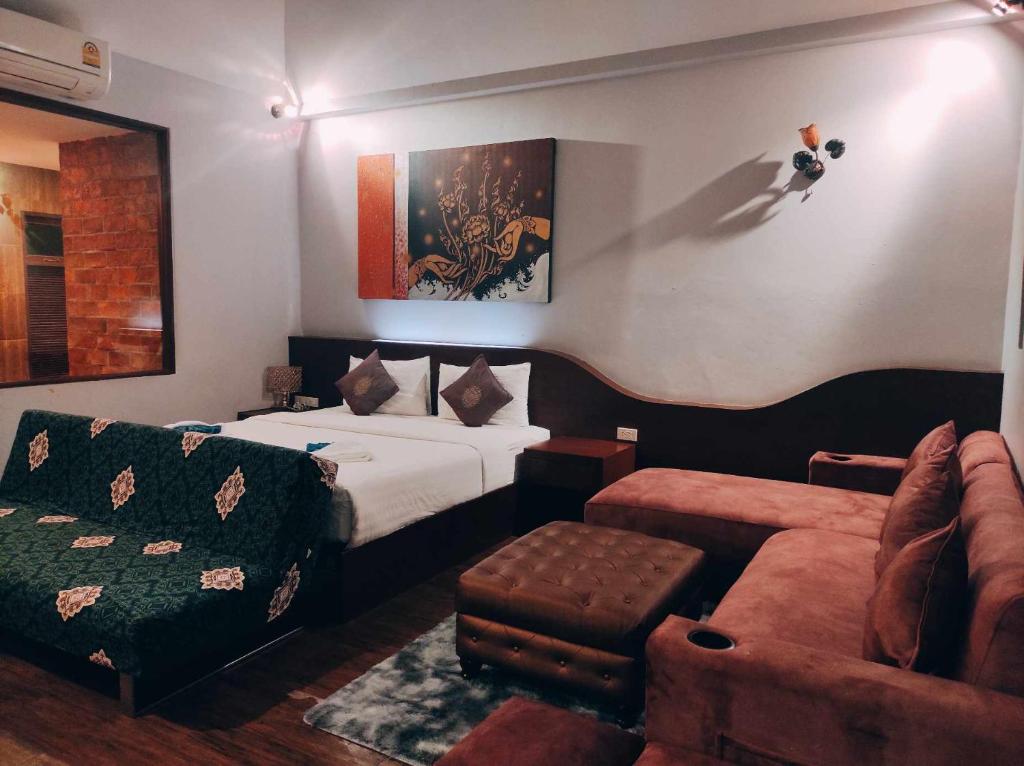
During my second visit to Sukhothai, I spent a night at Foresto Sukhothai Guesthome, and I really enjoyed my stay. The rooms are spacious, the gardens are beautiful, and the swimming pool was exactly what I needed after spending the morning exploring the historical park in the tropical heat. It’s also within walking distance of the night market and several excellent local restaurants.
Yes! One day is enough to visit the highlights of Sukhothai Historical Park and spend some time exploring New Sukhothai afterwards. I followed this exact itinerary and never felt rushed.
IS SUKHOTHAI HISTORICAL PARK WORTH VISITING?
Absolutely! I think it is one of the most underrated destinations in Thailand. The ancient temples are incredibly well preserved, the park is easy to explore by bicycle, and it’s really peaceful.
WHAT'S THE BEST WAY TO EXPLORE SUKHOTHAI HISTORICAL PARK?
Without a doubt, by bicycle. The park is mostly flat, the roads are well maintained, and cycling allows you to visit much more than you could do on foot. Bike rentals are inexpensive and available right outside the historical park.
SHOULD i STAY IN OLD OR NEW SUKHOTHAI?
It depends on the type of trip you’re planning. If your main priority is visiting Sukhothai Historical Park, staying in Old Sukhothai puts you minutes away from the entrance. If you’d rather have more restaurant options, cafés, and the night market within walking distance, New Sukhothai is the better choice.
CAN YOU VISIT SUKHOTHAI AS A DAY TRIP FROM BANGKOK OR CHIANG MAI?
No, the travel distance from these cities to Sukhothai is way too long for a day trip. However, Sukhothai does make for the perfect stop between your trip from Bangkok to Chiang Mai or vice versa.
MAP WITH ALL LOCATIONS
HOW TO USE THIS MAP: Click the star next to the map title to add this map to your google maps account. To view it on your phone while traveling, open Google Maps, click on the menu button and go to “Your Places”, click on Maps and you’ll see this map in your list.
FINAL THOUGHTS
Sukhothai may not receive as much attention as Bangkok, Chiang Mai, or even Ayutthaya, but that is exactly what makes it so special. Exploring centuries-old temples by bicycle, wandering through peaceful ruins, and ending the day with delicious street food at the local night market made this one of my favorite stops in Thailand.
If you’re traveling between Bangkok and Chiang Mai, I highly recommend spending at least one day in Sukhothai. It’s the perfect opportunity to slow down, learn more about Thailand’s history, and experience a destination that stills feels authentic and uncrowded.
I hope this Sukhothai Guide has inspired you to add this incredible destination to your Thailand itinerary. If you have any questions or would like to share you own experience, feel free to leave a comment below.