PLANNING A TRIP TO THE DOLOMITES: EVERYTHING YOU NEED TO KNOW
May 25, 2026
Planning a trip to the Dolomites can feel overwhelming at first. I know it did for me. We are constantly seeing all these dreamy photos and videos on social networks and the only thing that is clear is that you want to see them too. But where do you start? Some places have become so popular that require reservations in advance if you want to visit them too. Trust me when I say, that if you want to visit the Dolomites, a good planning will make all the difference.
The Dolomites are one of the most beautiful mountain destinations in Europe, but they are also much larger and more spread otu than many people expect. Distances between valleys can be significant, weather conditions change quickly, and choosing the wrong base can easily lead to unnecessary driving every day.
This guide covers everything you need to know before visiting the Dolomites. From choosing the best time to visit and deciding where to saty, to transportation tips, hiking advice, budgeting, and itinerary ideas. This is the complete Dolomites travel planning guide I wish I had before my first trip.
TABLE OF CONTENTS
DISCLAIMER: Did you know? This blog uses affiliate partnerships. When you click and book or make a purchase through one of my blog posts, I may receive a small commission (at no extra cost to you). Thank you for supporting The Travelling Hiker!
WHAT ARE THE DOLOMITES & WHERE ARE THEY LOCATED?
The Dolomites are one of the most spectacular mountain regions in Europe, known for dramatic limestones peaks, alpine meadows, and scenic mountain passes. It is considered one of the most beautiful mountain destinations in the world.
This UNESCO World Heritage area stretches across northeastern Italy and covers a large terroritory. Geographically, you can divide the Dolomites into three main regions.
Trentino – South Tyrol, located in the north, including famous areas like Val Gardena and Alpe di Siusi.
Veneto in the east, home to well known destinations such as Cortina d’Ampezzo and the famous Tre Cime di Lavaredo.
Friuli – Venezia – Giulia in the far east, which is quieter and less visited.
In this blog I will focus on the Trentino – South Tyrol and Veneto regions, which are the most famous regions and the ones I visited.
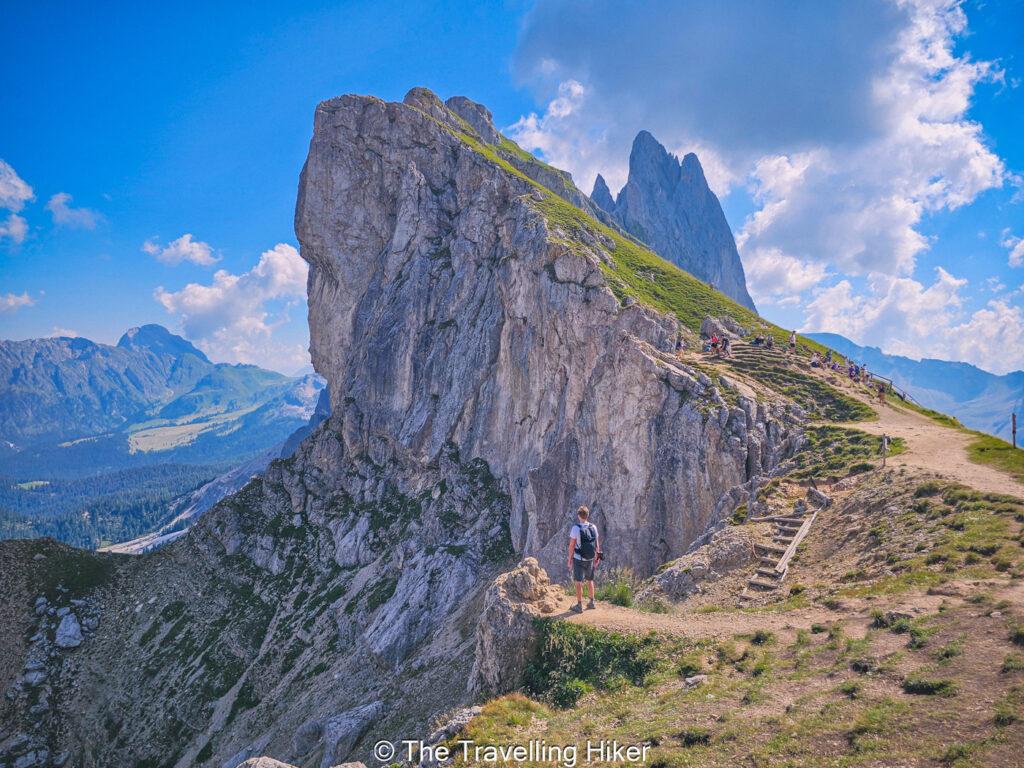
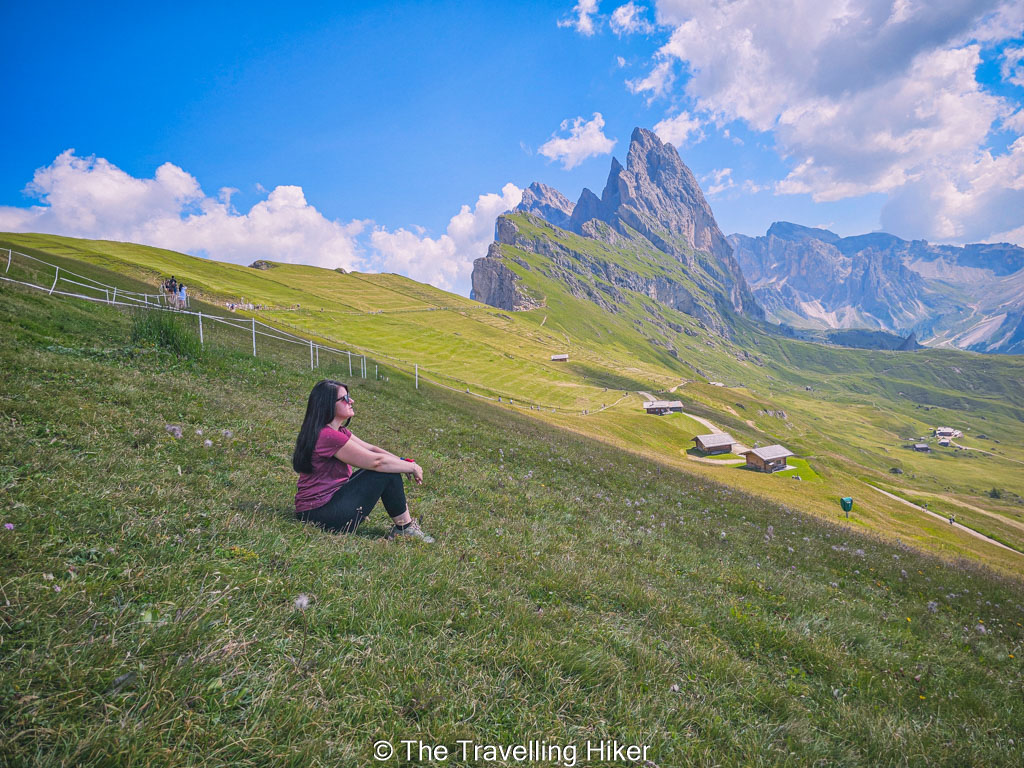
Seceda Ridge
WHEN IS THE BEST TIME TO VISIT THE DOLOMITES?
The best time to visit the Dolomites is during hiking season, which usually stretches between late spring and early autumn. Of course, it is also possible to visit the Dolomites during the winter months but most hiking trails will be closed and covered in snow. People who visit the Dolomites during the winter, do it mostly to ski.
Since this blog is oriented to hiking in the Dolomites, I will focus all my recommendations to visit this stunning region when it is possible to hike.
VISITING THE DOLOMITES IN THE SUMMER
Summer is by far the most popular time to visit the Dolomties, especially if you want to go hiking. Most trails are fully accessible from late June through September, mountain huts are open, cable cars operate daily, and the weather is generally stable. Just remember sunny days are not always guaranteed in the mountains.
So far, I have visited the Dolomites twice during the summer. The first time, despite it being August we got so much rain, that we decided to change our travel plans and head to Croatia. The second time around, we got amazing weather throughout our stay with just one day that it was very clouded.
Unfortunately summer months are also the busiest months. Popular hikes like Tre Cime di Lavaredo, Lago di Sorapis, Seceda get extremely crowded by mid-morning. But you should not let this stop you, if you can only visit the Dolomites during July and August. I visited during August and yes, it was crowded, but still had an amazing time. And all of my blogs are full with super helpful tips that will make you have a fantastic time.
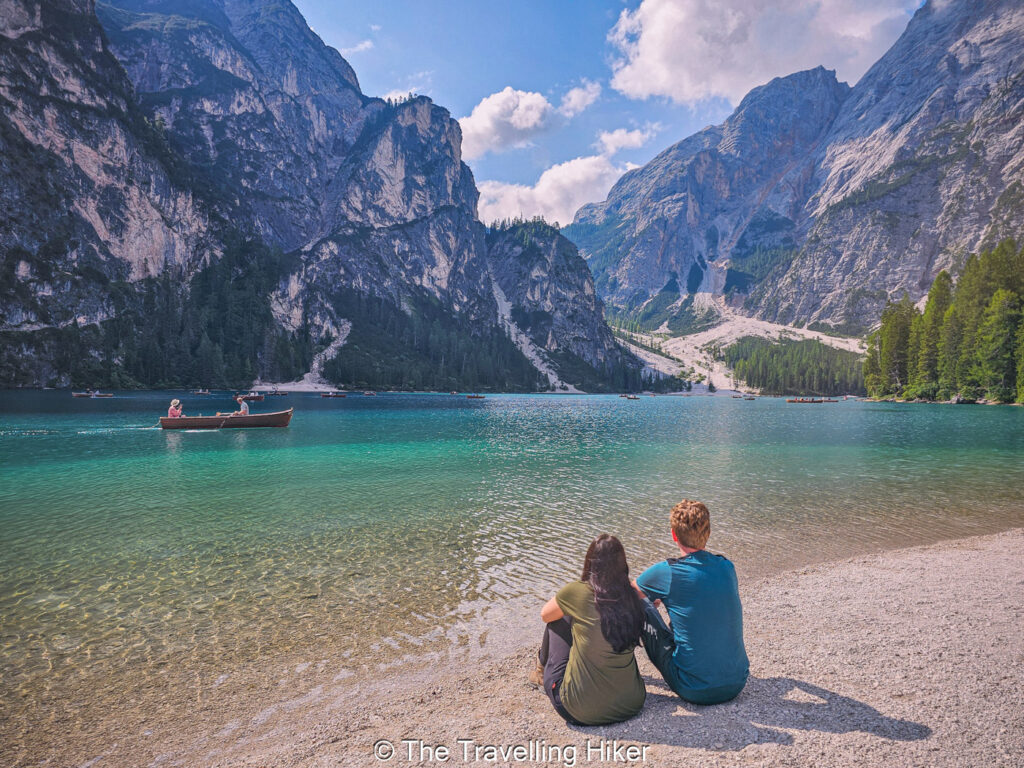
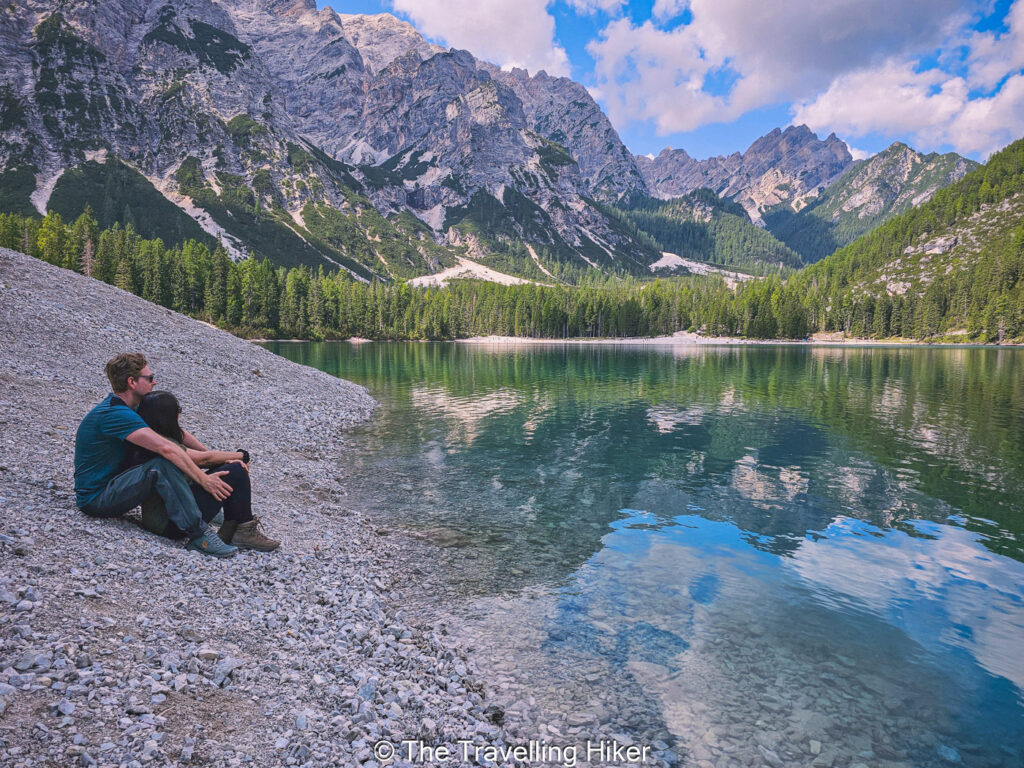
Lago di Braies in the summer
VISITING THE DOLOMITES DURING FALL
Fall is one of the most underrated times to visit the Dolomites. The summer crowds begin to disappear, temperatures become cooler, and the landscapes start changing into beautiful autumn colors.
For hiking, early fall can be an amazing time to visit. September usually still offers excellent trail conditions, and many mountain huts (rifugios) and cable cars remain open until late September or early October depending on the area or weather conditions.
The main thing to keep in mind is that weather conditions become less predictable later in the season. If hiking is your priority, September is generally the safest option for a fall trip.
VISITING THE DOLOMITES IN SPRING
Spring is probably the trickiest season for hiking in the Dolomites. While lower valleys start becoming green again, snow often remains on many higher elevation trails well into June. A lot of rifugios, cable cars, and mountain roads are also closed during early spring, especially in April and May.
That said, spring can still be a beautiful time to visit if you mainly want to enjoy quieter villages, scenic drives, and lower elevation walks. You’ll just have to be a bit more flexible with your itinerary.
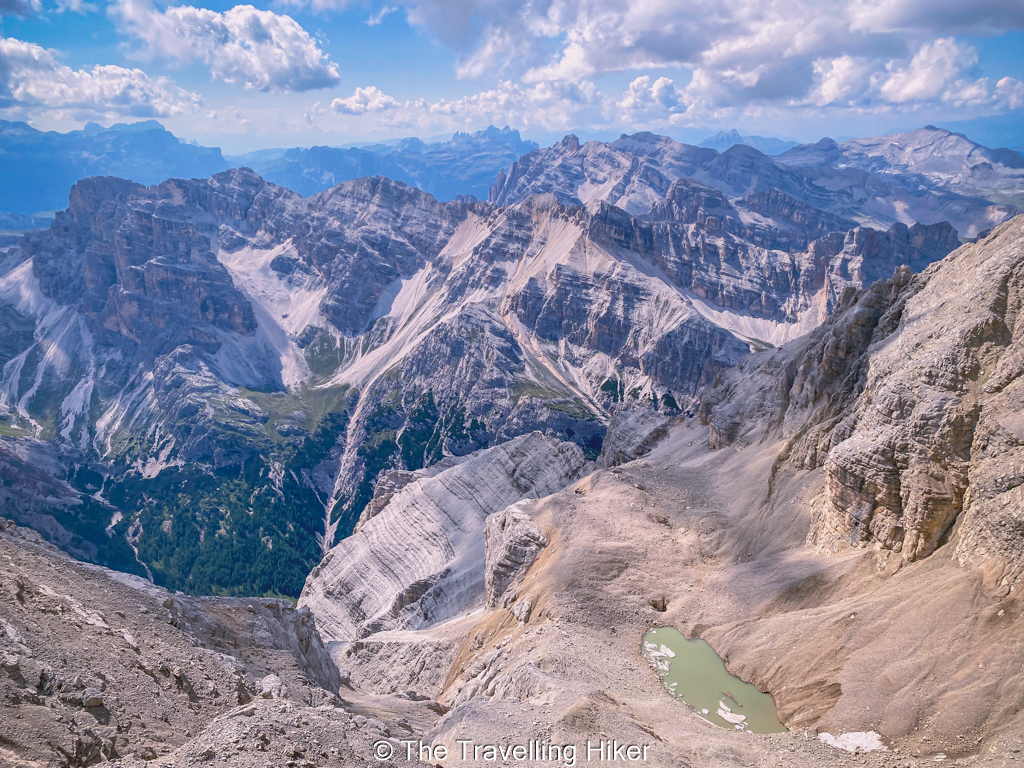
View from Cima Tofana
HOW TO GET TO THE DOLOMITES?
Now that you have figured out when to visit the Dolomites, it is time to start planning your transportation. In particular, how are you going to get to the Dolomites?
Getting to the Dolomties is fairly straightforward, but planning your transportation properly is one of the most important parts of organizing your trip. Most people choose to fly to one of the nearest airports and once there, rent a car to continue. However, since the Dolomites cover a large area in northern Italy, the best airport and route will depend on which valleys you plan to visit and whether you want to travel by car or public transport through the region.
FLYING TO THE DOLOMITES
The Dolomites do not have a major airport directly inside the mountains, so most travelers fly into nearby cities and continue by car or public transport. The closest and most commonly used airports are Venice, Verona, Innsbruck, Milan, and Munich.
Venice is usually the best overall option for international travelers and first-time visitors. It offers a large number of flight connections and provides relatively easy access to areas like Cortina d’Ampezzo and Val Gardena. Innsbruck is another excellent option if you’re visiting the northern Dolomites, although flight options are often more limited.
From these airports, driving times will vary depending on your origin and end destination, but you should expect something between 2 and 4 hours.
Find out which airport is best to fly to and book your flights with Skyscanner.
HOW TO MOVE AROUND THE DOLOMITES?
Personally, I think renting a car gives you by far the best experience in the Dolomites, especially if, like us, you enjoy hiking. Having your own vehicle makes it much easier to reach trailheads early in the morning, enjoy driving through scenic mountain passes, and stay flexible with changing weather conditions.
Driving in the Dolomites is generally very manageable, and most roads are well-maintained. However, I would recommend some experience driving mountain roads. Let’s face it, at some point or another, you’re going to cross a van or a bus at a narrow and sharp turn. If you have never driven these roads, these situations can get a bit stressful.
One of the most important things to be aware of is driving times. Even the shortest drive can take longer than you expect. Roads are not straight in the Dolomites; they are full of turns, and you will have to constantly brake, which will increase your driving times. Avoid overly ambitious driving days between multiple valleys.
Another important thing to keep in mind is timing. During summer, parking areas fill up extremely early, sometimes before sunrise. Starting your day early will help with parking and traffic.
Finally, always remember that weather conditions can change quickly in the mountains. Fog, rain, and storms can reduce visibility fast, especially on higher mountain passes. I recommend keeping your itinerary flexible based on weather conditions. You don’t want to take unnecessary risks.
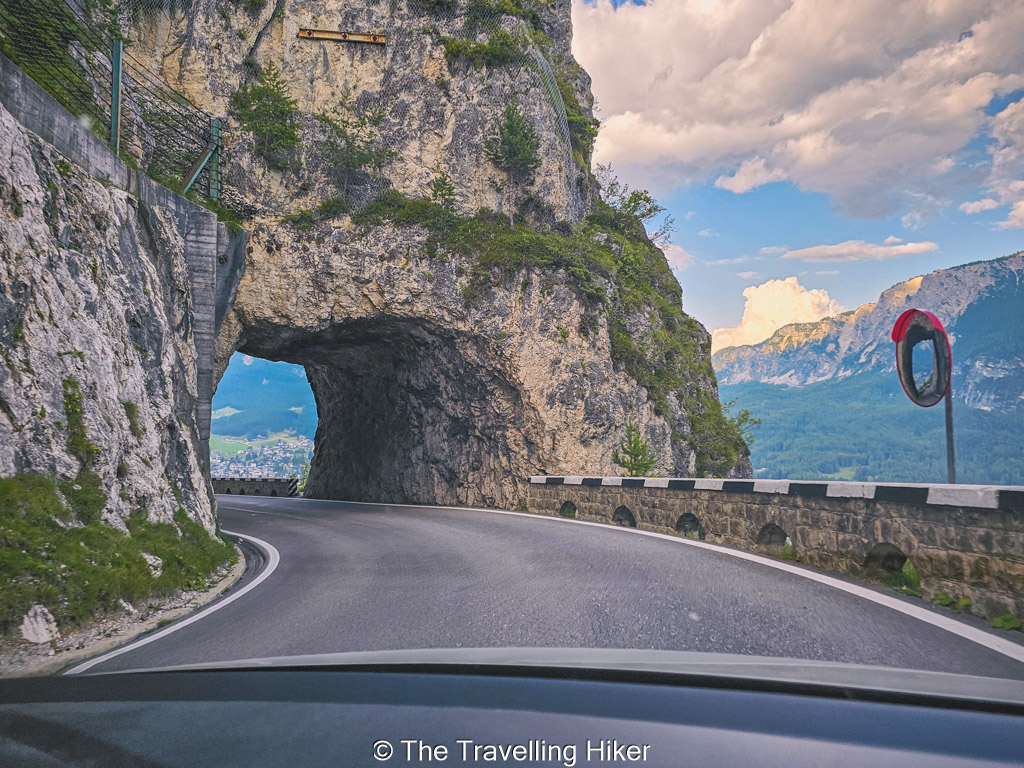
Roads in the Dolomites
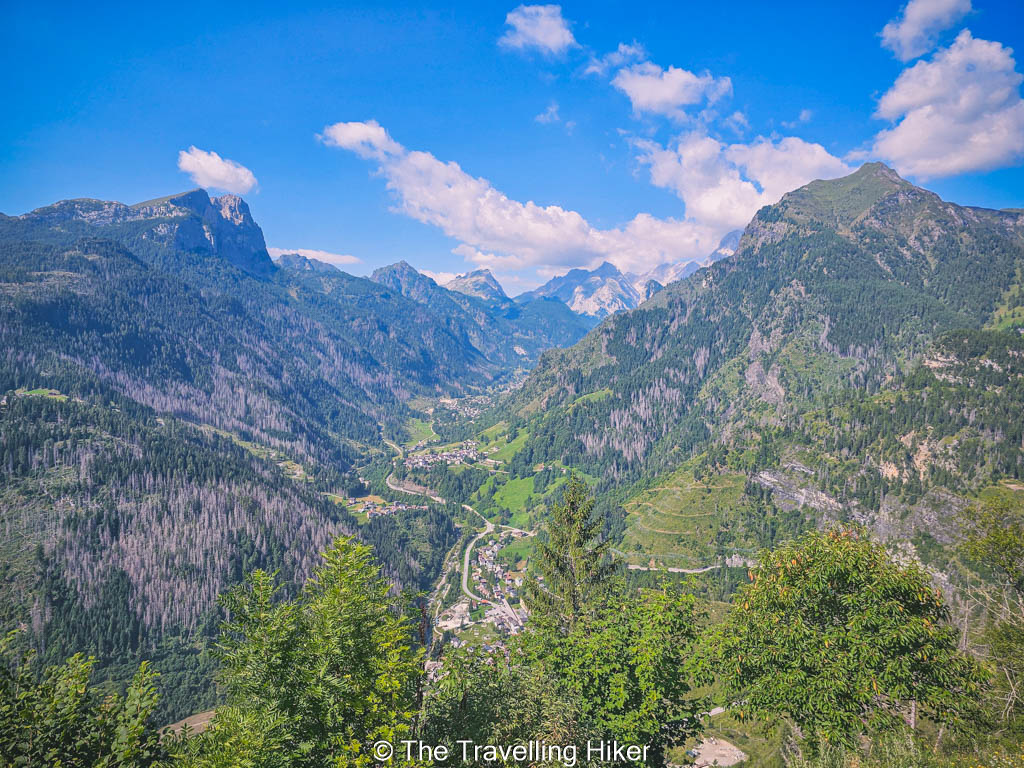
View of Cordevole Valley
CAN YOU VISIT THE DOLOMITES WITHOUT A CAR?
Yes, but it requires more planning and flexibility. The Dolomites have a surprisingly good bus network (especially in the summer months), and some areas like Val Gardena are easy to explore without a car.
That said, relying entirely on public transport can make it harder to visit multiple valleys or start hikes early in the morning. Some trailheads also have limited connections, especially outside the peak summer season.
HOW MANY DAYS DO YOU NEED TO VISIT THE DOLOMITES?
This depends on what you want to do and visit in the Dolomites. If you are just looking to visit the most famous sites and drive around enjoying the views, I would say 5 days is enough.
However, if you want to hike and enjoy being in the mountains as much as I do, I would try to plan as many days as possible!
We stayed there for 12 days, and I still have so many trails saved that I want to explore…
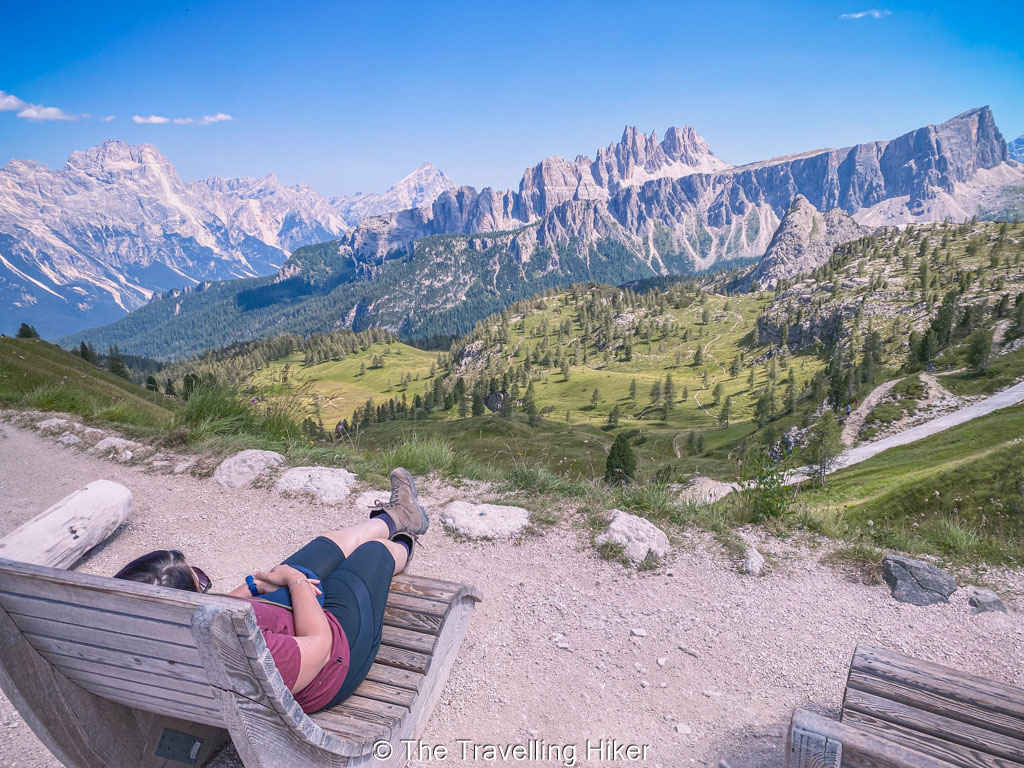
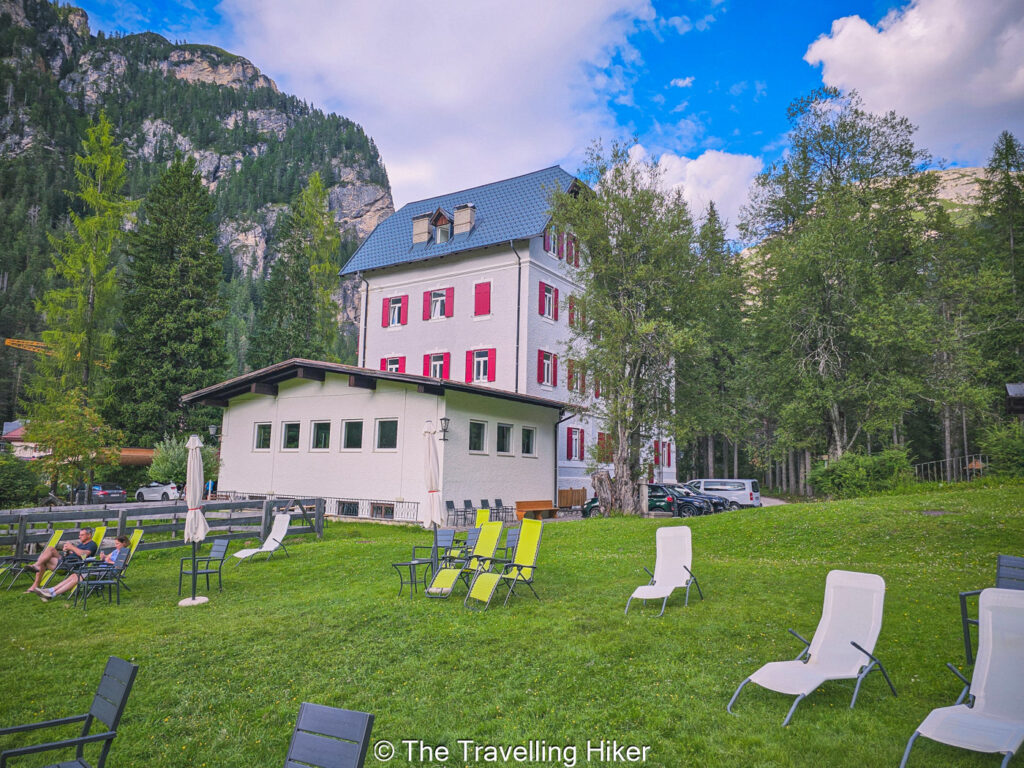
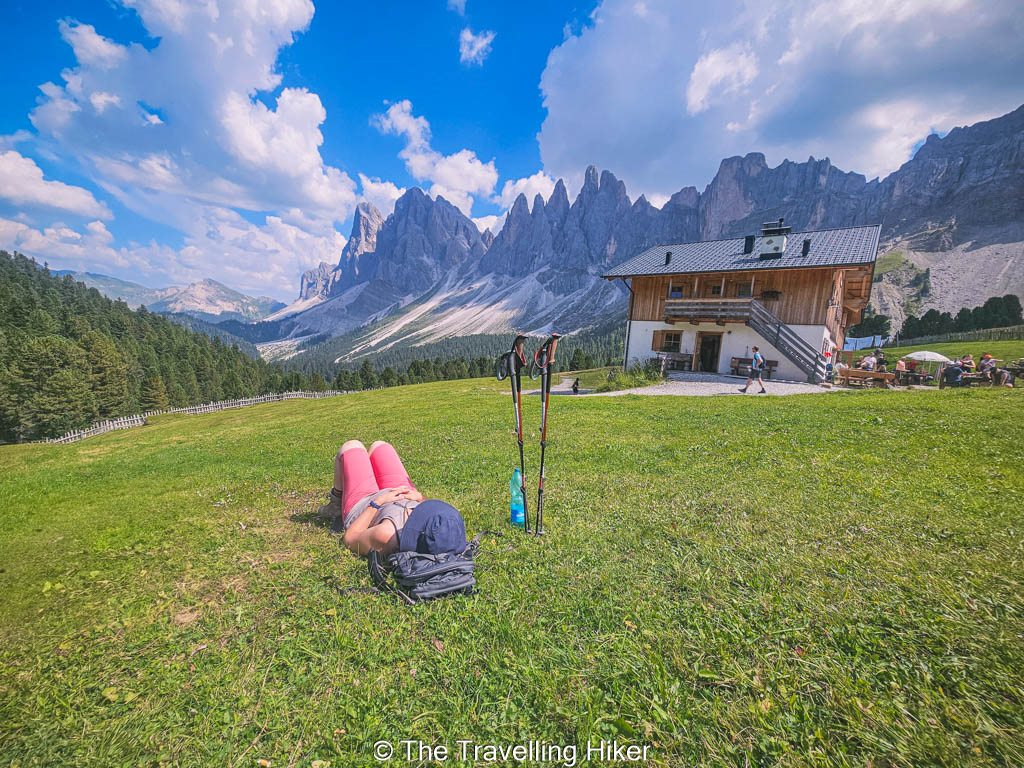
Relaxing next to Rifugio Scoiattoli
ACCOMMODATION IN THE DOLOMITES: BEST AREAS TO STAY
Choosing where to stay is probably the most important decision when planning a trip to the Dolomites. The region is much larger than many people expect, and driving times between valleys can take longer than it looks on the map. My most important recommendation is that you choose your accommodation location based on what you want to visit in the Dolomites, so that you can reduce driving times.
Another thing to consider is how many accommodations you should book. You don’t want to be changing hotels every day, but you should also not drive for hours either. The number of accommodations will depend on how many days you’re planning on visiting.
If you’re only visiting for 5 days or less, I recommend you choose one base, either near Cortina d’Ampezzo or in Val Gardena.
If you’re visiting for between 5 and 10 days, I recommend you choose two bases. Ideally, you should split your days between Cortina and Val Gardena.
If you’re visiting for 2 weeks, you can book three bases. In this case, you can add a third base in Val di Funes, for example.
Once you have decided where you’re going to set your base, you need to choose your type of accommodation. In the Dolomites, you can range from luxury spa hotels to traditional alpine guesthouses and mountain rifugios. Prices can become very expensive during the peak summer season, so booking early makes a huge difference.
I have written a very detailed blog post about Accommodation in the Dolomites, where you can find all sorts of tips and useful information.
There are a lot of things you can do in the Dolomites. Of course, the mountains are the main attraction, and hiking is a great activity to do, but the region offers so many other things you can do. Among my favorites are: eating lunch at a mountain hut with the most amazing views, driving through the most scenic mountain passes and stopping at the many breathtaking viewpoints, and exploring charming alpine villages.
BEST HIKES IN THE DOLOMITES
Hiking was the main reason we wanted to visit the Dolomites. The region has an incredible variety of trails ranging from easy walks through alpine meadows to challenging full-day mountain hikes.
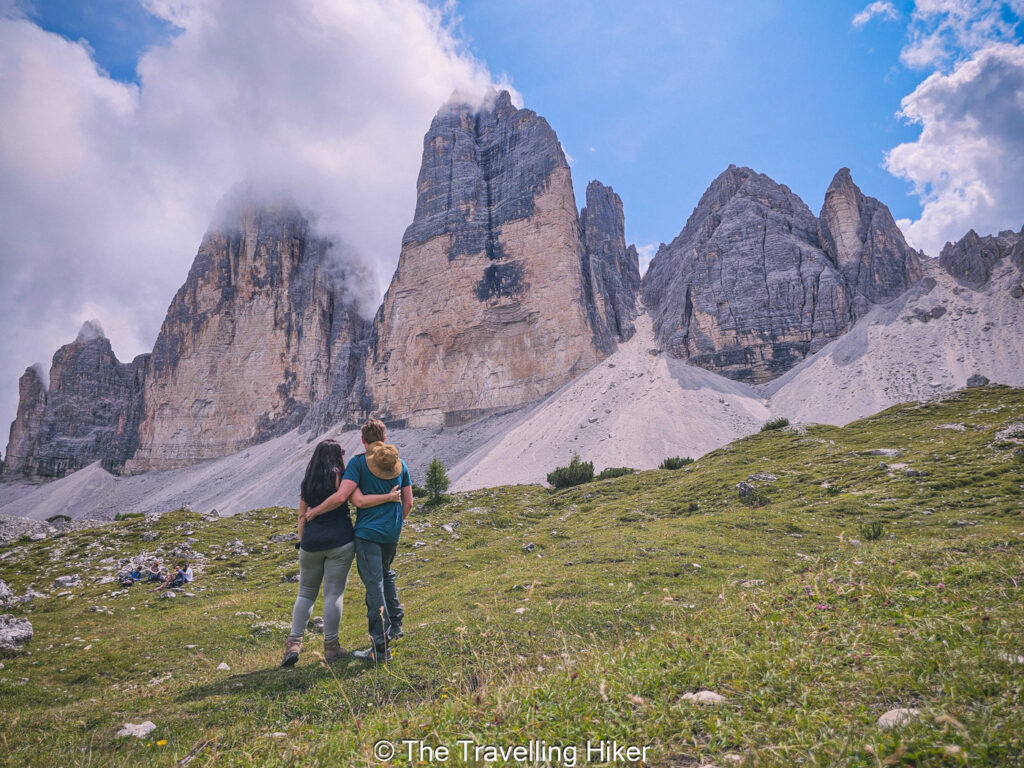
Some of the most famous hikes include Tre Cime di Lavaredo, Seceda, or Lago di Sorapis. I think one of the best things about hiking in the Dolomites is how rewarding many of the trails are, given the effort required. You do not always need to hike huge distances to experience incredible scenery here.
Want to know what the best hikes are in the Dolomites? Don’t worry, I have written a specific blog post about it. There, you will find all the necessary information about them.
The Dolomites are home to some of the most beautiful alpine lakes in Europe. Lago di Braies is by far the most famous, but many other lakes are just as impressive and often much quieter.
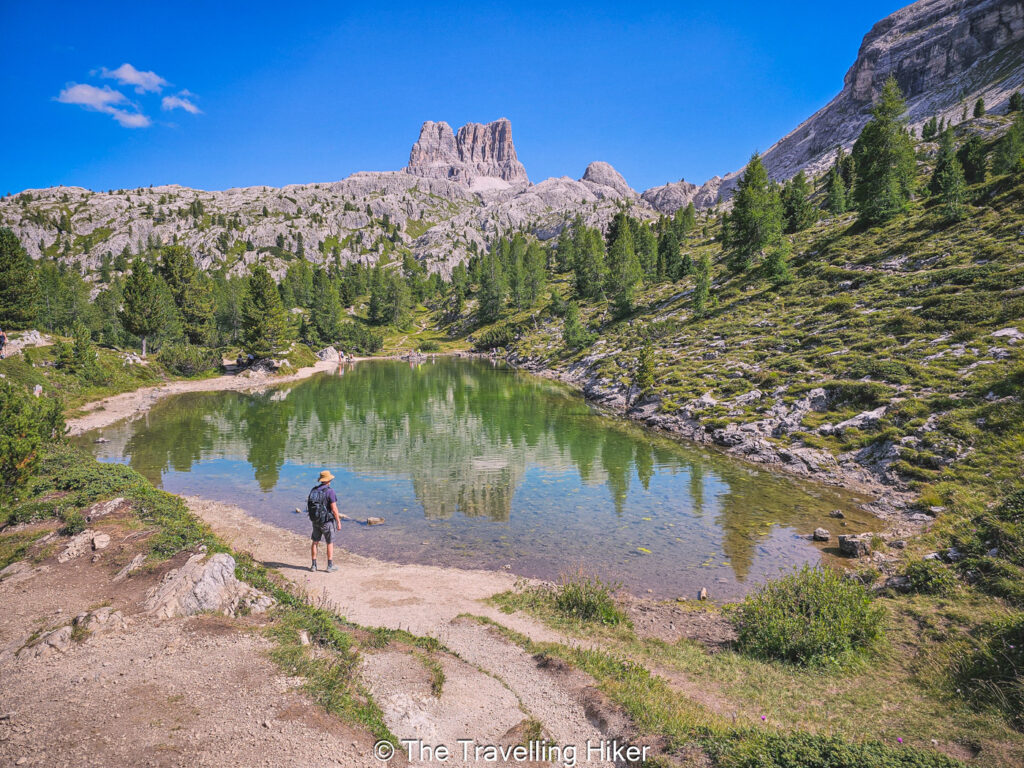
My personal favorite was Lago Limides, a small lake that requires just a short 1 km hike to reach. Once you’re there, you’ll be almost alone there, and you will be able to enjoy beautiful water reflections. Other beautiful lakes are Lago Federa, Lago di Carezza, and Lago Misurina.
Lago Limedes
INCREDIBLE MOUNTAIN HUTS (RIFUGIOS)
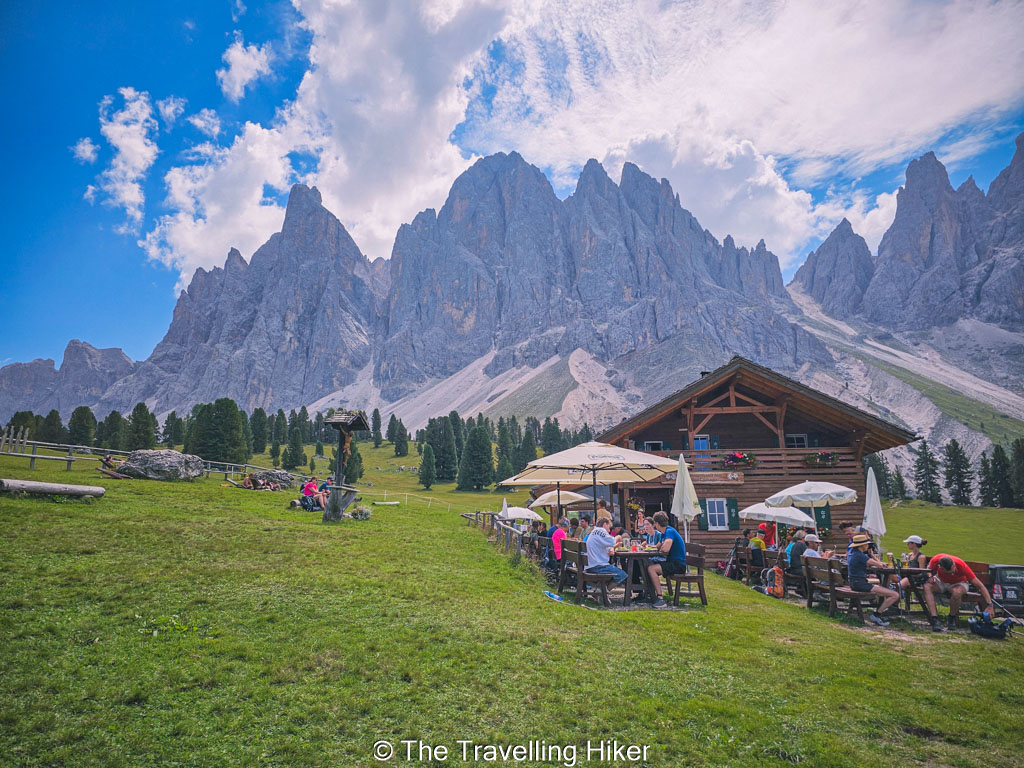
There are so many mountain huts or rifugios in the Dolomites. Stopping at one of them for lunch or a refreshing drink during your hikes is a must while in the Dolomites. Even though many of them are quite remote, they always manage to have delicious food or drinks that are just what you need during your hike.
Most of these mountain huts have beautiful views from their terraces, but in my opinion, the most incredible one was Rifugio Nuvolau near Cinque Torri. This rifugio sits at the top of Mt. Novulau and offers incredible 360-degree views.
Lunch at Rifugio Nuvolau
SCENIC MOUNTAIN PASSES
Driving through the Dolomites is another must-do activity! I have never seen so many scenic mountain passes in my life! You will find yourself stopping at every viewpoint you encounter to admire the views.
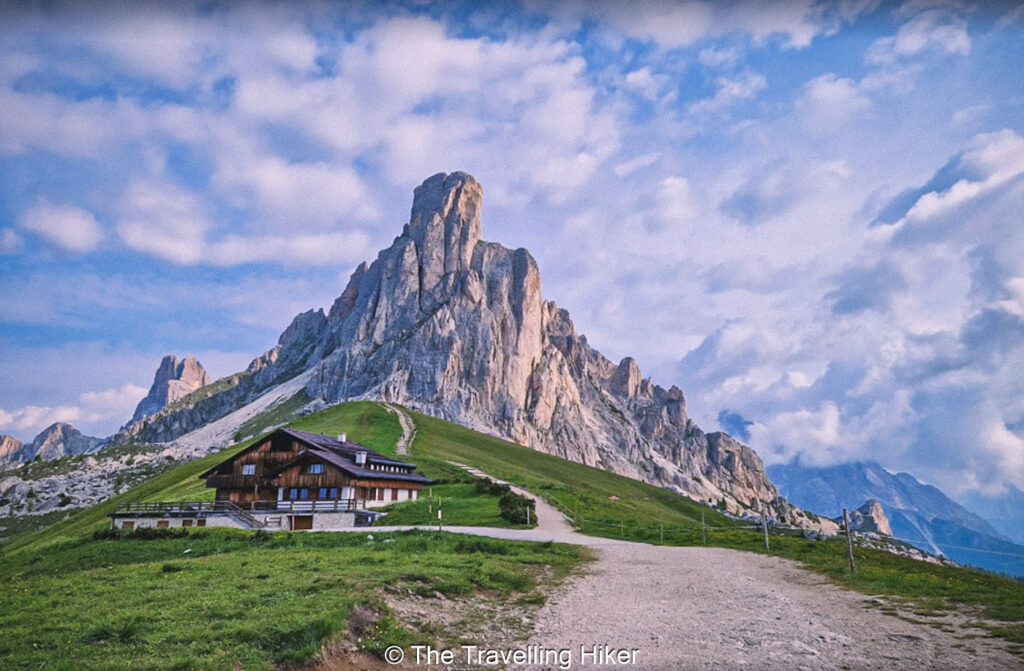
Among the most famous are Passo Giau, Passo Sella, Passo Gardena, and Passo delle Erbe. All of them offer beautiful drives with constant mountain views along the way.
Passo Giau
BEST CABLE CARS
The Dolomites have an extensive cable car network. With them, you can reach incredible viewpoints and hiking areas without needing long or difficult ascents.
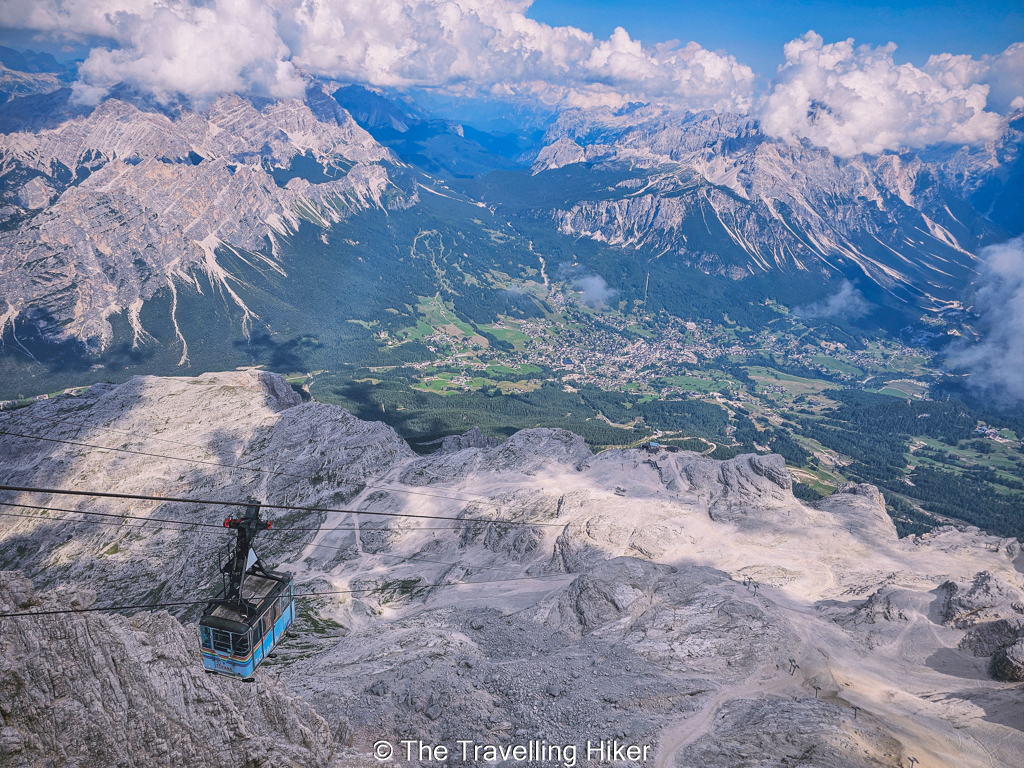
The Seceda cable car is probably the most famous one, giving access to one of the most iconic mountain ridges in the Dolomites. Other great options include Alpe di Siusi, Lagozui, and my personal favorite, the Freccia nel Cielo cable car in Cortina d’Ampezzo.
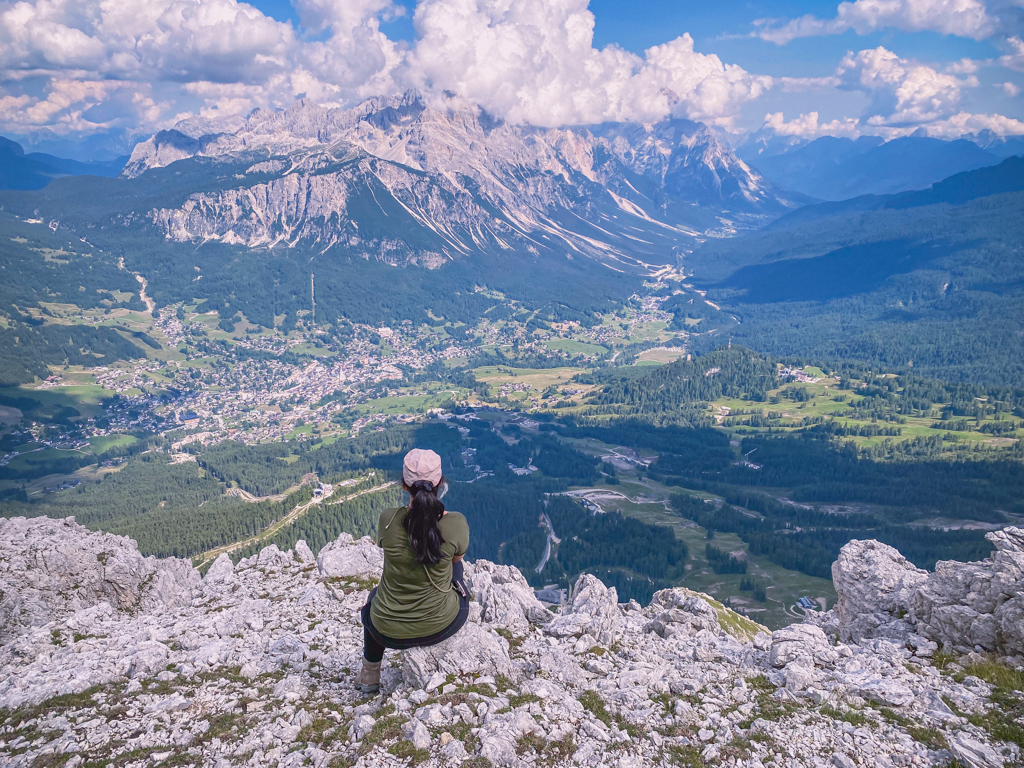
Cortina and the Freccia nel Cielo Gondola from the summit station
MOST BEAUTIFUL TOWNS IN THE DOLOMITES
Although the mountains are obviously the main highlight of the Dolomites, the towns and villages throughout the region are also part of what makes traveling here so special. Most towns are small, surrounded by dramatic peaks, and filled with traditional alpine hotels, wooden chalets, and mountain restaurants. After long hiking days, we love slowing down in the evenings and exploring the villages.
Castelrotto was probably my favorite town we visited in the Dolomites, located just below the Alpe di Siusi meadows. It had a perfect mix of beautiful scenery, great restaurants, and a lively atmosphere without feeling too large.
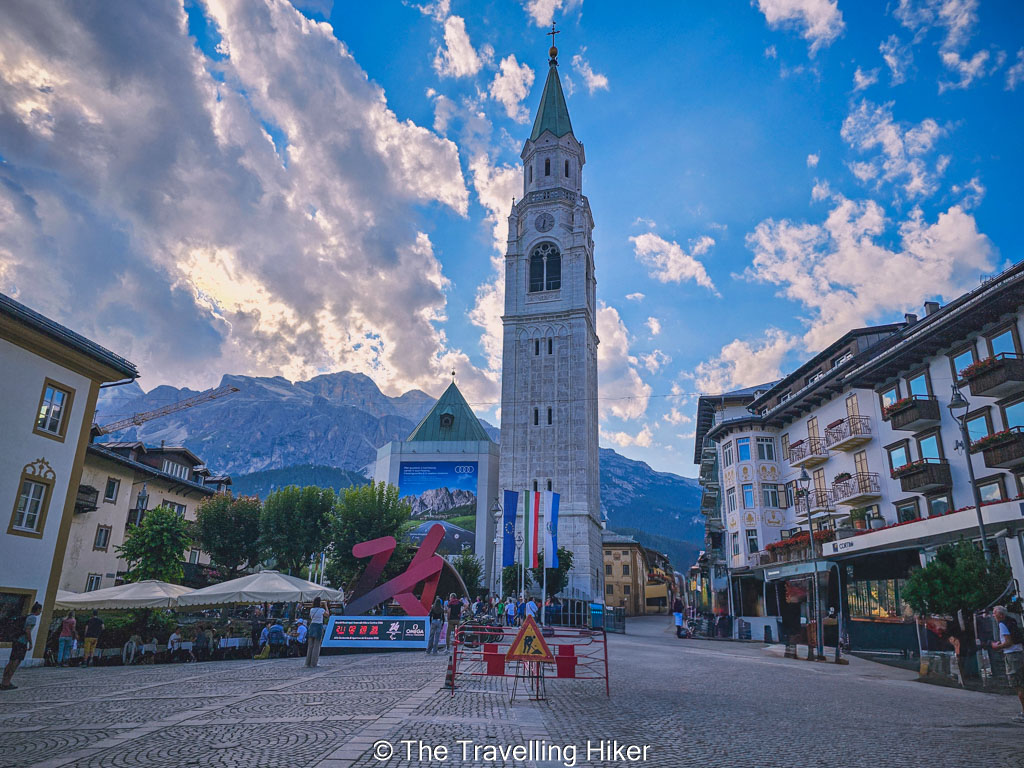
Cortina d’Ampezzo, on the other hand, was very different from other smaller alpine villages. It had a more upscale atmosphere, with plenty of restaurants and luxury shops.
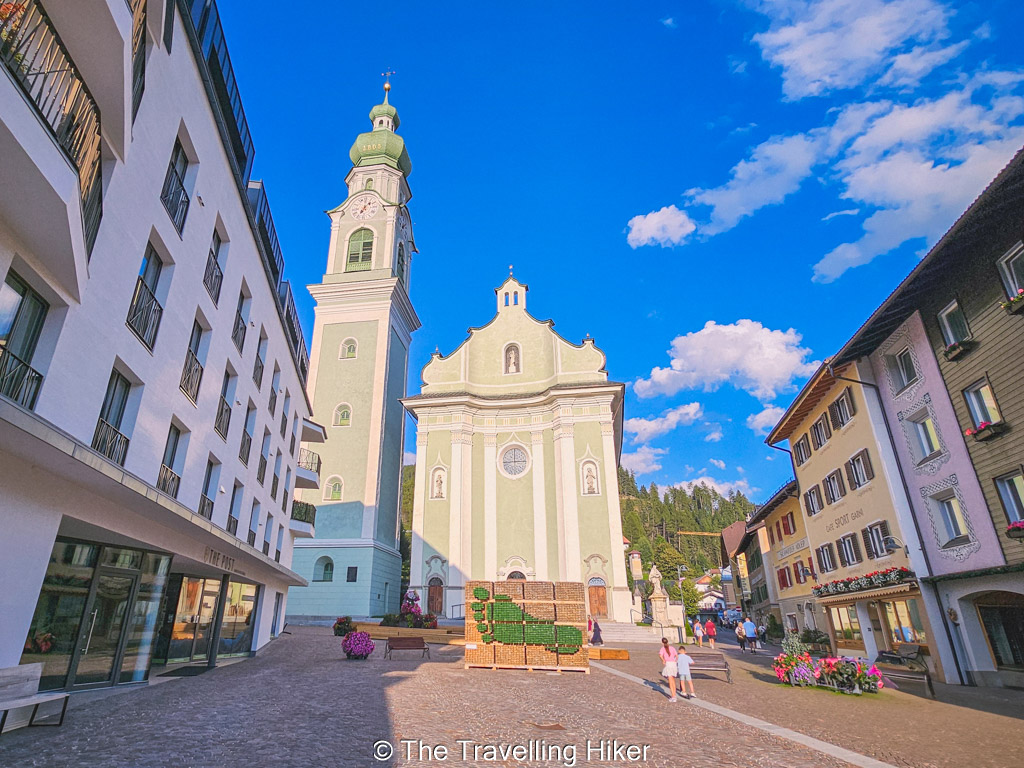
Other beautiful towns worth considering are Dobbiaco or Bressanone. Personally, I enjoyed the smaller and less crowded villages more than the most famous ones like Cortina or Ortisei.
Dobbiaco
Cortina d'Ampezzo
CREATE YOUR DOLOMITES ITINERARY
Now that you know what there is to do and how many days you’re visiting, it is time to create your itinerary. One of the biggest mistakes people make when visiting the Dolomites is trying to see too much in too little time. The region is much larger than it looks, and driving times will take longer than you expect.
With only 3 days in the Dolomites, it is best to focus on a single area rather than trying to cover the entire region. The western Dolomites and the area around Val Gardena fits perfectly for a 3-day trip.
I would prioritize one major hike or viewpoint each day, and then use your extra time for scenic drives and visits to cute mountain towns. Here is a suggestion for a 3-day itinerary.
Day 1: Lago di Carezza and Val di Funes
Day 2: Seceda and Ortisei
Day 3: Alpe di Siusi and Passo Sella
Relaxing in the meadows with Seceda in sight
5-DAY DOLOMITES ITINERARY
With 5 days in the Dolomites, you already have more time to explore the area. However, I would still focus on just one area in the Dolomites. A 5-day trip is the perfect amount of time to explore the area around Cortina d’Ampezzo. This amount of time also gives you more flexibility in case of bad weather, which unfortunately can happen in the mountains.
Here is my suggestion for a 5-day itinerary.
Day 1: Tre Cime di Lavaredo and Cadini di Misurina
Day 2: Lago di Braies and Lago di Dobbiaco
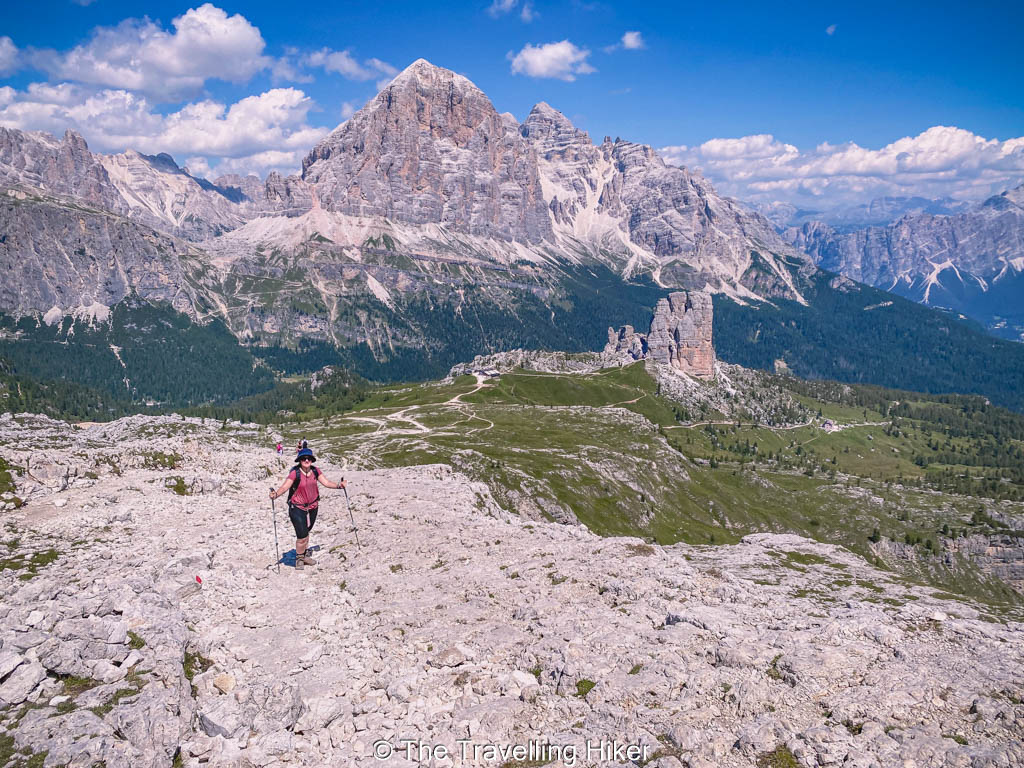
Day 3: Cinque Torri and Rifugio Nuvolau Hike
Day 4: Cima Tofana and Lagazuoi tunnels
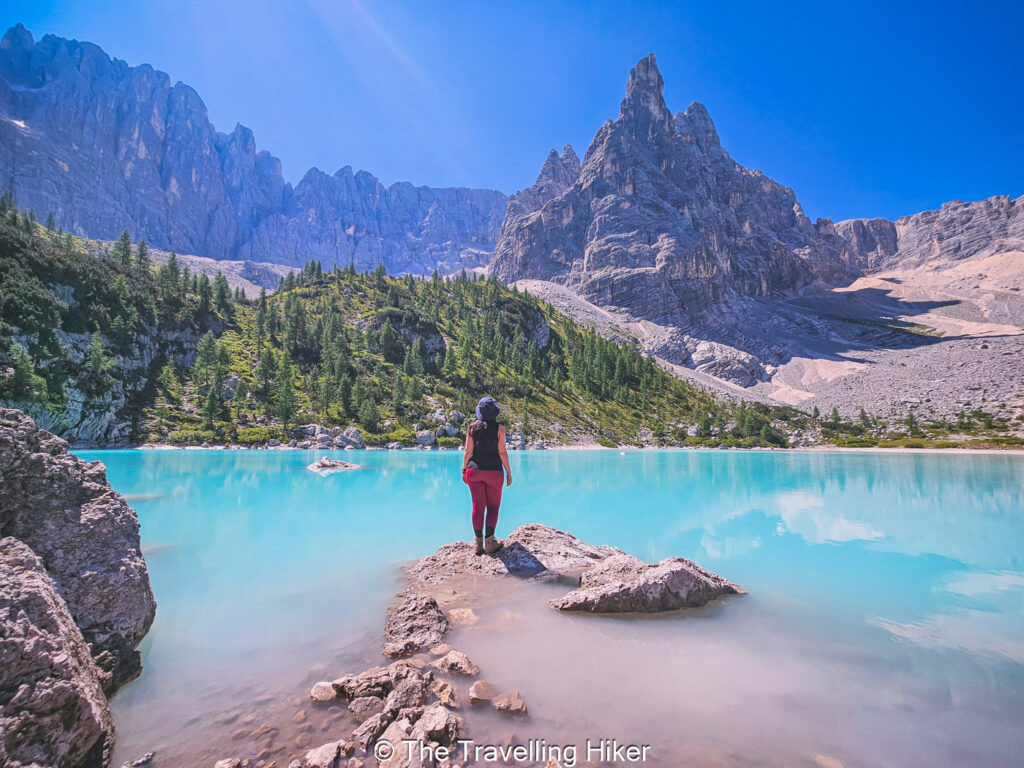
Day 5: Lago di Sorapis
Lago di Sorapis
7-DAY DOLOMITES ITINERARY
With 7 days in the Dolomites, you can already do a mix of both the eastern and western Dolomites. Personally, since we enjoy hiking a lot, 7 days is the minimum amount of time to enjoy these hikes, without having to rush or feeling like you are missing out on some other incredible areas.
My suggestion for a 7-day itinerary is:
Day 1: Tre Cime di Lavaredo and Cadini di Misurina
If you’re visiting the Dolomites, most probably, you will be doing at least one hike during your trip. Even though you don’t need to have technical mountaineering experience or the most expensive gear, planning for your hikes will guarantee you a great time in this destination. Through this section, I will share some tips to have a smooth trip.
WHAT HIKING EXPERIENCE DO YOU NEED?
One thing that surprises many first-time visitors is that you do not need to be an advanced hiker to experience some of the most iconic places in the Dolomites. Hikes like Seceda, Cinque Torri, and Tre Cime di Lavaredo are relatively accessible for most people with a moderate fitness level.
That said, some hikes can still be physically demanding due to elevation gain, rocky terrain, and changing weather conditions. I always recommend checking elevation profiles rather than only looking at hiking distance since steep climbs can make trails feel much harder than expected.
ESSENTIAL HIKING GEAR
You do not need extremely technical equipment for most Dolomites hikes, but some proper gear is still very important. Good hiking shoes with a solid grip make a huge difference since many trails are rocky and uneven.
Weather conditions can also change very quickly in the mountains, even during summer. Always carry an extra waterproof layer, water, snacks, and sunscreen.
Trekking poles are also very useful on longer descents, although they are not necessary for easier hikes.
MOUNTAIN HUT CULTURE EXPLAINED
One of my favorite parts of hiking in the Dolomites is the rifugio culture. Rifugios are mountain huts located throughout the region where hikers can eat, rest, and sometimes stay overnight. Many serve traditional alpine food with incredible mountain views.
Some rifugios are easy to access and feel almost like mountain restaurants, while others are located deep in the mountains and mainly serve long-distance hikers. Prices are generally reasonable considering the remote locations.
Rifugio delle Odle
Do you need to book rifugios in advance?
If you plan to stay overnight at a rifugio, booking in advance is usually essential during the summer. Popular huts along famous hiking routes can sell out months in advance, especially during July and August.
DOLOMITES BUDGET AND COSTS
The Dolomites are not necessarily a cheap destination, especially during summer, but costs can vary a lot depending on your travel style. Accommodation, rental cars, and cable cars are usually the biggest expenses, while hiking itself is often free once you arrive at the trailhead.
ACCOMMODATION PRICES
Accommodation prices vary significantly depending on the season and location. Popular areas like Ortisei, Cortina d’Ampezzo, and Alpe di Siusi are usually the most expensive.
Budget hotels and guesthouses can sometimes be found for around 100€ to 150€ per night, while mid-range alpine hotels often cost between 200€ and 400€ during peak season. Luxury hotels can easily go far beyond that.
Booking early makes a huge difference here.
Our hotel near Cortina d'Ampezzo
TRANSPORTATION PRICES
Rental cars are usually another of the largest expenses when visiting the Dolomites. Prices vary depending on demand, but booking several months ahead often saves a lot of money.
Fuel costs can also add up since you will likely spend a fair amount of time driving between valleys and trailheads. Parking at popular hikes, like Tre Cime di Lavaredo or Lago di Braies, requires additional fees as well.
CABLE CARS AND PARKING FEES
Cable Cars are one of those expenses that add up surprisingly quickly in the Dolomites. Many round-trip tickets cost between 25€ and 40€ per person, but they can even be more expensive! The Seceda Cable Car round-trip costs 72€ in 2026!
Parking fees are also common at popular lakes and trailheads during the summer.
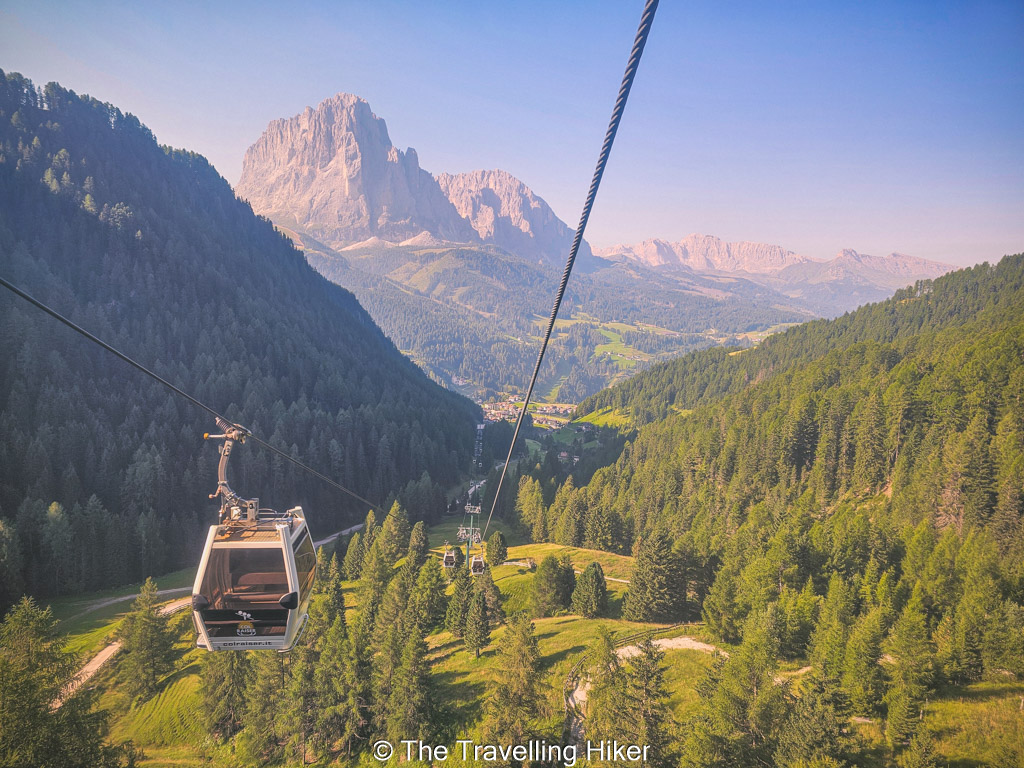
Sassolungo from Col Raiser cable car
IS THE DOLOMITES EXPENSIVES?
Overall, I would describe the Dolomites as a moderate to expensive destination depending on your travel style. Costs rise significantly during the peak summer season, especially for accommodation.
Personally, I think the Dolomites offer very good value considering the scenery and hiking opportunities. Many of the best experiences here, like hiking, are either free or relatively low-cost compared to other mountain destinations in Europe.
IMPORTANT TIPS FOR VISITING THE DOLOMITES
The Dolomites are one of those destinations where small planning decisions can completely change your experience. Timing, weather, parking, and itinerary pace matter much more here than many people expect.
PARKING AND OVERTOURISM
The Dolomites have become incredibly popular in recent years, especially during July and August. Places like Lago di Braies, Seceda, and Tre Cime di Lavaredo have become so extremely crowded that, in recent years, a pre-booking system has been installed.
Tre Cime di Lavaredo and Cadini di Misurina. To be able to park your car at Rifugio Auronzo, where the trailhead for these two popular hikes begins, you have to make a reservation in advance. You can do so at auronzo.info website.
Lago di Braies. To park your car near Lago di Braies, you also have to make a reservation in advance between 9:00 and 16:00. You can do so at prags.bz.
Seceda Cable Car. Since 2026, it is also necessary to pre-book your cable car tickets for a specific day and time slot. You can do so at seceda axess shop.
Lago di Braies
EARLY STARTS ARE ESSENTIAL
I honestly can’t emphasize this enough. Starting early will give you a completely different experience in the Dolomites. Many places we visited were almost empty when we arrived, and by the time we left, they were quite busy.
Starting early will also help you avoid any potential thunderstorms.
WEATHER CAN CHANGE QUICKLY
Mountain weather in the Dolomites can change surprisingly fast. Sunny mornings can quickly turn into storms, fog, or heavy rain during the afternoon.
We were super lucky with the weather during our trip to the Dolomites, but we have experienced changing weather at other mountain destinations.
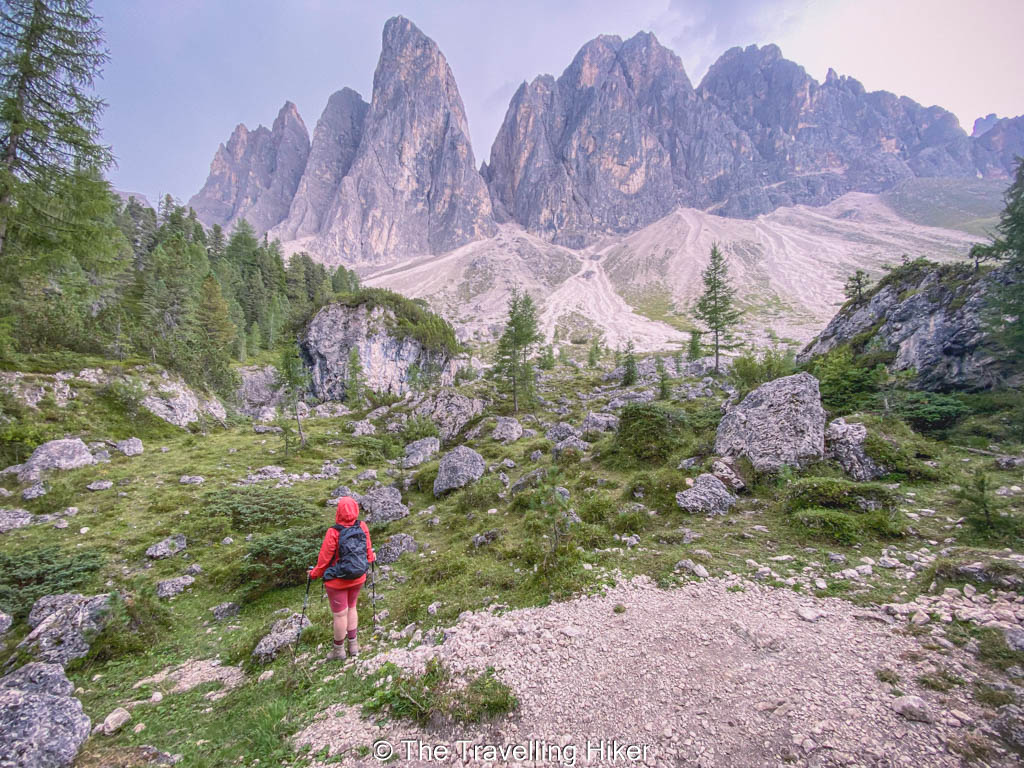
Odle Peaks from the Adolf Munkel Trail
CASH VS CARD IN MOUNTAIN HUT
Most hotels and larger restaurants accept cards without issues, but some smaller rifugios and mountain huts still prefer cash, especially in remote areas.
I always recommend carrying some euros with you while hiking, just in case. This is especially useful if you plan to stop frequently at rifugios for food or drinks.
TRAVEL INSURANCE FOR HIKING
Even though hikes in the Dolomites are accessible, accidents and weather-related issues can still happen in the mountains. I never travel without travel insurance for my peace of mind.
FAQ ABOUT PLANNING A TRIP TO THE DOLOMITES
WHAT IS THE BEST MONTH TO VISIT THE DOLOMITES?
July and August are the best months overall, but they are also the busiest. If you want to visit with fewer crowds, I would go in early September.
DO YOU NEED A CAR IN THE DOLOMITES?
Technically, no, but personally, I think having a car gives you a much better experience, especially if you want to go hiking. The Dolomites are spread across multiple valleys, and many trailheads are easier to reach by car.
View of Cortina d'Ampezzo at Ra Valles
HOW MANY DAYS DO YOU NEED IN THE DOLOMITES?
I would recommend at least 5 to 7 days for a first trip to the Dolomites. However, if you have more, you will not regret it!
ARE THE DOLOMITES GOOD FOR BEGINNER HIKERS?
Yes, absolutely! One of the best things about the Dolomites is that many incredible areas are accessible without difficult hiking.
At the same time, experienced hikers will still find plenty of challenging full-day hikes and via ferratas throughout the region.
FINAL THOUGHTS
Planning a trip to the Dolomites can feel overwhelming at first. Between choosing where to stay, deciding what activities to prioritize, and figuring out transportation logistics, there are a lot of details to consider before your trip.
At the same time, the effort is completely worth it. The Dolomites are honestly one of the most amazing mountain destinations in Europe.
Hopefully, this guide helped make planning your Dolomites trip a little easier and gave you a better idea of how to structure your itinerary.