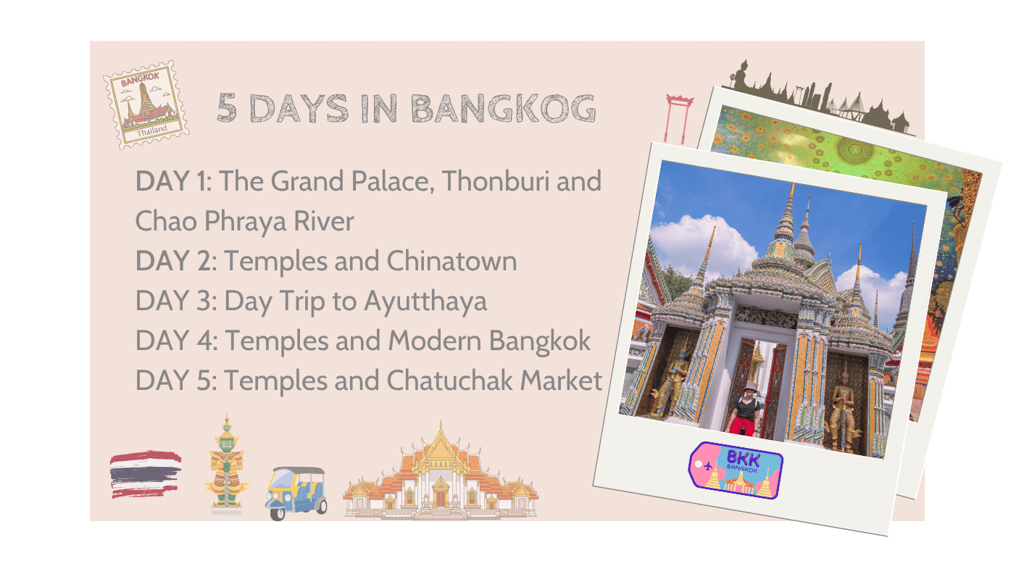
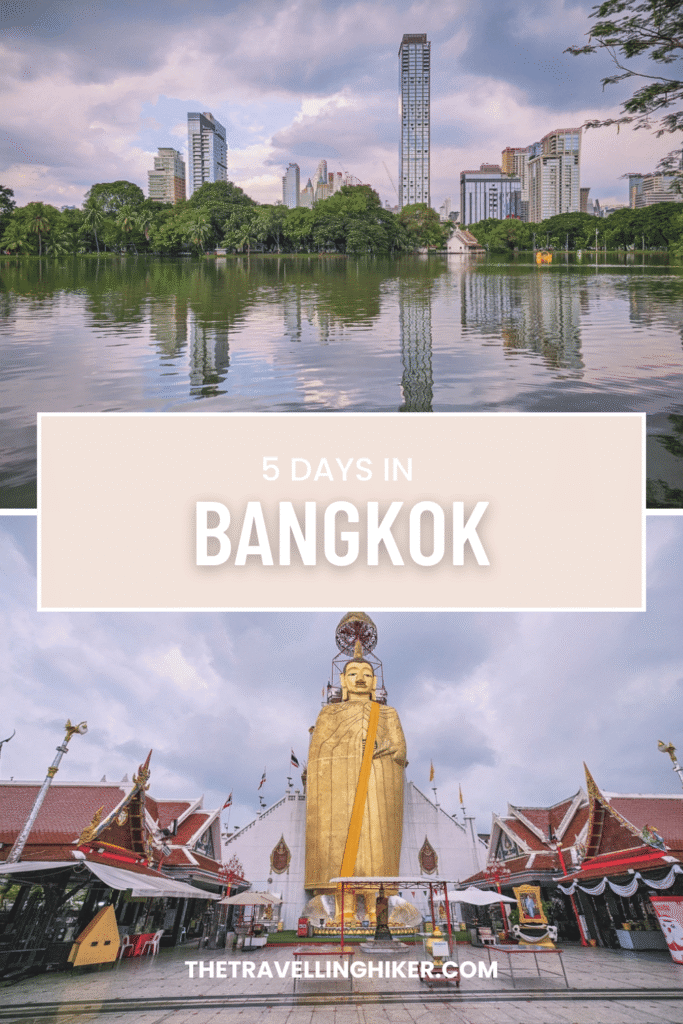
Planning a Bangkok 5 day itinerary can feel quite complicated and overwhelming. The city is huge, busy and packed with things to see and so. There are beautiful temples, bustling and colourful markets, lively neighborhoods, street food and modern shopping malls. But don’t worry, I have some good news. In five days, you have enough time to experience many of the city’s highlights without having to rush from one place to another.
In this Bangkok itinerary, I’ll take you through five days in the city, combining Bangkok’ most famous sights with some lesser known places and experiences that are easy to miss. I’ve also included practical tips on getting around, where to stay and how to organise each day so you can spend less time worrying about logistics and more time enjoying Bangkok.
If this is your first time in Bangkok, this itinerary is a good starting point. It covers the classic sights you probably don’t want to miss, while also introducing some alternative places. And if you are wondering what to do in Bangkok in 5 days, you’ll find plenty of ideas to help you build a trip that works for you.
TABLE OF CONTENTS
DISCLAIMER: Did you know? This blog uses affiliate partnerships. When you click and book or make a purchase through one of my blog posts, I may receive a small commission (at no extra cost to you). Thank you for supporting The Travelling Hiker!
BANGKOK: A FEW INTERESTING FACTS
Bangkok is the capital of Thailand and, with more than 10 million people living in its metropolitan area, it is by far the country’s largest city. It is also a city of contrats. Modern skyscrapers, huge shopping malls and busy roads sit alongside golden temples, traditional houses and small canals.
The city is known in Thai as Krung Thep Maha Nakhon, although this is actually only the shorter version of its official name. The full ceremonial name is one of the longest place names in the world. Luckily, you don’t need to learn it to visit Bangkok!
One of the things I found most interesting about Bangkok is how closely the city is connected to the Chao Phraya River. The river has played an important role in Bangkok’s history and is still part of everyday life today. Boats are not only a fun way to see the city, but also a practical way to get around and avoid some of Bangkok’s traffic. We used it as our transportation method almost every day during our stay.
Bangkok is also sometimes called the “Venice of the East” because of its network of canals, known locally as khlongs. Many of these canals have disappeared as the city has grown, but some are still used today. Taking a boat along one of the smaller canals is a great way to see a different side of Bangkok and get away from the busy streets for a while.
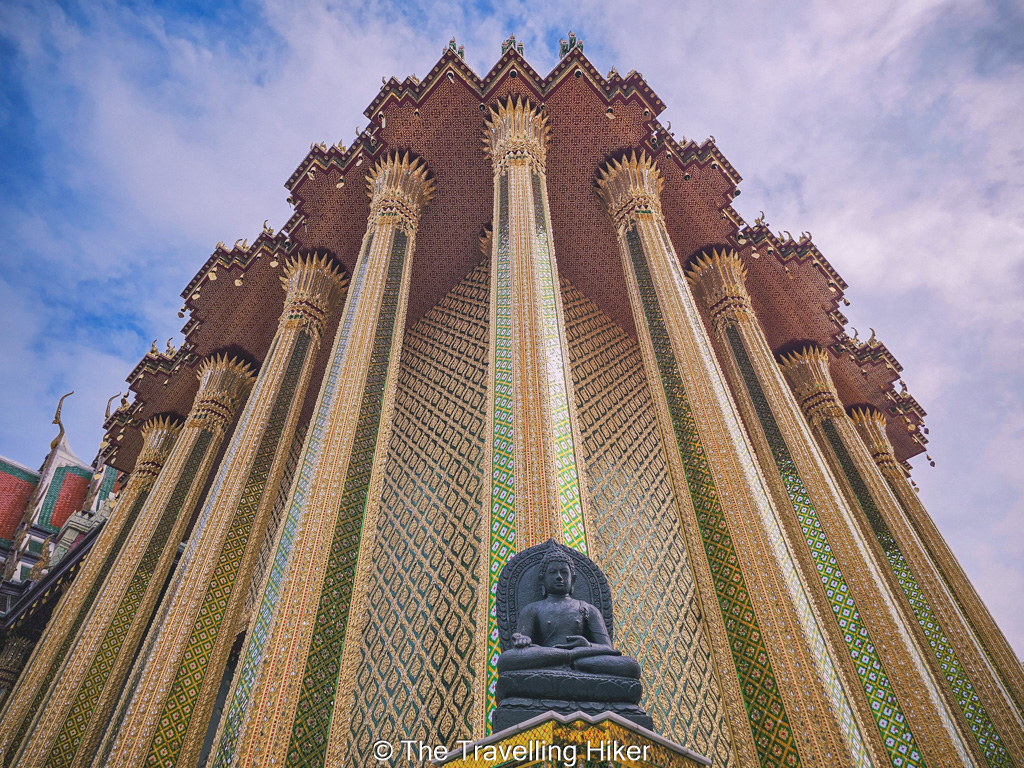
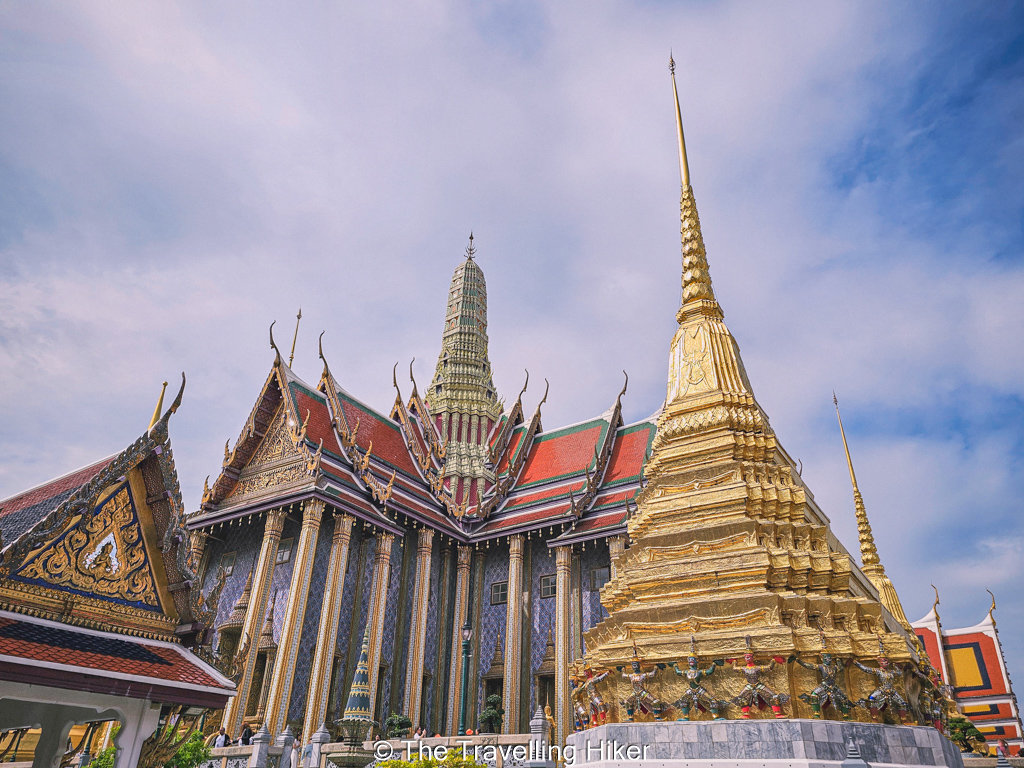
Details of the Grand Palace
HOW TO GET TO BANGKOK?
Most international visitors arrive in Bangkok by plane. The city has two airports: Suvarnabhumi Airport (BKK) and Don Mueang International Airport (DMK). If you are flying from Europe, you will most likely arrive at Suvarnabhumi Airport, which is Bangkok’s main international airport. Don Mueang Airport is mainly used for domestic flights and some international low-cost airlines.
If you are already traveling around Thailand, you can also reach Bangkok by train or bus. In this case, you will most probably arrive at Bangkok’s main train station, Krung Thep Aphiwat Central Terminal, or Mo Chit 2 Bus Terminal.
Suvarnabhumi Airport is around 30 km from the city centre and is well connected to Bangkok by public transport. The Airport Rail Link is usually the easiest option if you are traveling light, and your hotel is located next to a train station. It connects the airport with the city and takes around 30 minutes to reach the centre. Taxis, ride-hailing apps (Grab or Uber) and private transfers are also available and can be more convenient if you have a lot of luggage or your hotel is not close to a train station.
For our trip, we flew into Bangkok Suvarnabhumi Airport. Since our hotel was located near Khao San Road, we decided to take a Grab directly to our hotel. It was easy and covenient, especially after then long flight.
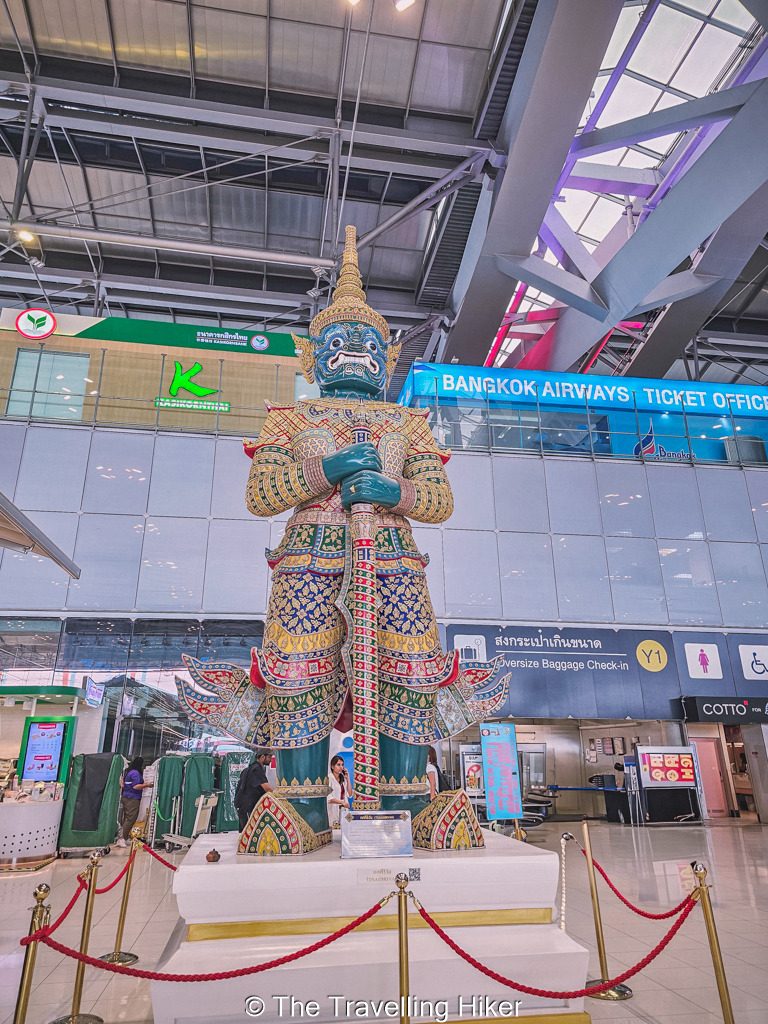
Yaksha a Guardian Warrior Statues in Suvarnabhumi Airport
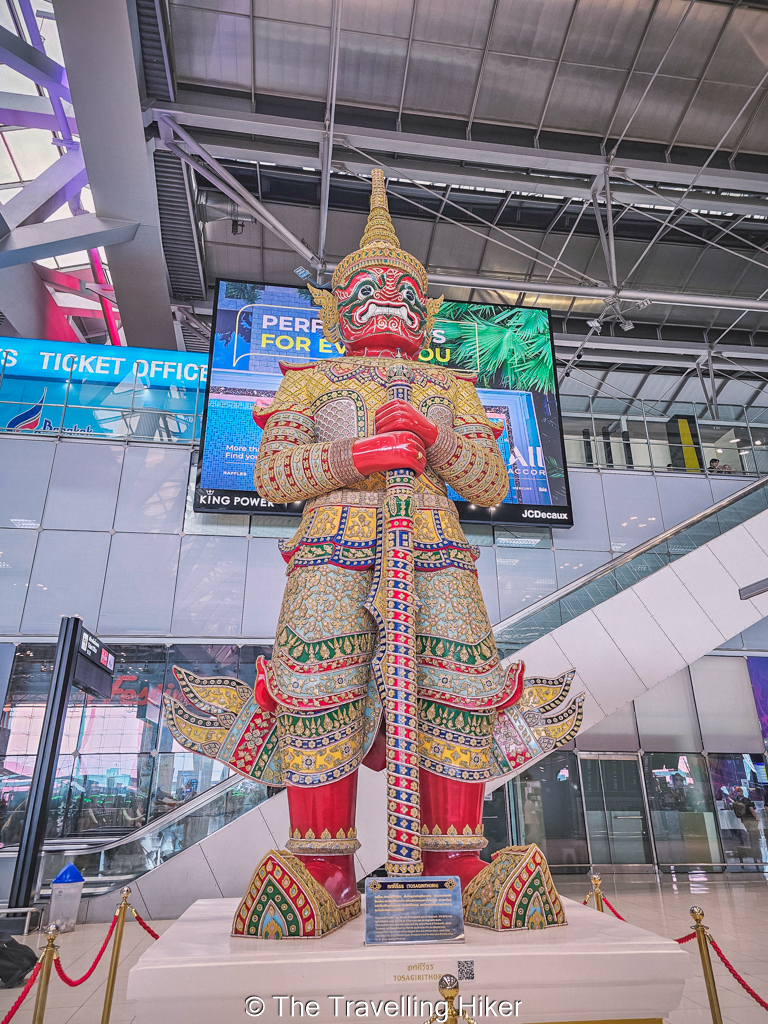
Another Yak in Suvarnabhumi Airport
HOW TO GET TO BANGKOK FROM DON MUEANG AIRPORT?
Don Mueang Airport is a little further from teh main tourist areas, but you can also reach the city by taxi, bus or train.
When leaving Thailand, our flight to Cambodia departed from Don Mueang Airport, so we also took a Grab to reach the airport. It was a simple option and meant we didn’t have to worry about changing transport with our luggage.
When deciding how to get into Bangkok, I would mainly look at where your hotel is located and how much luggage you have. Public transport can be a great option, but sometimes paying a little more for a direct ride is worth it.
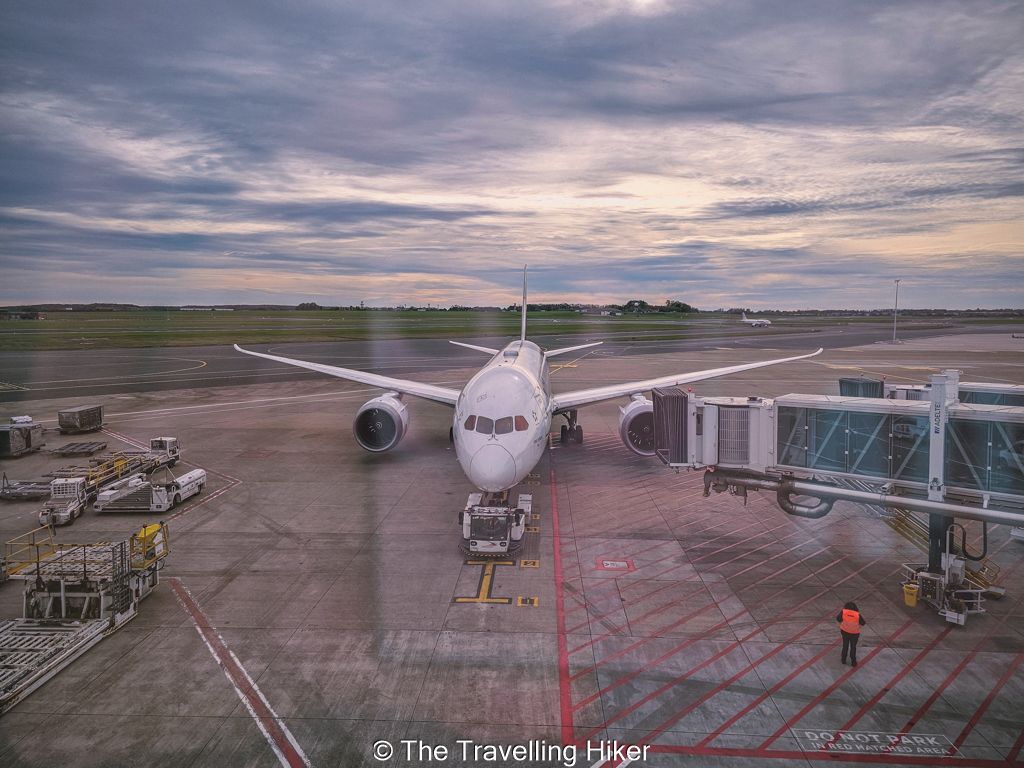
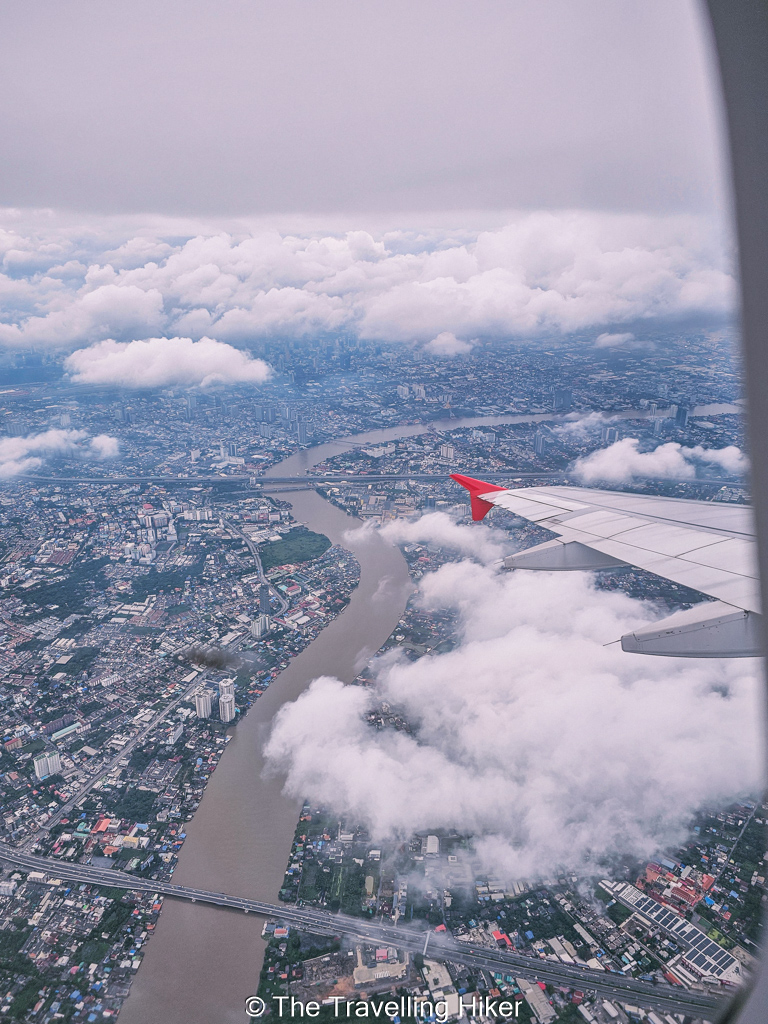
Taking off from Bangkok
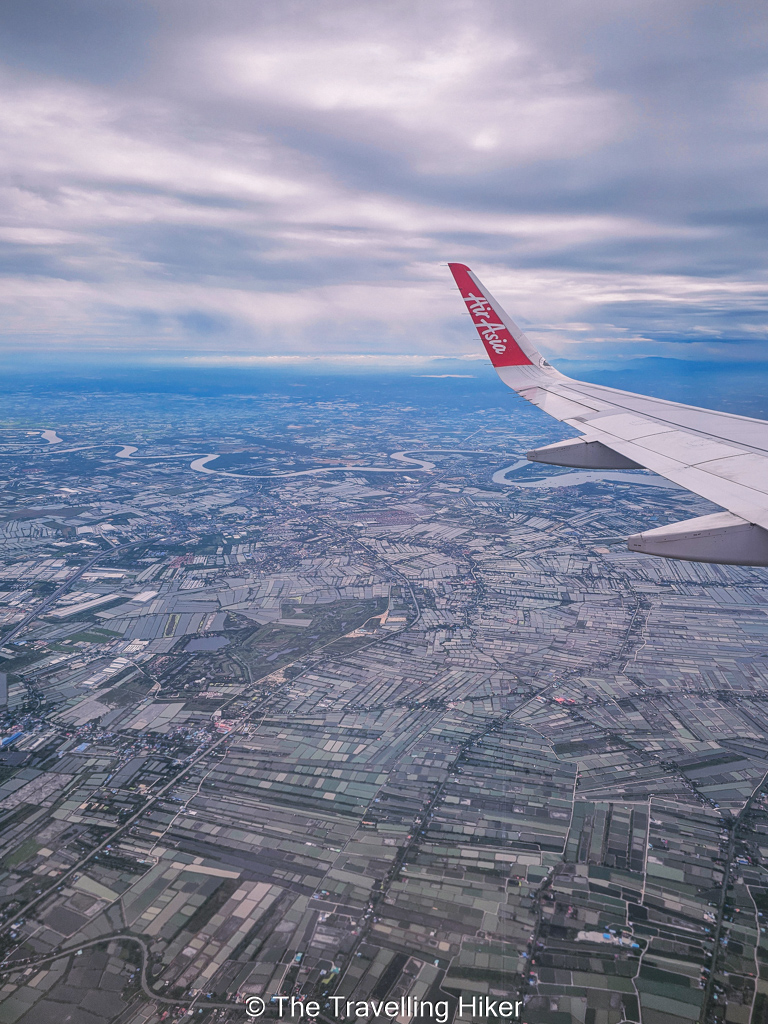
Flying over Bangkok
BEST TIME TO VISIT BANGKOK
The best time to visit Bangkok is generally betweenNovember and February, when the weather is cooler and there is less rain. This is also the busiest time of the year, so you can expect more tourists and higher prices, especially around Christmas and New Year.
From March to May, temperatures rise considerably and Bangkok can feel very hot, especially when you are spending the day walking around temples and other outdoor sights. The rainy season usually starts around May and last until October. Don’t let this put you off completely, though. Rain often comes in short, heavy showers rather than lasting all day, and you can still have plenty of sunshine between them.
My first time in Thailand was in October, and we barely had any rain. However, during our second trip to Thailand, we visited in November and got plenty of rain throughout the trip.
If you can choose when to go, I would personally aim for the cooler months. But if your trip falls outside this period, don’t worry too much. Bangkok can be visited throghouth the year, as long as you are prepared for the heat and the possibility of rain.
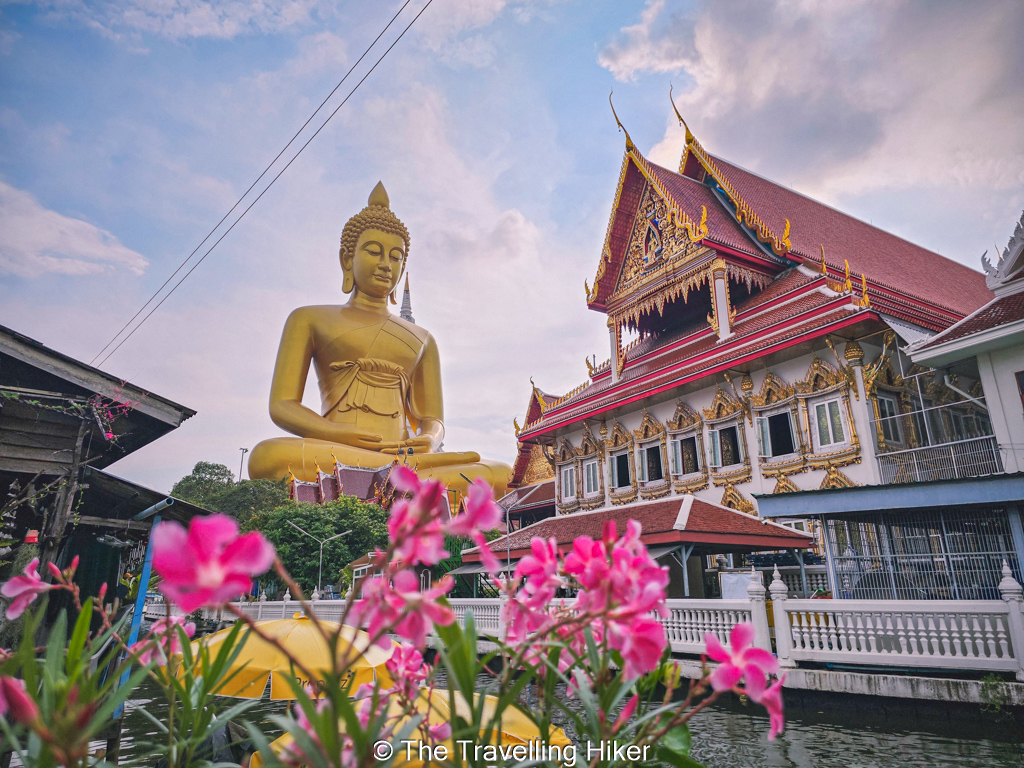
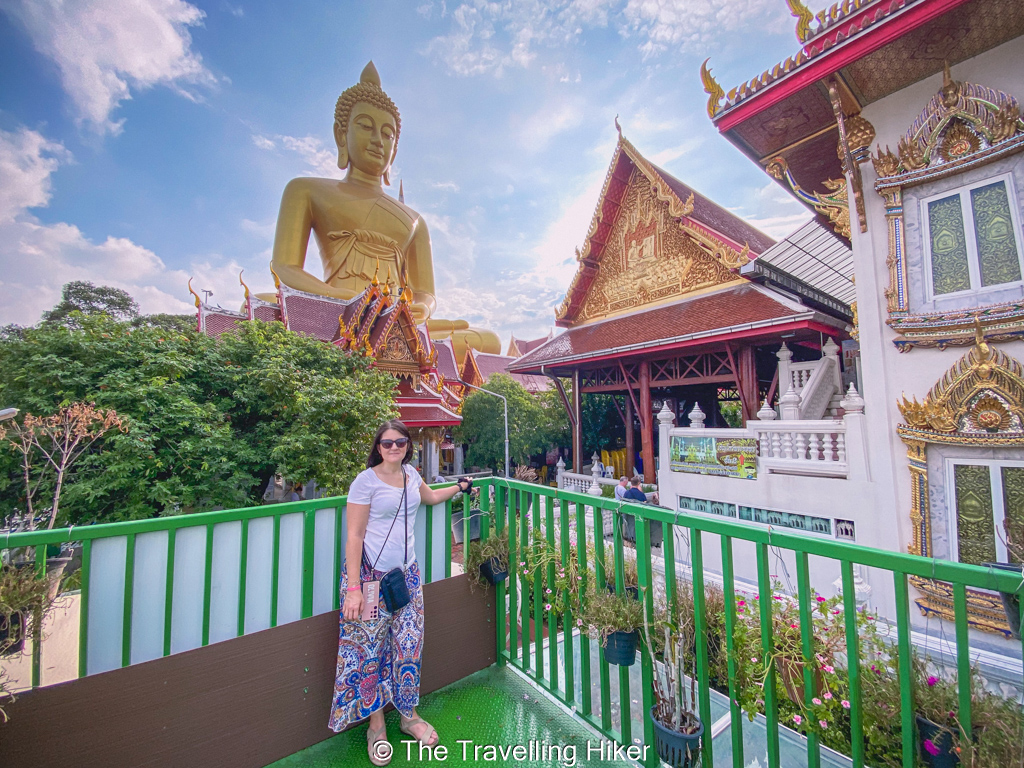
Giant Buddha at Wat Paknam Phasi Charoen
IS 5 DAYS ENOUGH TO VISIT BANGKOK?
Yes, 5 days is a good amount of time to visit Bankok, especially if it is your first time in the city. Bangkok is huge and you could easily spend much longer exploring it, but five days gives you enough time to see the main sights without having to rush through everything.
With five days, you can visit Bangkok’s most famous temples, explore some of its different neighborhoods, experience its markets and street food, and still have some time to see a different side of the city. You can also use one of the days for a day trip outside Bangkok, such as Ayutthaya, without feeling like you are missing too much in the city itself.
Of course, you won’t see everything in five days. And that’s perfectly fine. I would rather leave a few things for another visit than try to fit too much into each day. The itinerary below focuses on the places and experiences I thing are most worth your time while leaving some room to slow down and enjoy the city.
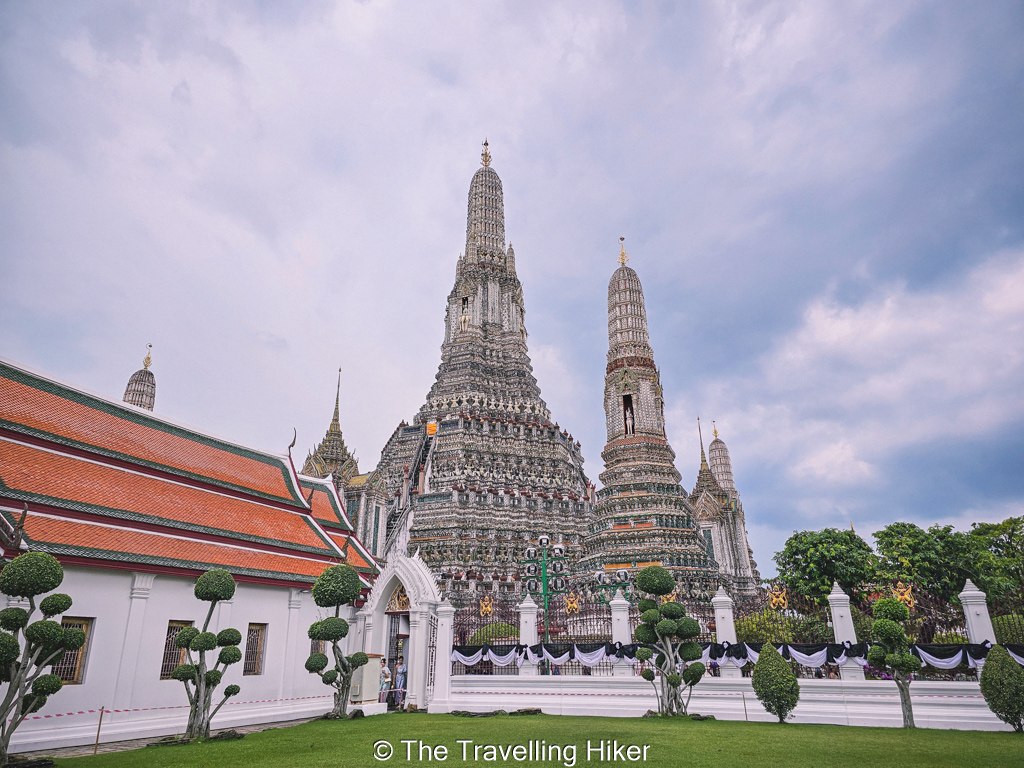
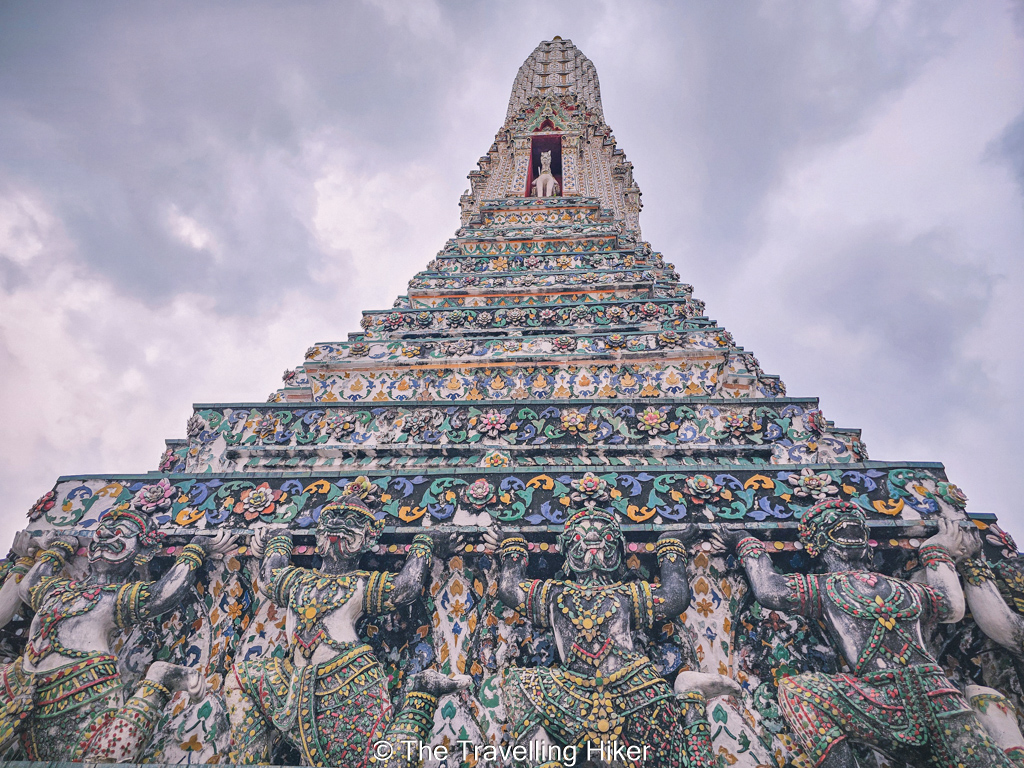
Wat Arun's central prang
WHAT TO DO IN BANGKOK IN 5 DAYS?
Before I share everything we did in Bangkok, I would like to clarify a few points.
You could probably fit more things into your itinerary, but we like to travel at a slower pace. For us, it is more about enjoying a place than ticking things off a checklist.
We spent a total of 5 days in Bangkok, but they were split between the beginning and the end our trip to Thailand. We had around 2.5 days in Bangkok at the beginning of our trip and another 1.5 days at the end.
The Grand Palace was closed on some of the days we were in Bangkok, so we had to rearrange our plans and visit some sights on different days than we originally intended. This meant that our itinerary is not necessarily organised in the most logical order.
For this reason, don’t feel that you have to follow our itinerary exactly as we did. Instead, use it as a guide and adapt it to your own trip.
Let’s jump into our Bangkok 5 day itinerary. I have also included a more detailed breakdown of each day, with practical information and tips to help you plan your own trip.
DAY 1 - THE GRAND PALACE, THONBURI AND CHAO PHRAYA
Time to start our first day in Bangkok! Make sure you enjoy a delicious breakfast before you start your itinerary, you’ll need the energy! The day is going to be filled with many different aspects of Bangkok!
STOP 1: THE GRAND PALACE
Every visit to Bangkok should begin at the Grand Palace! The complex is huge and there is a lot to see: the palace buildings, the Temple of the Emerald Buddha (Wat Phra Kaew) and Queen Siritkit Museum of Textiles.
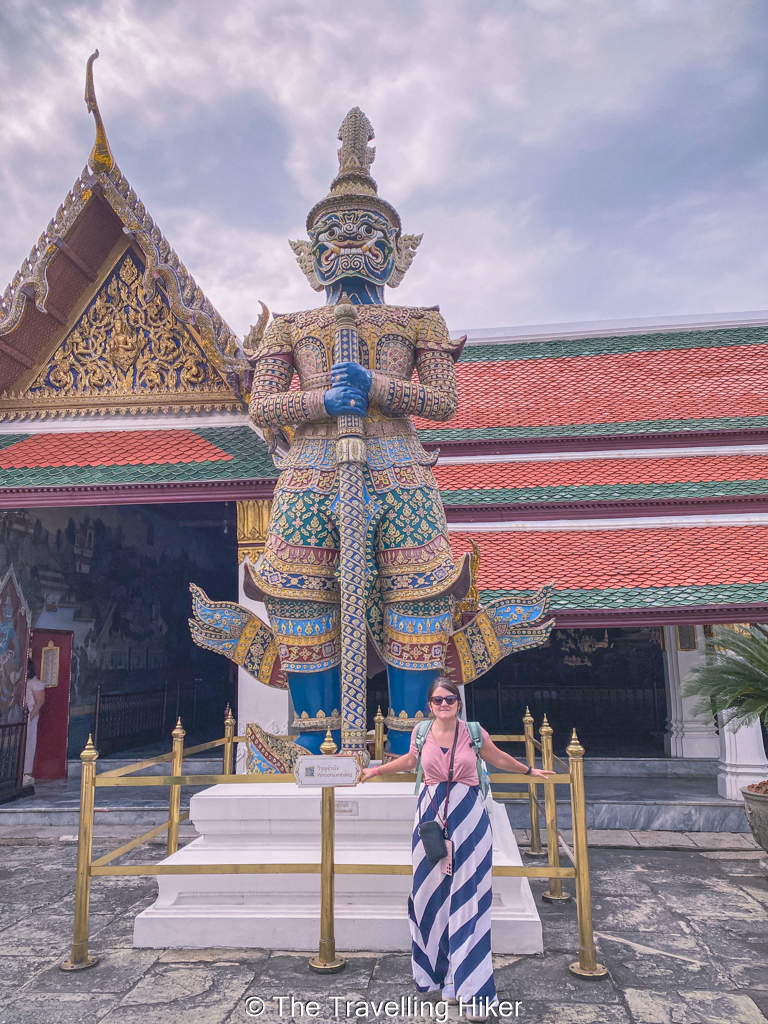
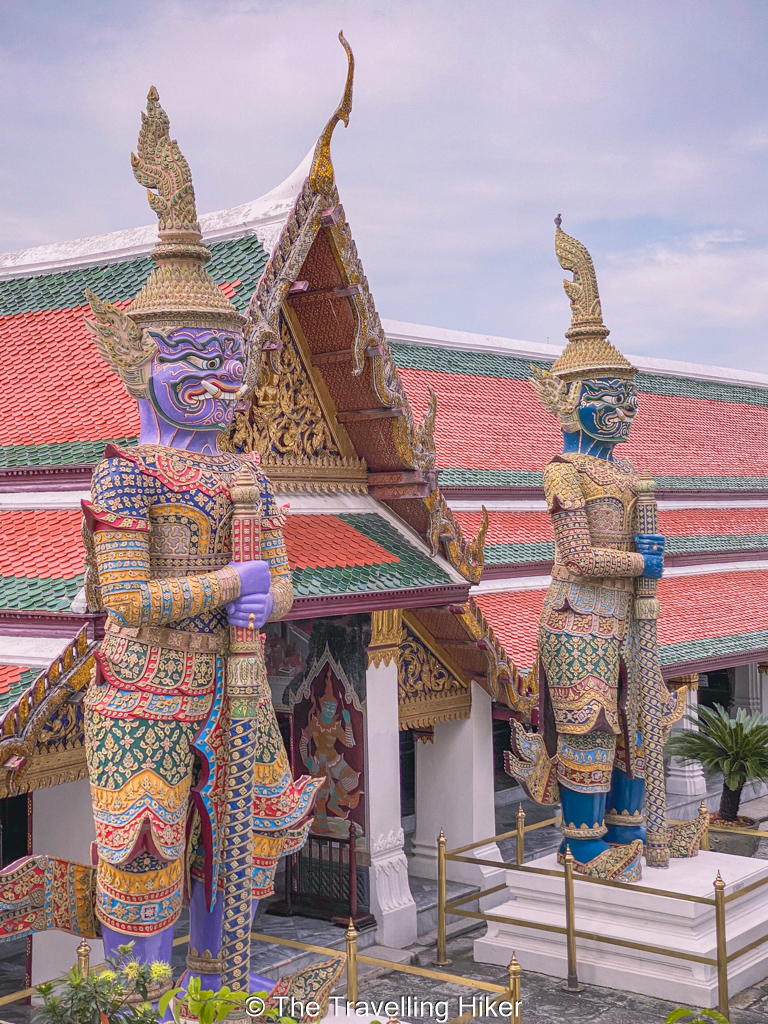
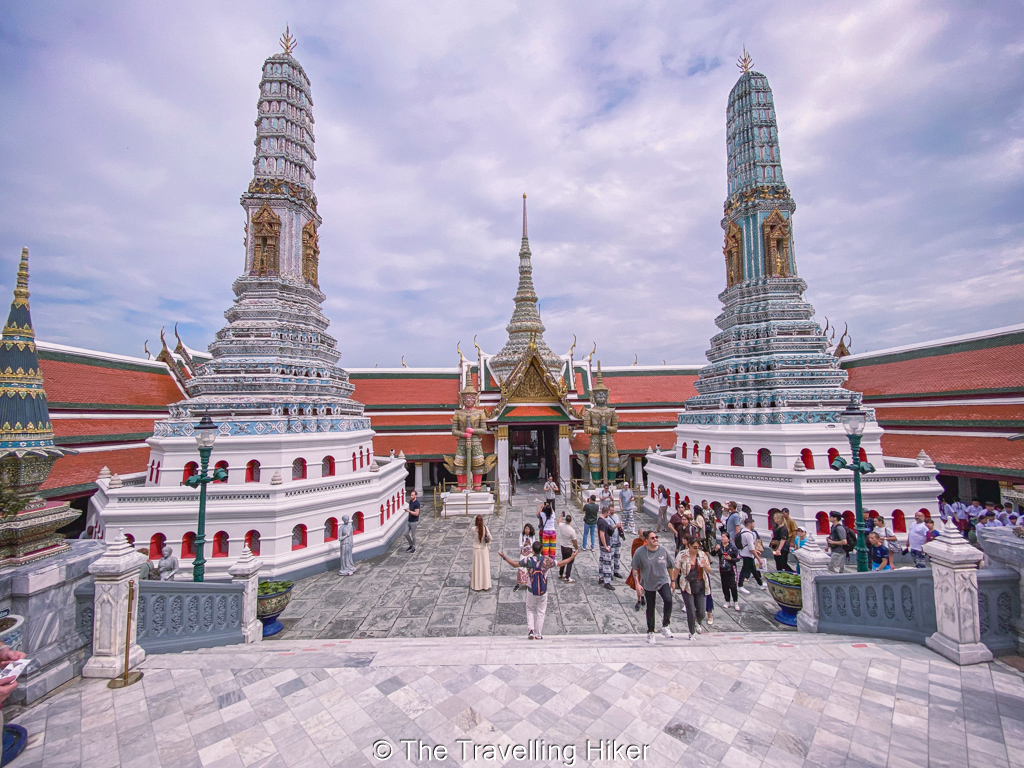
The Grand Palace is one of the most impressive sights in Bangkok. Everywhere you look you will be amazed by the colourful and intricate details. From the paintings on the walls, to the Yaksha warriors protecting the Temple of the Emerald Buddha. Take your time exploring the complex.
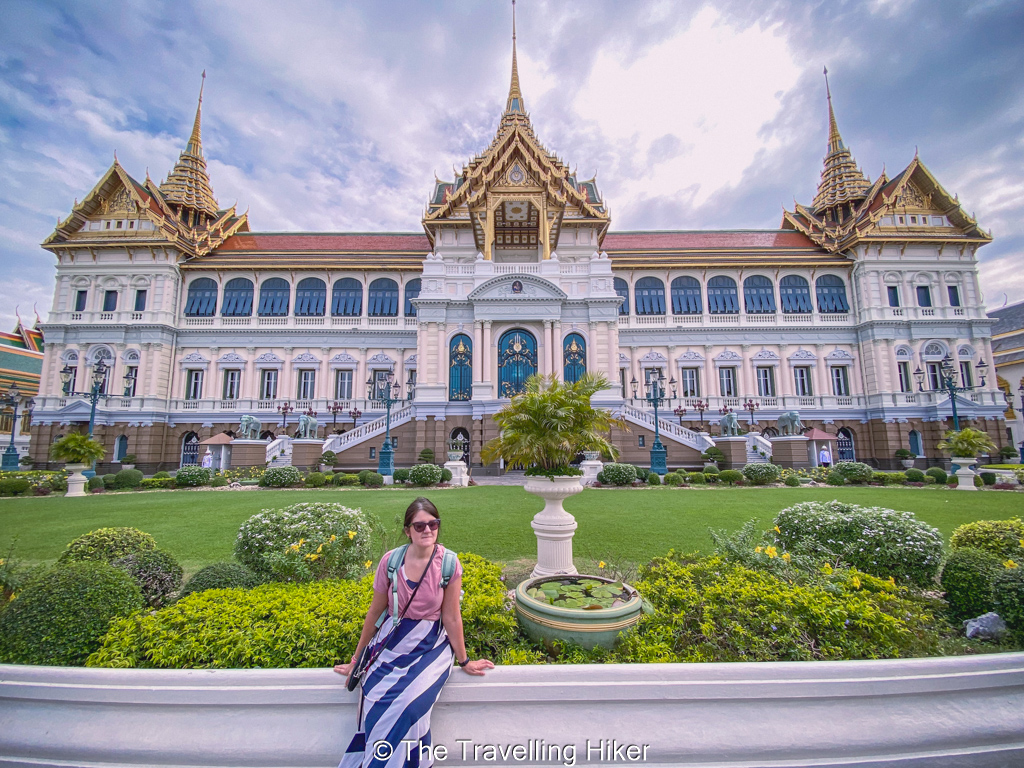
In front of the Grand Palace
The Yakshas were my favorite part of the Grand Palace
More Yakshas
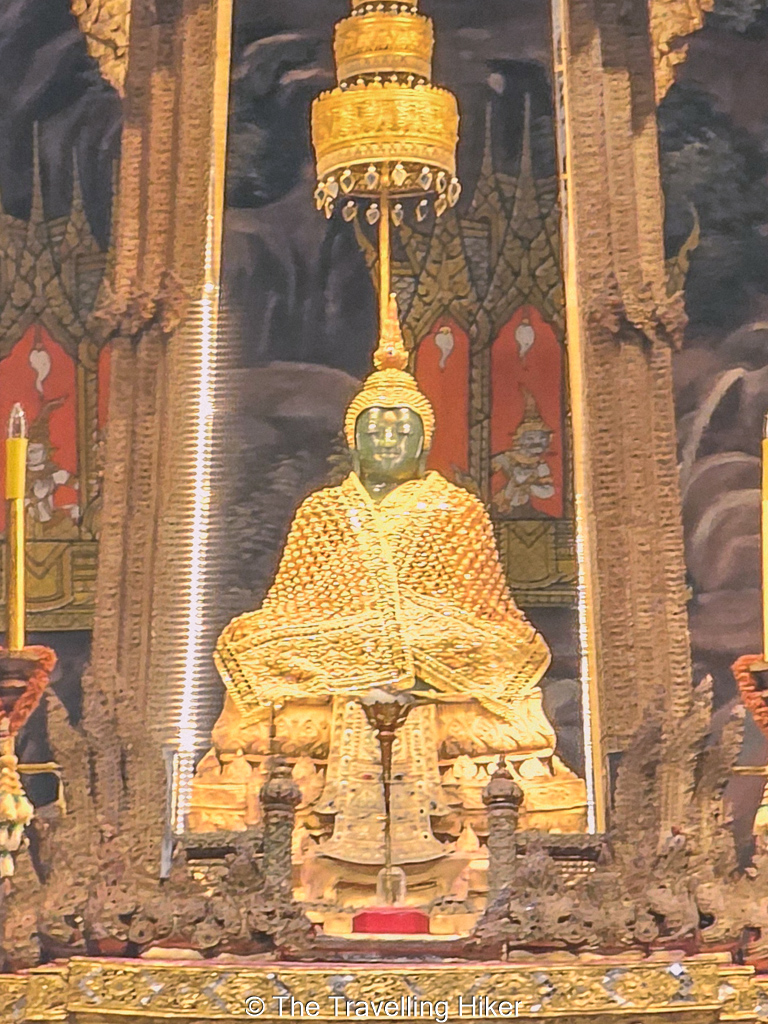
Inside the Grand Palace you will also find Wat Phra Kaew or the Temple of the Emerald Buddha, which is famous for its Buddha image carved from a single block of jade. This statue is considered the spiritual protector of the Thai kingdom.
Wat Phra Kaew main hall
Emerald Buddha
Practical information
Price. Tickets to visit the Grand Palace cost 500 THB per person (prices in 2026). The ticket will allow you to visit the Palace Grounds, Wat Phra Kaew and Queen Sikirit Museum of Textiles.
Opening hours. The palace is open daily from 8:30 to 16:30. I recommend getting there as soon as it opens since it gets really busy as the day goes on.
Time needed to visit. You will need a minimum of 2 hours to visit the palace, maybe more. We spent there all morning.
Dress Code. There is a very strict dress code enforced. Shouldres and knees need to be covered. If you are not dressed appropriately, you will be forced to buy something to cover them or you will be denied entry to the palace.
Entrance to the Grand Palace
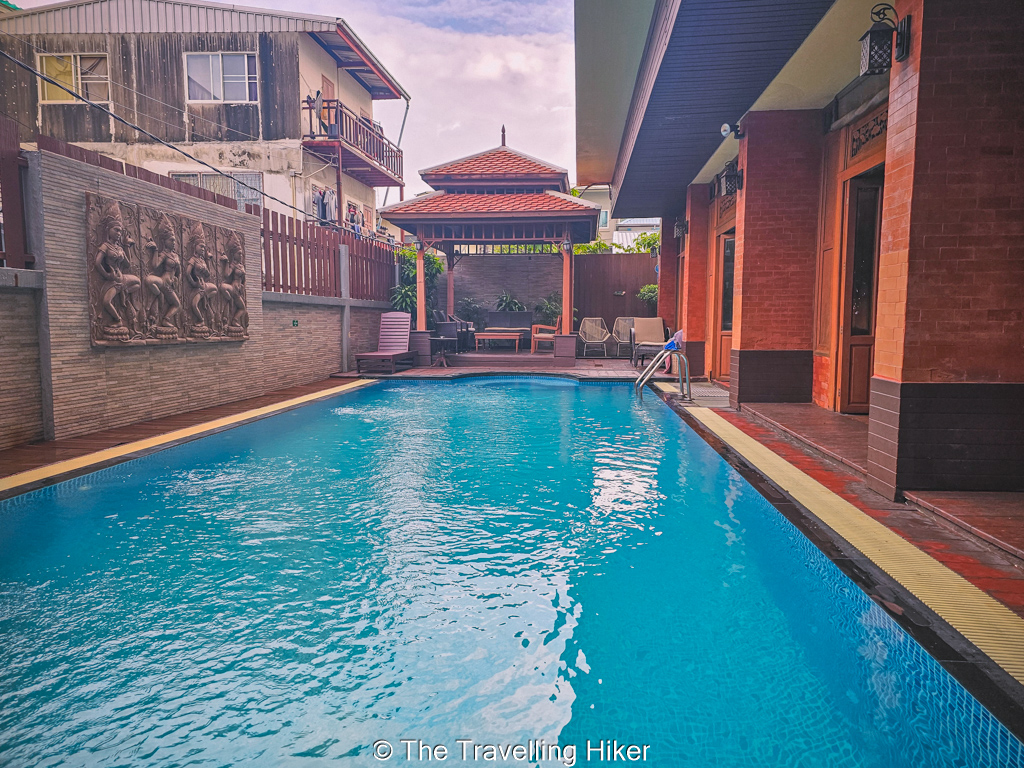
STOP 2: COOL DOWN AND RELAX IN THE POOL OF OUR HOTEL
By the time we were done visiting the Grand Palace it was already past noon so we decided to return to the hotel to relax and cool down. Bangkok can get very hot, especially when you spend the morning walking around outside.
Instead of immediately moving on to the next sight, we went back to our hotel and spent some time relaxing by the pool. It was exactly what we needed before continuing with our day.
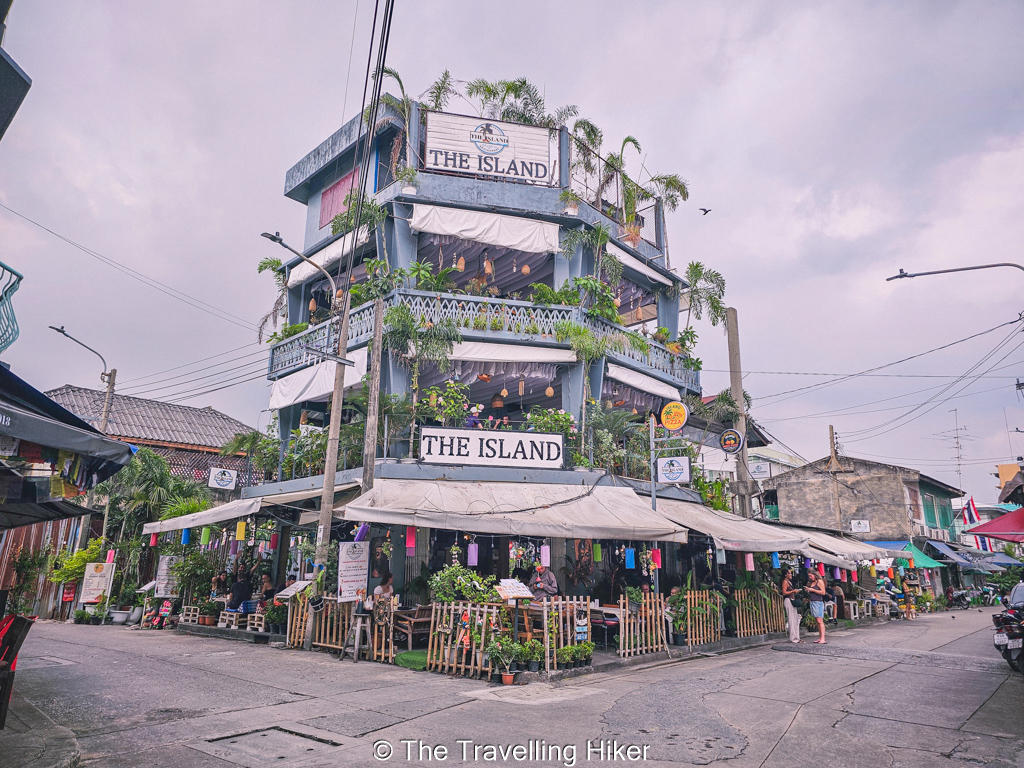
STOP 3: LUNCH AT THE ISLAND BANGKOK
Once we had cooled down and relaxed for a while, it was time for lunch. We headed to The Island Bangkok, a restaurant with really good reviews not far from our hotel.
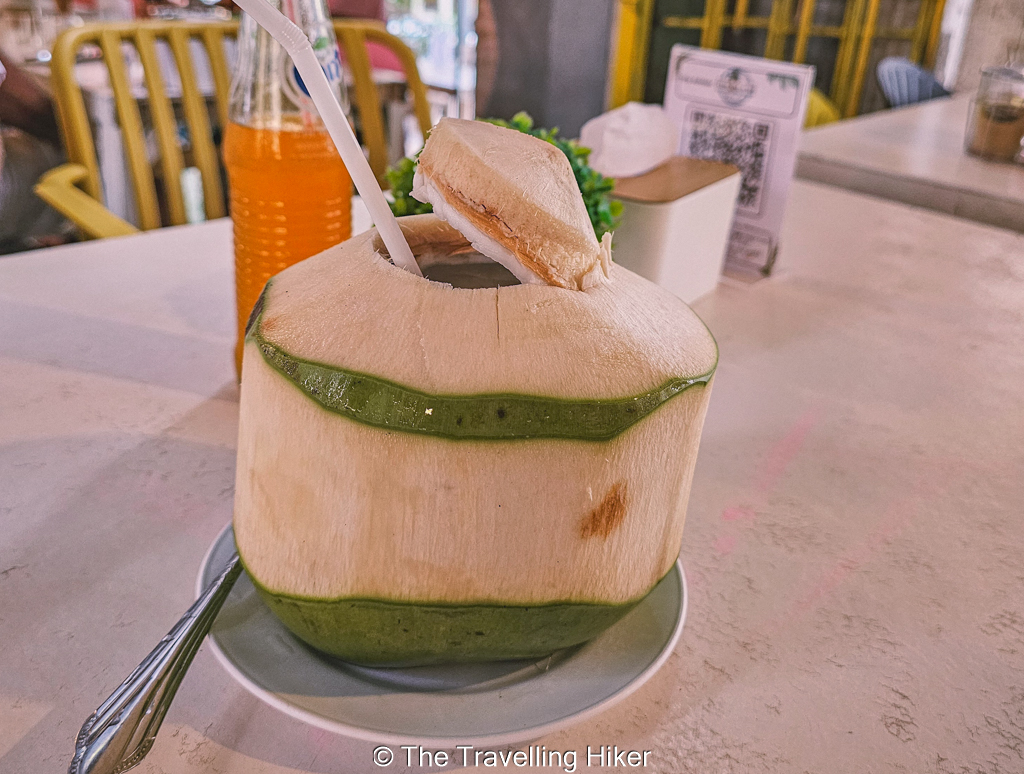
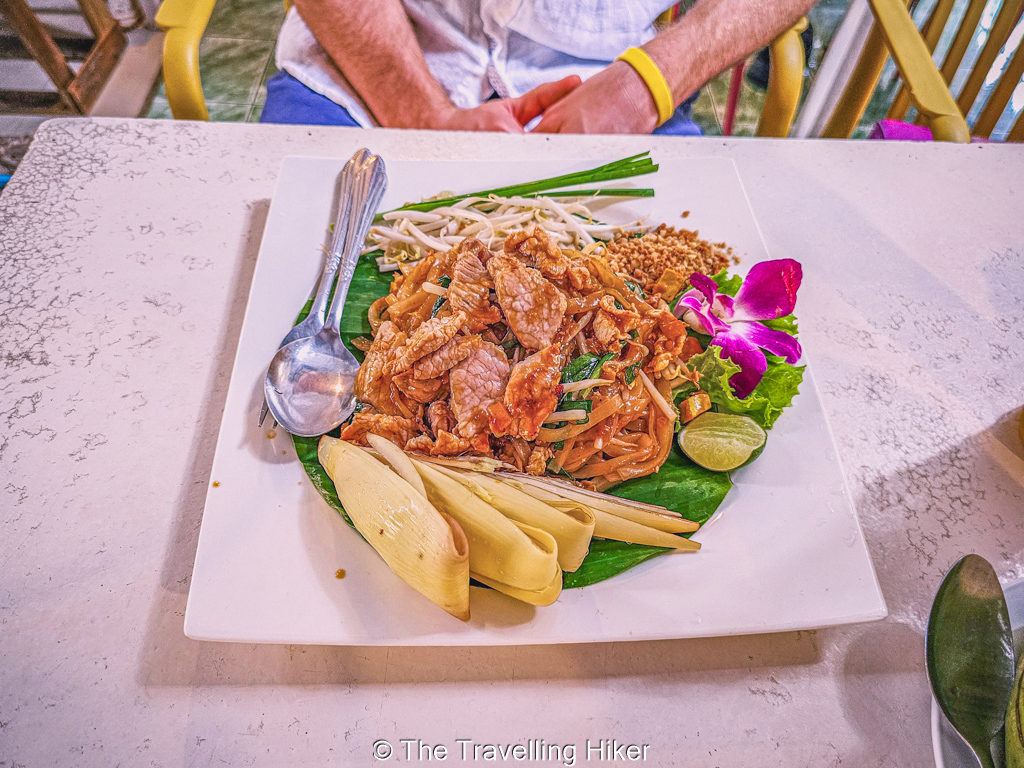
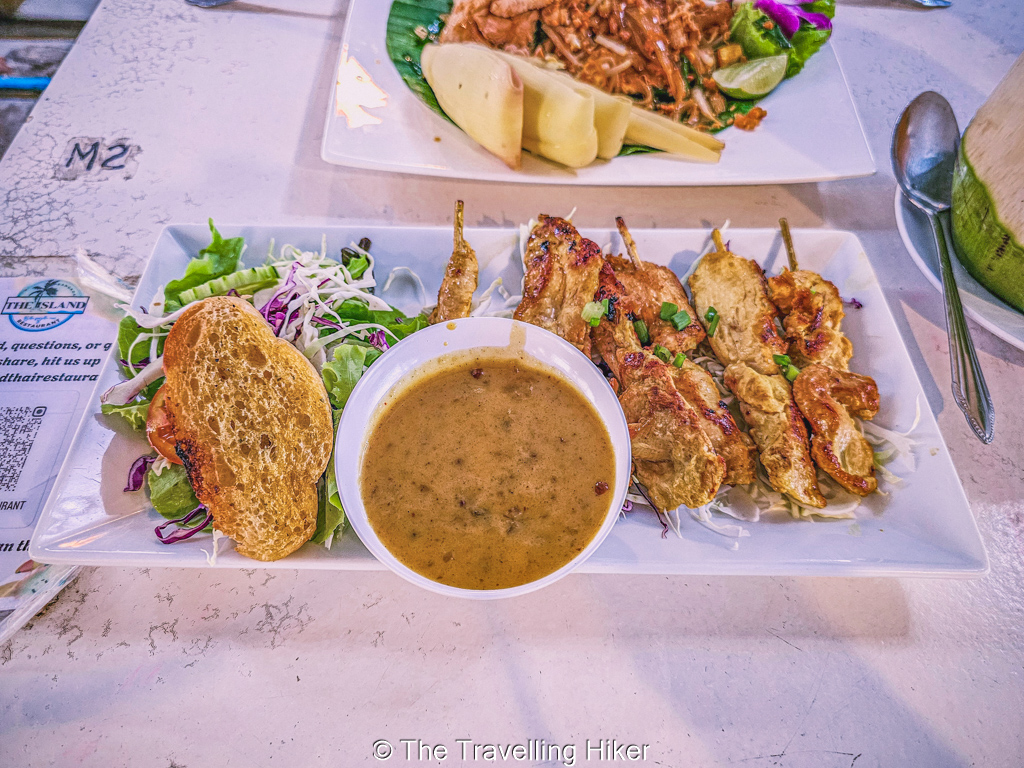
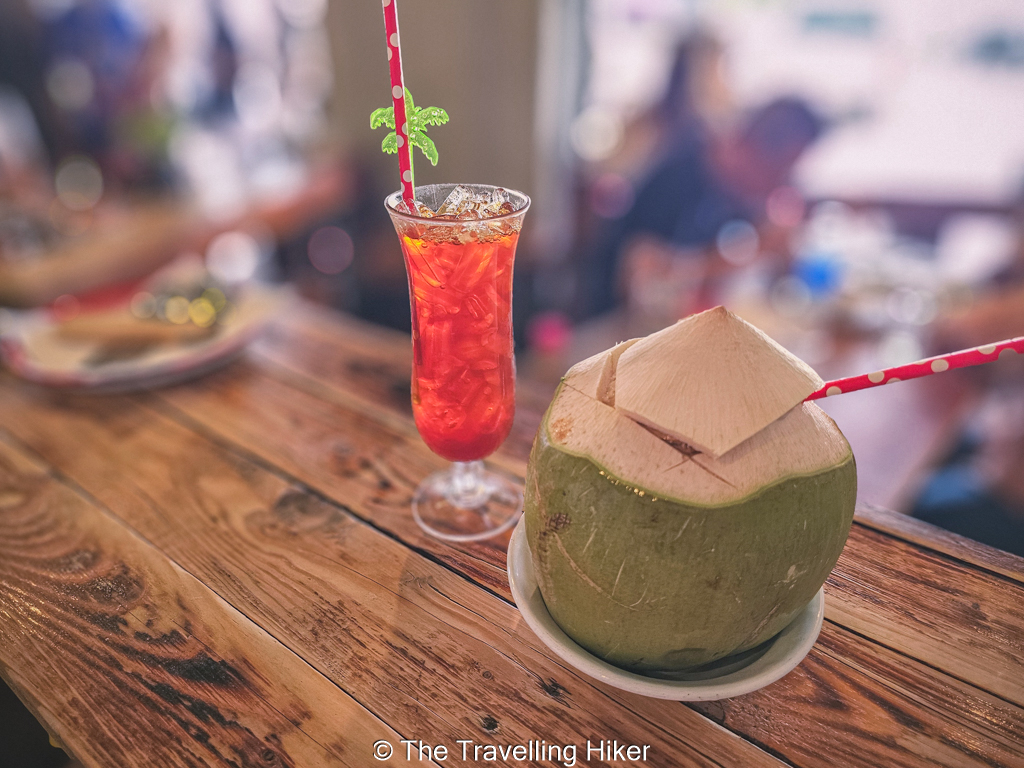
A delicious Pad Thai and some chicken satay skewers were just what we needed to have enough energy for the afternoon. And of course, I also had to have my first coconut of the trip! I’m addicted to them!
The Island Bangkok
Refreshing coconut
Chicken Pad Thai
Chicken Satay
STOP 4: WAT PAKNAM PHASI CHAROEN TEMPLE
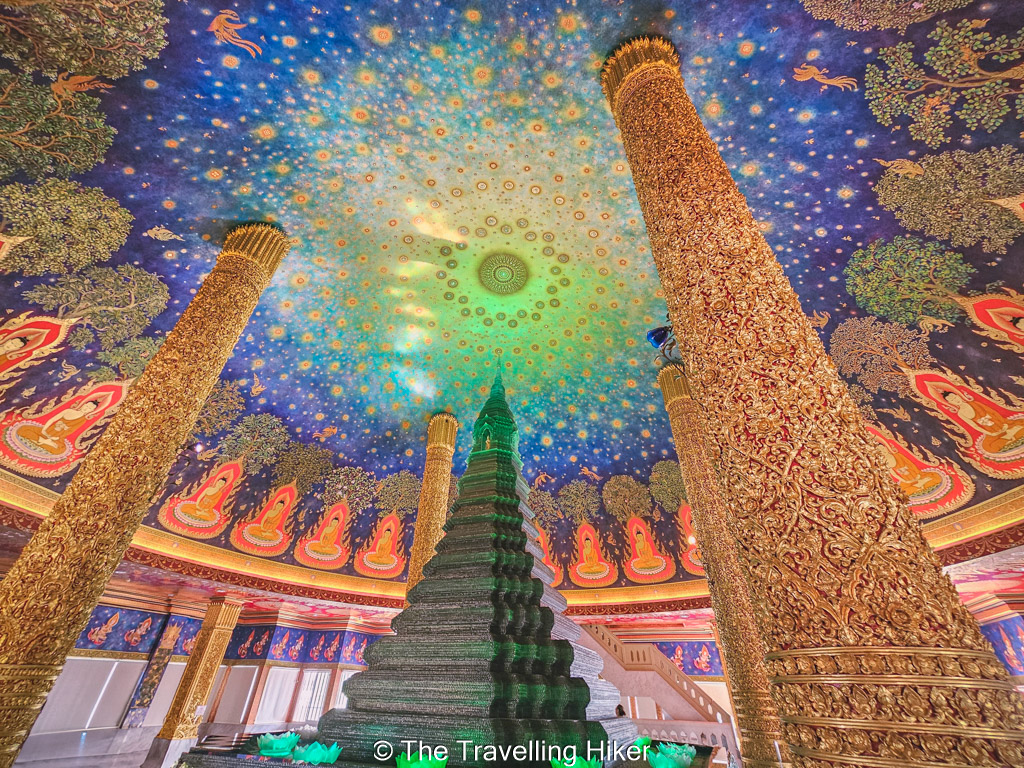
After lunch, we called a Grab and headed to our next stop: Wat Paknam Phasi Charoen, a large Buddhist temple in Thonburi. The temple is particularly famous for its impressive glass stupa, with a colourful ceiling and a large sitting Buddha next to one of the canals.
After the busy Grand Palace, this temple was quite calm and relaxing. There were fewer tourists around and we could explore the temple complex peacefully.
Colourful Meditation Hall at Wat Paknam Phasi Charoen
The temple is a little further away from Bangkok’s main tourist sights, but I think it is worth adding to your itinerary if you want to see another side of the city.
While you’re there, don’t limit yourself to the temple. Walk through the neighbouring alleys for a better view of the Buddha.
Observation platform at Wat Paknam
Practical information
Price. You can visit Wat Paknam Phasi Charoen for free.
Opening hours. The temple is open daily from 8:00 to 18:00.
Time needed to visit. You will somewhere between 45 minutes to 1 hour.
Dress Code. You are visiting an active worship place, so you will have to cover your knees and shoulders. Ton the enter any temple’s buildings, you will also have to remove your shoes.
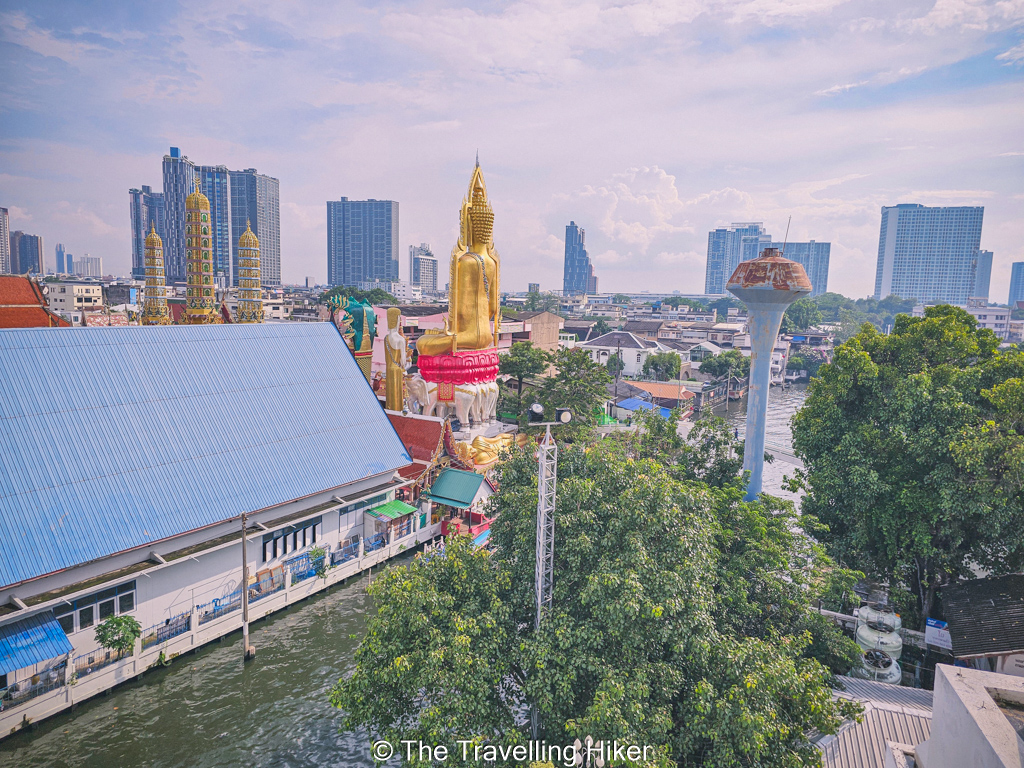
View from the temple stupa
The big Buddha across the canals
STOP 5: BOAT RIDE IN THE KHLONGS
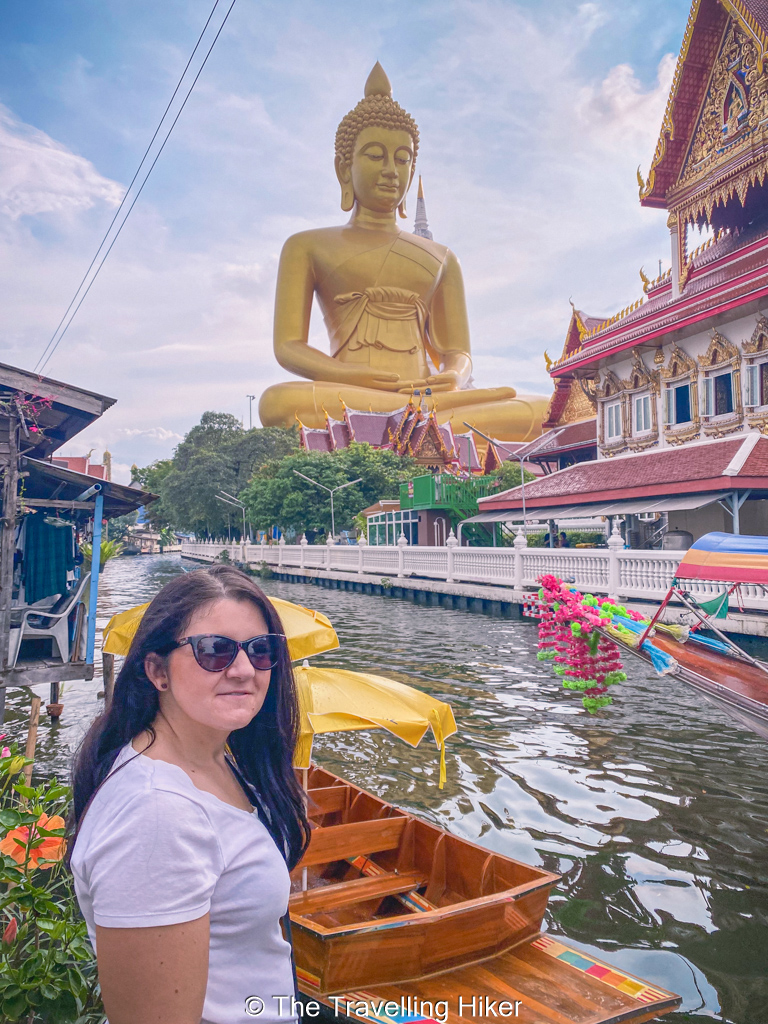
From Wat Paknam, we continued our exploration of the Thonburi area by boat. This part of Bangkok is known for its khlongs, or canals, which are an interesting contrast to the busy roads and modern buildings elsewhere in the city.
The boat ride took us through smaller canals where we could see houses, temples and everyday life along the water. It was a very nice activity to do because it gave us a completely different perspective of Bangkok.
Practical information
Price. A short boat ride along the khlongs costss approximately 200 THB (prices in 2026).
Duration. The boat ride lasts around 45 minutes.
Book in advance. You can book this activity in advance here.
STOP 6: ICONSIAM MALL
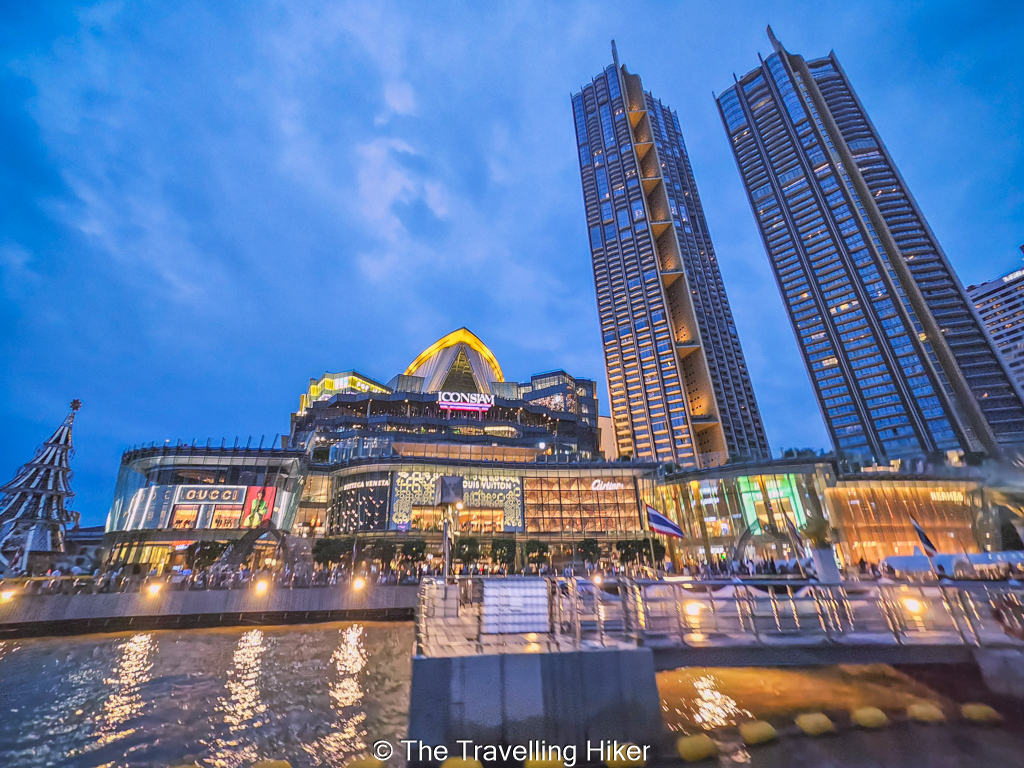
After our boat ride, we called another Grab and heades to ICONSIAM, one of Bangkok’s largest and most impressive shopping malls. We are not usually the type of travelers who spend hours shopping, but ICONSIAM is worth visiting even if shopping isn’t your thing.
The building itself is impressive, and there are plenty of restaurants and places to stop for a drink. We just walked around the mall and window-shopped for a while. When we got tires, we got a drink at the Starbucks on the top floor and enjoyed the views of the Chao Phraya River while we relaxed.
Tip: If you don’t feel like getting a drink, there is also a free rooftop terrance next to Starbucks.
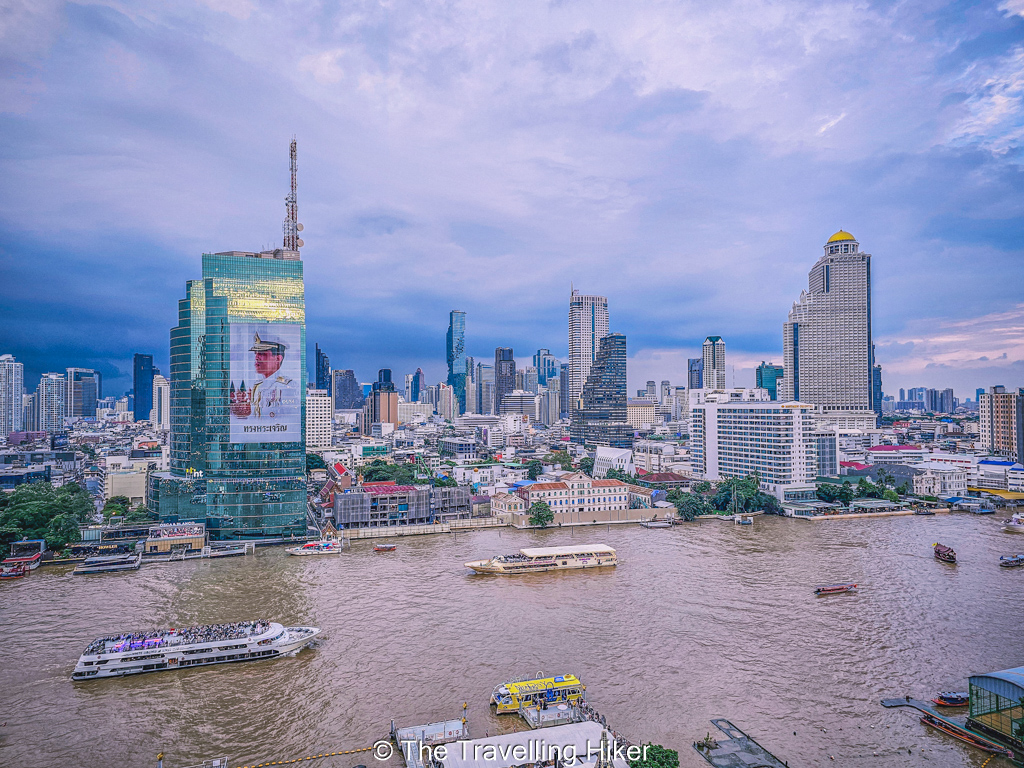
View of the Chao Phraya River from ICONSIAM rooftop terrace
ICONSIAM mall building from the Chao Phraya
STOP 7: SUNSET BOAT RIDE ON THE CHAO PHRAYA
By late afternoon, we made our way back onto the water, this time along the Chao Phraya River.
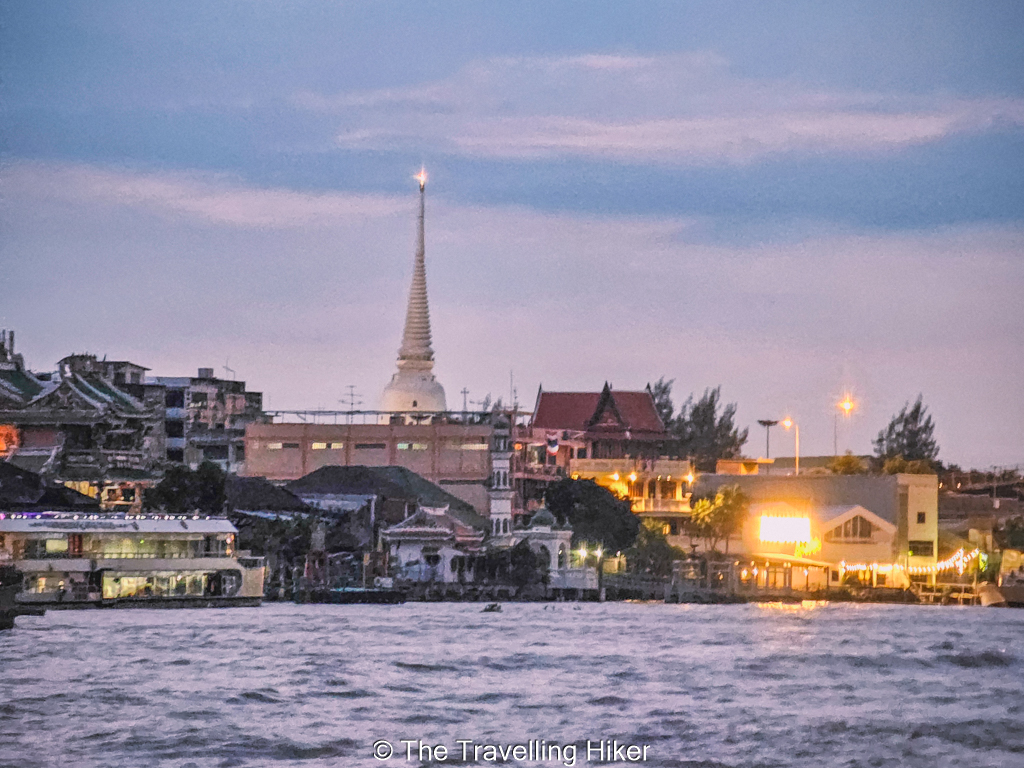
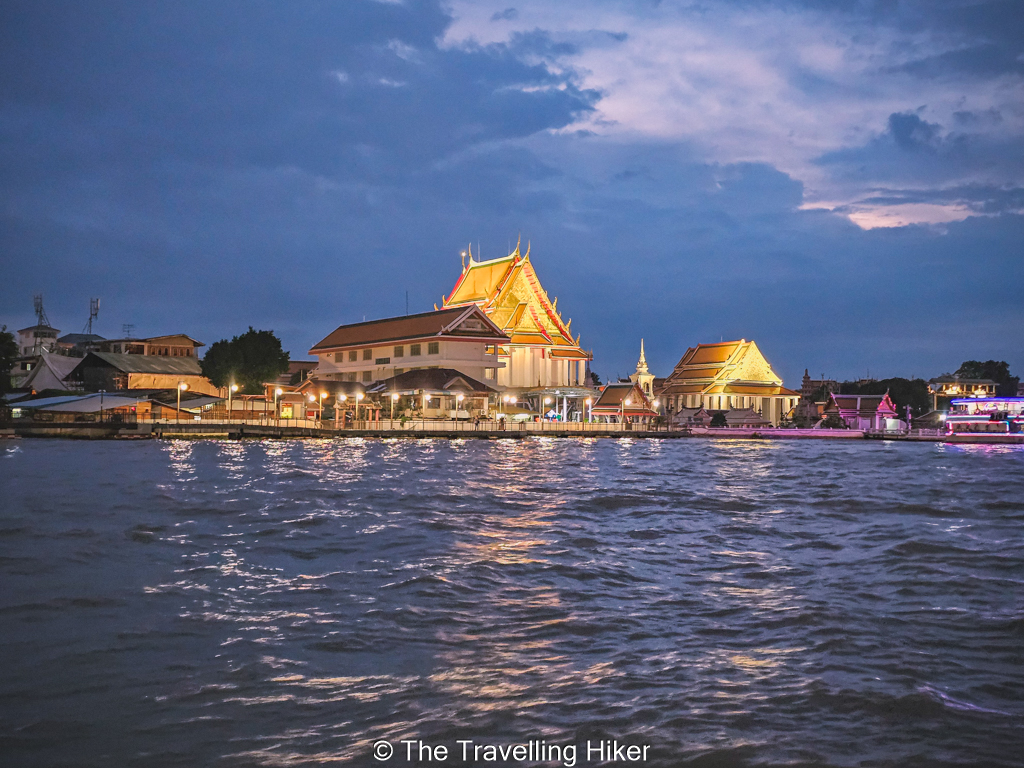
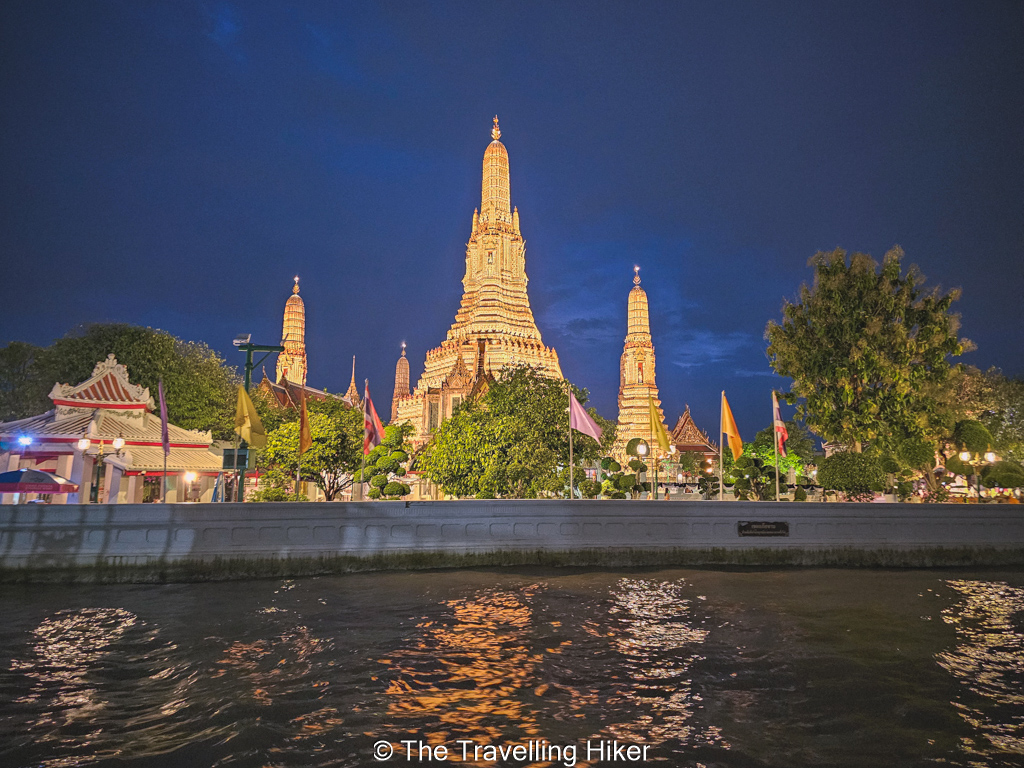
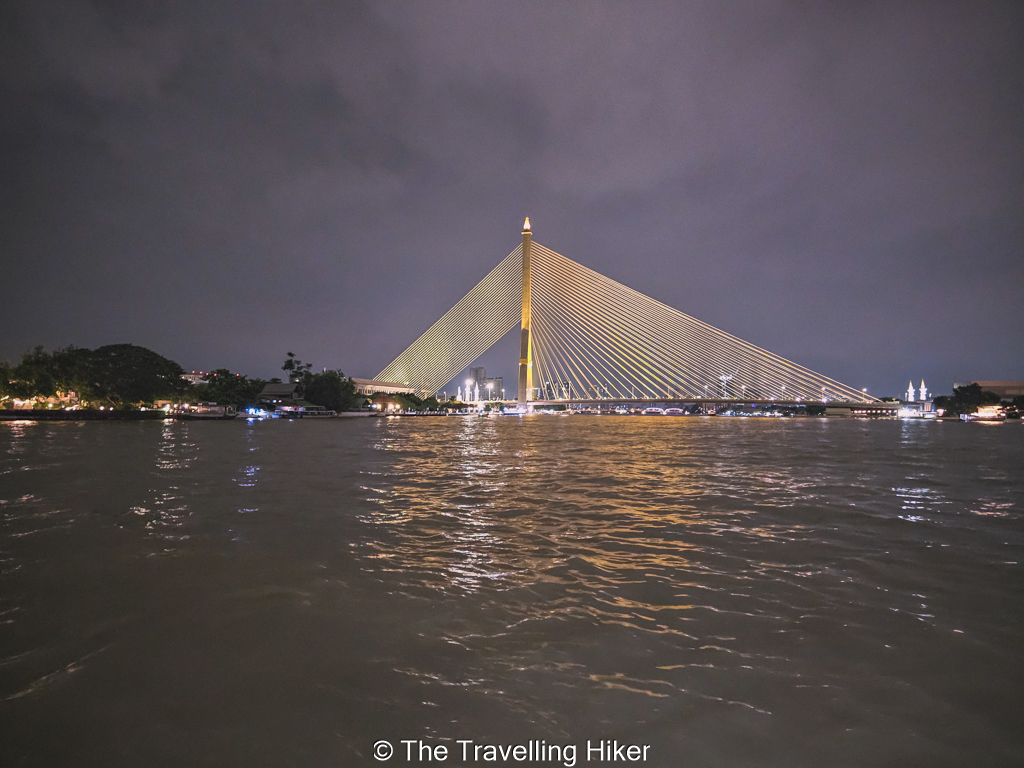
This was a completely different experience from the earlier trip through the khlongs. As the sun started to go down, the buildings along the river slowly lit up and Bangkok began to look completely different.
Wat Prayurawongsawat from the Chao Phraya
Wat Kalayanamit lit up
Practical information
Dinner Cruise. If you feel like having a fancy dinner, you can book a dinner cruise along the Chao Phraya River. You will have dinner while watching Bangkok light up. Book your dinner cruise here.
Chao Phraya Tourist Boat (Blue Flag Line). If you just want to experience the boat ride but don’t care about the dinner, you can take this option. This line is designed specifically for tourists and runs daily until 20:00. It stops at famous sights such as ICONSIAM, Chinatown, Wat Arun and Khao San Road. It only costs 40 THB per ride or 150 THB for unlimited rides per day. We chose this option and loved the experience.
Wat Arun at night
Somdet Phra Pinklao Bridge
STOP 8: KHAOSAN ROAD
We ended our first day in Bankok at Khaosan Road. After such a long day, we were ready for some food and a drink, so we decided to explore the area.
Khaosan Road is definitely lively and very touristy, with lots of bars, restaurants, street food and shops. I have to say it was not our cup of tea, but at least we can say we checked it out.
We decided to just have dinner at Prime Burger near Khaosan Road and eventually headed back to our hotel for some well-deserved rest.
DAY 2 - TEMPLES AND CHINATOWN
Our second day in Bangkok was all about temples. We visited some the city’s most beautiful temples, including a few that are a little less known, before making our way towards Chinatown in the afternoon.
STOP 1: GOLDEN MOUNT TEMPLE (WAT SAKET)
We started our second day in Bangkok at Wat Saket, also known as the Golden Mount Temple. This temple is located on top of a small artificial hill and is one of the best places to get a different perspective of Bangkok.
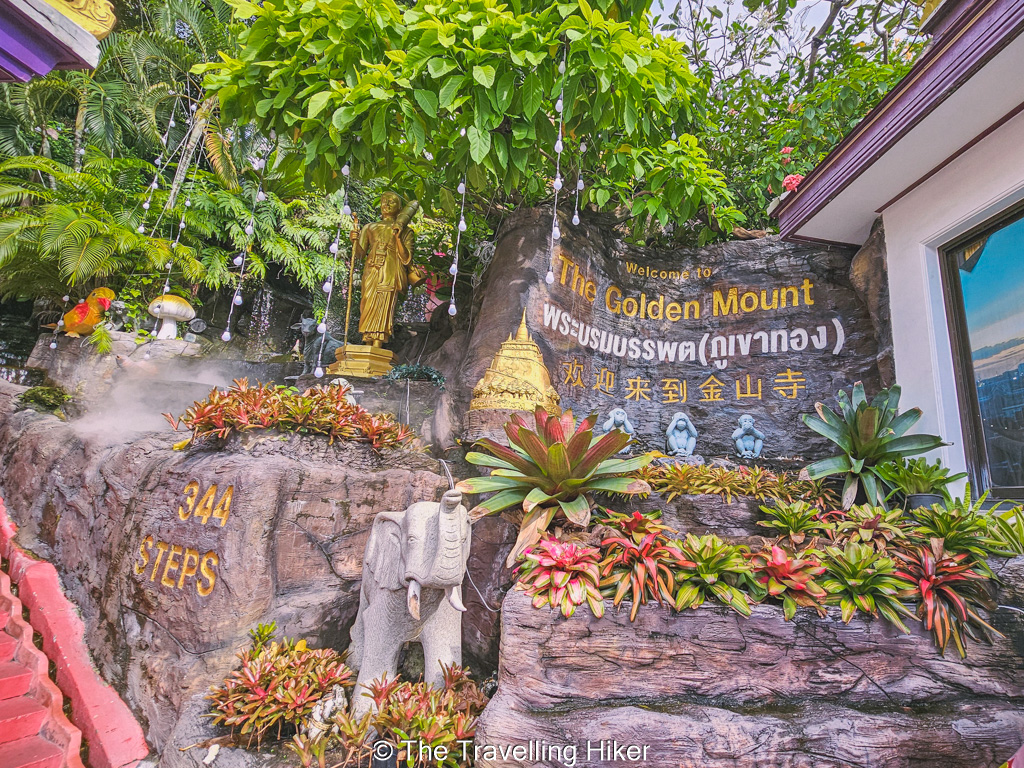
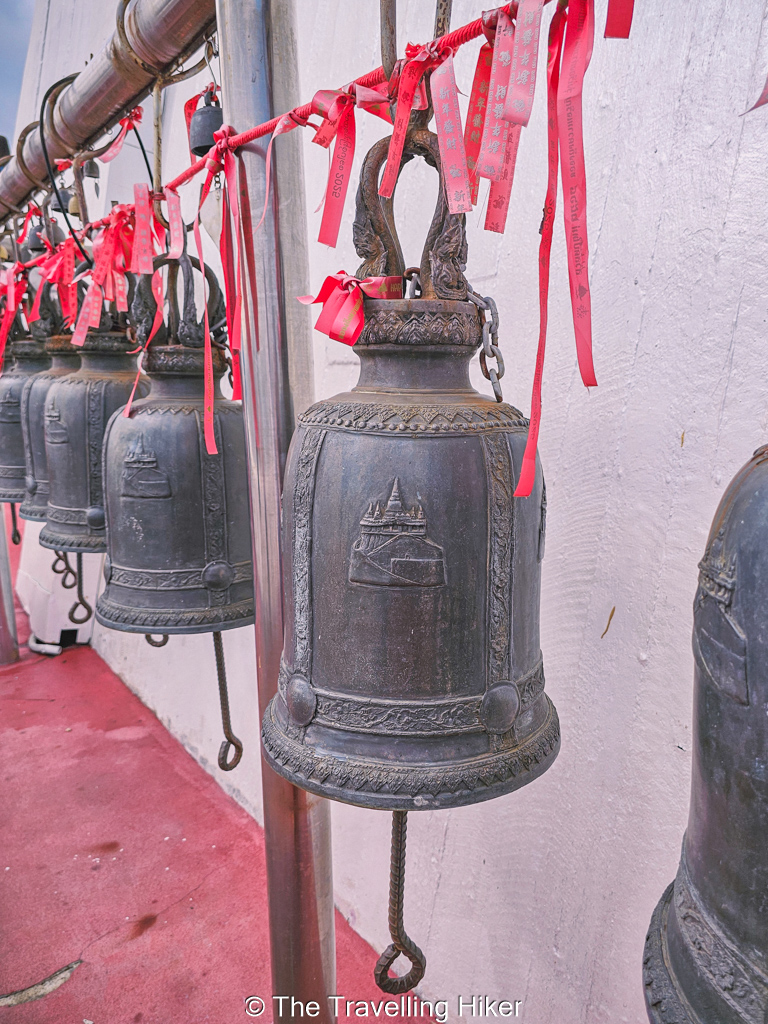
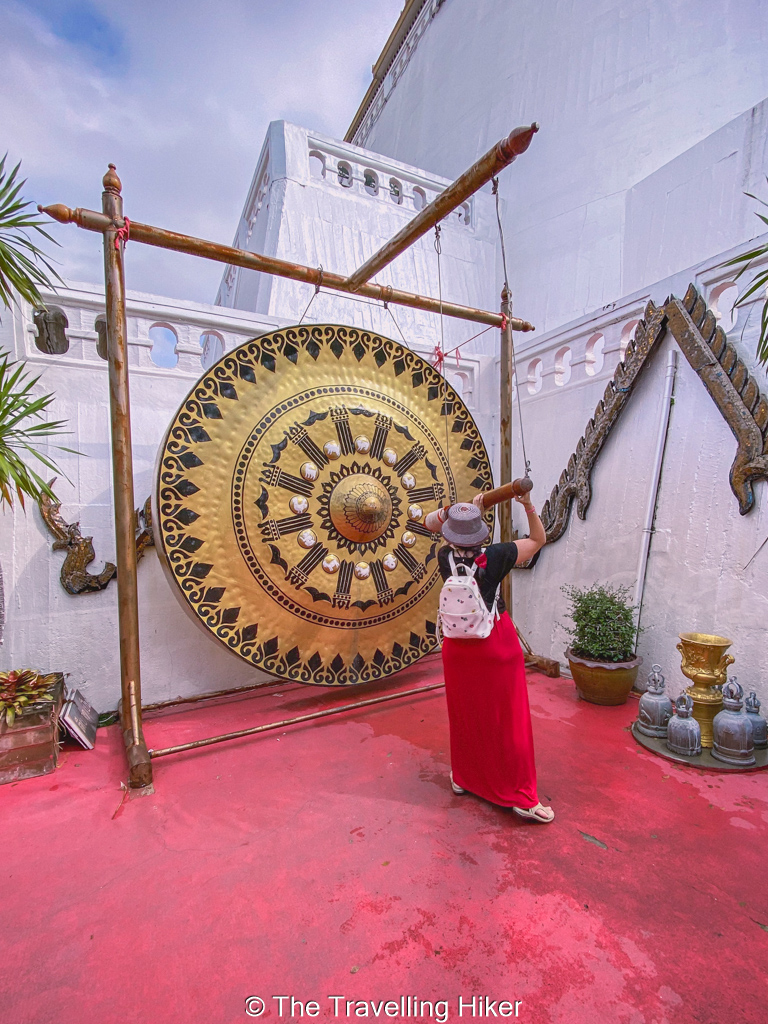
To reach the temple, you have to climb 344 steps to the top. Don’t worry, the climb is not particularly difficult, as the steps are quite small. In addition, there are plenty of stops along the way, with viewpoints over the city, bells, a huge gong, statues and greenery.
Entrance to the Golden Mount
Prayer bells at the Golden Mount
Playing the big gong at Wat Saket
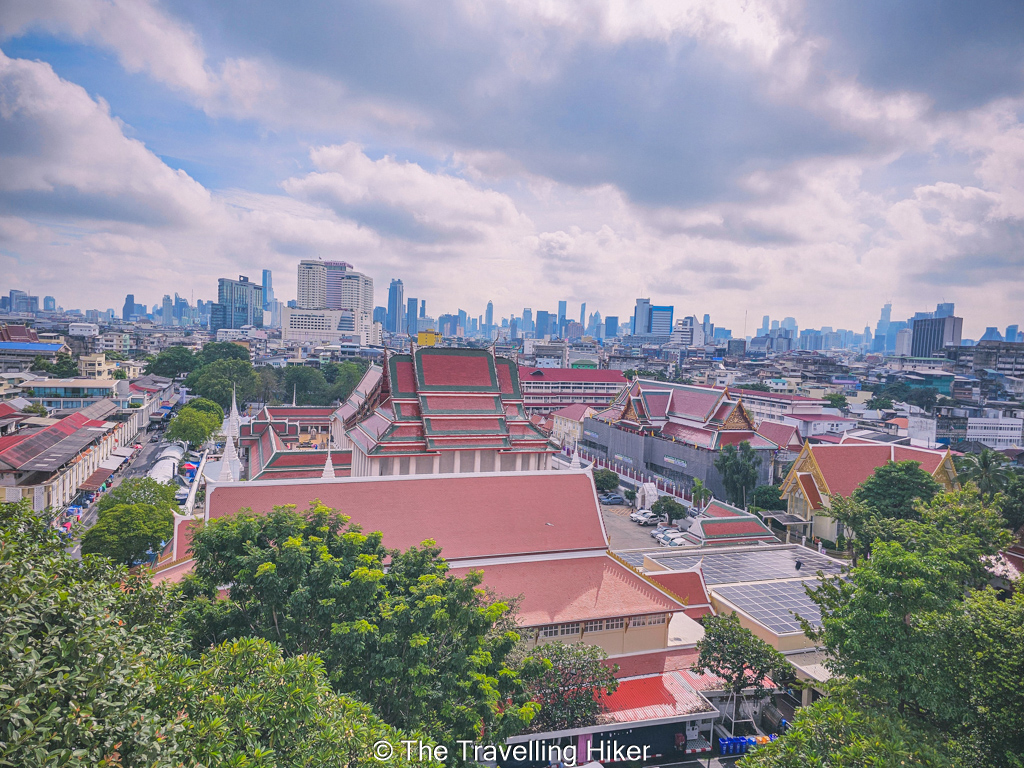
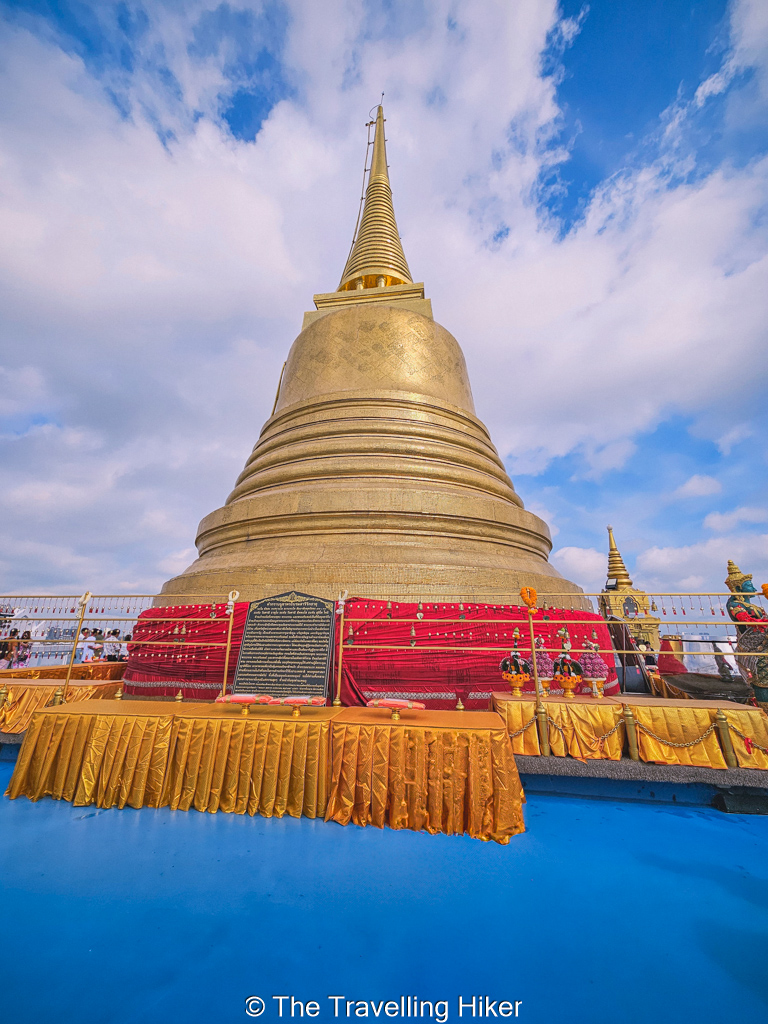
Once you reach the top, you will find a golden chedi and a small temple. The best part for me was the view. From here, you can see Bangkok’s skyline, including some of its modern skyscrapers, as well as many of the older buildings and temples around the city.
We spent around 30 minutes exploring the temple and enjoying the views before heading to our next stop.
Practical information
Price. 100 THB per person.
Opening hours. The temple is open between 7:00 and 19:00.
Time needed. Around 30 to 45 minutes.
Dress code. As with most Buddhist temples in Bangkok, shoulders and knees should be covered.
View from the top of the Golden Mount
Golden Chedi at Wat Saket
STOP 2: LOHA PRASAT OR WAT RATCHANATDARAM
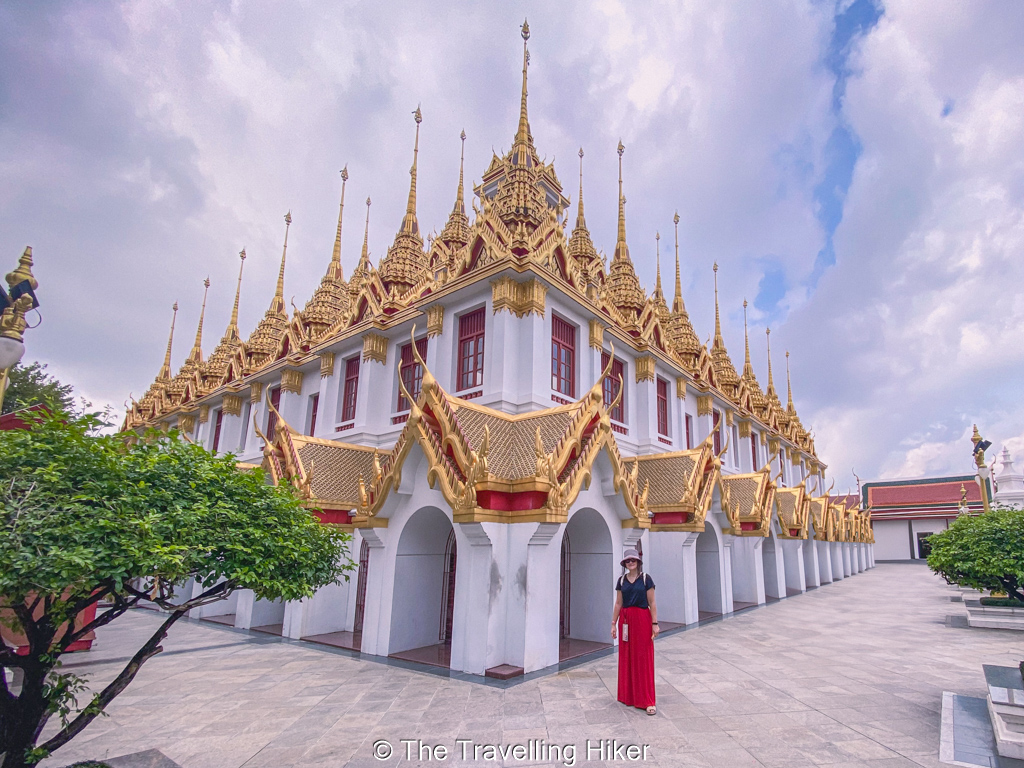
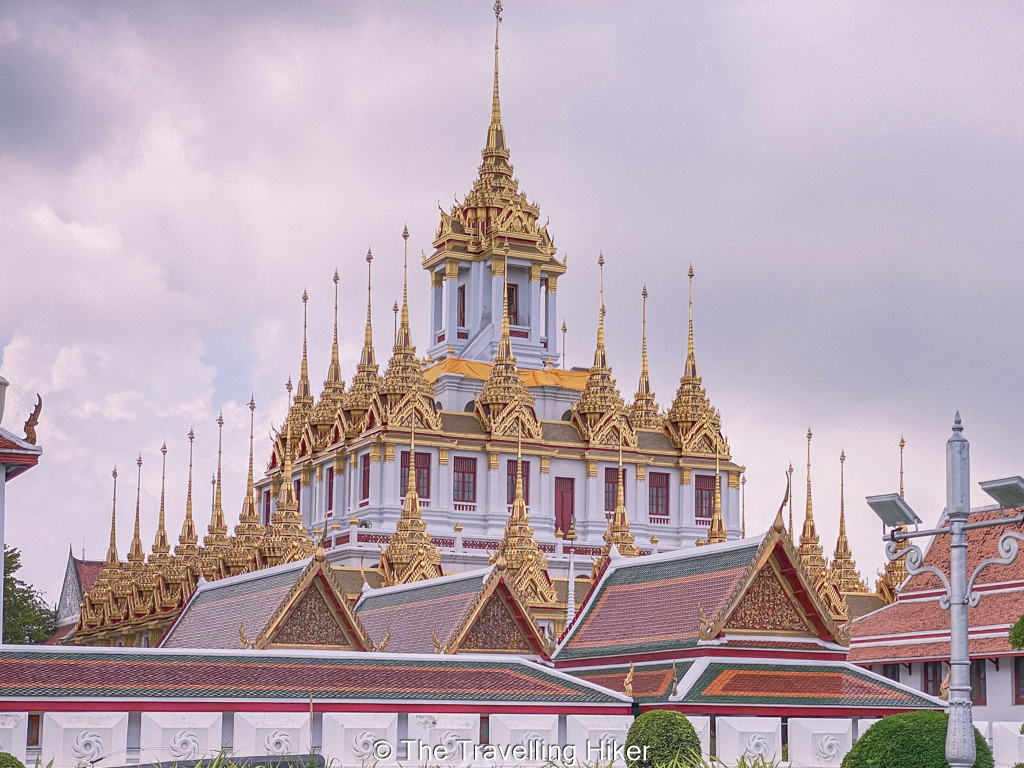
From Wat Saket, we walked to our next stop, Wat Ratchanatdaram, also known as Loha Prasat. This temple is quite different from the others we visited in Bangkok and is probably one of the most unusual temples in the city.
The first thing you will notices is its impressive structure with multiple levels and tall metal spires, which represent the 37 qualities you need to reach enlightenment. You can walk around the different floors and enjoy the views over the surrounding area. The higher you go, the better the views become.
I really liked how different Loha Prasat felt compared to Wat Saket.
Practical information
Price. Free is you only visit the outside. 100 THB per person if you want to climb the different levels.
Opening hours. The temple is open between 8:00 and 17:00.
Time needed. Around 30 minutes.
Dress code. Shoulders and knees should be covered.
Standing in front of Loha Prasat
Top levels of Loha Prasat
STOP 3: THE GIANT SWING AND WAT SUTHAT TEP
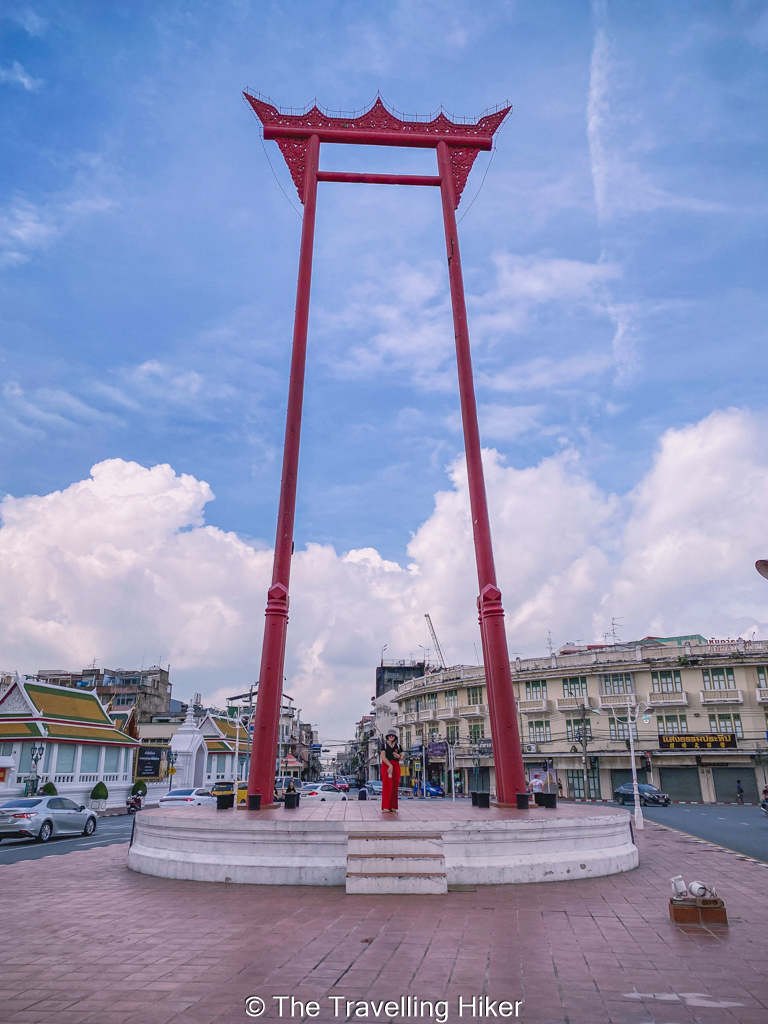
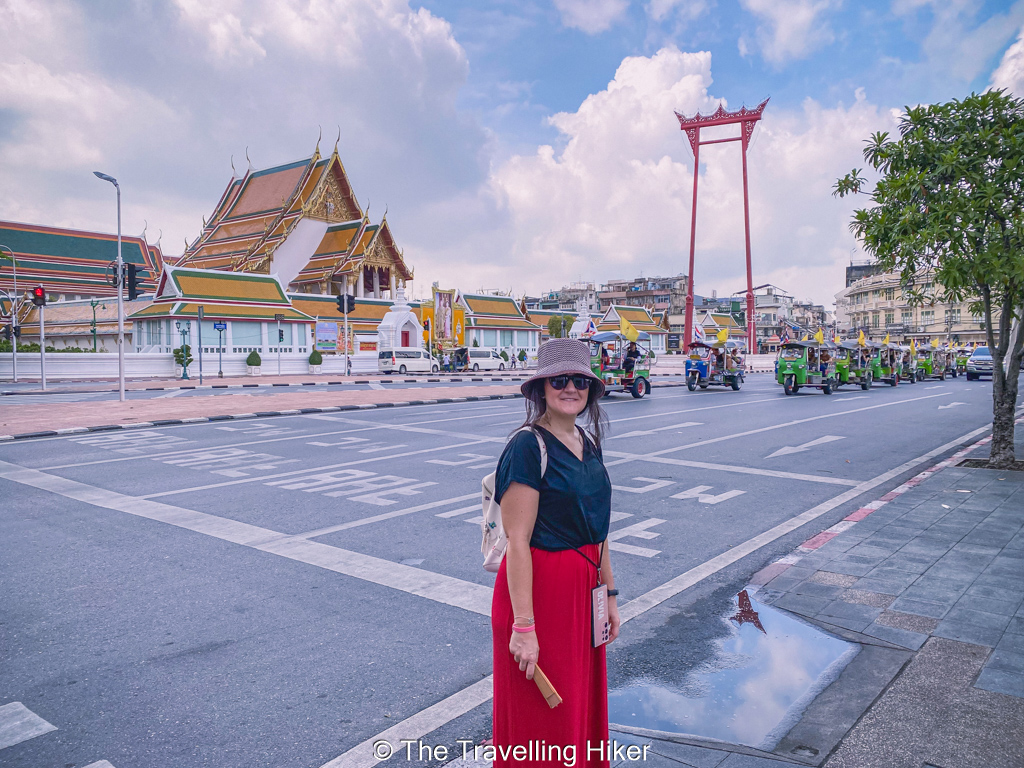
We continued walking towards the Giant Swing, one of Bangkok’s most recognisable landmarks.
The Giant Swing was originally used for a traditional Brahmin ceremony called the Triyampawai, where participants would swing high into the air to try to reach a suspended bag of coins. The ceremony was eventually discontinued for safety reasons, but the Giant Swing remains an important historical landmark in Bangkok.
Walking underneath the Giant Swing
The Giant Swing and Wat Suthat
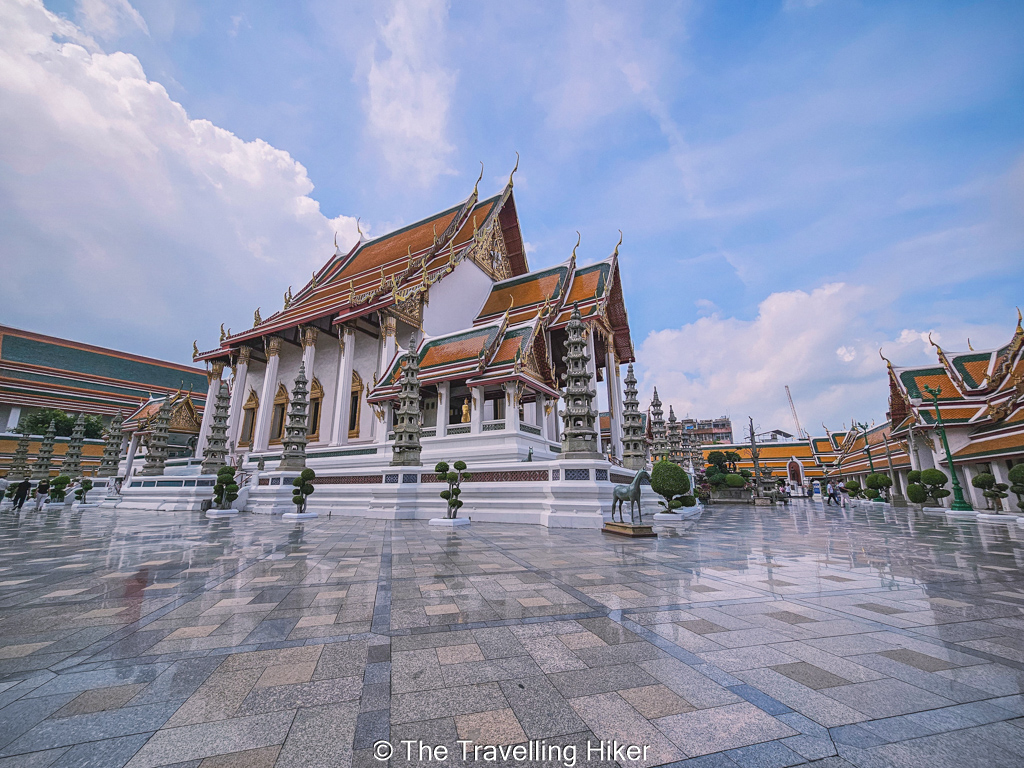
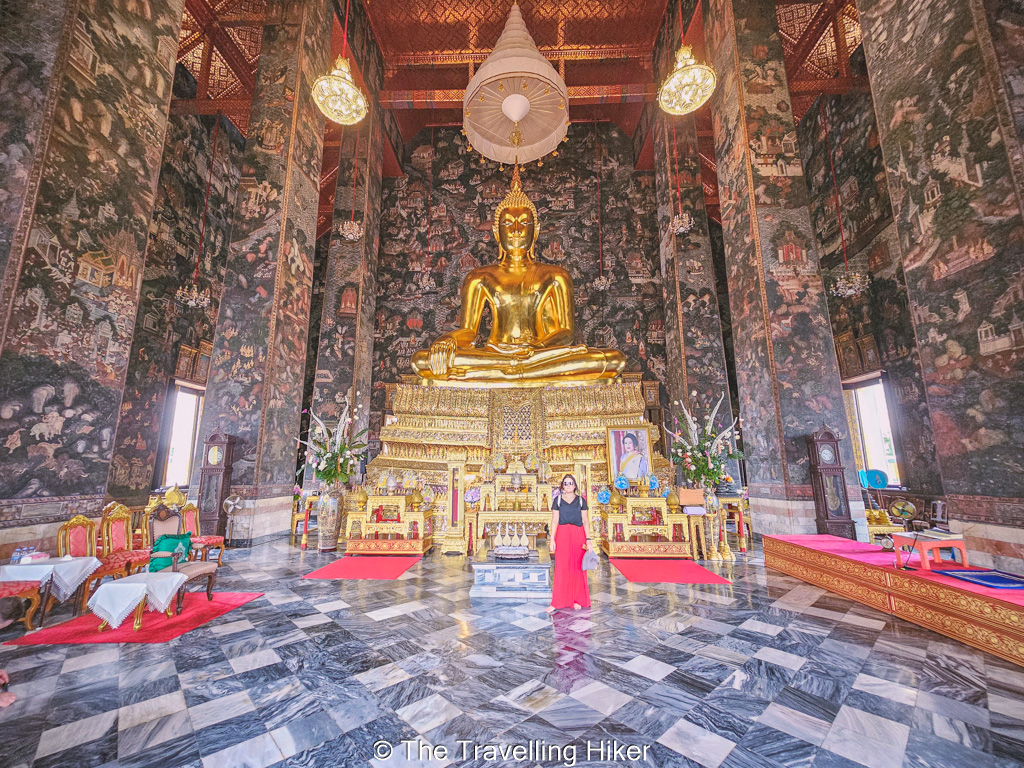
Right behind it, you will find Wat Suthat, one of Bangkok’s most important royal temples. The temple is famous for its elegant architecture, beautiful murals and peaceful atmosphere. Inside the main hall, you will find an impressive golden Buddha image called Phra Sri Sakyamuni, which was brought from Sukhothai in the early 19th century. The surrounding walls are covered with detailed murals depicting stories from Buddhist teachings and Thai history.
Practical information
Price. 100 THB per person to enter Wat Suthat. The Giant Swing can be seen for free from outside.
Opening hours. The temple is open between 8:30 and 17:30.
Time needed. Around 30 to 45 minutes.
Dress code. Shoulders and knees should be covered.
Wat Suthat Tep
Phra Sri Sakyamuni
STOP 4: WAT RATCHABOPHIT
We continued walking towards Wat Ratchabophit, another beautiful temple in Bangkok’s Old Town. This temple is a little less famous, but I think it is well worth adding to your itinerary.
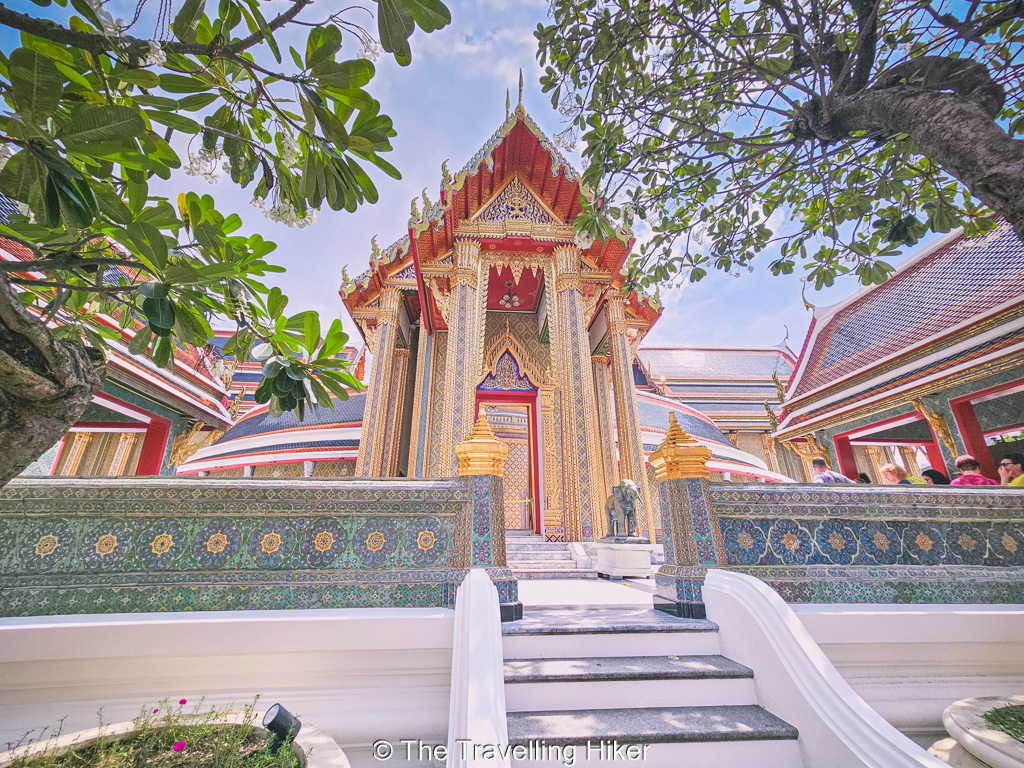
What makes Wat Ratchabophit particularly interesting is the combination of traditional Thai architecture and European influences. The outside is decorated with colourful tiles and intricate details, while the interior has a more European feel.
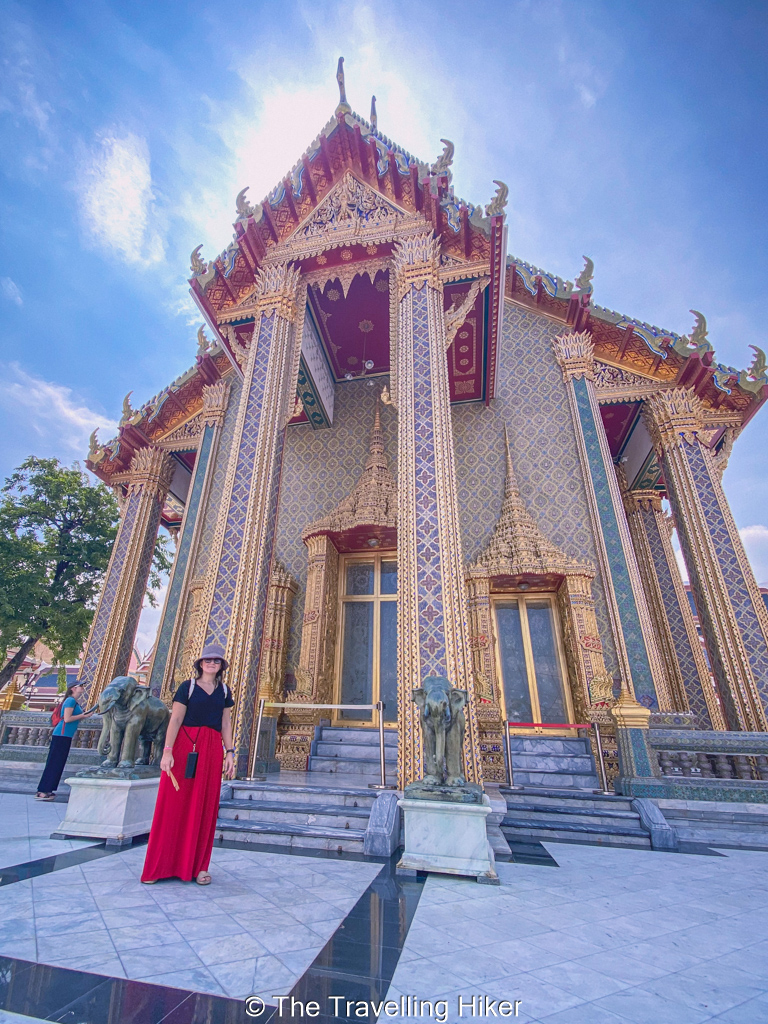
Standing in front of the main ordination hall of Wat Ratchabophit
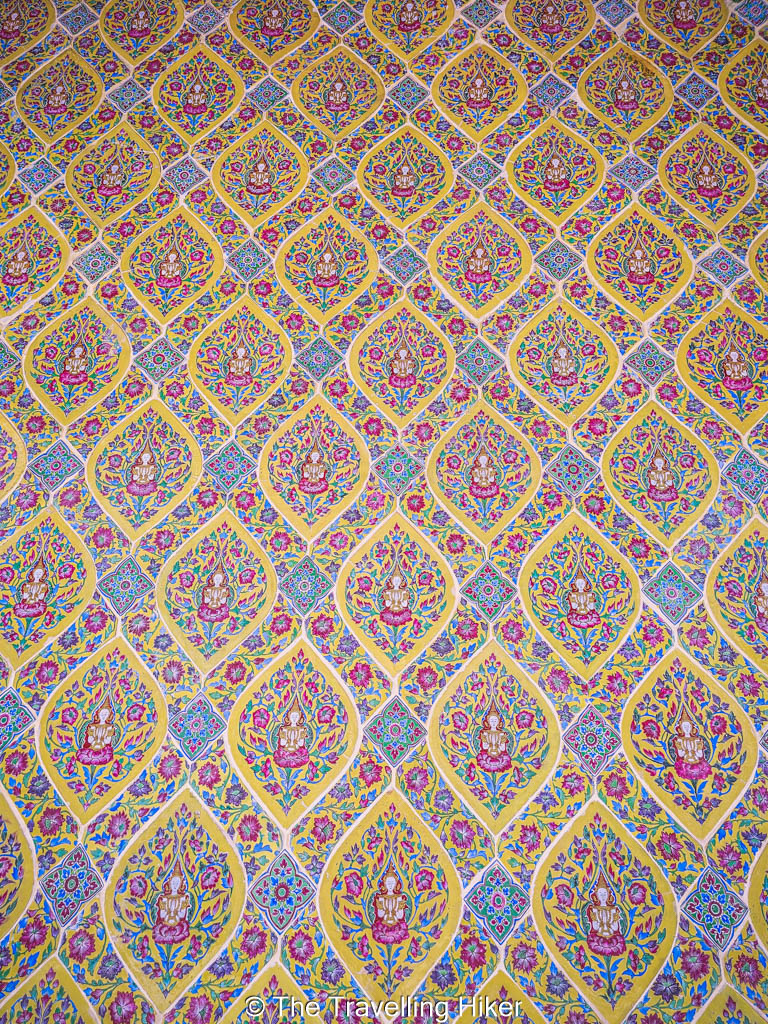
Details on the temple's wall
The temple was built during the reign of King Chulalongkorn in the late 19th century and is still an active Buddhist temple today. We really enjoyed walking around the complex and taking a closer look at all the details, especially since we were almost alone there.
Practical information
Price. Free.
Opening hours. The temple is open between 8:00 and 17:00.
Time needed. Around 30 minutes.
Dress code. Shoulders and knees should be covered.
Beautiful entrance to the temple
STOP 5: WAT PHO (TEMPLE OF THE RECLINING BUDDHA)
From Wat Ratchabophit, we continued walking towards Wat Pho, also known as the Temple of the Reclining Buddha.
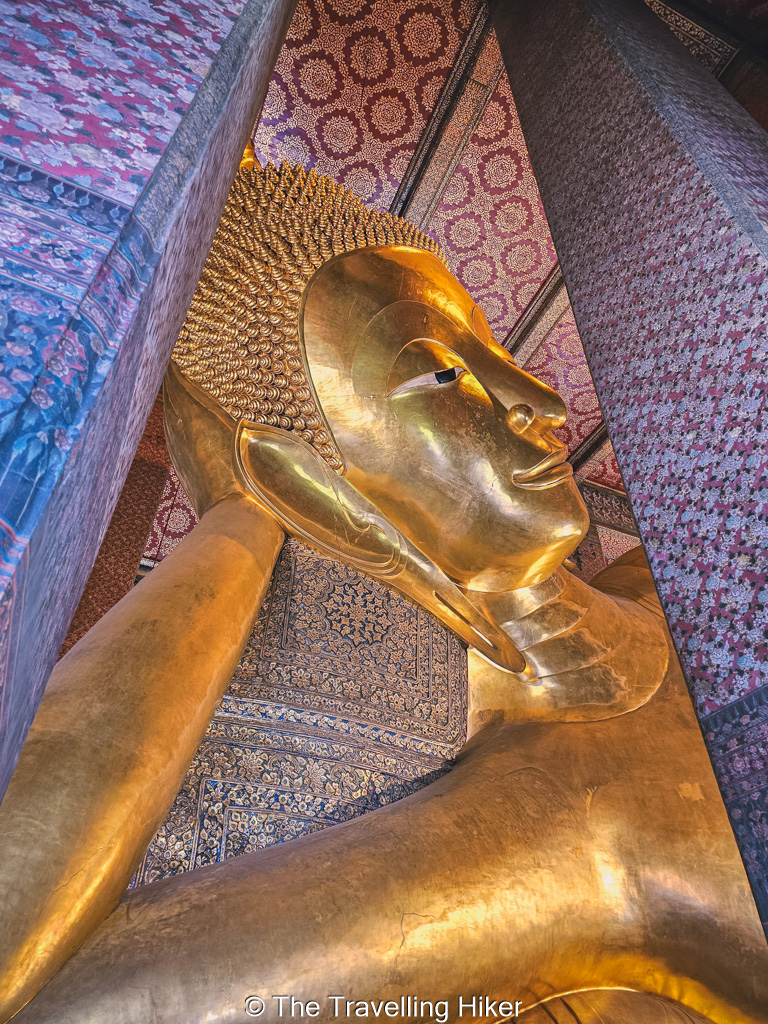
The main highlight is, of course, the enormous Reclining Buddha, which is 46 metres long and covered in gold leaf. The statue is impressive and a must-see in Bangkok. Just don’t expect to be alone here ;). Wat Pho was definitely one of the busiest temples we visited this day.
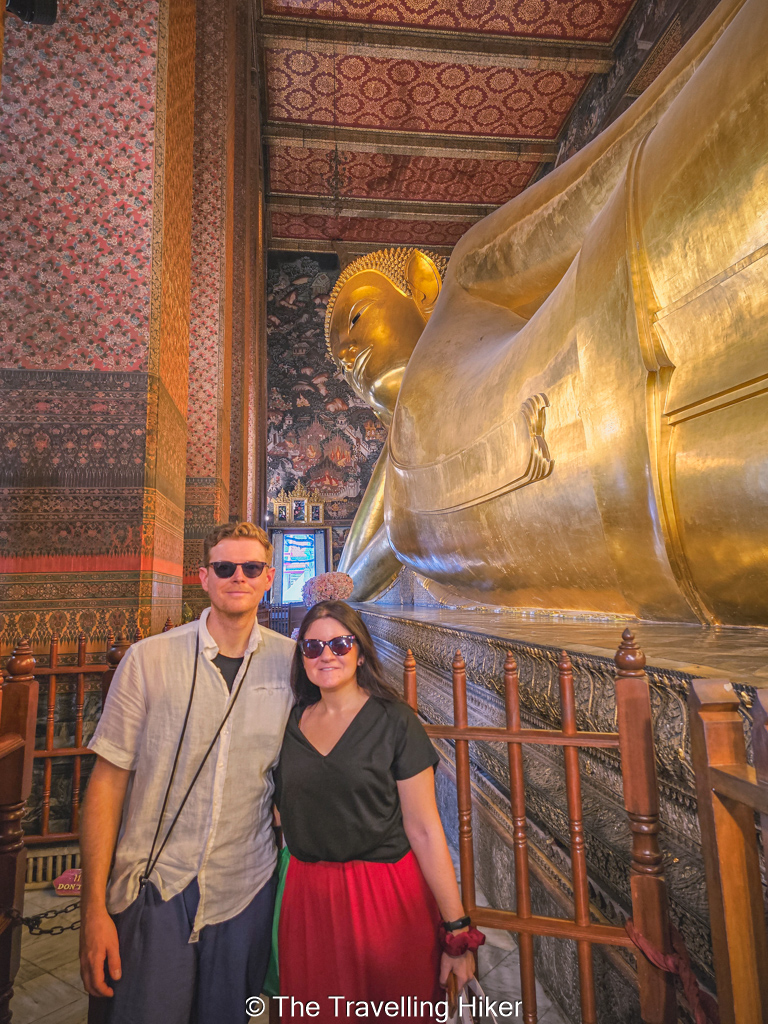
David and I in front of the reclining Buddha
Head of the reclining Buddha
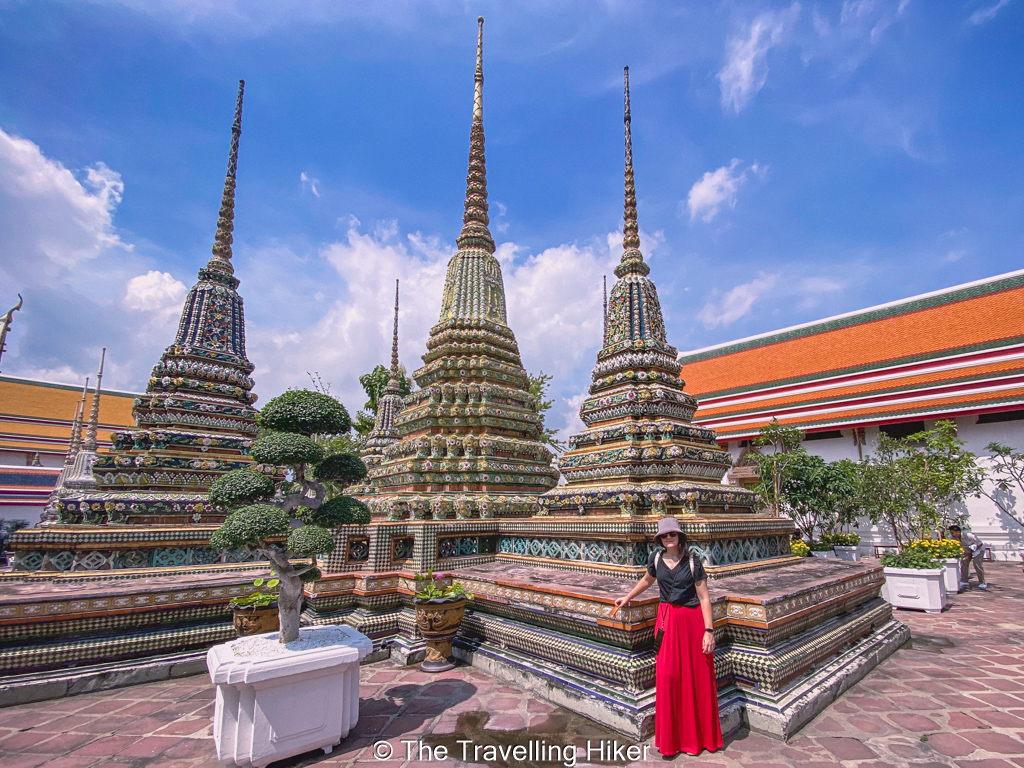
After seeing the Buddha, don’t leave immediately. The temple complex is quite large and has plenty of smaller temples, stupas and beautiful details to discover. I particularly liked walking around the different courtyards and looking at the colourful decorations on the chedis.
Wat Pho is also considered the birthplace of traditional Thai massage and is home to a school where you can still get a traditional Thai massage today. We didn’t have one during this visit, but it could be a good option if you want to add some relaxation to your Bangkok itinerary.
The colourful stupas in Wat Pho
Practical information
Price. 300 THB per person.
Opening hours. The temple is open between 8:00 and 19:30.
Time needed. Around 1 hour. Expect more time if you decide to get a Thai massage.
Dress code. Shoulders and knees should be covered.
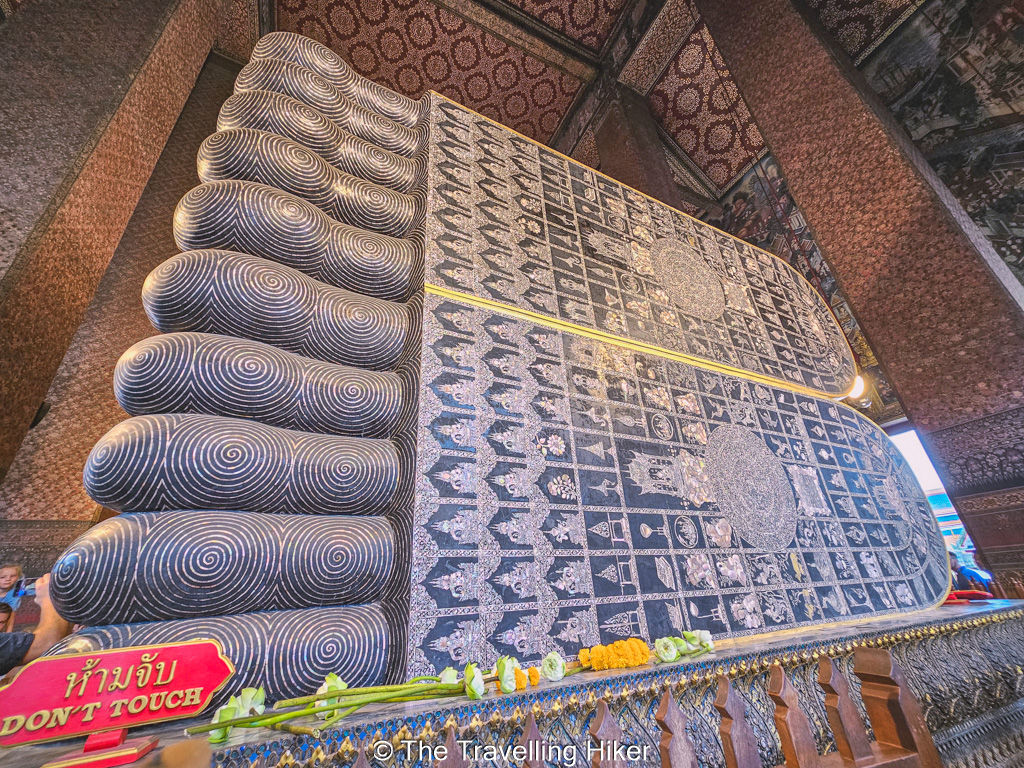
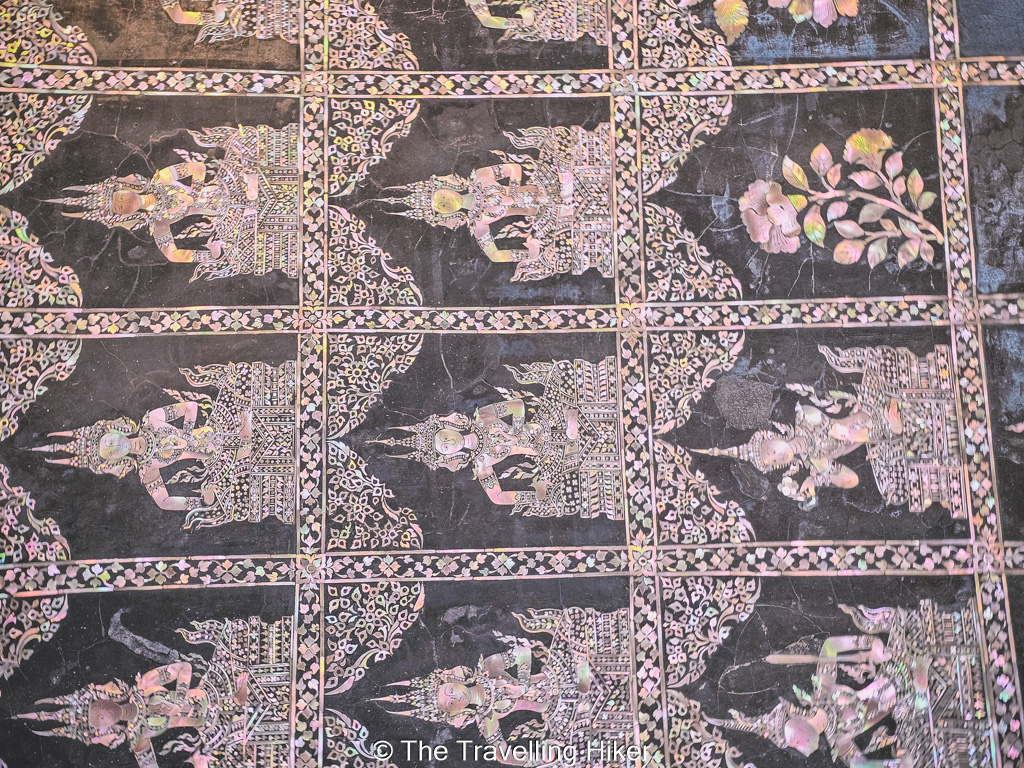
Tip. Remember to take a closer look at the soles of the Reclining Buddha’s feet. They are decorated with 108 mother-of-pearl panels representing auspicious symbols.
The reclining Buddha's feet
Detail on the Buddha's feet
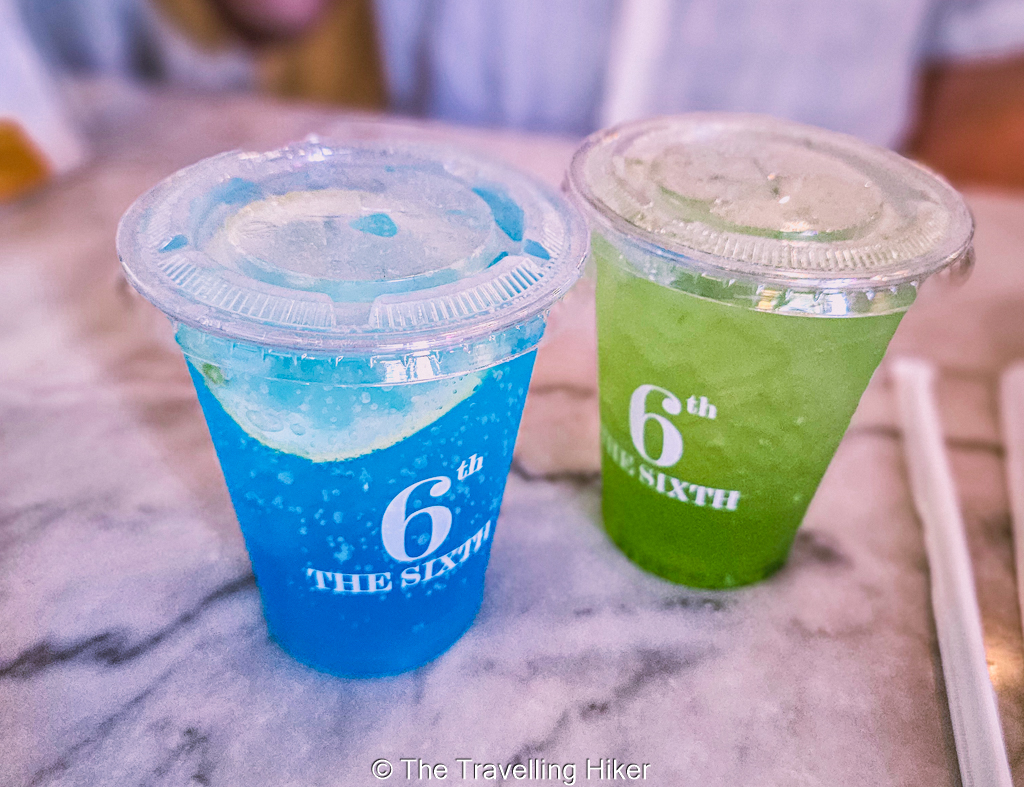
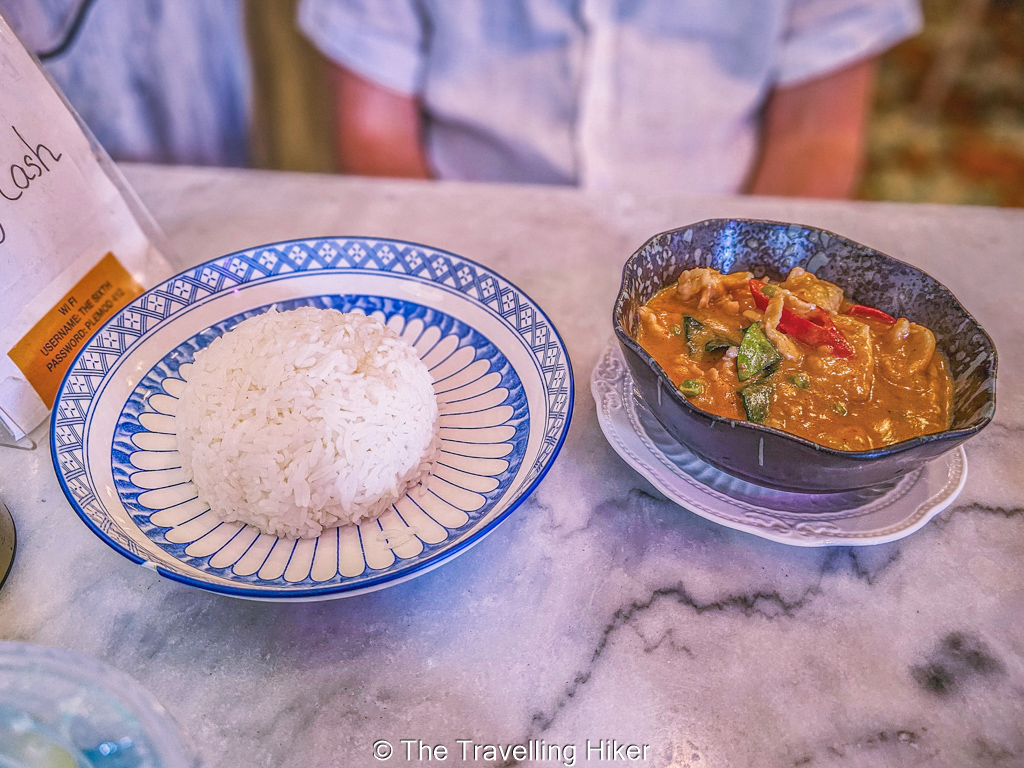
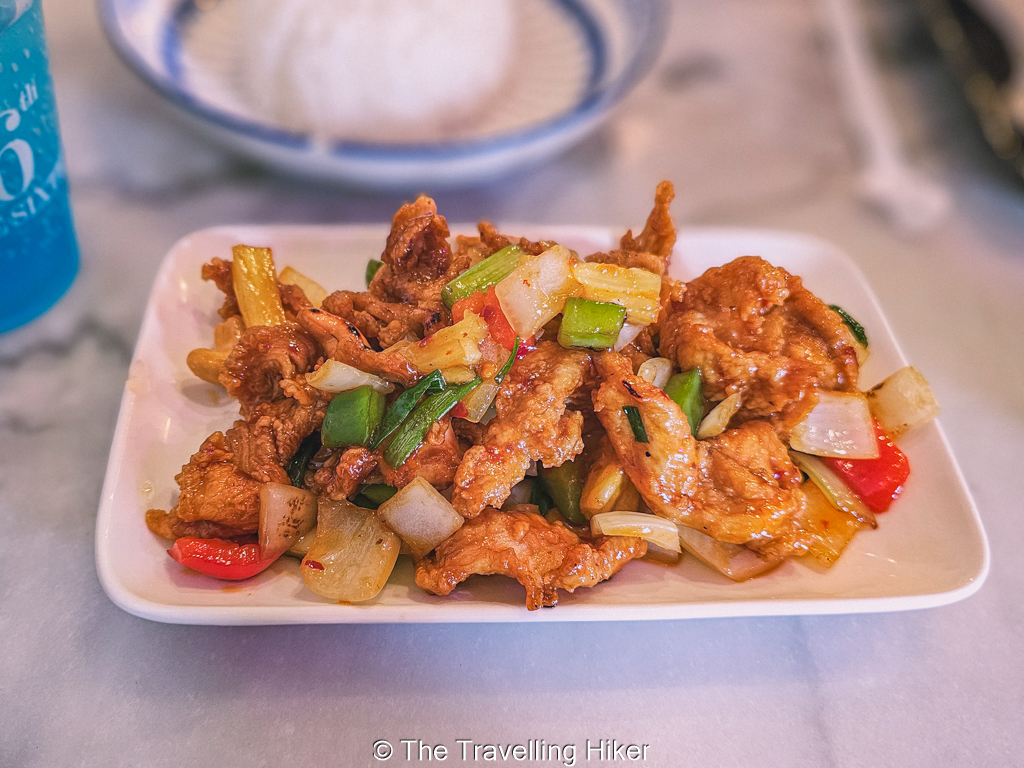
STOP 6: LUNCH AT THE SIXTH
After visiting Wat Pho, it was time for lunch. We walked to The Sixth, a small Thai restaurant located just a few minutes from Wat Pho.
After a morning full of temples and quite a lot of walking in the heat, it was nice to sit down for a while in a place with air conditioning and enjoy some good Thai food. The restaurant is quite small, so it can get busy around lunchtime, but we were able to get a table and enjoy a relaxed lunch before continuing with the rest of our day.
If you are looking for a place to have lunch around Wat Pho, I think The Sixth is a good option. It is conveniently located and the food is good. Just keep in mind, you can only pay cash here.
Colorful sodas
Thai Red Curry
Chicken and cashew nuts
STOP 7: WAT ARUN (TEMPLE OF DAWN)
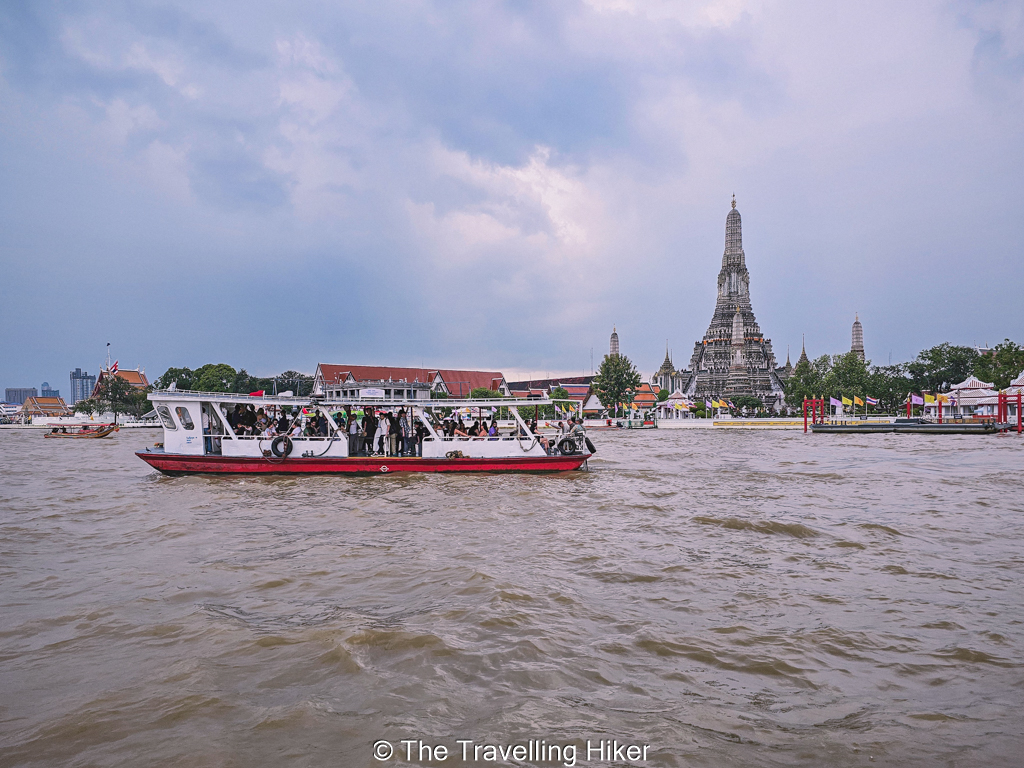
After lunch, we headed to Wat Arun, also known as the Temple of Dawn. Getting there from Wat Pho is very easy. We walked to the nearby Tha Thien pier and took the short ferry across the Chao Phraya River.
Good to know: There are several tourist boats offering to take you across the Chao Phraya, but you don’t need to pay much for this short crossing. Look for the local ferry, which costs only 5 THB per person.
Crossing the Chao Phraya towards Wat Arun
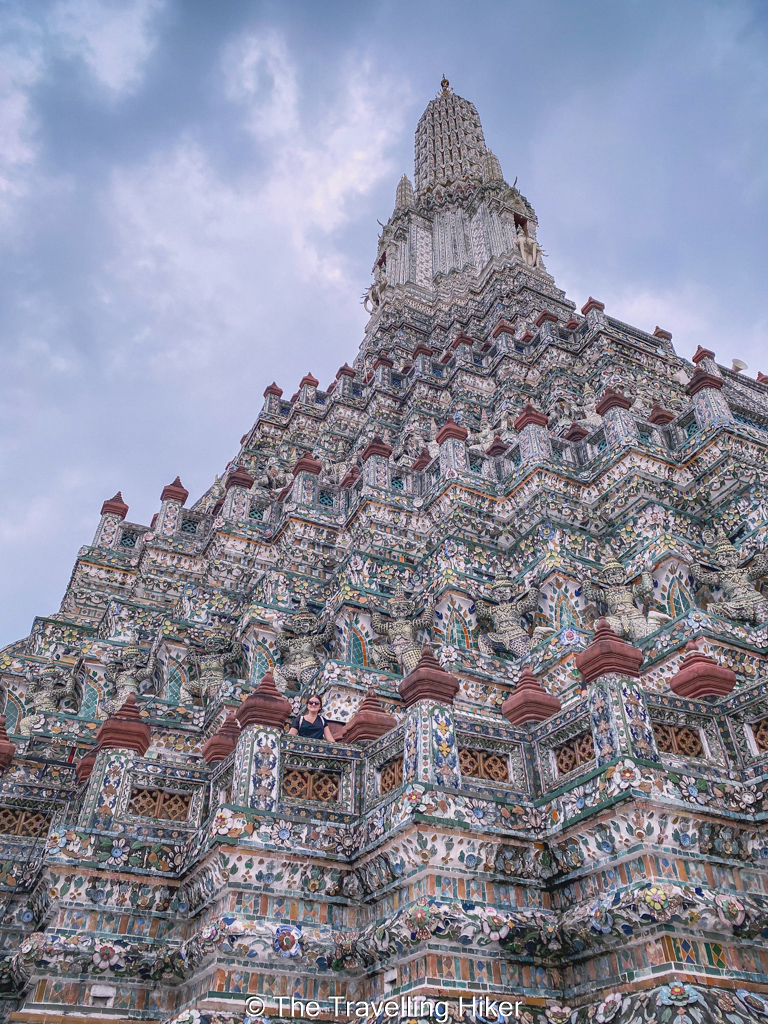
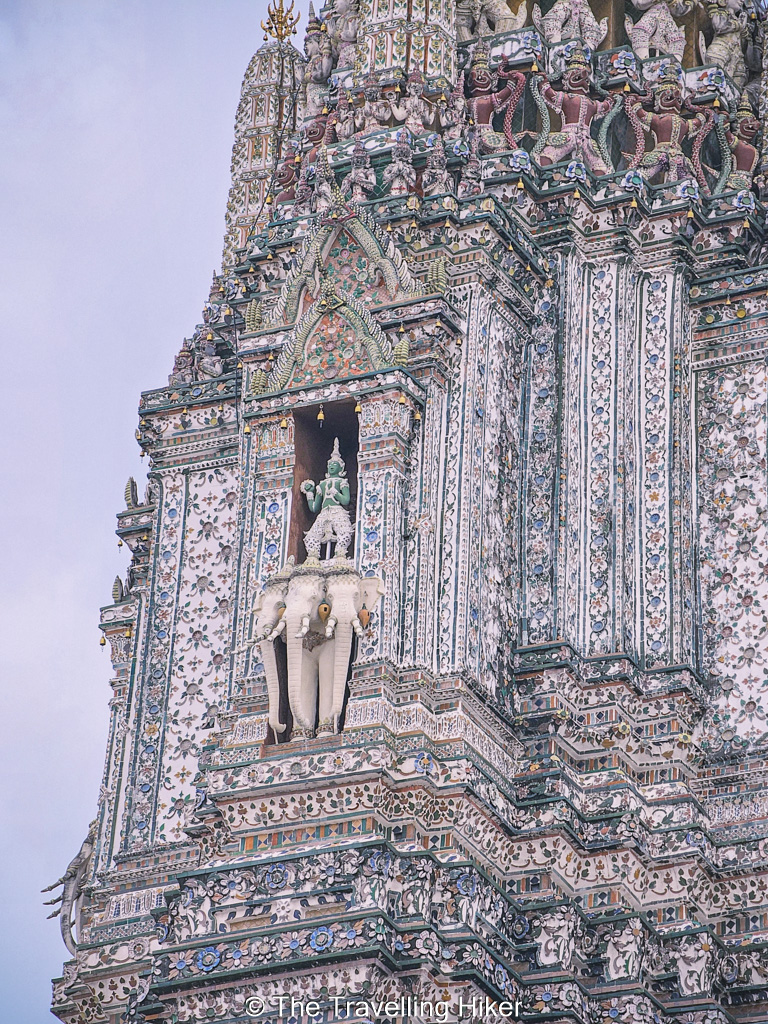
Wat Arun is one of the most recognisable temples in Bangkok, mainly because of its impressive central prang covered in colourful porcelain and ceramic tiles. When you get closer, take some time to look at the incredible details in the decorations. There is so much to see that you can easily miss some of them if you just walk around quickly.
You can also climb part of the central prang for a closer look and enjoy views over the Chao Phraya River and the surrounding area. The steps are quite steep, so take your time going up and down.
I really liked Wat Arun. The temple looks beautiful from a distance, but I think it is even more impressive when you are standing right next to it and can see all the small details in the decorations.
Wat Arun's central prang from up close
Me on the viewing platform of Wat Arun
Details of Wat Arun
Practical information
Price. 200 THB per person.
Opening hours. The temple is open between 8:00 and 18:00.
Time needed. Around 1 hour.
Dress code. Shoulders and knees should be covered.
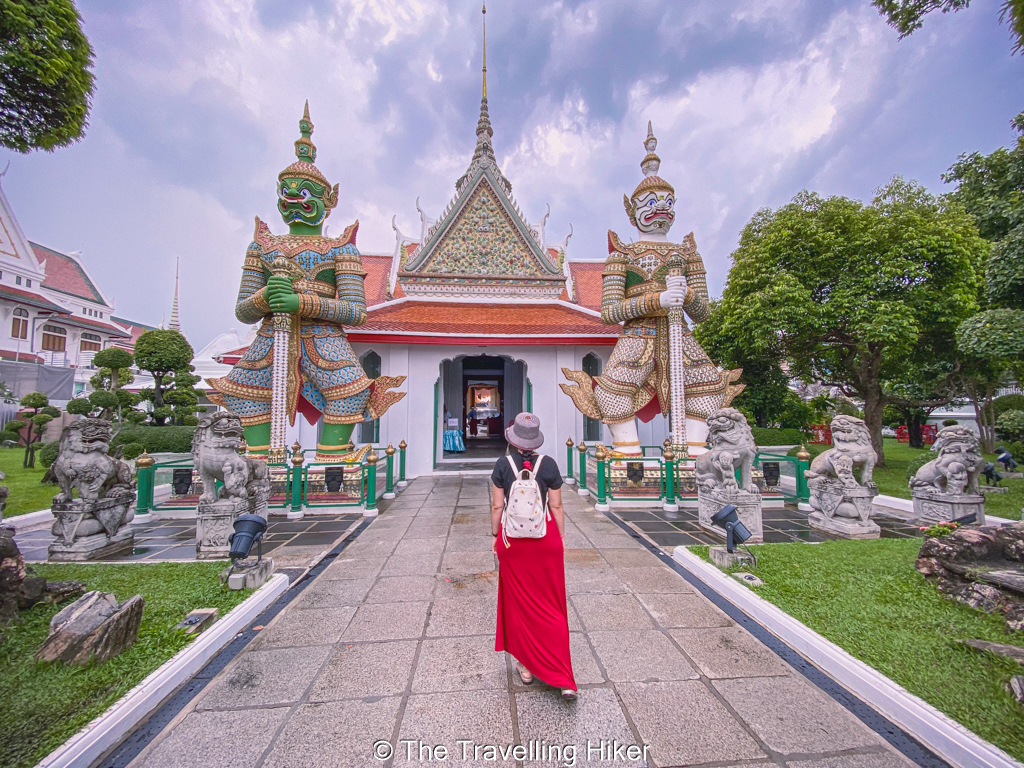
Tip. Don’t just visit the main prang in Wat Arun. Make sure to also check out the Main Ordination Hall and the Giants of Wat Cheang.
The Giants of Wat Chaeng
STOP 8: WAT MANGKON KAMALAWAT (DRAGO TEMPLE)
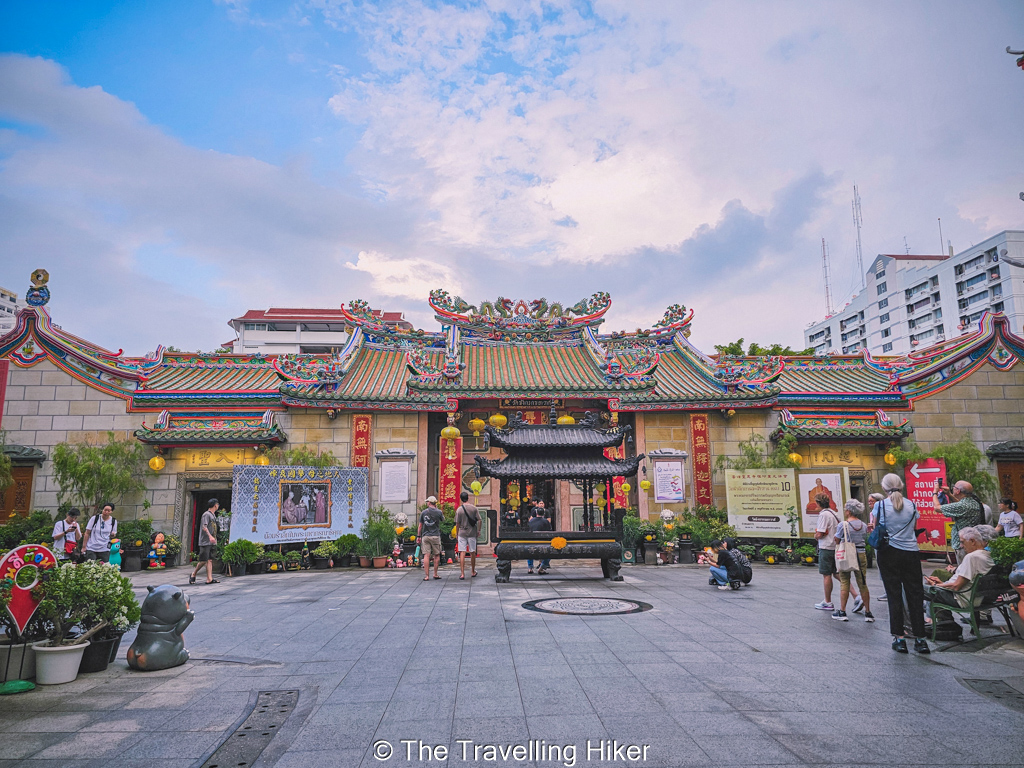
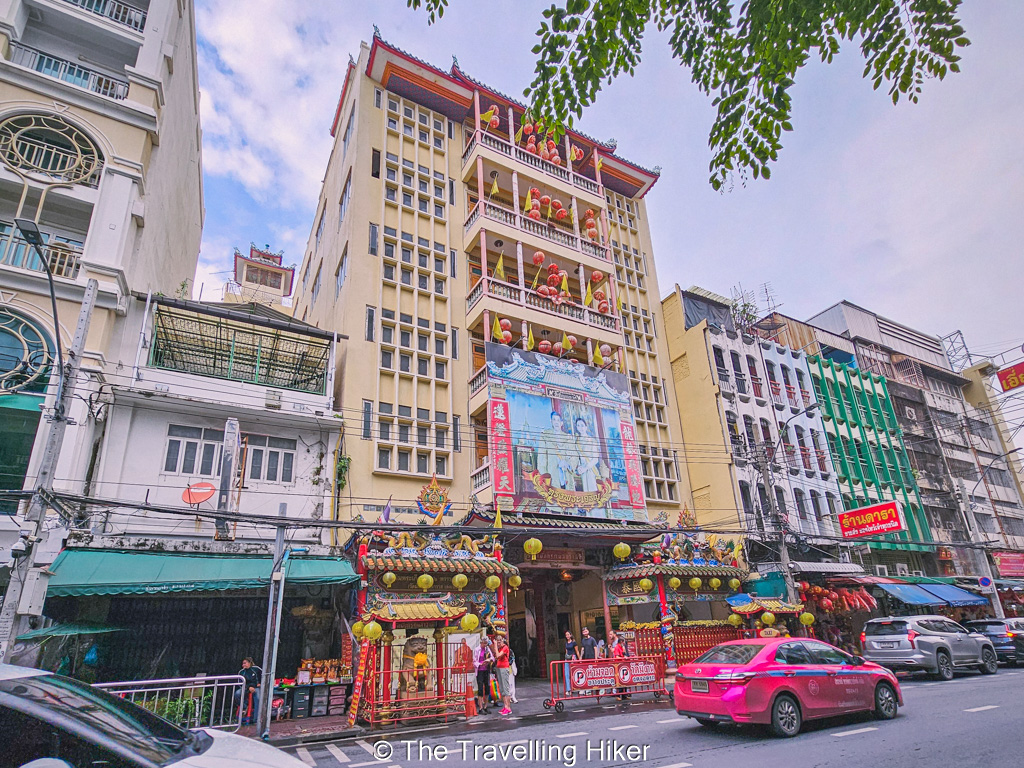
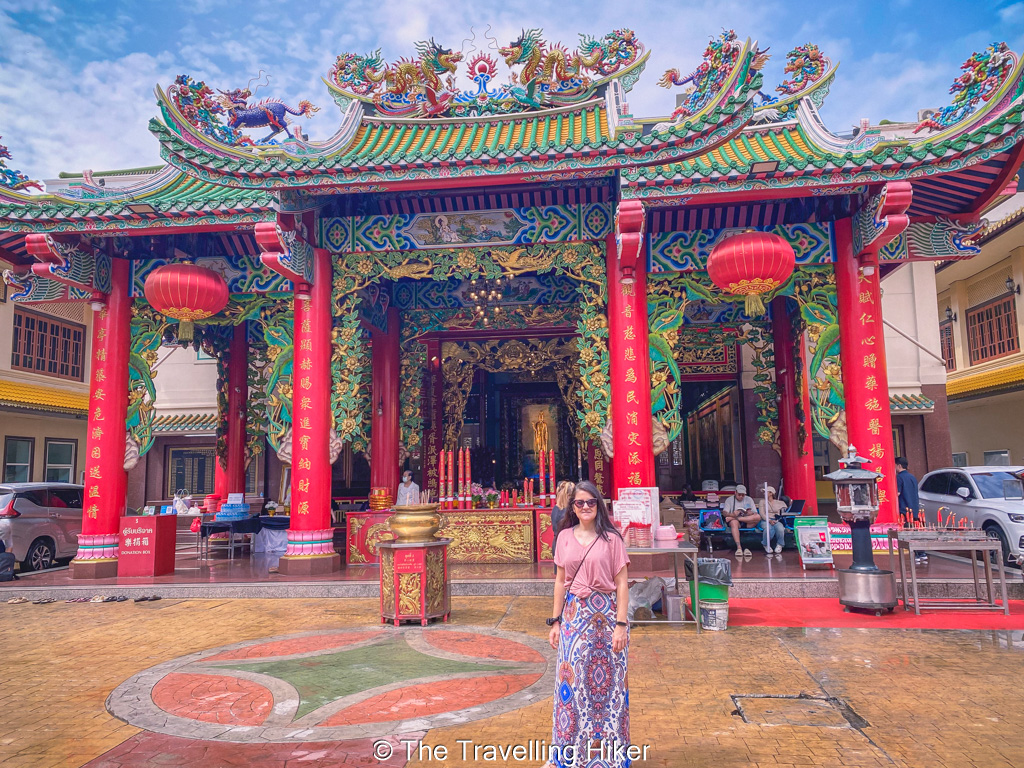
After visiting Wat Arun, we crossed the Chao Phraya again and continued towards Chinatown. Our first stop was Wat Mangkon Kamalawat, also known as the Dragon Temple. This is the largest and most important Chinese Buddhist temple in Bangkok and is located right in the heart of Chinatown.
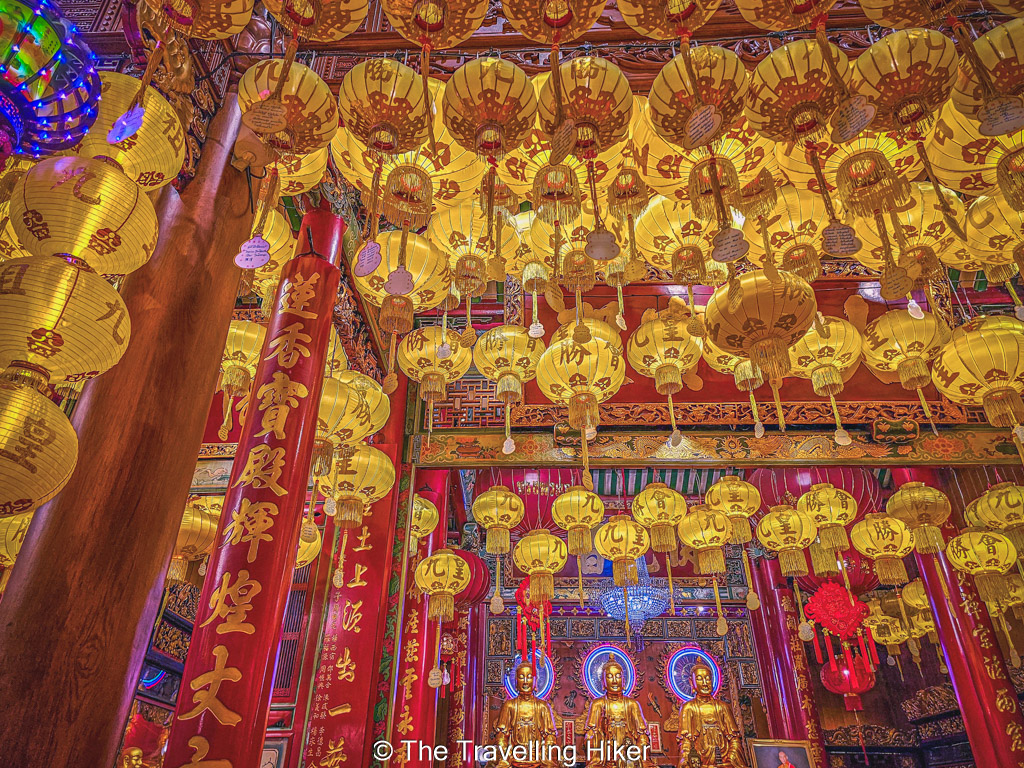
The temple is very different from the Thai temples we had visited earlier in the day. The entrance is beautifully decorated with traditional Chinese details, dragons and colourful ornaments. Inside, you will find several shrines and statues dedicated to Buddhist, Taoist and Chinese deities.
The temple can get quite busy, especially around Chinese festivals, but since we visited on a regular day, it was quite peaceful. It was a nice introduction to Chinatown before continuing to explore the neighbourhood.
Practical information
Price. Free.
Opening hours. The temple is open between 8:00 and 18:00.
Time needed. Around 30 hour.
Dress code. Shoulders and knees should be covered.
Inner Courtyart at Wat Mangkon
Details of the Chinese lanterns
Wat Mangkon from across the street
STOP 9: REST AT BERLIN CAFE (CHINATOWN)
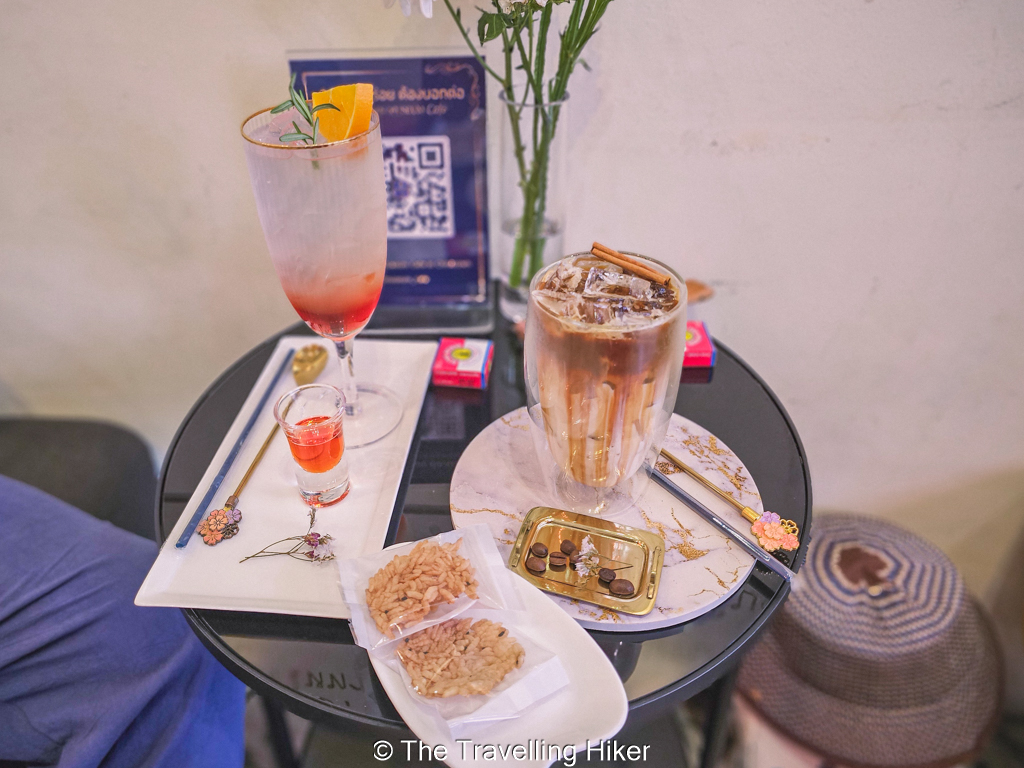
By this time, the fatique from a long day of walking was starting to hit us, so we stopped for a drink at Berlin Cafe.
The cafe has a relaxed atmosphere and was a good place to escape the heat for a little while. We had a lemonade and an iced latte and rested here for quite a while. By the time we left the café, it was already dark, so it was the perfect time to explore the Chinatown night market.
Berlin Cafe
STOP 10: CHINATOWN NIGHT MARKET
By the time we left Berlin Cafe, Chinatown was already starting to come alive. The streets were filled with colourful signs, food stalls, small restaurants and plenty of people.
We spent the evening walking around Yaowarat Road and the surrounding streets. Chinatown is particularly famous for its street food, so this is a great place to try some local dishes and snacks.
We didn’t have a specific plan for the evening. We simply walked around, looked at the different stalls and stopped for food when something caught our eye.
If you enjoy street food, make sure you leave some room for this part of the day. Chinatown is one of the places where I think wandering around without a strict plan works best.
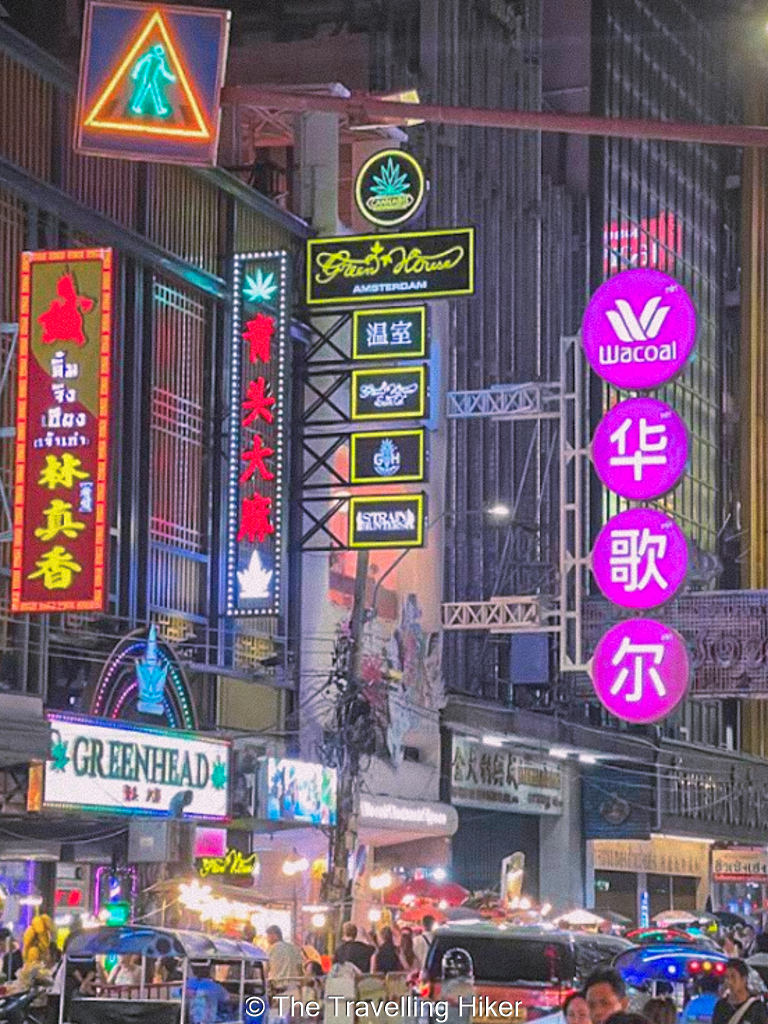
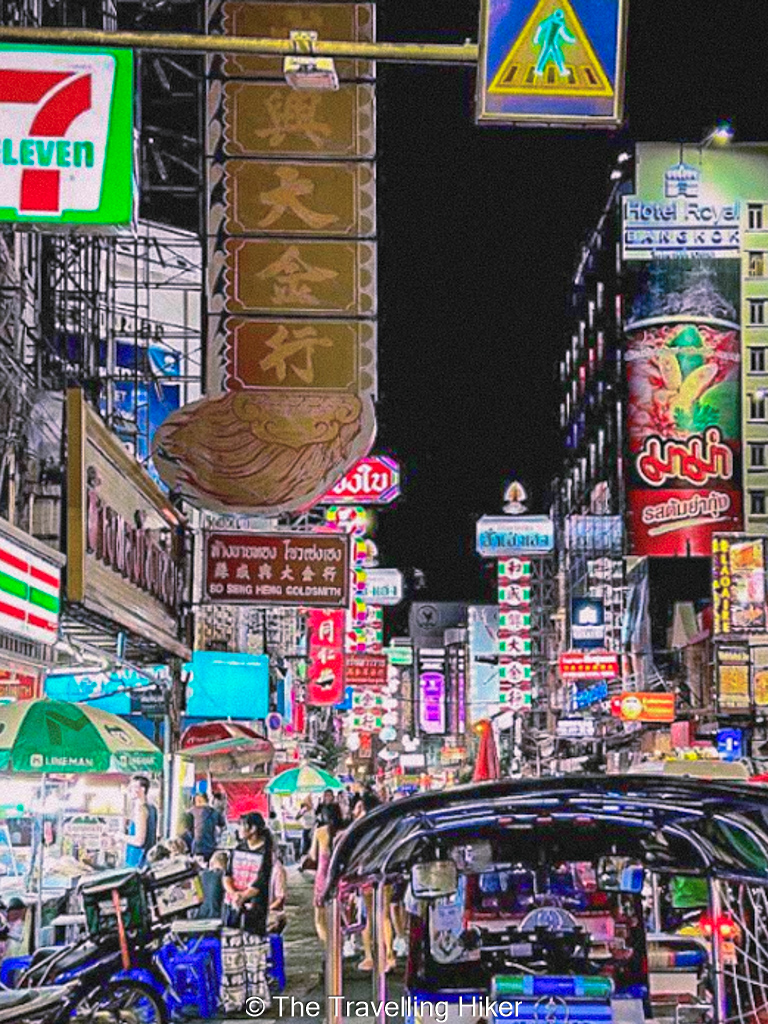
Neon signs in Chinatown
Chinatown night market
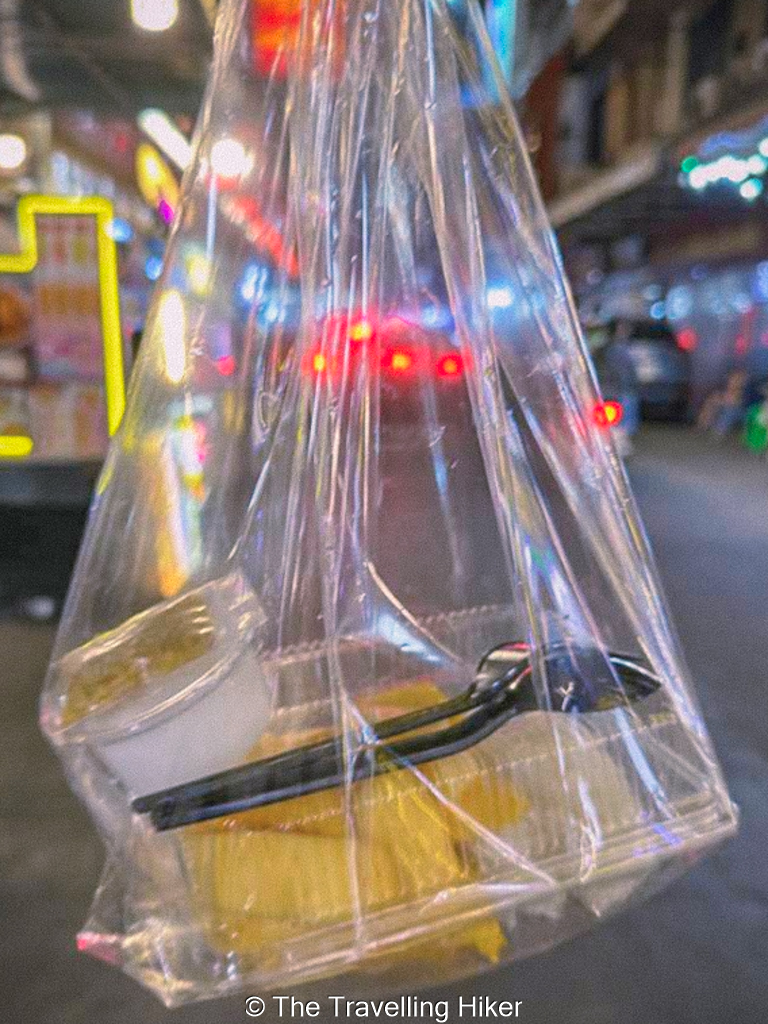
Mango Sticky Rice
DAY 3 - DAY TRIP TO AYUTTHAYA
For the third day of our Bangkok itinerary, we decided to escape the city for a day and visit Ayutthaya, the former capital of the Kingdom of Siam.
Ayutthaya is located around 80 km north of Bangkok and makes for an easy day trip from the city. The historical park is spread across a large area, with ancient temples and ruins scattered throughout the former capital.
We spent the day exploring some of the most important temples and getting a feel for what the old capital must have looked like. Since I have written a complete guide to visiting Ayutthaya, I won’t go into too much detail here. If you are planning your own day trip, I recommend checking out my Ayutthaya guide for the full itinerary, how to get there and all the practical information you need.
During our day in Ayutthaya, we explored many temples. These were some of the highlights of our day.
STOP 1: WAT MAHATHAT
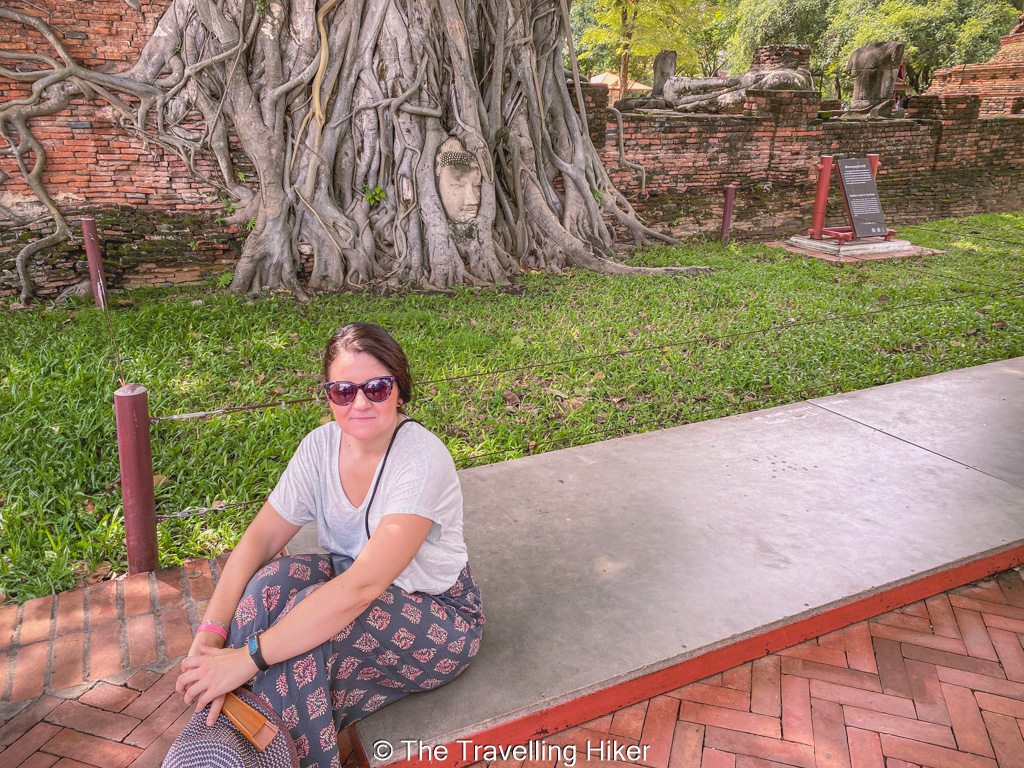
Our first stop was Wat Mahathat, one of the most famous temples in Ayutthaya. The temple is particularly well known for the Buddha head surrounded by the roots of a tree, which has become one of the most recognisable images of Ayutthaya.
We wandered around the extensive ruins to discover crumbling brick towers, ancient chedis, and countless headless Buddha statues that were damaged during the Burmese invasion of 1767.
Practical information
Price. 80 THB per person.
Opening hours. Between 8:00 and 17:00.
Sitting in front of the famous Buddha in the tree
STOP 2: WAT YAI CHAI MONGKOL
Wat Yai Chai Mongkol is one of the most impressive temples in Ayutthaya. The temple is surrounded by rows of Buddha statues, and you can climb the large chedi for views over the surrounding area.
I really liked this temple because you can walk around and see the ruins from different angles.
Make sure to also visit the reclining Buddha behind the main temple. Measuring around 28 metres long, it’s often overlooked by visitors rushing to the next stop, but it’s another highlight of the complex.
Practical information
Price. 50 THB per person.
Opening hours. Between 8:00 and 17:00.
Main Chedi at Wat Yai Chai Mongkol
STOP 3: WAT PHRA SI SANPHET
Wat Phra Si Sanphet was once part of the royal palace complex of Ayutthaya. The three large chedis are the main highlight and have become one of the symbols of the ancient city.
We spent some time walking around the extensive ruins surrounding the chedis. Although the palace buildings were not there anymore, we could easily imagine the grandeur of this royal complex during the height of the Ayutthaya Kingdom.
Practical information
Price. 80 THB per person.
Opening hours. Between 7:00 and 17:00.
The three famous bell-shaped chedis at Wat Phra Si Sanphet
Once we had returned to Bangkok, we were quite tired from the long day, so we decided to have dinner at a restaurant that was next door to our hotel. This turned out to be a great decision as we had one of our favourite meals in Bangkok!
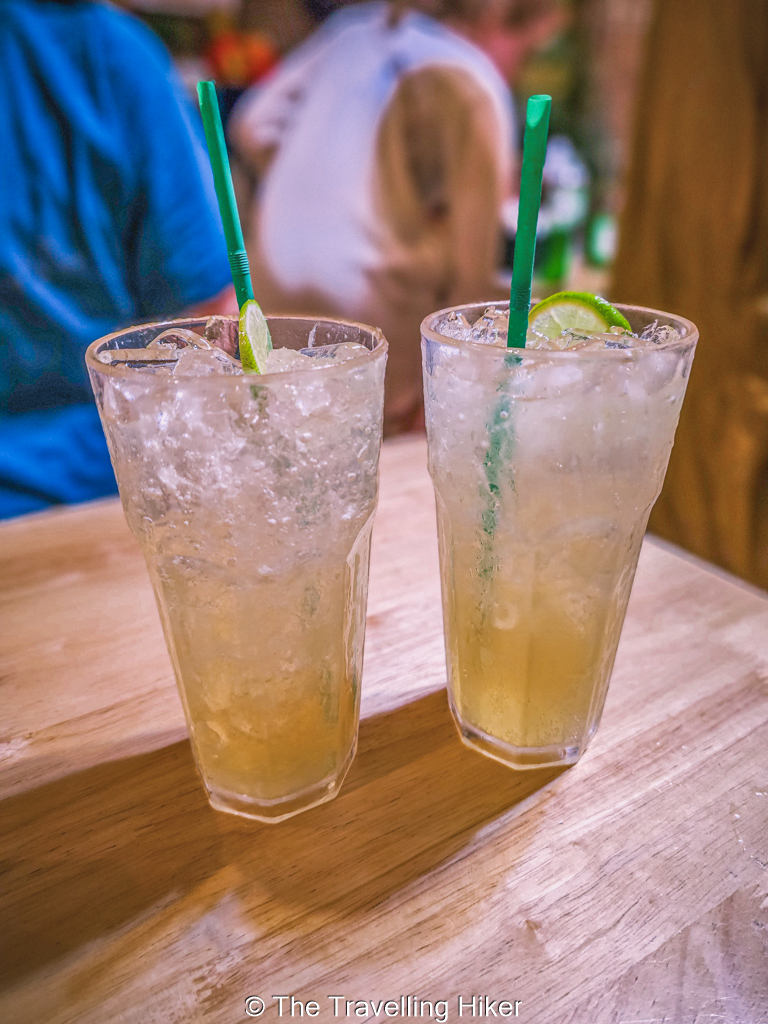
Honey lemonade
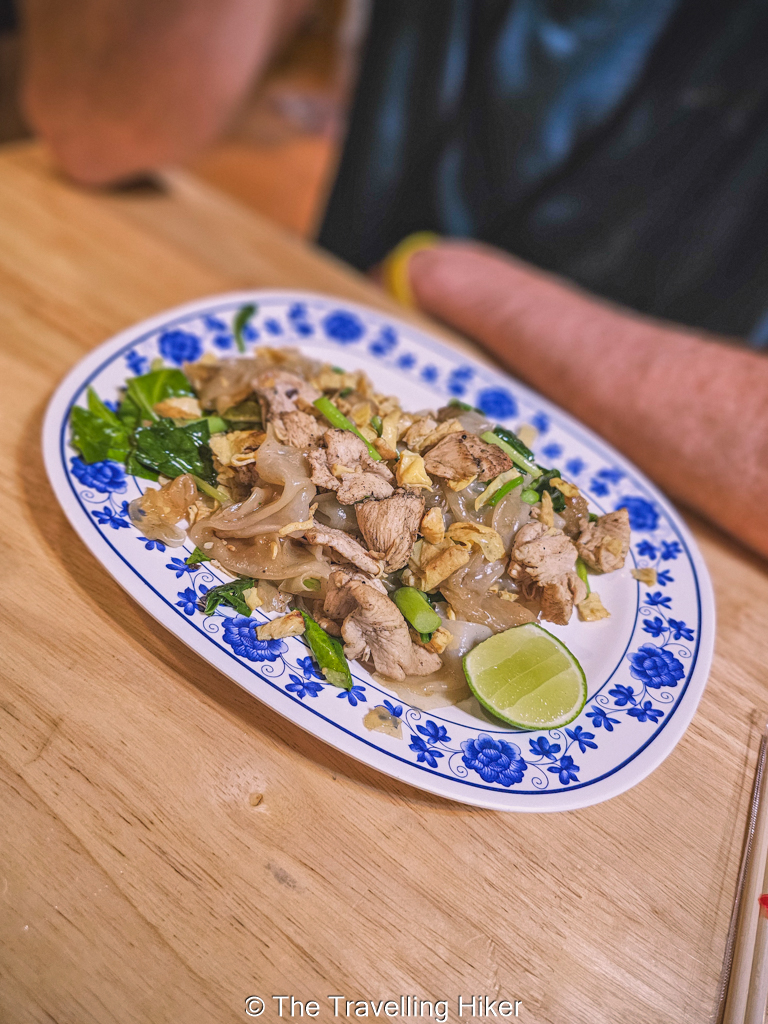
Chicken Pad Sew Ew
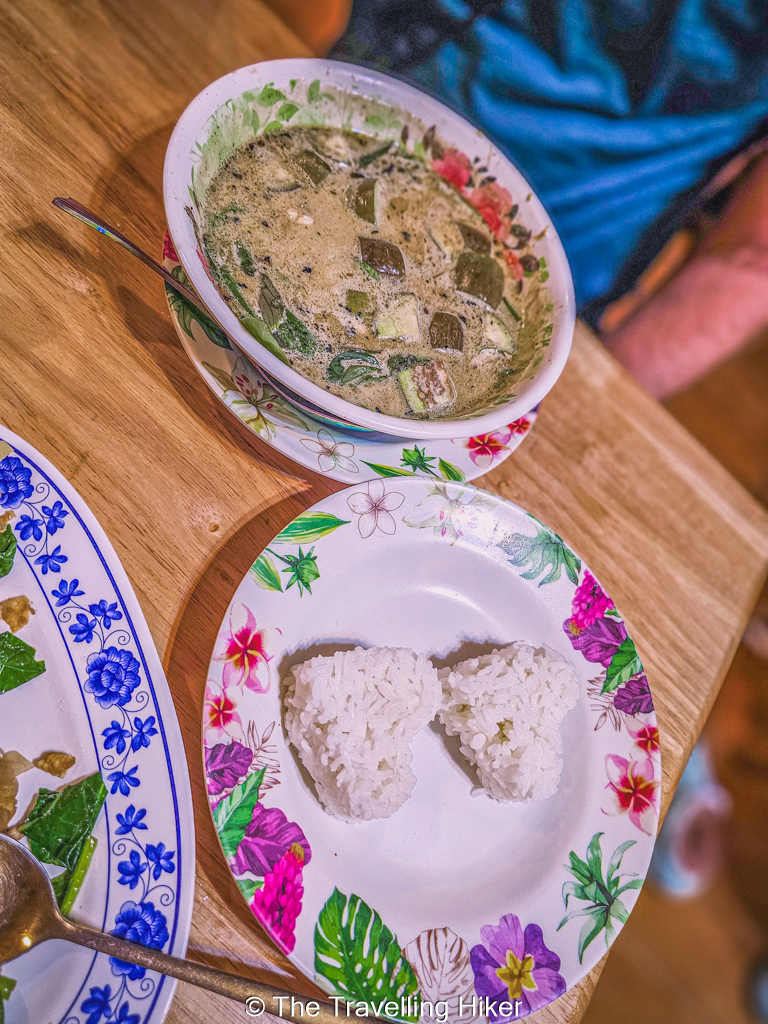
Thai Green Curry
DAY 4 - TEMPLES AND MODERN BANGKOK
After spending the previous day exploring Ayutthaya, we were back in Bangkok for another day of exploring the city. This time, we started with a few more temples and in the second half of the day, we explored the modern part of Bangkok.
STOP 1: WAT INTARAWIHAN
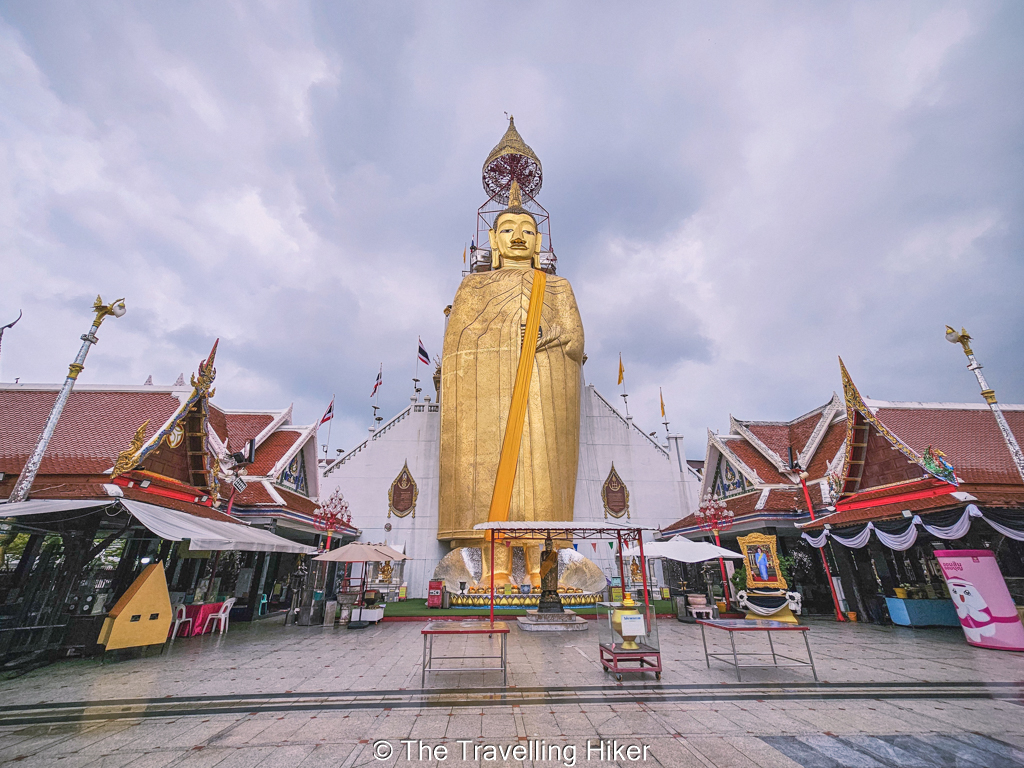
We started our day at Wat Intarawihan, a Buddhist temple best known for its huge standing Buddha statue, Luang Pho To. The statue is around 32 metres tall and is difficult to miss as you approach the temple.
The temple complex itself is quite peaceful, and we spent some time walking around and taking a closer look at the different buildings and decorations.
I particularly liked that you could climb up to the area around the Buddha and get a nice view of Bangkok from up there.
Standing Buddha at Wat Intharawihan
Practical information
Price. 50 THB per person.
Opening hours. The temple is open between 8:30 and 20:00.
Time needed. Approximately 30 minutes.
Dress code. Shoulders and knees should be covered.
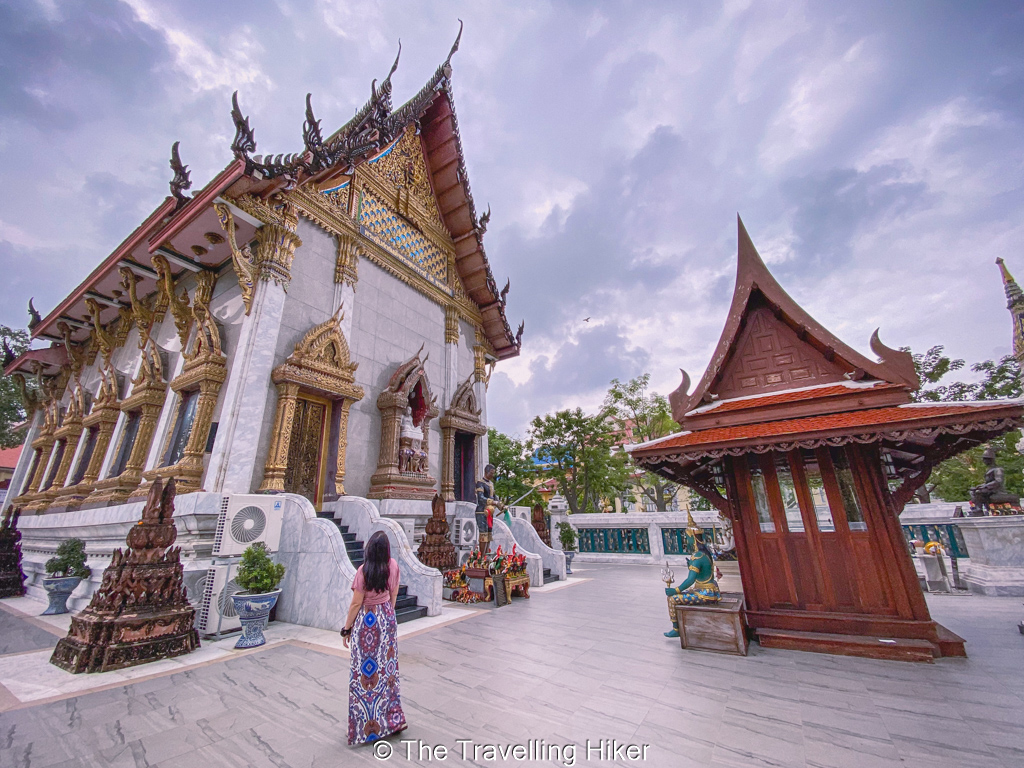
Standing in front of the main hall at Wat Intharawihan
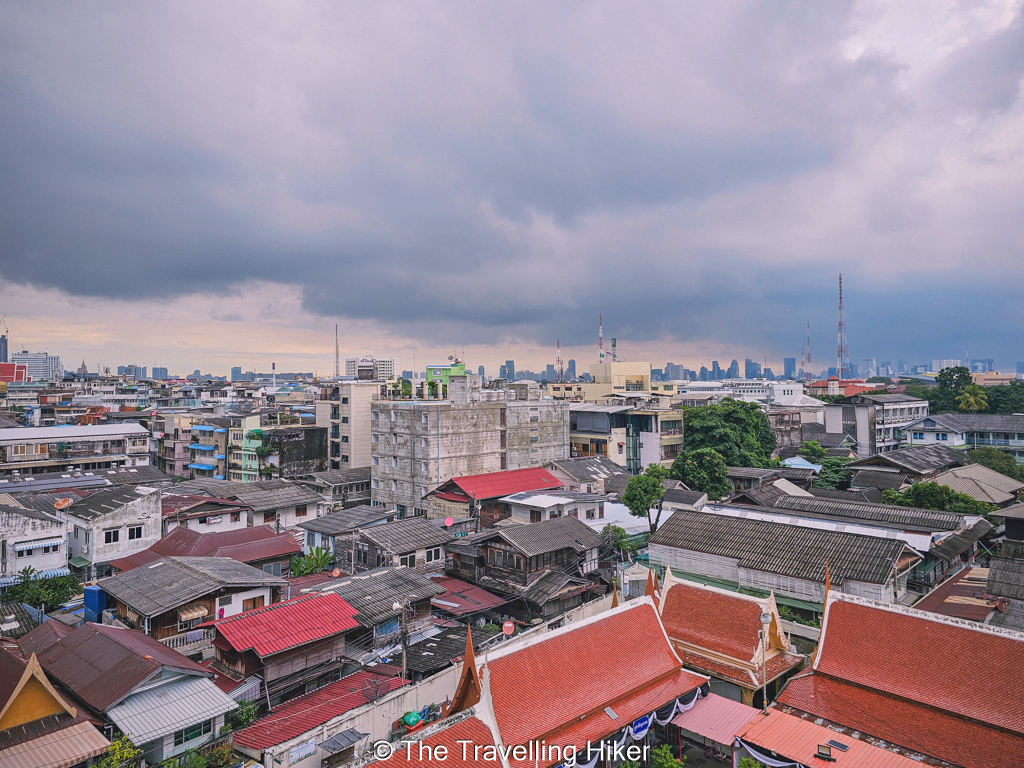
View of Bangkok from the standing Buddha
STOP 2: WAT BENCHAMAPHOBIT (MARBLE TEMPLE)
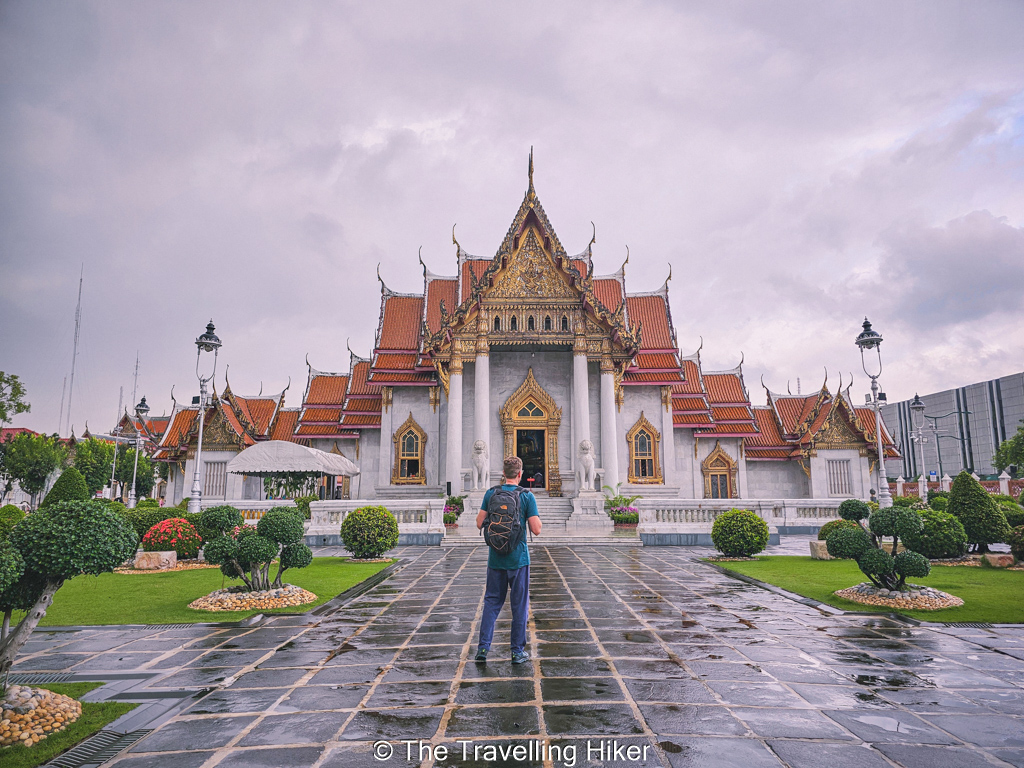
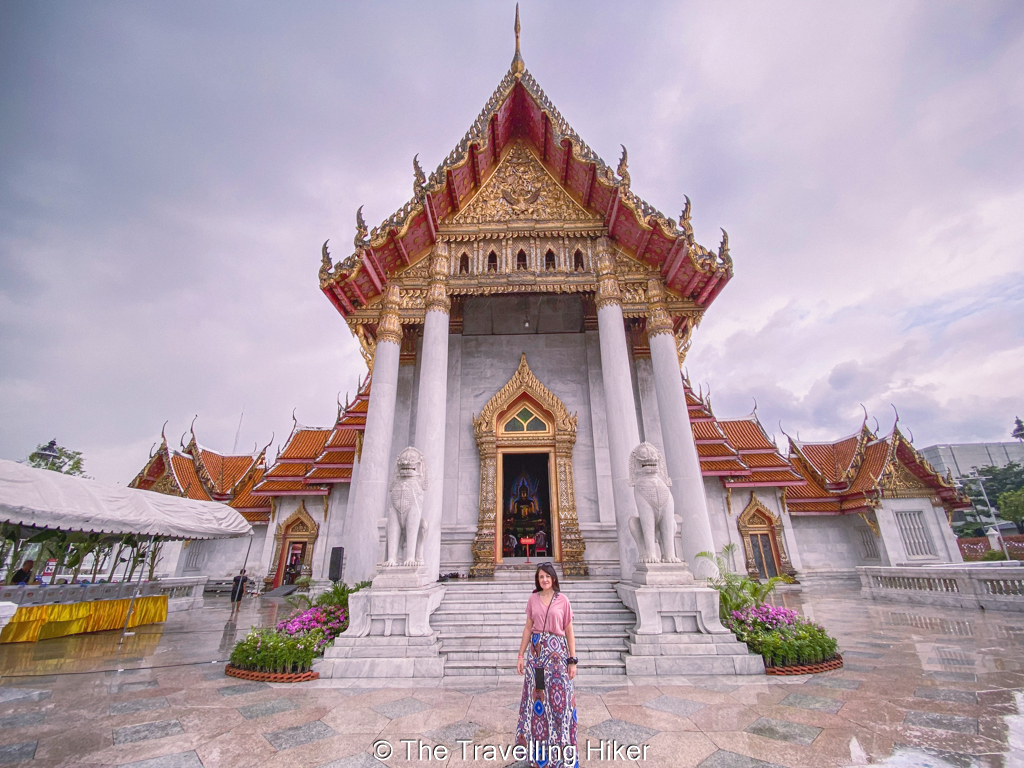
From Wat Intarawihan, we took a Grab and headed to Wat Benchamaphobit, also known as the Marble Temple. This was one of my favourite temples in Bangkok.
The temple gets its nickname from the Carrara marble used in its construction. I really liked the combination of traditional Thai architecture with European influences, particularly the marble details and stained-glass windows.
The courtyard behind the main temple is also worth exploring, with a collection of Buddha images arranged around the cloister.
David in front of the main ordination hall
Practical information
Price. 100 THB per person.
Opening hours. The temple is open between 8:00 and 17:00.
Time needed. Approximately 45 minutes.
Dress code. Shoulders and knees should be covered.
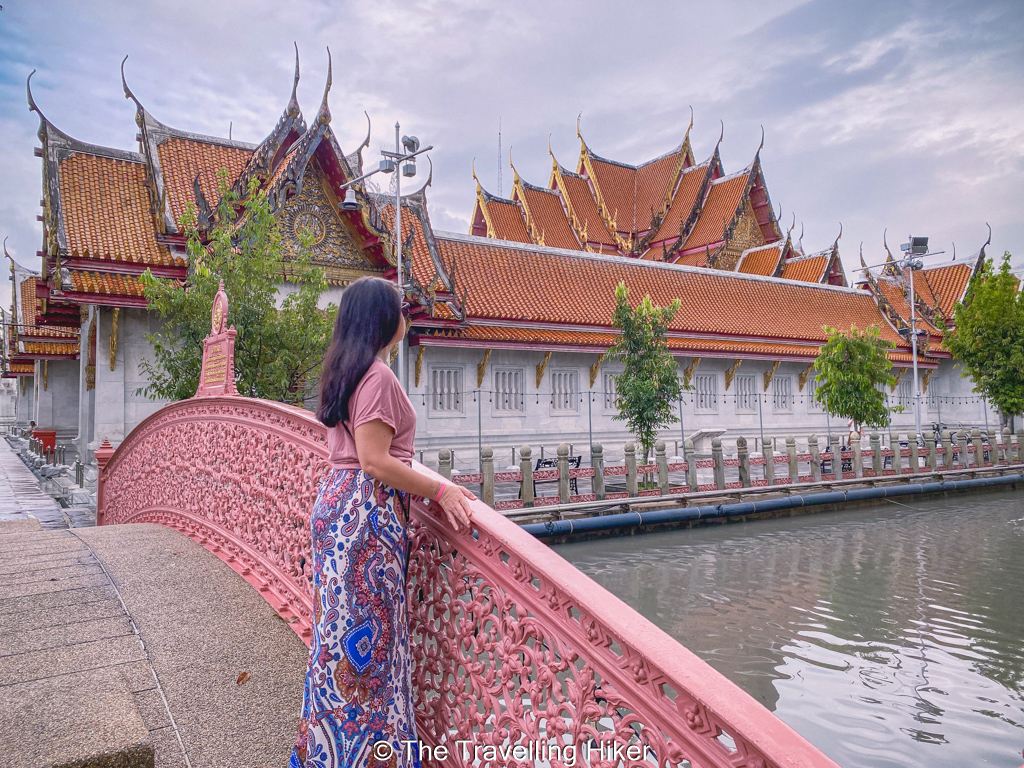
Crossing one of the bridges at Wat Benchamaphobit
STOP 3: WAT TRAIMIT
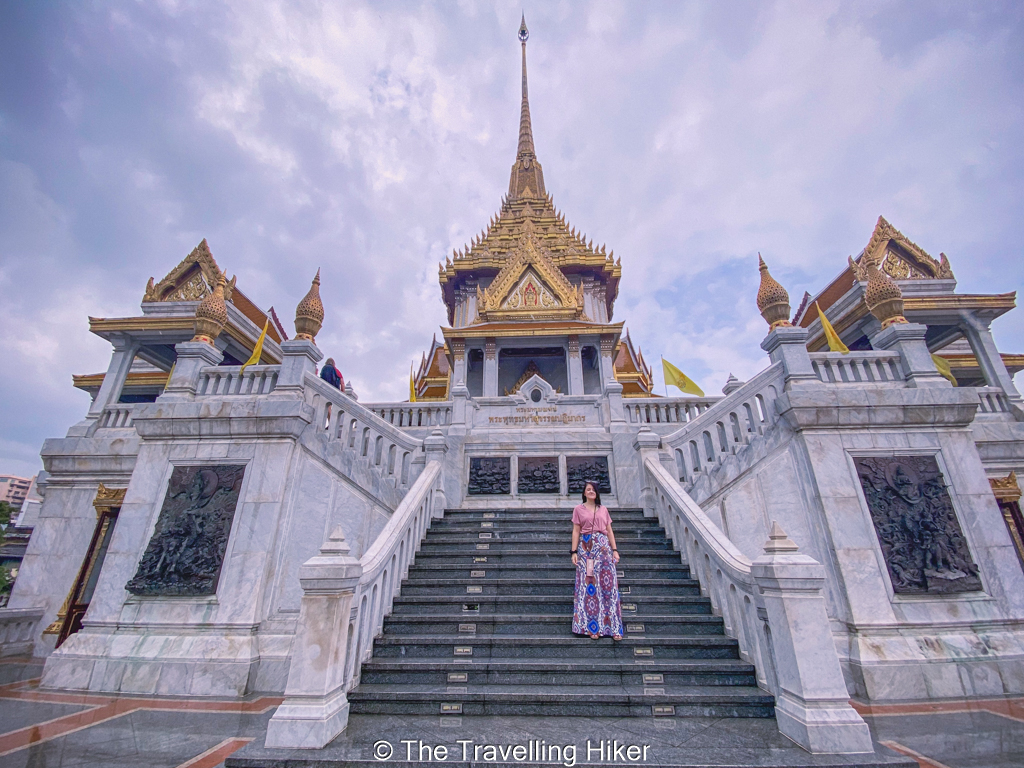
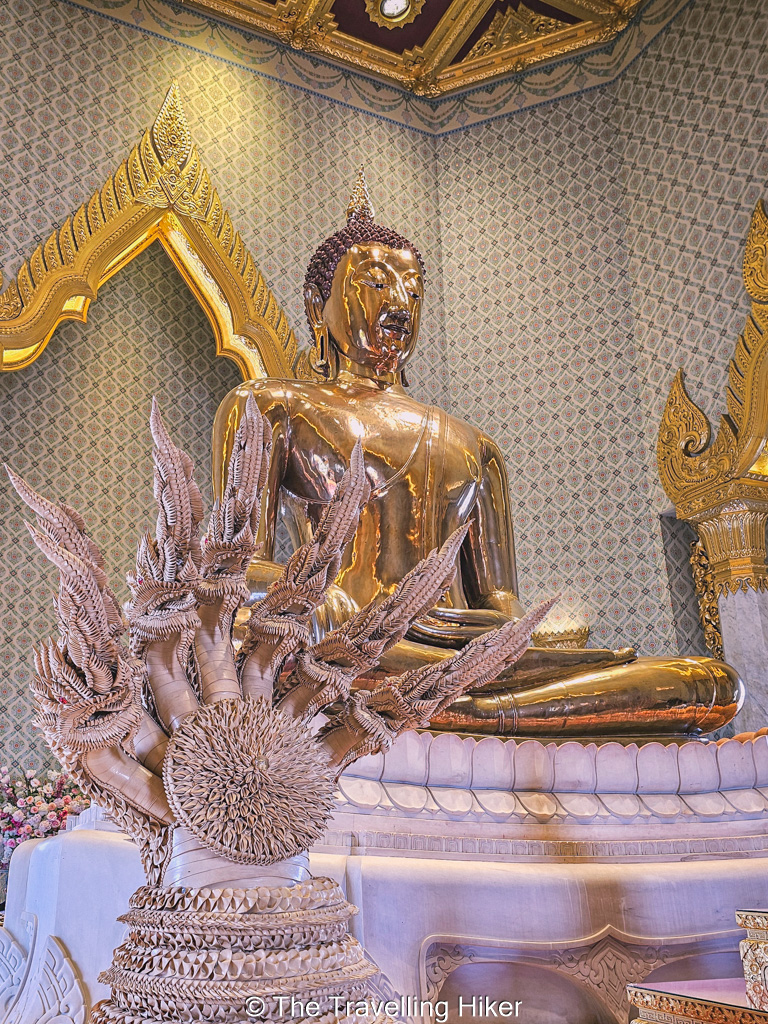
Our next stop was Wat Traimit, in the heart of Bangkok’s Chinatown. The temple is famous for housing the world’s largest solid gold Buddha image, which weighs around five tonnes.
The Buddha statue is certainly impressive, but there is more to see here than just the statue. The temple also has a museum where you can learn more about the history of the Buddha and the Chinese community in Bangkok.
Practical information
Price. 100 THB per person (temple + museum).
Opening hours. The temple is open between 8:00 and 17:00.
Time needed. Between 45 minutes and 1 hour.
Dress code. Shoulders and knees should be covered.
Wat Traimit
Golden Buddha at Wat Traimit
STOP 4: CHINATOWN COMMEMORATIVE GATE
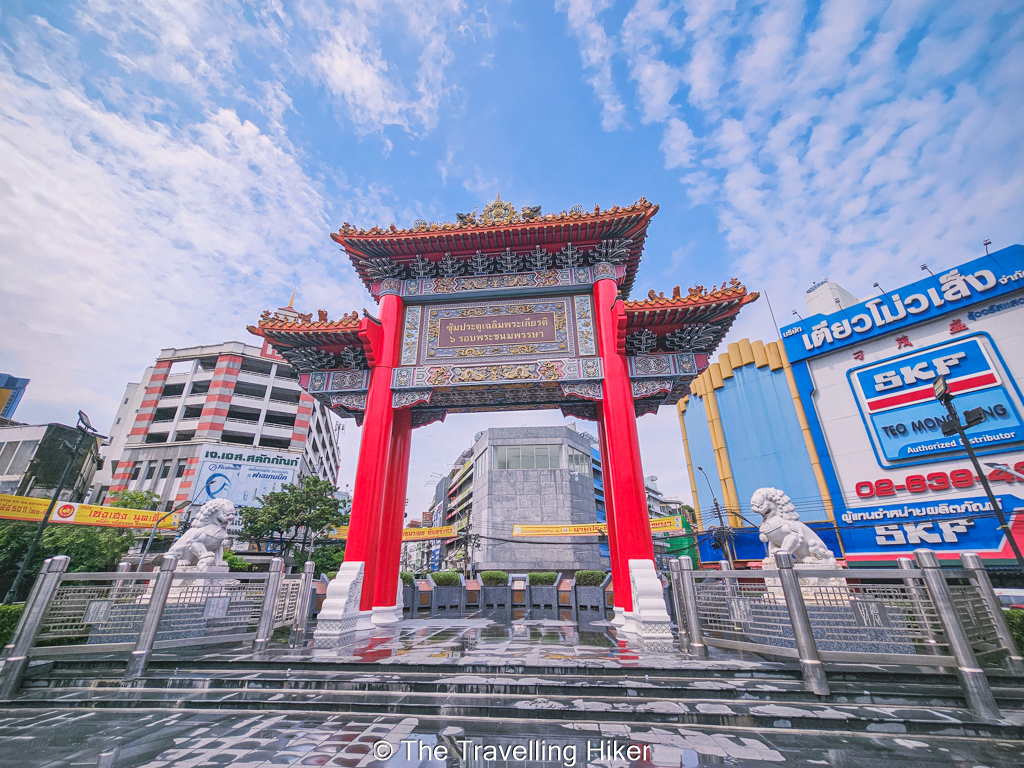
After visiting Wat Traimit, we walked towards the Chinatown Commemorative Gate, which is just in front of Wat Traimit.
The large red and golden gate marks the entrance to Chinatown and is particularly impressive when you see it up close. We stopped here for a few photos before continuing to our next destination.
It is a relatively quick stop, but since it is close to Wat Traimit, I think it is worth adding to your route.
Chinatown commemorative gate
STOP 5: KUAN YIN SHRINE
From the Chinatown gate, we continued to Kuan Yin Shrine.
The shrine is dedicated to Kuan Yin, the Chinese goddess of mercy, and is part of the Thian Fa Foundation, one of the oldest charitable foundations in Bangkok. The shrine is quite small compared to the temples we had visited earlier, but I liked the different atmosphere and the Chinese architecture.
Kuan Yin Shrine
STOP 6: REST AT THE HOTEL AND BRUNCH AT KLAIRE
By this point, we had already done quite a lot of walking, and since it was raining on and off, we decided to head back to our hotel and relax for a while.
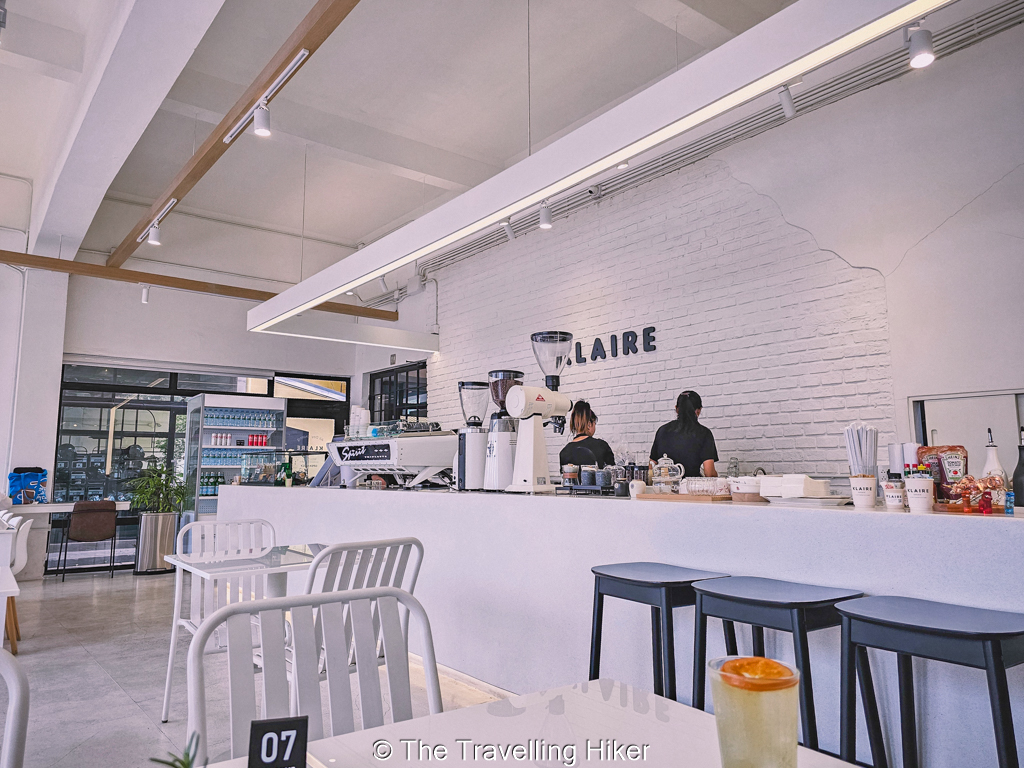
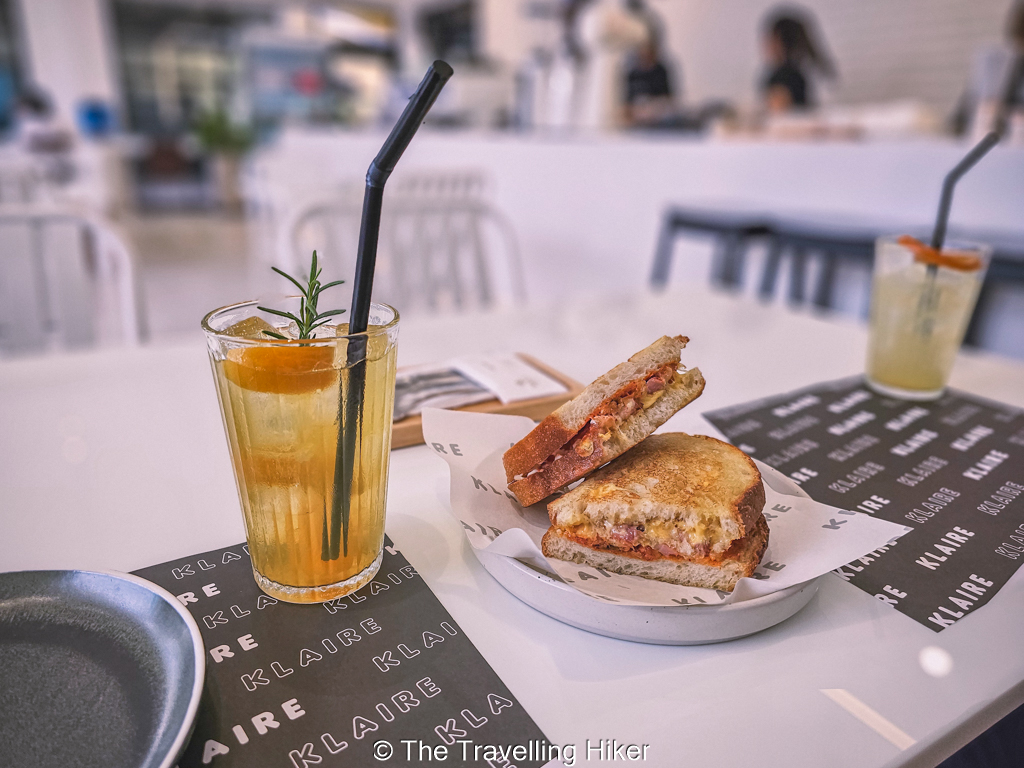
Once it finally stopped raining, we went out for brunch at KLAIRE, a small café on Phra Sumen Road. We had some food and drinks and took our time here before continuing with the afternoon.
Klaire Cafe
Our delicious brunch
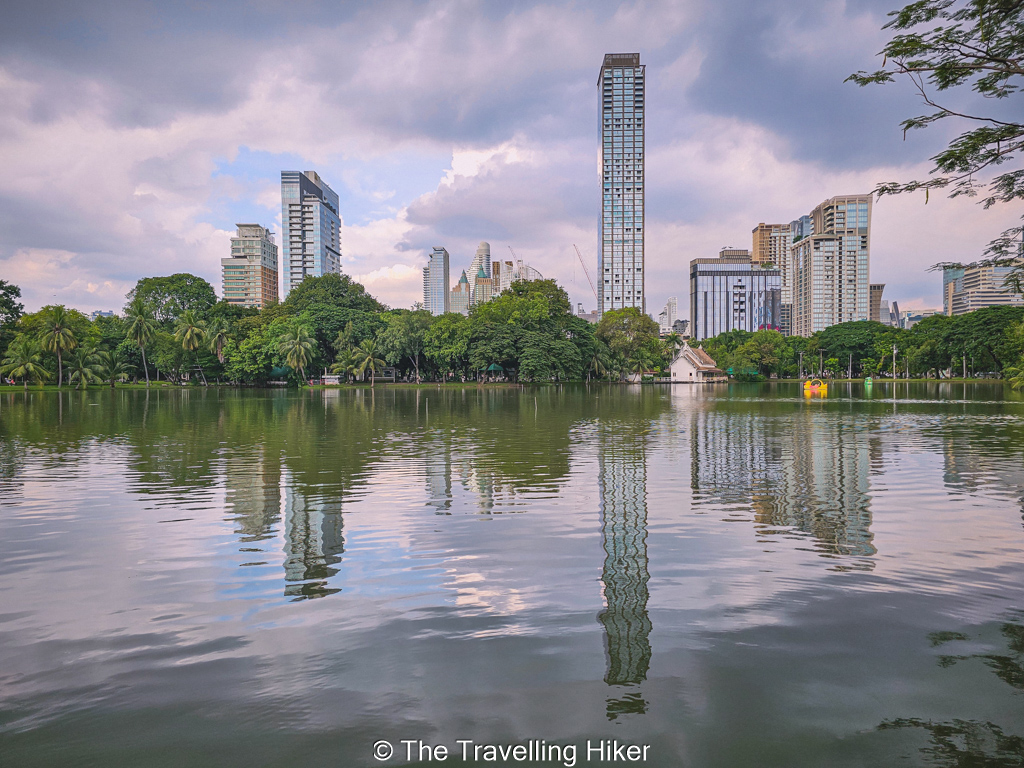
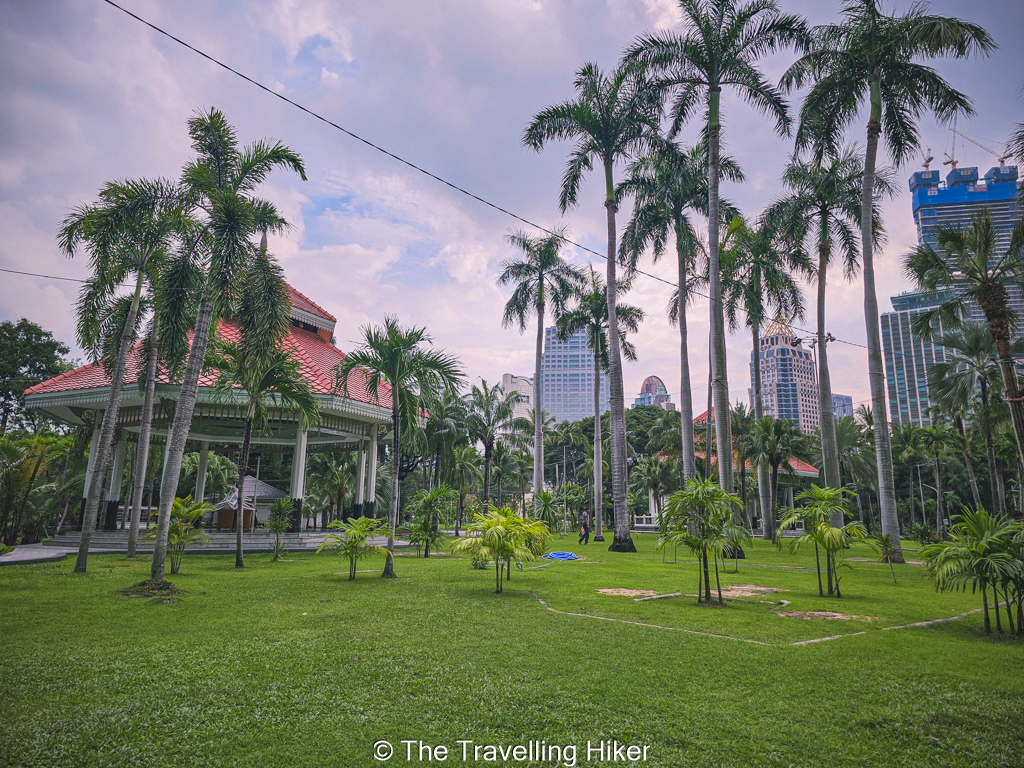
STOP 7: LUMPHINI PARK
After lunch, we headed to Lumphini Park, one of the largest green spaces in central Bangkok.
It was nice to have a change of scenery after spending most of the day surrounded by temples, buildings and busy streets. We simply walked around the park for a while and enjoyed some time away from the noise and traffic of the city.
Don’t expect a huge nature escape, as you can still see Bangkok’s skyscrapers around you, but that is also what makes Lumphini Park interesting. You get a bit of greenery right in the middle of one of Asia’s busiest cities.
Reflection of the skyscrapers on the pond
Pavilion at Lumphini Park
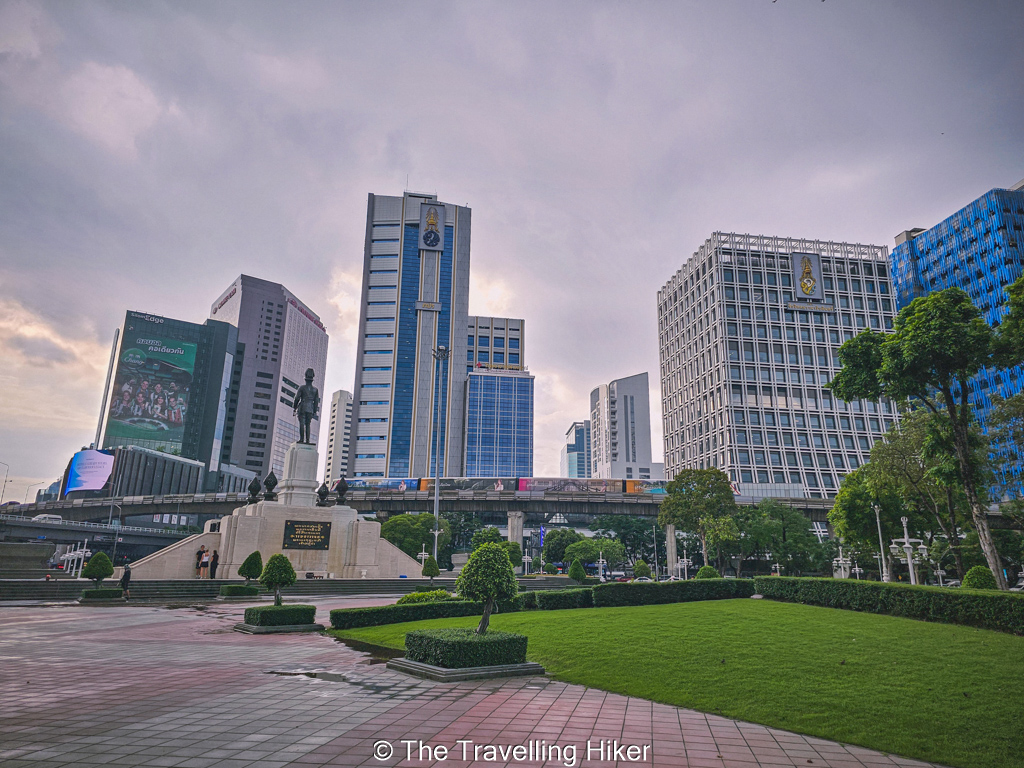
Entrance to the park
STOP 8: SUNSET AT MAHANAKHON KING POWER
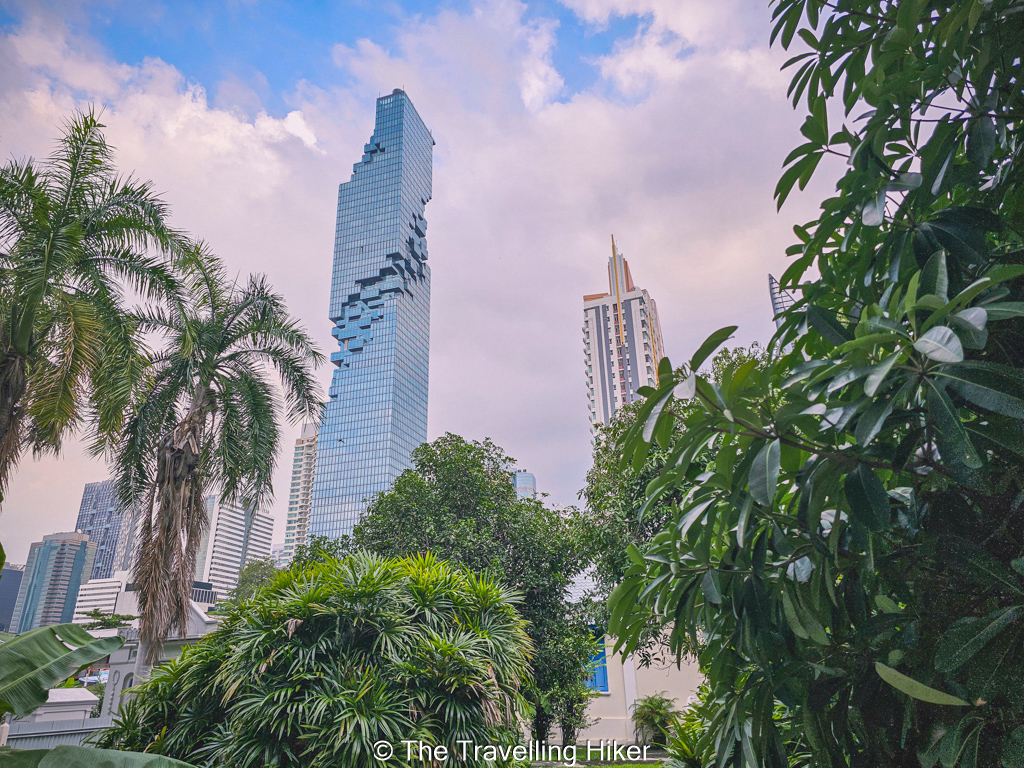
As the afternoon came to an end, we made our way to Mahanakhon King Power to watch the sunset over Bangkok.
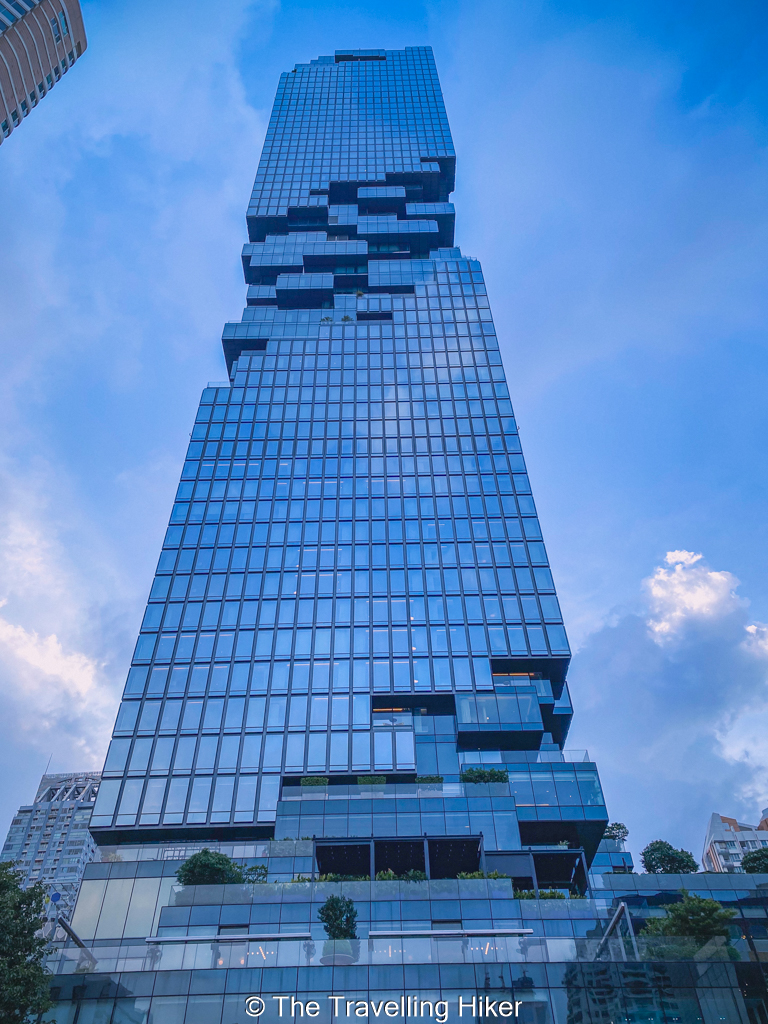
King Power Mahanakhong Skyscraper
At the feet of the tower
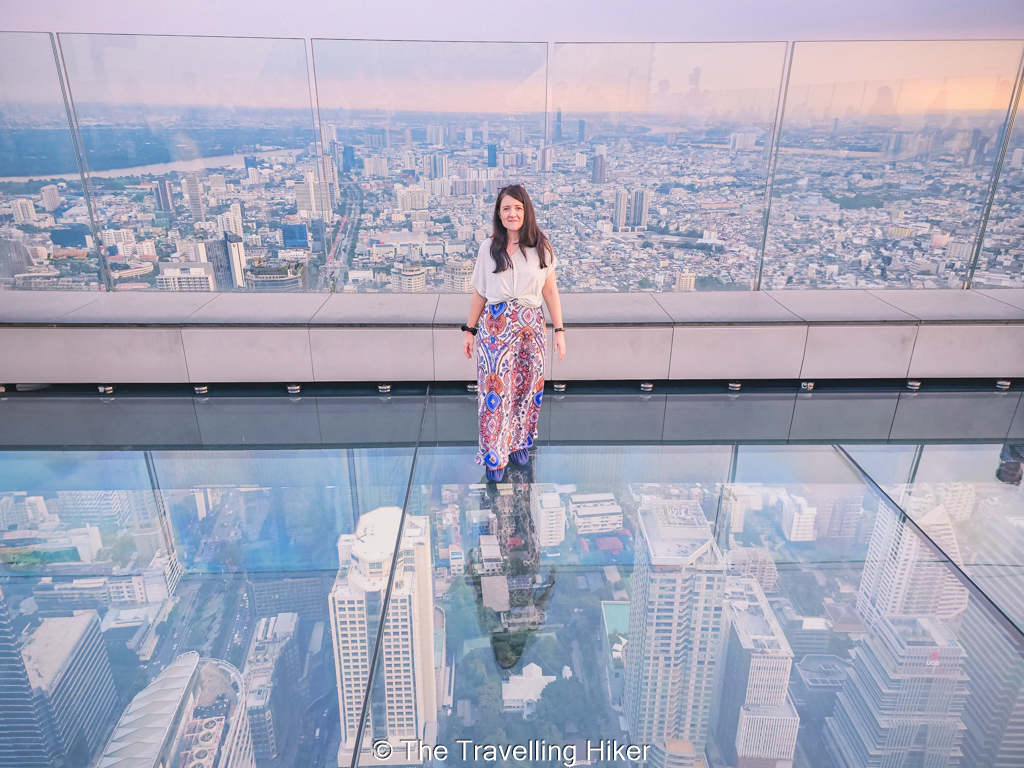
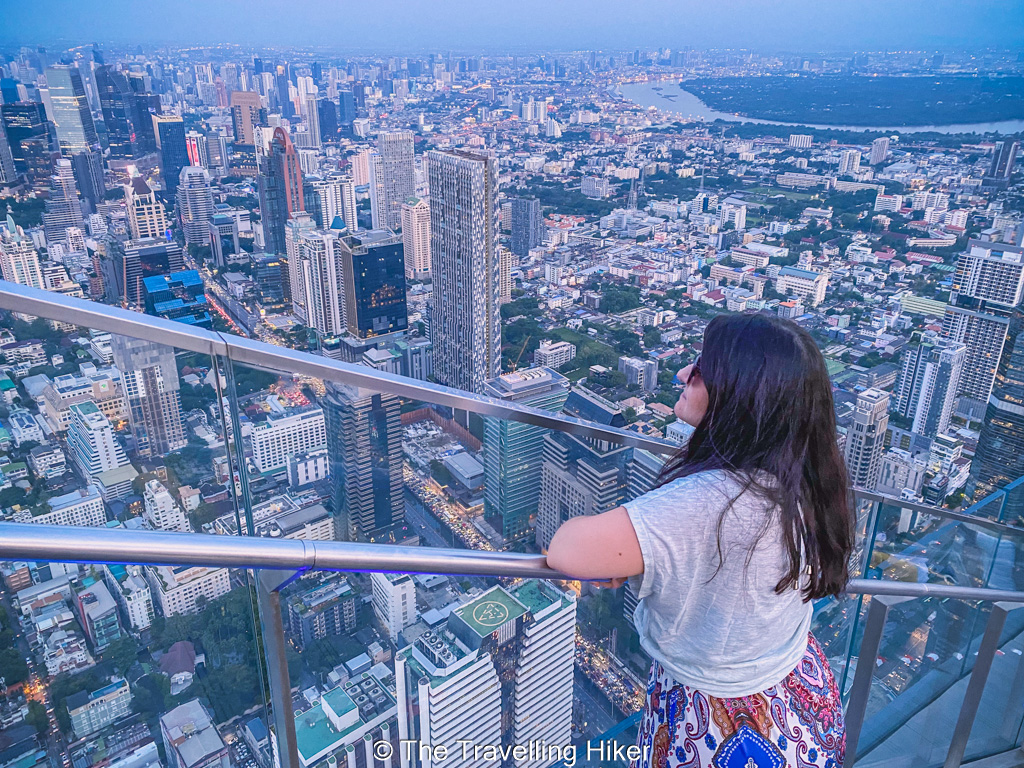
The Mahanakhon SkyWalk is located at the top of one of Bangkok’s most recognisable skyscrapers and offers panoramic views across the city. The outdoor observation deck is also home to the famous glass tray, if you are brave enough to step onto it. I have to admit I was quite scared, but I managed!
Mahanakhong Skywalk
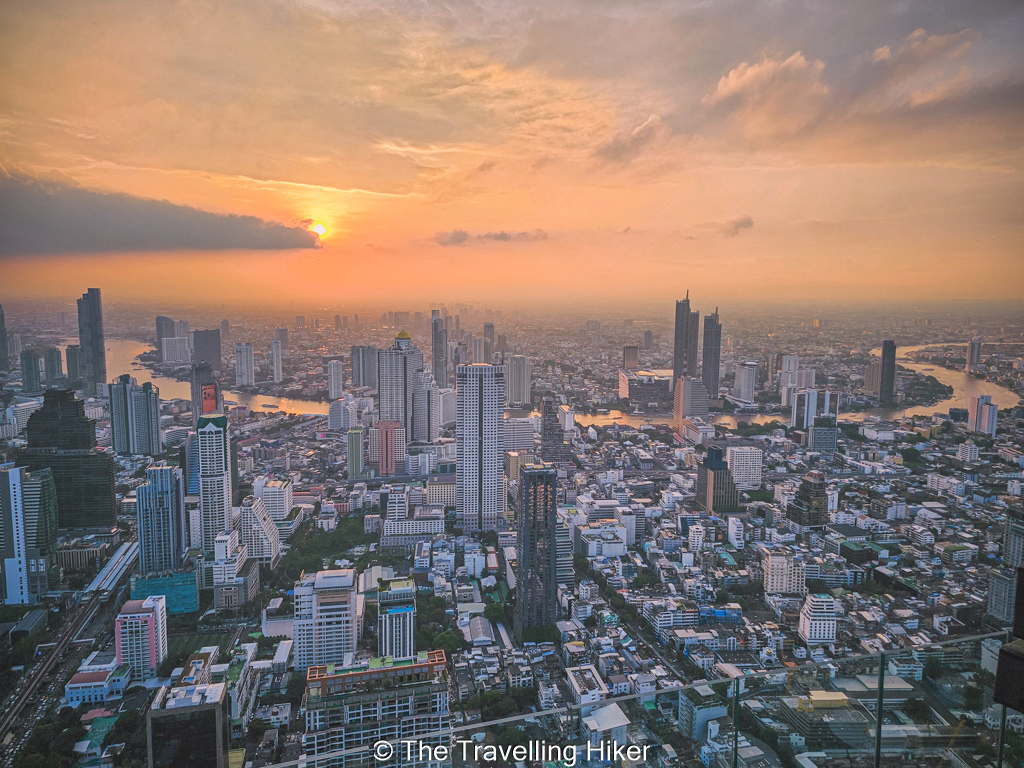
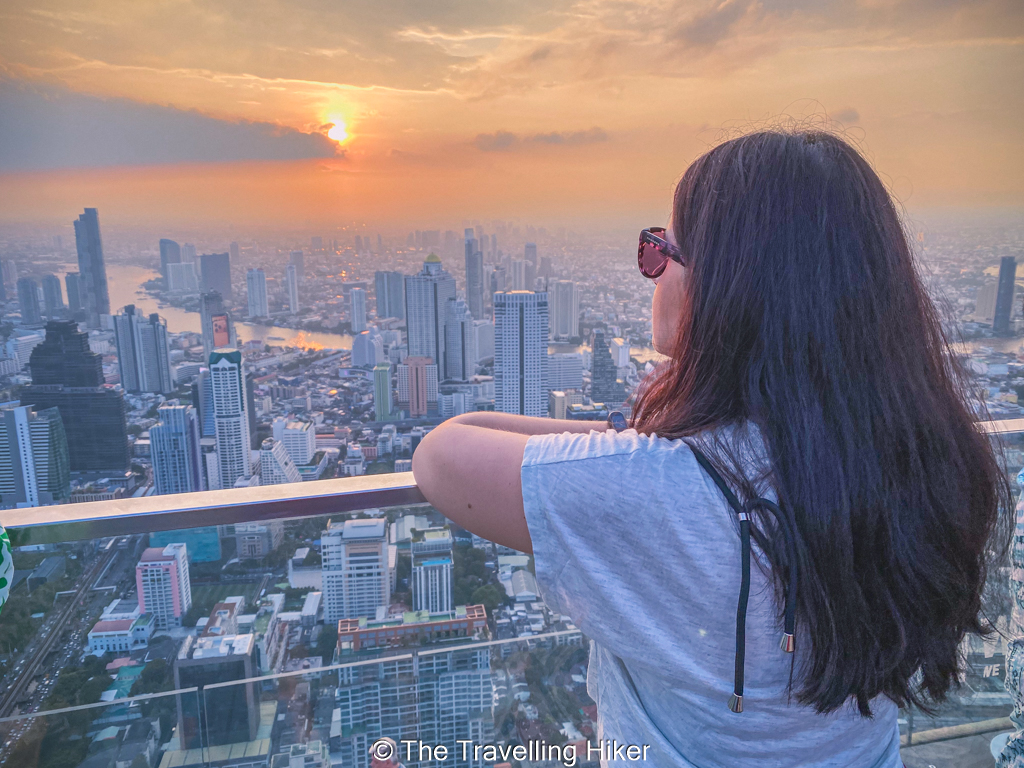
We timed our visit for sunset, and we were rewarded with a beautiful sunset after a rainy day!
Practical information
Price. 500 THB per person, depending on the time and ticket option.
Opening hours. The temple is open between 10:00 and 00:00, with last access to the SkyWalk at 23:00.
Time needed. Around 1.5 to 2 hours.
Book your tickets online. If you want to visit at sunset, it is recommended to book your tickets online in advance. You can do so here.
Tip. Check the weather before going, as the outdoor areas can close in bad weather.
Beautiful sunset at Mahanakhon SkyWalk
Admiring the sunset
STOP 9: DINNER AT THE SPEAKEASY ROOFTOP BAR
After watching the sunset, we headed to The Speakeasy Rooftop Bar for dinner and drinks.
Located on the rooftop of the Hotel Muse Bangkok, this was a lovely way to finish the day. The views over Bangkok were beautiful at night, and the food was really nice too!
If you like rooftop bars but don’t want somewhere that feels too much like a party, I would definitely recommend checking out The Speakeasy. It has a more sophisticated atmosphere, and you can enjoy the views while having dinner or a drink.
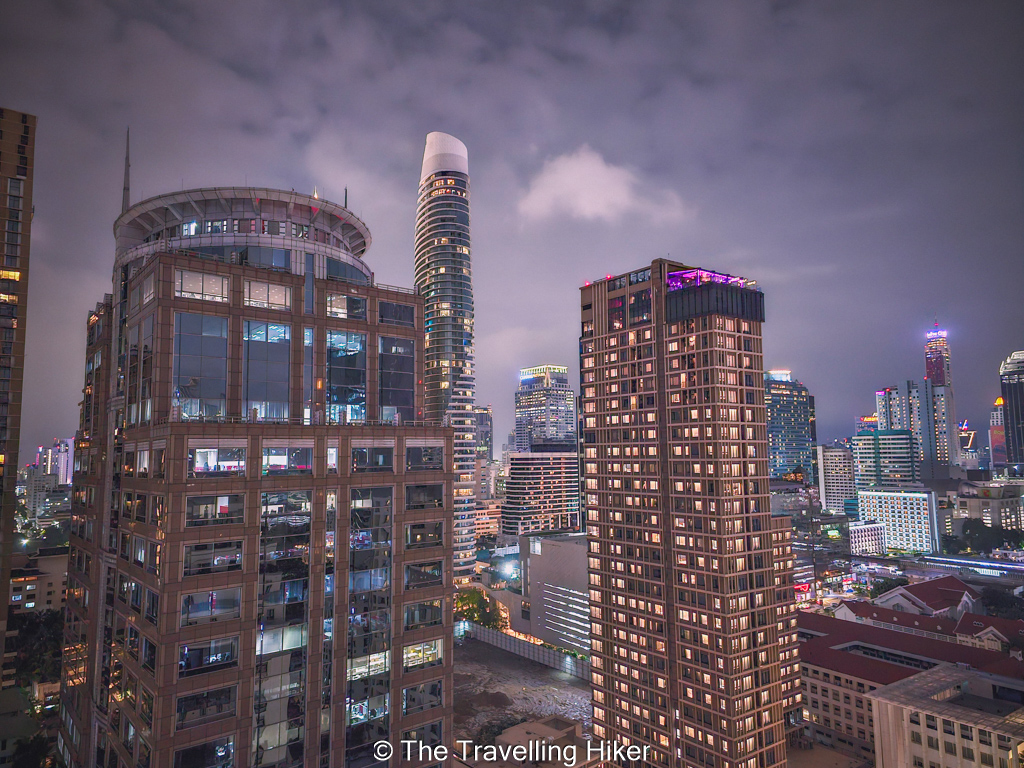
View from the Rooftop Bar
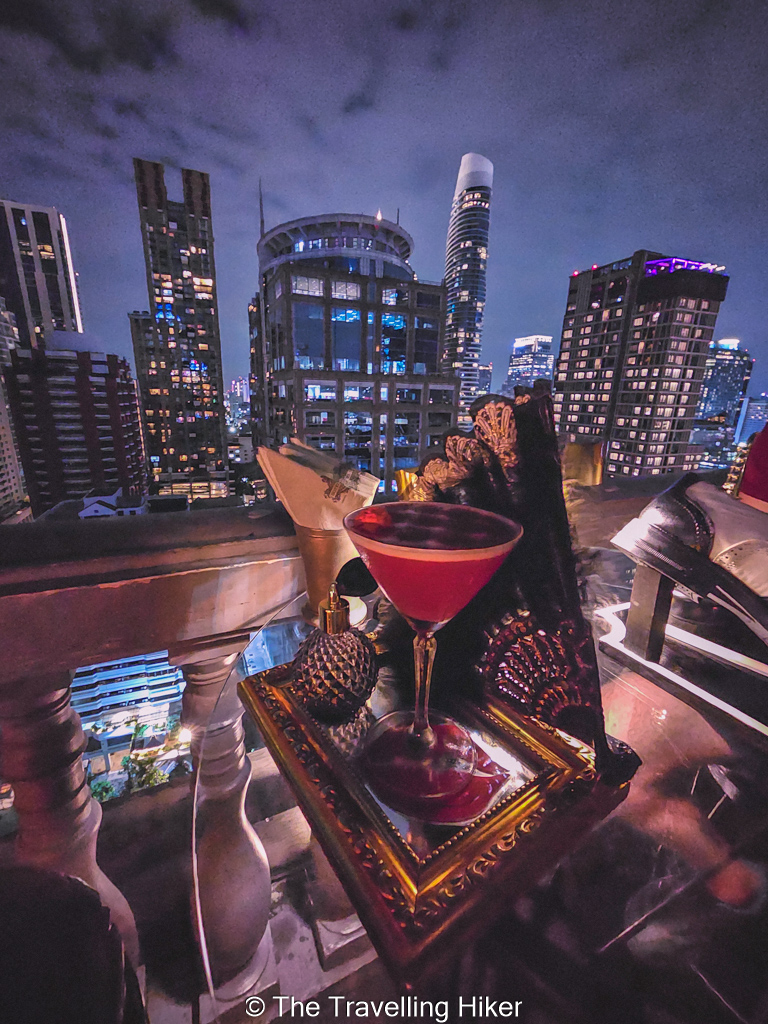
Cocktail with a view!
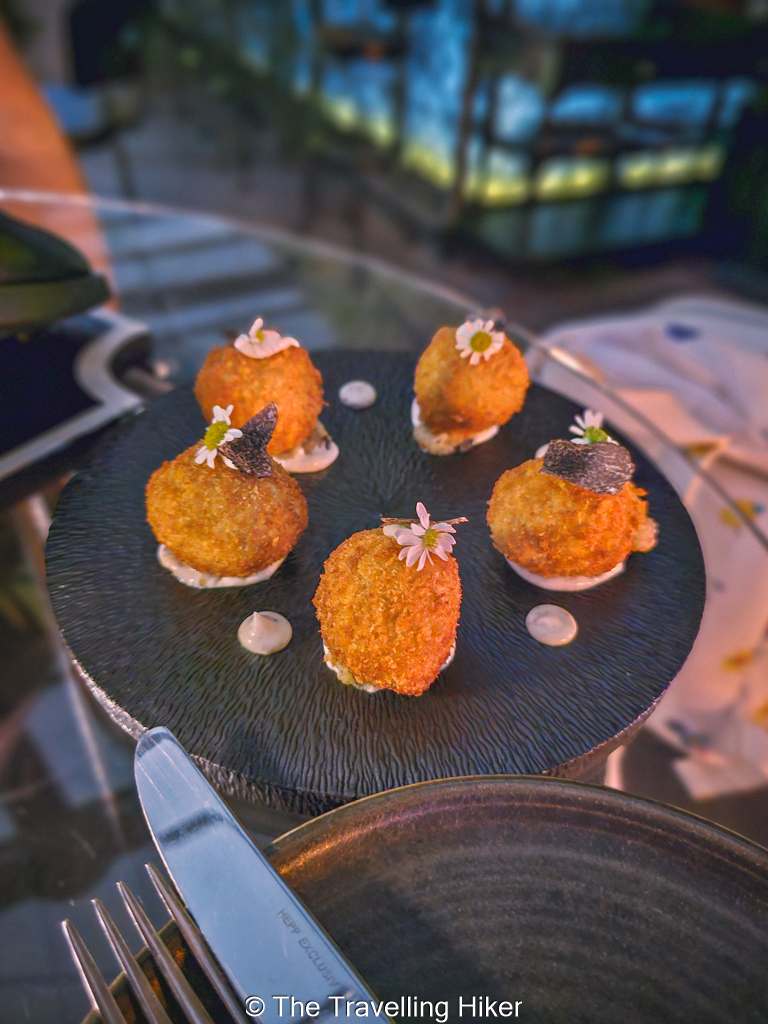
Croquetas!
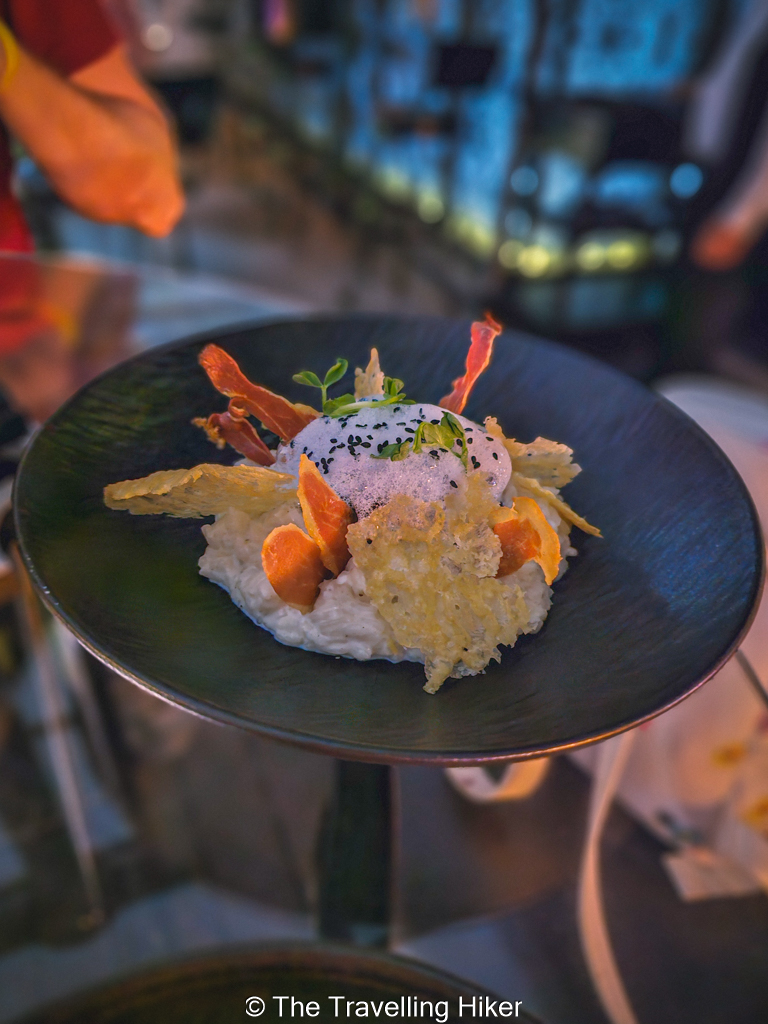
Risotto!
DAY 5 - TEMPLES AND CHATUCHAK MARKET
Our fifth and final day in Bangkok was a much slower one. By this point, we had already seen a lot of temples and explored quite a few different parts of the city, so we didn’t want to pack too much into our last day.
STOP 1: WAT KALAYANAMIT
Since it was our last day, we allowed ourselves a bit of a lie-in and didn’t rush out of the hotel early in the morning.
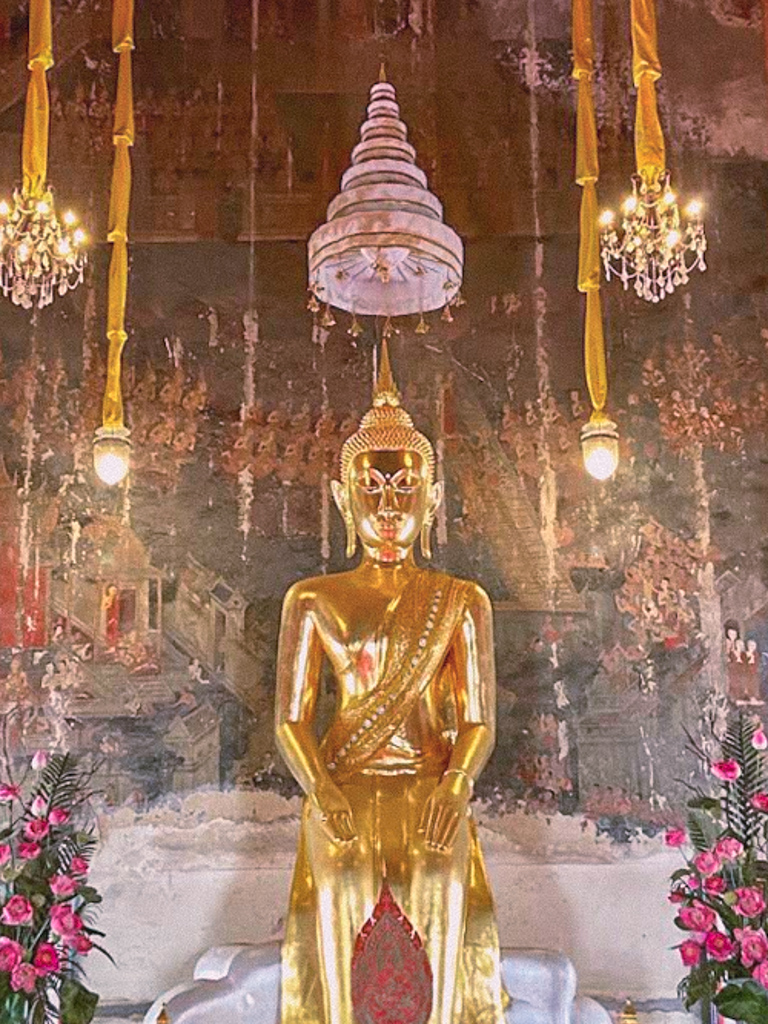
Our first stop was Wat Kalayanamit, a beautiful temple located on the banks of the Chao Phraya River in Thonburi. The temple is best known for its enormous Buddha image inside the main viharn, but I also really liked its location right next to the river.
Practical information
Price. Free.
Opening hours. The temple is open between 8:00 and 16:00.
Time needed. Around 30 minutes.
Dress code. Shoulders and knees should be covered.
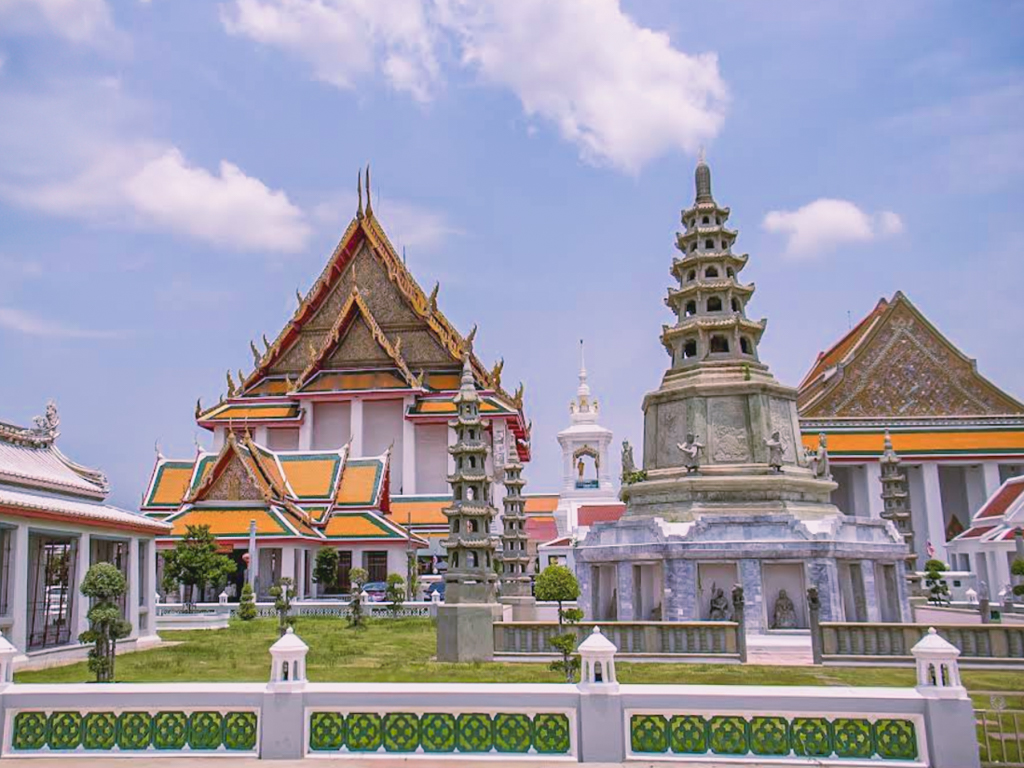
Wat Kalayanamit
Standing Golden Buddha
STOP 2: WAT PRAYURAWONGSAWAT
From Wat Kalayanamit, we continued to Wat Prayurawongsawat, another beautiful temple on the Thonburi side of the Chao Phraya River.
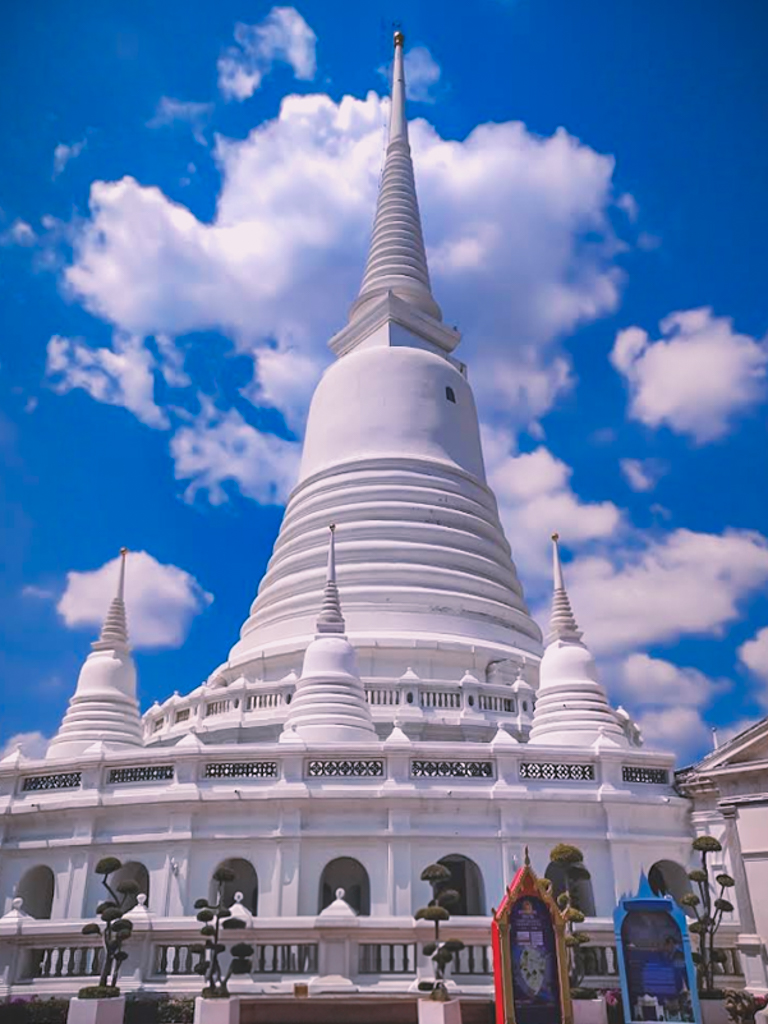
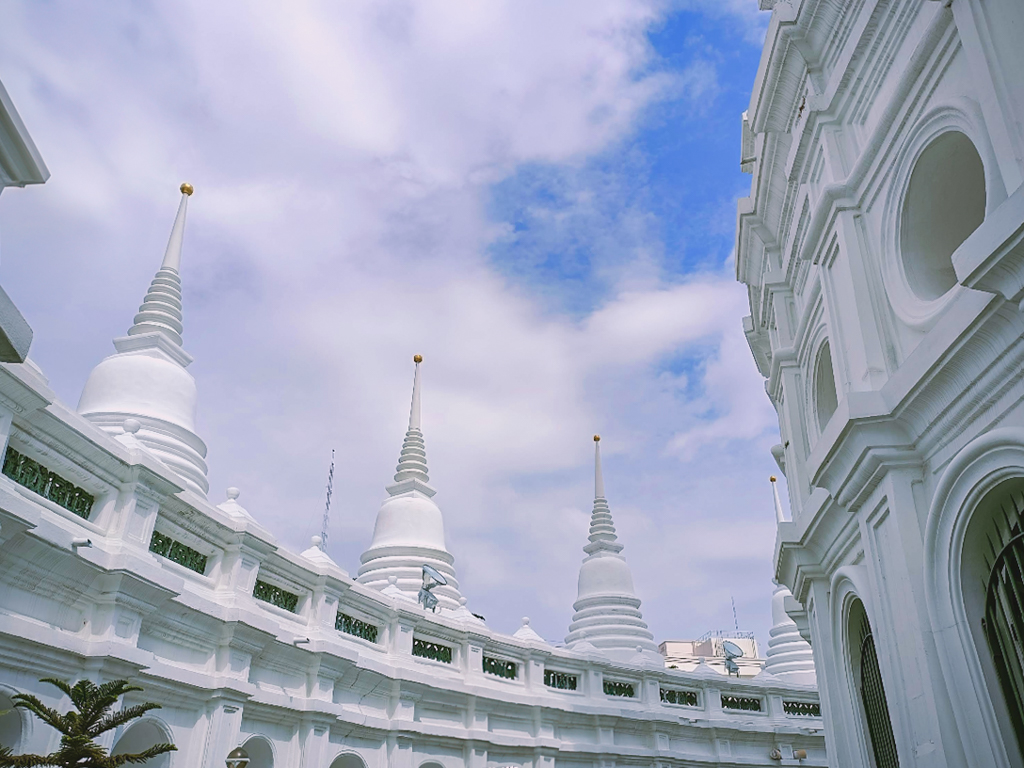
The main feature of the temple is the large white chedi, which you can actually enter and explore. The temple complex also has a peaceful courtyard and some smaller buildings to discover.
We didn’t spend too long here, but it was another nice stop to add to our final morning in Bangkok.
Practical information
Price. Free.
Opening hours. The temple is open between 8:00 and 17:00.
Time needed. Around 30 minutes.
Dress code. Shoulders and knees should be covered.
Main Chedi at Wat Prayoon
View from the circular courtyard
STOP 3: lunch at pad thai kratong thong by ama
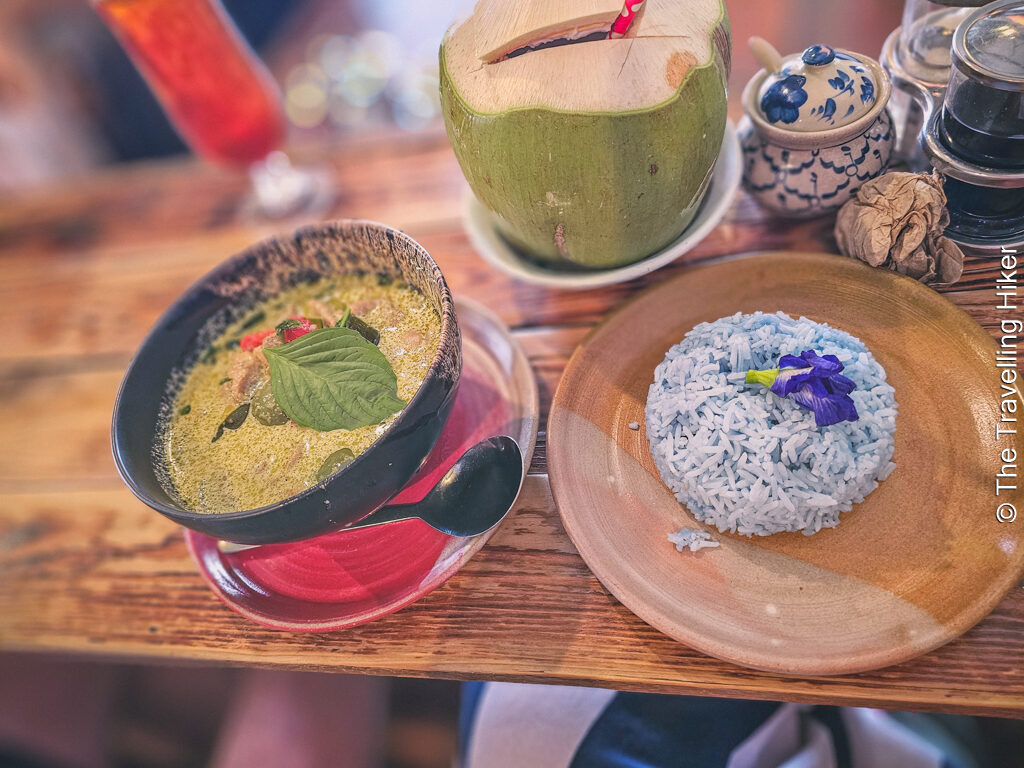
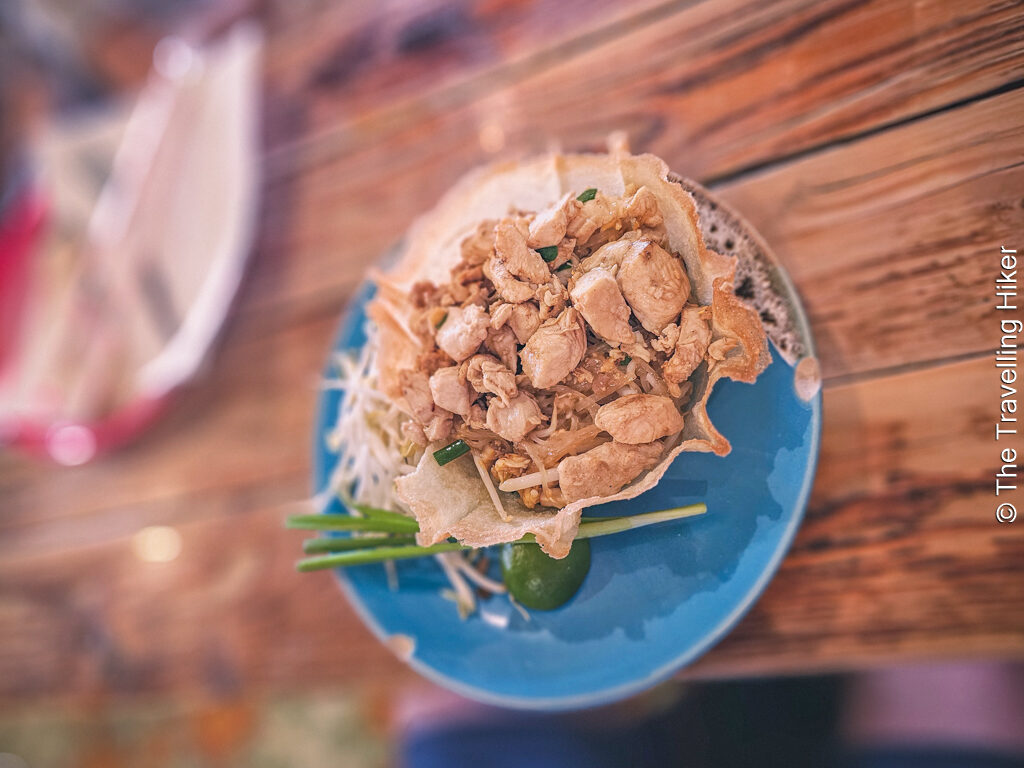
After visiting the two temples, it was time for lunch. We stopped at Pad Thai Kratong Thong by Ama, where we enjoyed some delicious Thai curry and Pad Thai.
Coconut and Thai Tea
Thai green curry
Pad Thai
STOP 4: CHATUCHAK WEEKEND MARKET
We finished our last day in Bangkok at Chatuchak Weekend Market, one of the largest markets in the city.
The market is huge, with thousands of stalls selling pretty much everything you can imagine, from clothes and souvenirs to homeware, art, food and plenty of random things you probably didn’t know you needed.
We just spent our last evening in Bangkok wandering around the market, looking at the different stalls and buying some small souvenirs here and there.
I think Chatuchak works well as the final stop of a Bangkok itinerary because you can make the visit as long or as short as you like.
Practical information
Opening days. The main Chatuchak Weekend Market is open on Saturdays and Sundays, so you will only be able to visit if you are in Bangkok during the weekend.
Opening hours. The temple is open between 9:00 and 18:00.
Time needed. This really depends on how much you want to explore and whether you are planning to shop.
OTHER DAY TRIPS FROM BANGKOK
If you have more than five days in Bangkok, or you simply want to see something different from the city, there are several interesting day trips you can take.
We chose to visit Ayutthaya, but it is not the only option.
Kanchanaburi. This is a good option if you are interested in history and nature. The town is famous for the Bridge over the River Kwai, but there is much more to see in the surrounding area. You can visit the JEATH War Museum, learn more about the history of the Death Railway and combine this with a visit to Erawan National Park, where you will find a beautiful series of waterfalls.
Damnoen Saduak Floating Market and Maeklong Railway Market. This is another super famous day trip from Bangkok. Most people combine both markets in one day trip. Just keep in mind that even these markets are quite touristy.
Khao Yai National Park. If you would rather escape the city and spend some time in nature, Khao Yai National Park is another option. It is one of Thailand’s largest and oldest national parks, with forests, waterfalls, hiking trails and plenty of wildlife.
Hua Hin. If you are looking for a change of scenery and some time by the sea, you could also consider Hua Hin. The coastal town is around three hours from Bangkok and is known for its beaches, seafood and more relaxed atmosphere. Personally, I would prefer to spend at least a couple of nights here rather than visiting as a day trip, but it can be an option if you have limited time.
ACCOMMODATION IN BANGKOK
Bangkok is a huge city so there are endless neighbourhoods where you can get your accommodation. However, if this is your first trip to Bangkok, and you are going to be visiting the most famous sites in the city, I would recommend booking your hotel near Khao San Road.
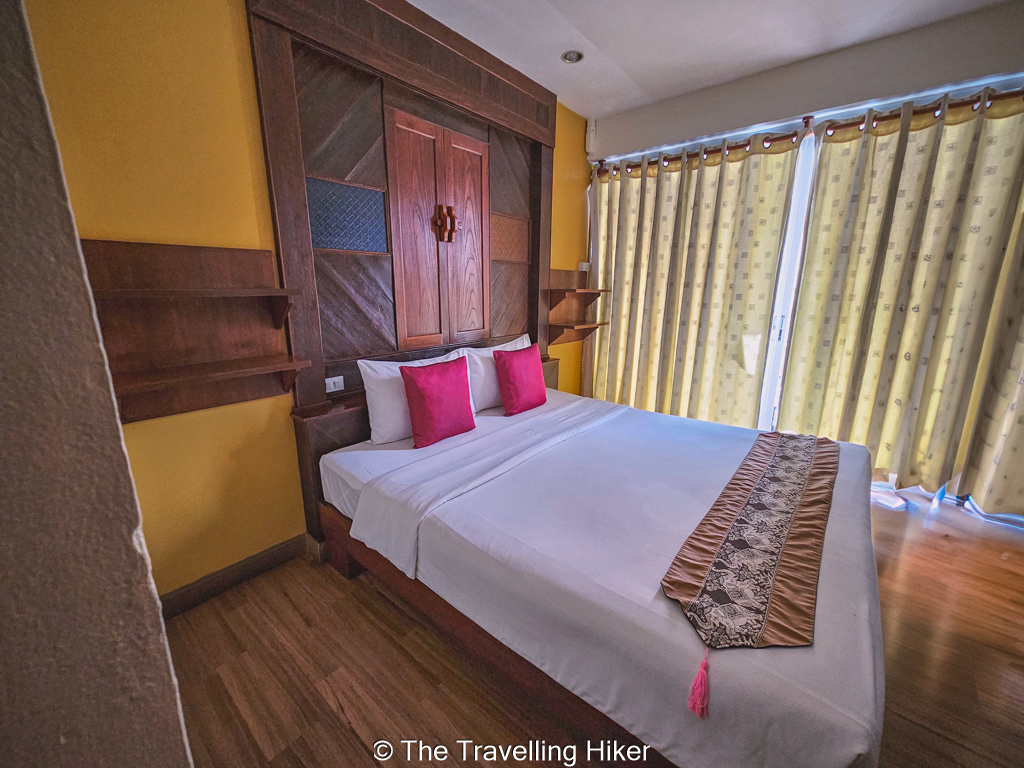
Lamphu Treehouse Boutique Hotel
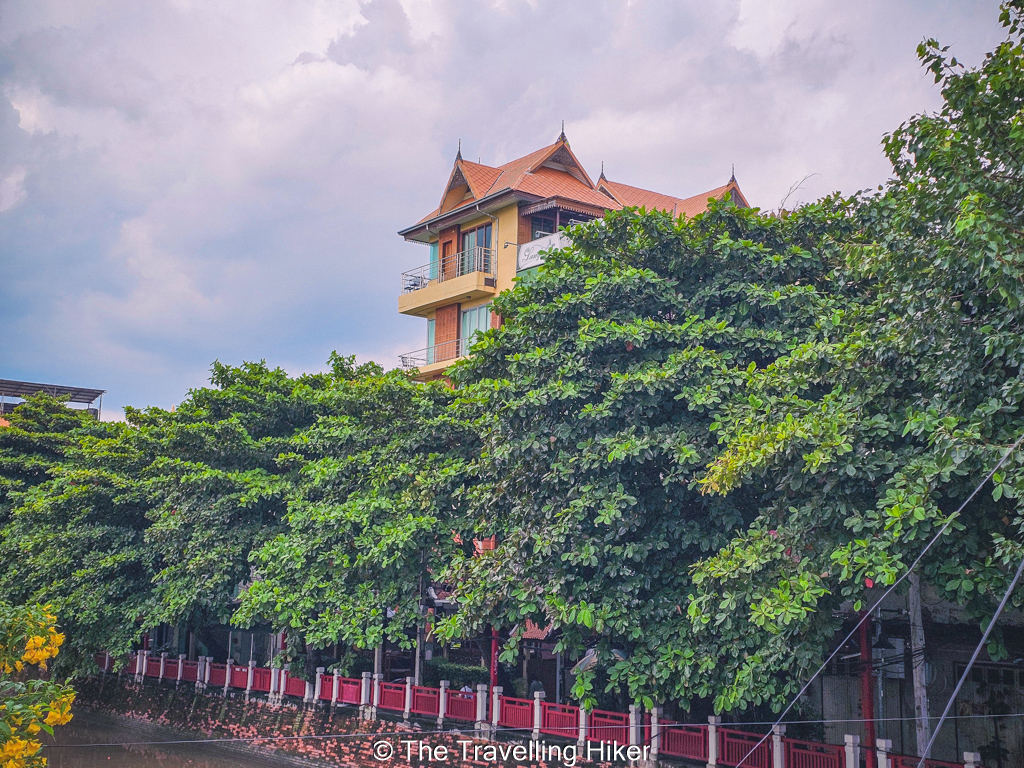
During our most recent trip to Bangkok, we stayed at Lamphu Treehouse Boutique Hotel. The hotel is located in a very calm area of the city, yet it is only 10 minutes walking from Khao San Road and it is incredibly well connected. The rooms were spacious and comfortable. The breakfast buffet was delicious. And the most important thing of all, they allowed us an early check-in at 9:00 am!
Yes, I think five days is a good amount of time to explore Bangkok without having to rush. Of course, you could easily spend longer in Bangkok, especially if you want to explore more neighbourhoods or take additional day trips.
HOW DO YOU GET AROUND BANGKOK?
We used a combination of Grab, boats and walking during our stay. Grab was convenient when we wanted to go somewhere that wasn’t easily connected by public transport. Boats are also a great way to get around areas along the Chao Phraya River.
For shorter distances, we often simply walked. Just remember that Bangkok can be very hot, so don’t underestimate how tiring a longer walk can be.
Admiring the view from Mahanakhong SkyWalk
IS BANGKOK EXPENSIVE TO VISIT?
Bangkok can be surprisingly affordable, especially when it comes to food and local transport. You can find everything from inexpensive street food to more expensive restaurants and rooftop bars, so it is quite easy to adapt your budget.
Accommodation also varies considerably depending on the area and the type of hotel you choose.
IS BANGKOK SAFE FOR TOURISTS?
Bangkok is a popular destination for tourists and we felt comfortable exploring the city during our stay. As with any large city, it is still important to use common sense, keep an eye on your belongings in crowded areas and be careful with traffic when crossing roads.
MAP WITH ALL LOCATIONS
HOW TO USE THIS MAP: Click the star next to the map title to add this map to your google maps account. To view it on your phone while traveling, open Google Maps, click on the menu button and go to “Your Places”, click on Maps and you’ll see this map in your list.
FINAL THOUGHTS
After spending five days exploring Bangkok, I can understand why people either fall in love with the city or find it a little overwhelming. It is busy, noisy and chaotic at times, but there is also so much to discover.
Overall, I think five days is a great amount of time to visit Bangkok if you want to see the main highlights without having to rush. You could definitely see more in five days, but for us, this pace was just right.
If you are planning a trip to Thailand, I hope this itinerary gives you some ideas and helps you plan your own Bangkok itinerary. And don’t forget to leave some time to simply wander around, stop for a drink, eat some street food and enjoy the chaos of Bangkok. Some of our favourite moments happened when we weren’t following a plan at all.