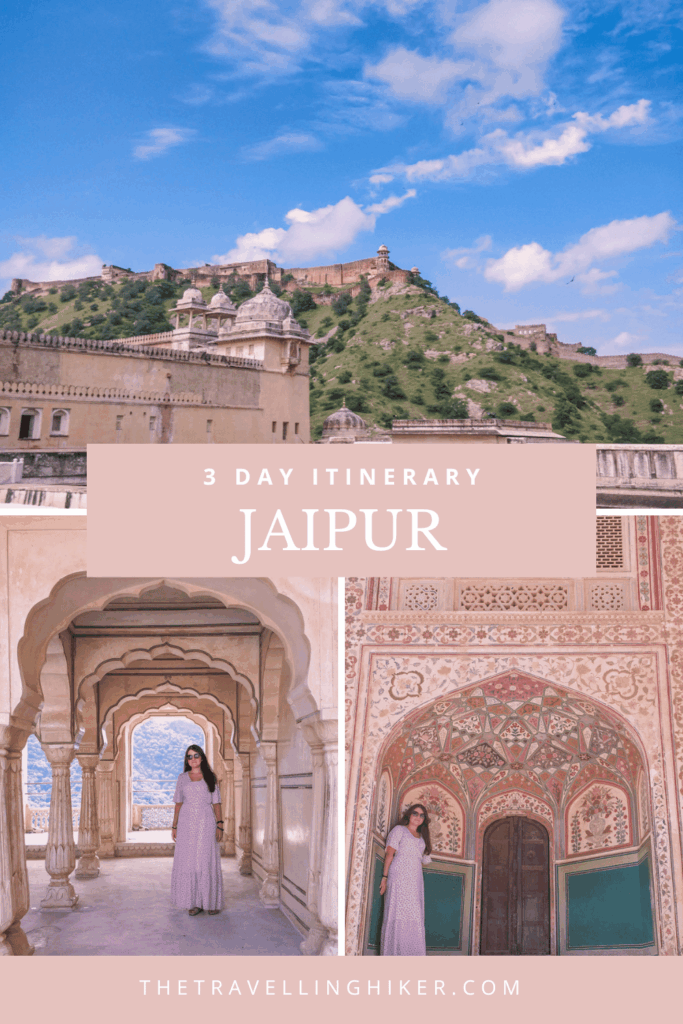
THE BEST 3 DAY JAIPUR ITINERARY FOR FIRST-TIME VISITORS
January 11, 2026
Planning a trip to Rajasthan and wondering how to make the most of your time in Jaipur? This 3 day Jaipur itinerary is designed to help you explore the Pink City without rushing, covering its iconic forts, royal palaces, colorful bazaars,and a few hidden gems along the way. This itinerary balances sightseeing with breathing room, so you can truly enjoy Jaipur’s charm, culture, and vibrant energy.
TABLE OF CONTENTS
INTERESTING FACTS ABOUT JAIPUR
Jaipur is full os small details that make it stand out from other cities in India. These quick facts help explain why the Pink City feels so unique while you explore it.
Jaipur is considered one of India’s first planned cities. It was founded in 1727 by Maharaja Sawai Jai Singh II and designed using Vastu Shastra, with wide streets laid out in a grid pattern. This thoughtful planning still makes Jaipur easier to navigate today.
The city get its nickname the Pink City because many buildings are painted in pink. It was painted this color in 1876 to welcome Prince Albert of Wales, as pink symbolized hospitality.
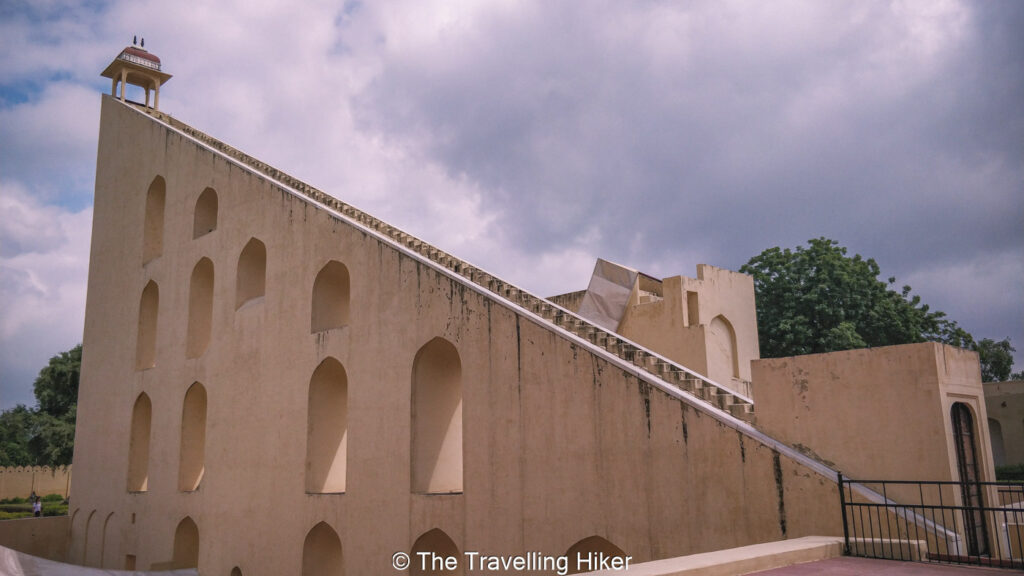
Jaipur is closely linked to astronomy and science. The Jantar Mantar complex contains large stone instruments that wer used to measure time and observe celestial movements.
The city has long been known for its handicrafts and jewelry. Jaipur is especially famous for gemstones, block printing, and traditional textiles.
HOW TO GET TO JAIPUR?
Before I share with you how to spend 3 days in Jaipur, you need to get to the Pink City. Jaipur is well connected to the rest of India, making it an easy city to include in almost any Rajasthan itinerary or as part of the famous Golden Triangle (New Delhi – Agra – Jaipur).
BY PLANE
Jaipur International Airport (JAI) is located about 12 kilometers from the city center. It has regular domestic flights from major Indian cities such as Delhi, Mumbai, and Bangalore, as well as a few internation connections.
From the airport, you can reach most parts of the city by taxi, app-based rides, or prepaid airport cabs. Travel time to central Jaipur ranges from 30 to 45 minutes, depending on traffic.
Traveling by train is one of the most popular ways to reach Jaipur. Jaipur Junction is a major railway hub with frequent connections to cities like Delhi, Agra, Udaipur, Jodhpur, and Mumbai. Trains from Delhi take around four to five hours, which is not too bad.
From the station, auto rickshaws and taxis are easily available.
It is recommended to book your tickets in advance if you want to travel in a particular class. You can book your tickets with 12Go.
BY CAR
Jaipur is also well connected by road, especially from Delhi and nearby cities in Rajasthan. The drive from Delhi to Jaipur takes about five to six hours via the Delhi Jaipur Expressway, also known as NH48.
The best way to do this is to hire a car with a private driver that will take you to Jaipur. This is what we did, we hired a car with a driver that got us from Pushkar to Jaipur.
If you want to choose this option, you can ask your hotel to arrange it for you, or book it in advance via 12Go Asia.
MOVING AROUND JAIPUR
Getting around the city is quite straightforward. The are several options that will help you explore the city such as auto rickshaws, taxis, ride-hailing apps, or hiring a driver for the day.
For shorter distances withing the old city, walking can be a pleasant way to explore, especially early in the morning or later in the evening.
We actually did a mix of all this during our stay in Jaipur. We walked within the old city, used a lot of Ubers, and one of the days we hired a private driver to take us to the forts outside the city.
IS THREE DAYS ENOUGH TO VISIT JAIPUR?
Jaipur has a lot of things to do and see, so my recommendation is that you stay as many days as possible.
In 3 days, you will be able to visit all the most famous sites in the city without having to rush from one place to another, but you will not be able to see everything. Adding an extra day will allow you to explore at a more relaxed pace and manage to see everything I mention in this guide.
WHEN IS THE BEST TIME TO VISIT JAIPUR?
Jaipur can be visited year-round, but the experience changes significantly depending on the season. The weather, crowds, and even the pace of sightseeing can feel very different, so choosing the right time to visit Jaipur can make a big difference to your trip.
The months from October to March are considered the best time to visit Jaipur. During this period, the weather is cooler and much more comfortable for sightseeing. Daytime temperatures are pleasant, and evenings can be slightly chilly, especially in December and January. This is the ideal time to explore Jaipur’s forts, palaces, and markets without the intense heat. It is also the peak tourist season, so expect higher prices and more crowds around popular attractions.
Summer in Jaipur runs from April to June, and temperatures can rise sharply, often exceeding 40ºC. The city is quieter and hotels often offer lower rates. However, you should only target these months if you can handle the heat.
The monsoon season lasts from July to September. Jaipur receives moderate rainfall, which brings some relief from the heat and adds a fresh, greener feel to the surroundings.
3 DAY JAIPUR ITINERARY - THE BEST ITINERARY TO VISIT THE PINK CITY
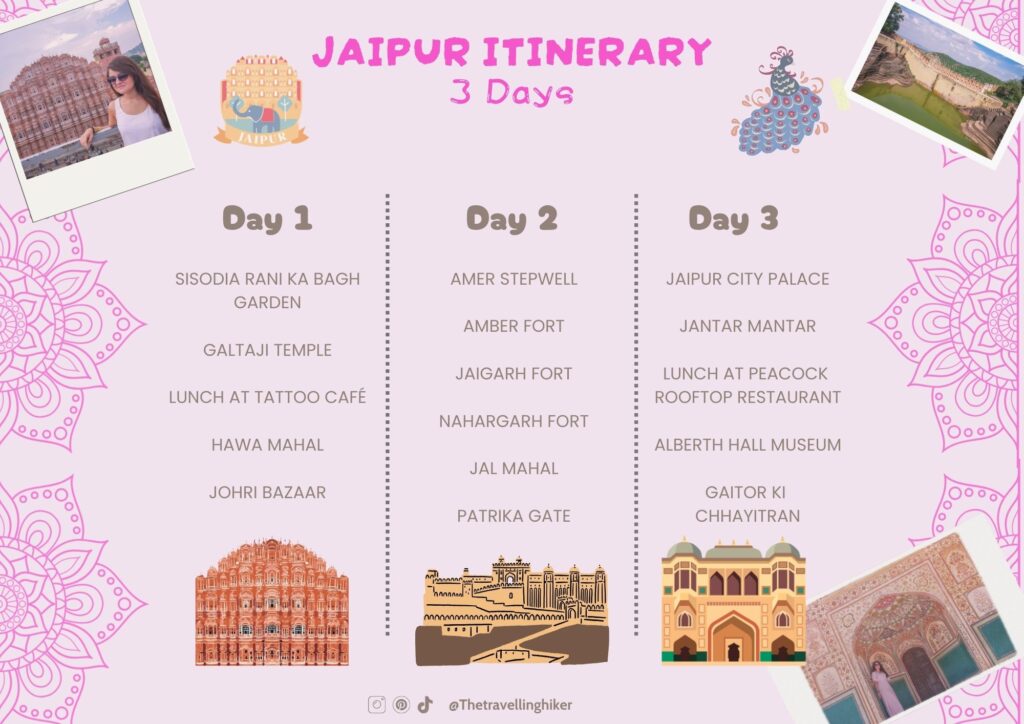
Let’s not wait any longer and start with our 3-day itinerary in Jaipur. This itinerary combines the most famous sites in Jaipur with lesser-known places. All places mentioned here are pinned in the map at the end of this blog.
DAY 1 - HAWA MAHAL & OTHER STOPS
STOP 1: SISODIA RANI KA BAGH GARDEN
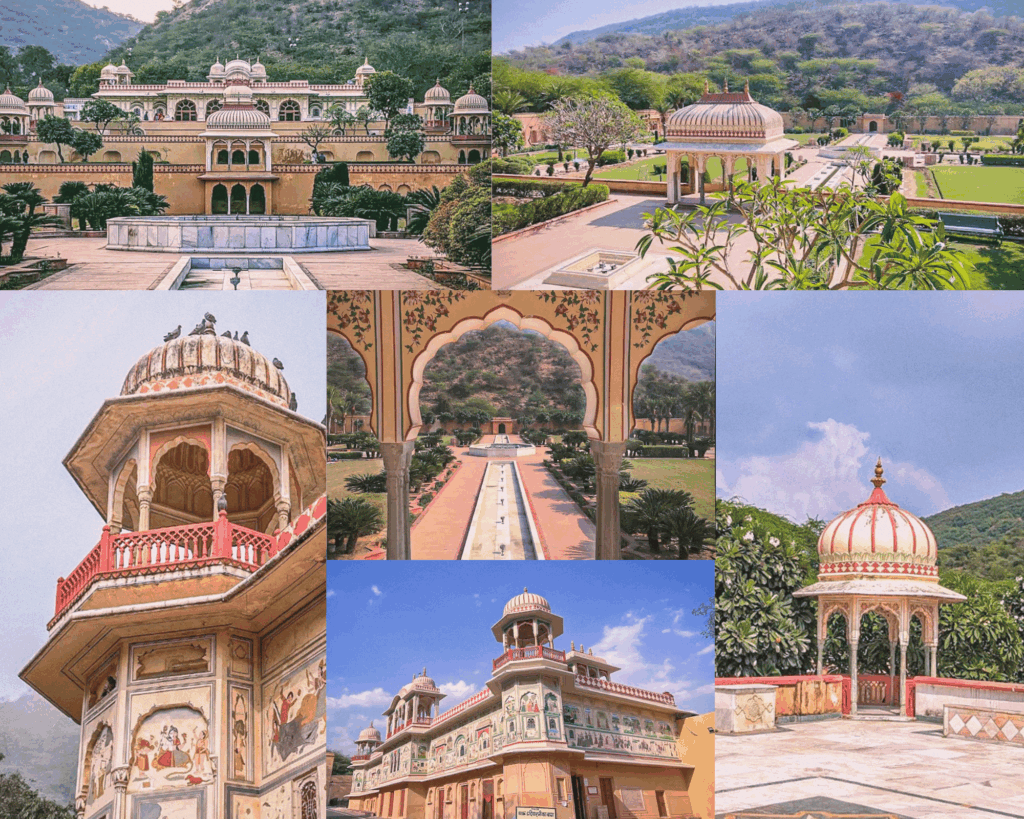
We begin our day with a visit to one of Jaipur’s “hidden gems”, Sisodia Rani ka Bagh Gardens. This garden offers a relaxed atmosphere compared to other more famous sites in Jaipur.
The garden was built in the early 18th century by Maharaja Sawai Jai Singh II for his queen Sisodia Rani, who was a princess from Udaipur. Designed in a traditional Mughal style, Sisodia Rani ka Bagh is laid out across multiple terraces with fountains, water channels, and pavilions that create a sense of balance and symmetry.
From the top terraces of the garden, you also get lovely views of the surrounding hills, which make it a very nice and peaceful start to your visit.
Practical information
Price. Tickets to visit the garden cost 200 INR (prices in 2025).
Opening hours. Sisodia Rani ka Bagh garden is open daily between 8:00 and 20:00.
STOP 2: SHREE GALTAH PEETH TEMPLE
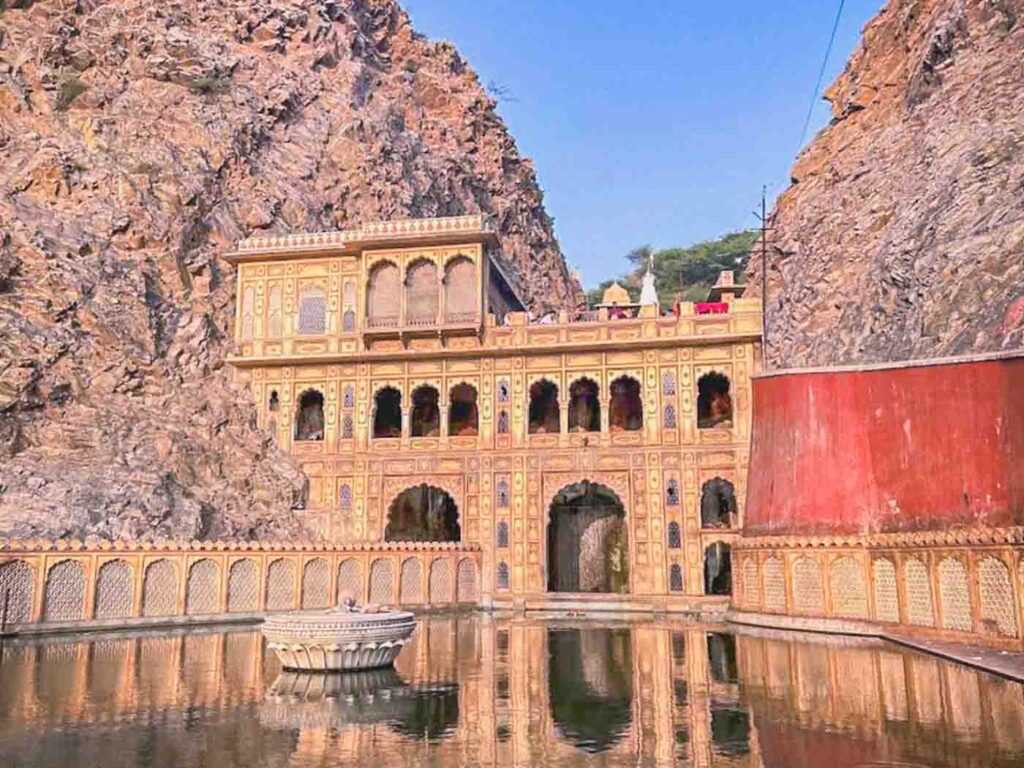
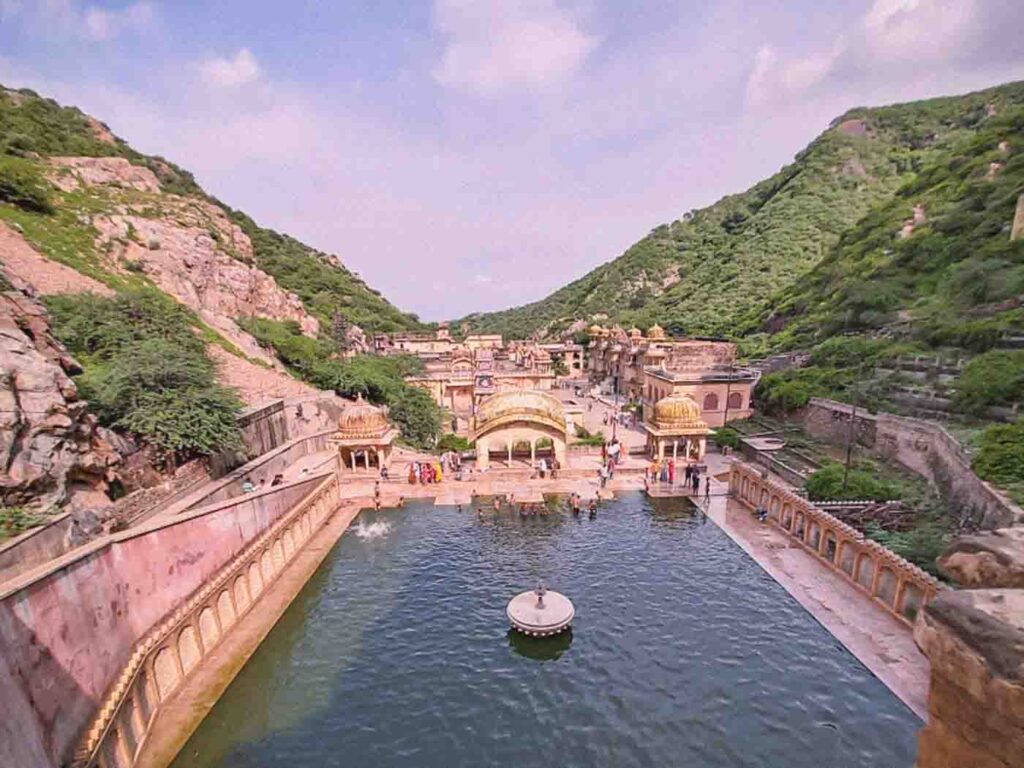
Our next stop will be Shree Galtah Peeth Temple, more commonly known by locals as Galtaji Temple or the Monkey Temple. This temple is tucked into a narrow valley just outside the city which makes for a very different site to other places in Jaipur.
The temple complex dates back several centuries and is built around a natural water source that never dries up. Inside you will find a series of sacred water tanks, known as kunds, where pilgrims come to bathe. The most important of these is the Galta Kund, believed to have holy properties. Surrounding the pools are temples, pavilions, and carved structures with pink sandstone details that blend beautifully into the landscape.
Galtaji is also famous for its resident monkeys, which roam freely throughout the complex. Be mindful of your belongings and keep food out of sight!
Practical information
Price. Galtaji Temple can be visited for free.
Opening hours. The temple is open from sunrise until dawn (approximately 6:00 to 18:00).
Dress modestly. This temple is active place of worship so be respectful of the place.
STOP 3: LUNCH AT THE TATTOO CAFE
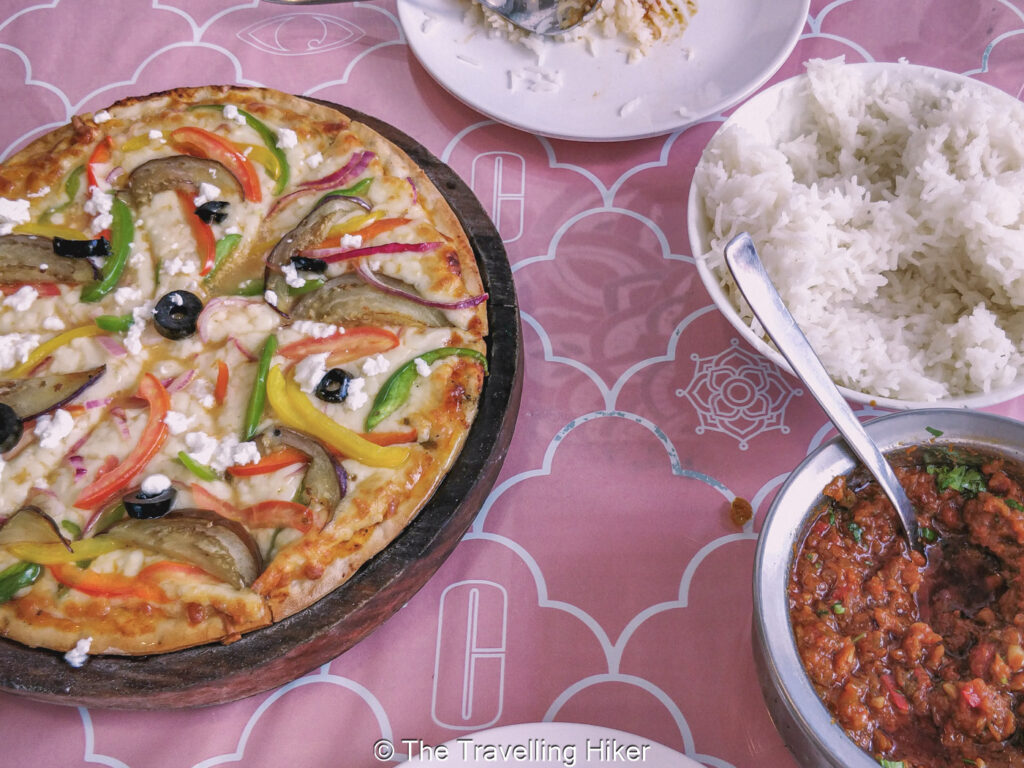
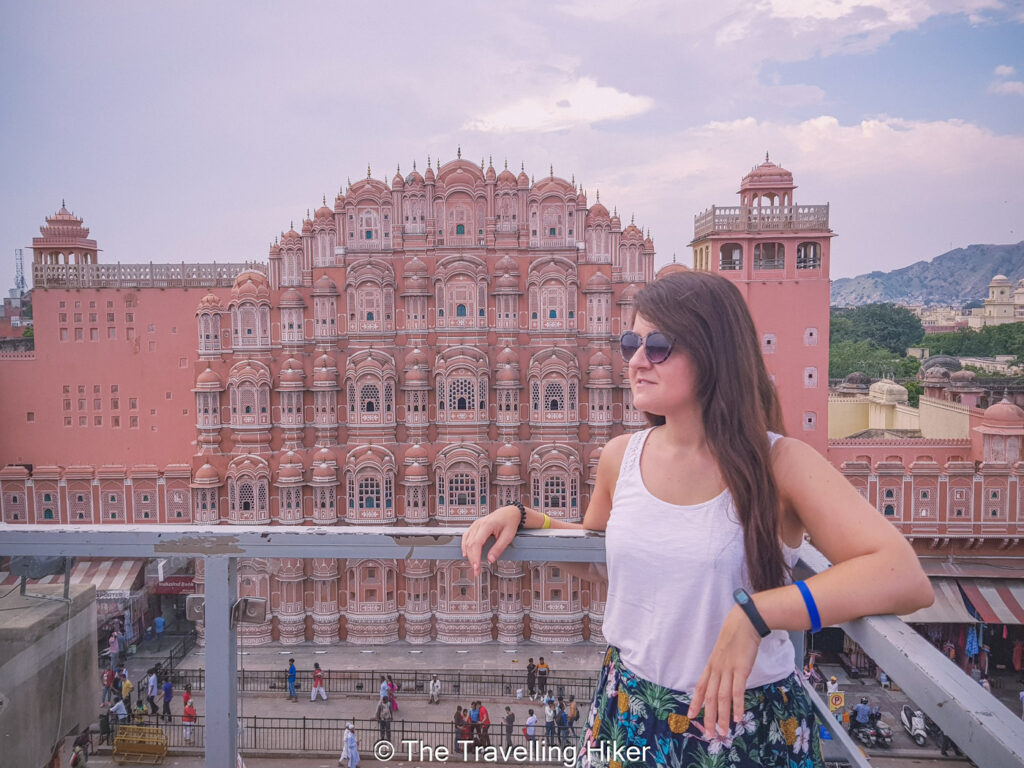
By this time, you’re a probably hungry so we are going to have lunch at a place with iconic views in Jaipur, The Tattoo Café & Lounge. Located directly opposite Hawa Mahal, this rooftop café offers one of the best dining viewpoints in Jaipur. It is a great place to take a break while still feeling fully immersed in the heart of the Pink City.
This café has a mix of Indian and international dishes, which makes it an easy choice for all travelers. It is the perfect place for a casual lunch while exploring Jaipur.
STOP 4: HAWA MAHAL
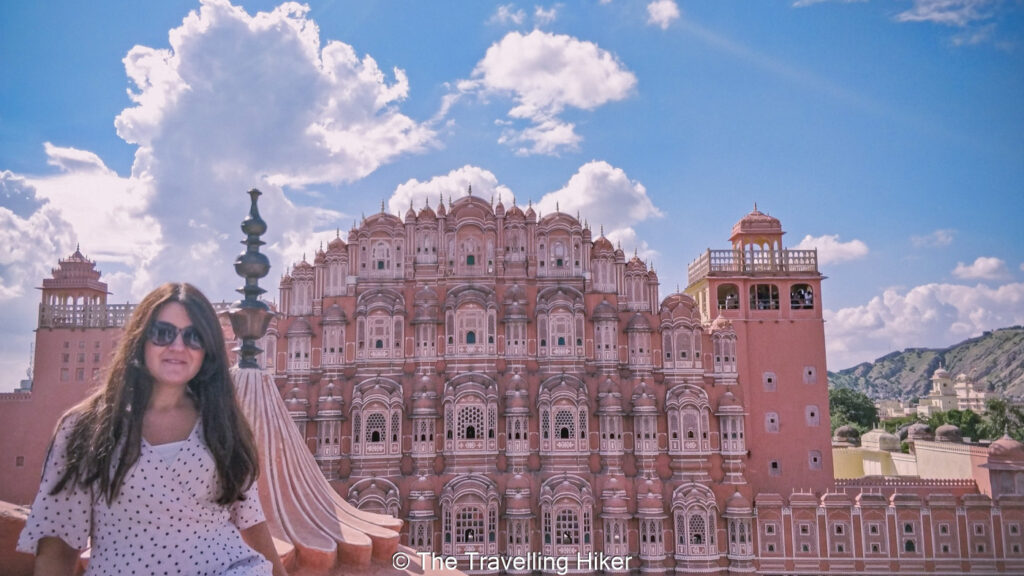
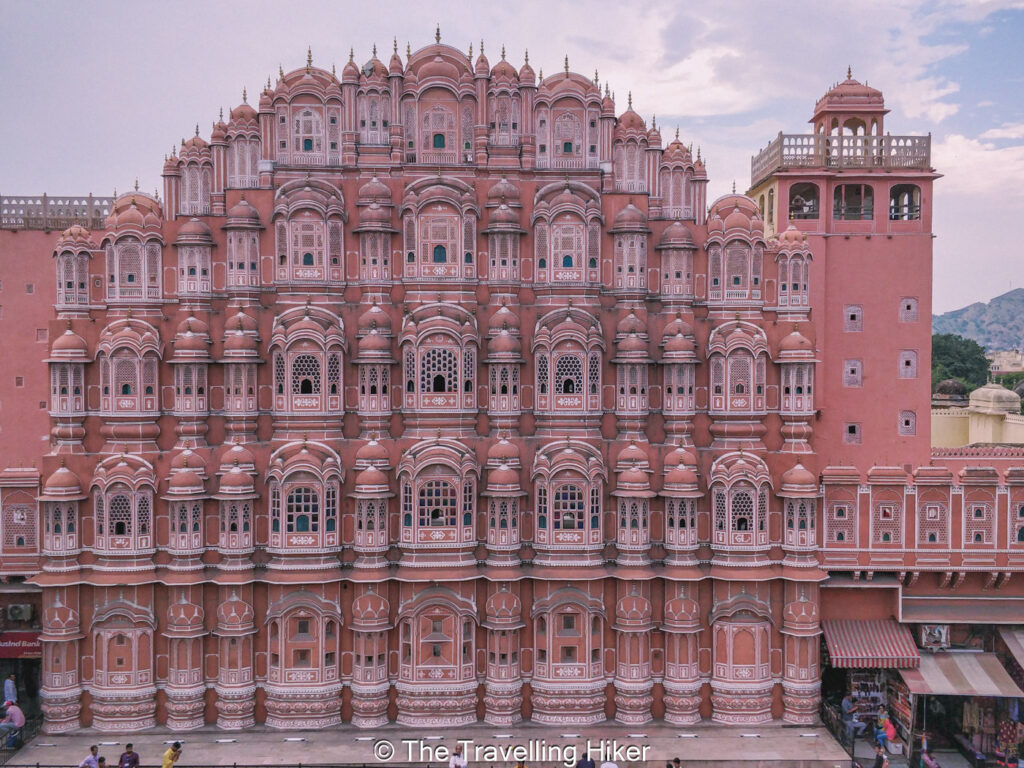
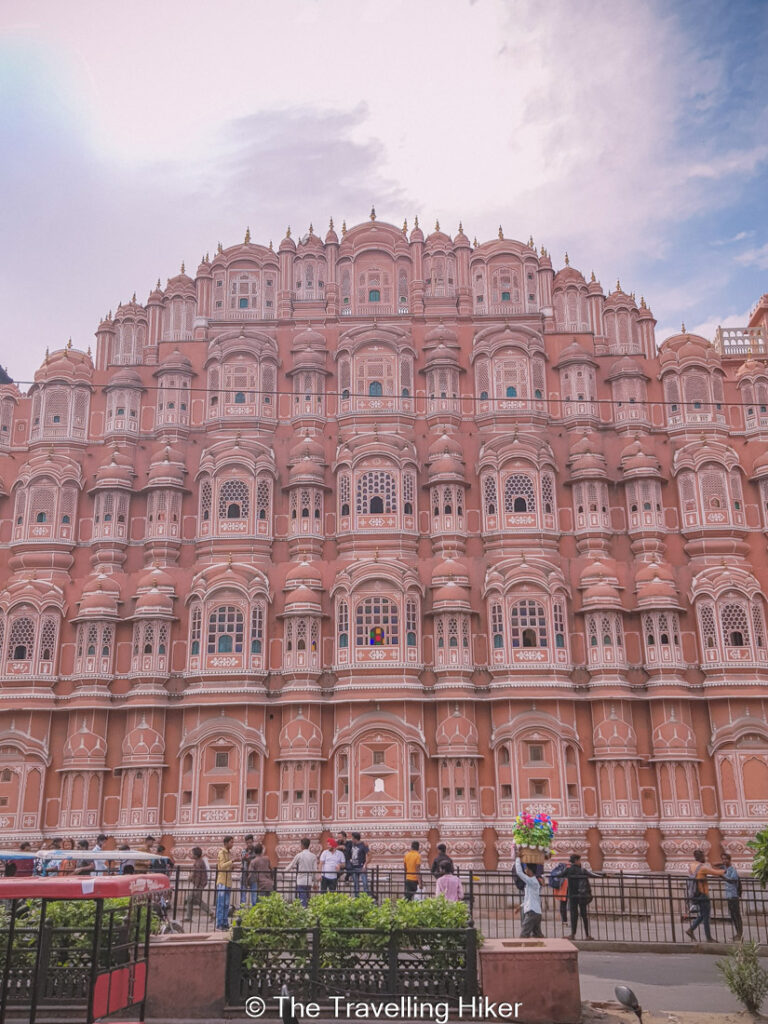
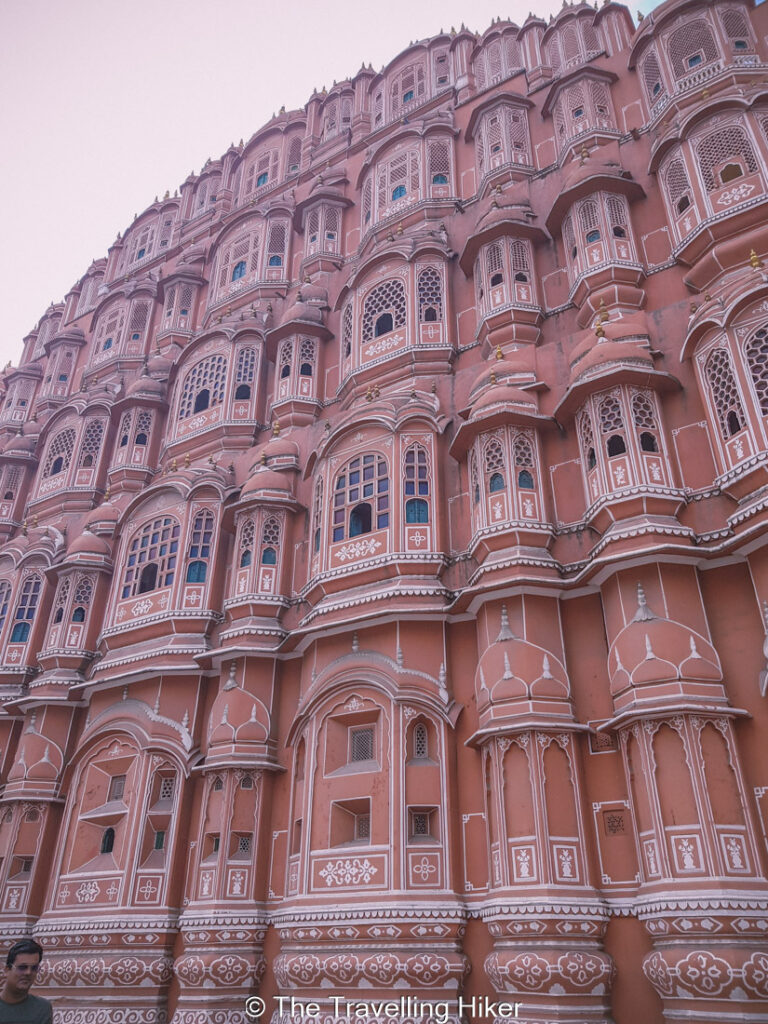
After lunch, we visited the Hawa Mahal, also known as the “Palace of the Winds”, one of India’s most iconic landmarks. It is mostly famous for its honeycomb-like façade of pink sandstone and nearly a thousand tiny windows, which look almost like a delicate piece of lace carved in stone.
Hawa Mahal was built in 1799 and designed so royal women could watch street life and festivals below without being seen, a clever blend of beauty and purpose.
Inside, you’ll find narrow corridors and breezy passages that live up to the palace’s name. On the upper floors, you’ll get lovely views over Jaipur’s bustling bazaars and the distance City Palace.
Practical information
Price. Tickets to visit the Hawa Mahal cost 500 INR per person.
Opening Hours. The Palace of the Winds is open daily between 9:00 and 16:30.
STOP 5: EXPLORE THE JOHRI BAZAAR
Finish your first day in Jaipur by doing some shopping in one of its many bazaars, Johri Bazaar. This market has long been associated with jewelry and precious stones. You will see displays of gold and silver as well as loose gemstones that Jaipur is known for. Even if you’re not planning to buy, walking through Johri Bazaar is a must-do experience.
Beyond jewelry, Johri Bazaar also offers a variety of textiles and souvenirs. There are plenty of colorful fabrics, embroidered items, bangles, and scarves. The market can feel busy, especially in the afternoon, but that is part of its charm.
Tip: Bargaining is expected in Johri Bazaar, but always keep things friendly. It also heps to walk around a bit before making a purchase, as prices can vary from shop to shop.
DAY 2 - AMER FORT, JAIGARH FORT AND NAHARGARH FORT
STOP 1: AMER STEPWELL
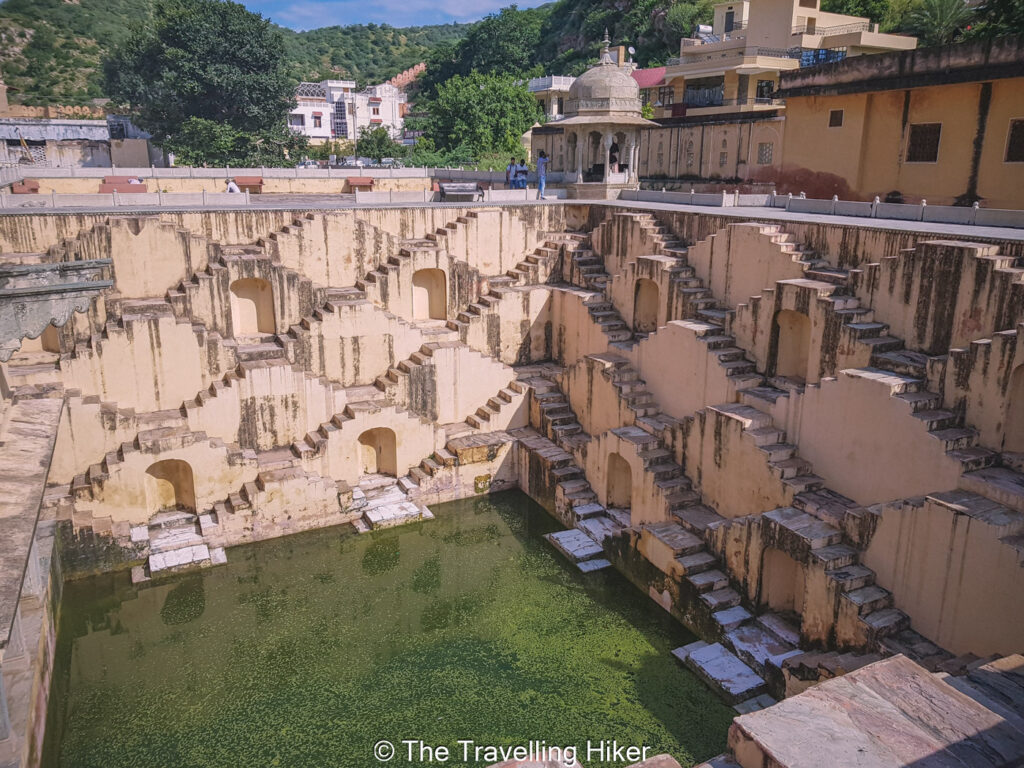
Amer Stepwell, also known as Panna Meena Ka Kund, is often overlooked by travelers rushing between major sights, yet is well worth a short stop.
The stepwell dates back to the 16th century and was built as a communal water source for the local villagers. Its most striking feature is the perfectly symmetrical stairway design, with zigzagging steps that form a beautiful geometric pattern.
Unfortunately, climbing on the steps is now restricted but you can still admire the structure from above and appreciate its design.
Amer Stepwell is the perfect stop on your way to the famous Amber Fort.
STOP 2: AMBER FORT OR PALACE
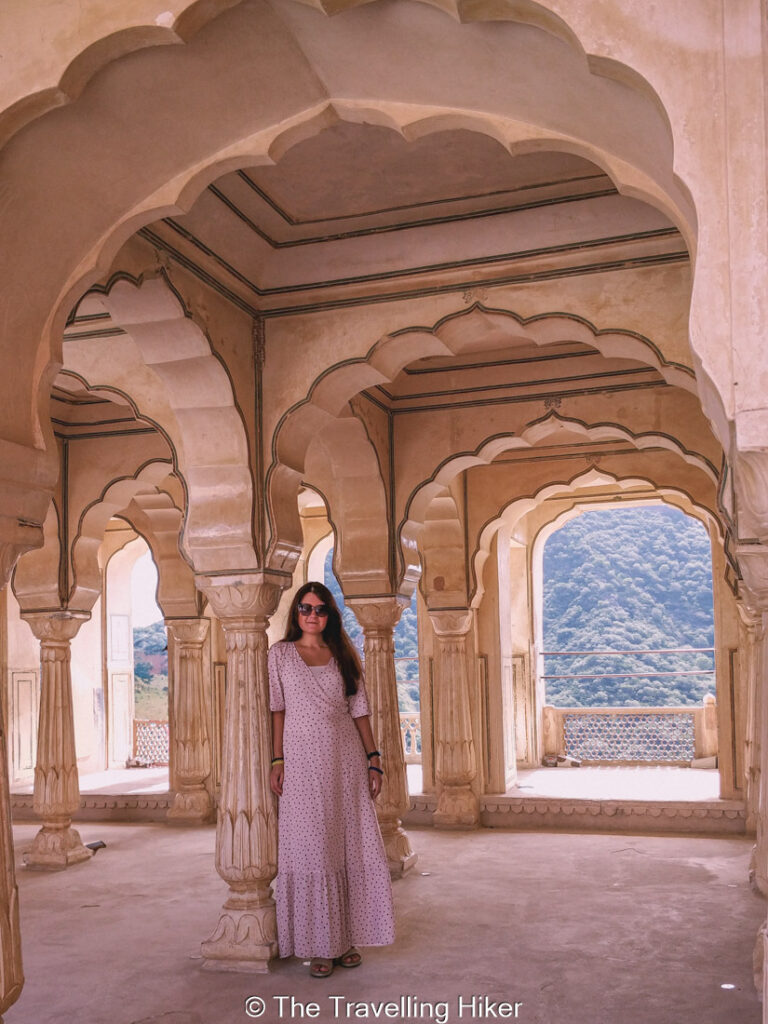
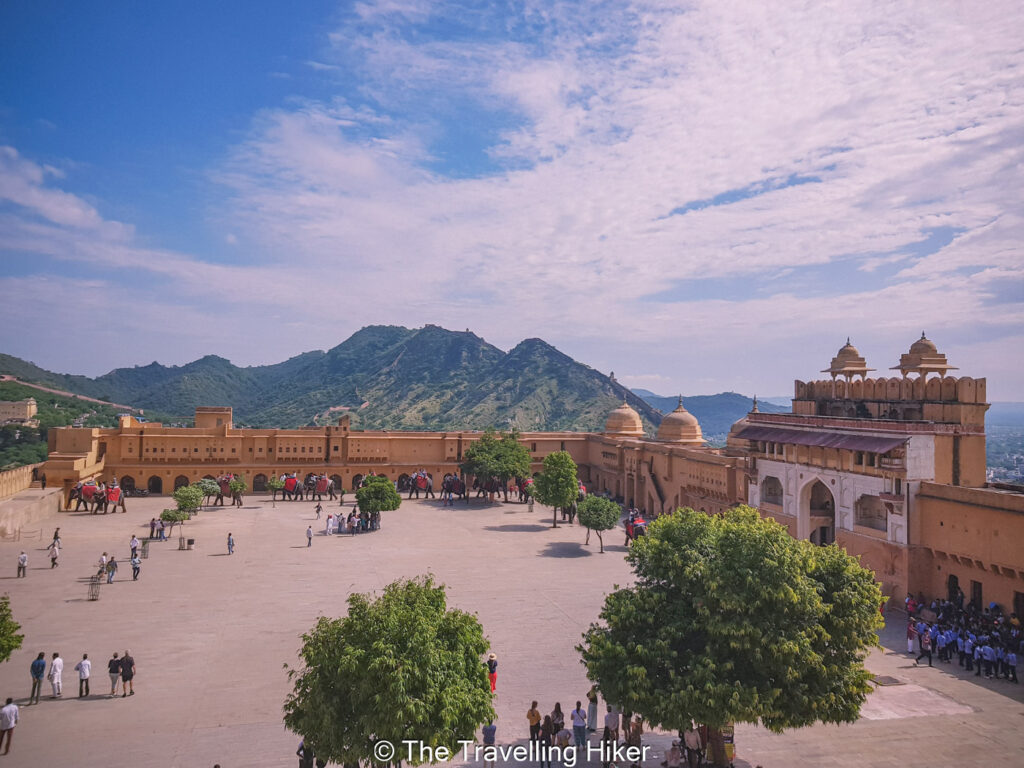
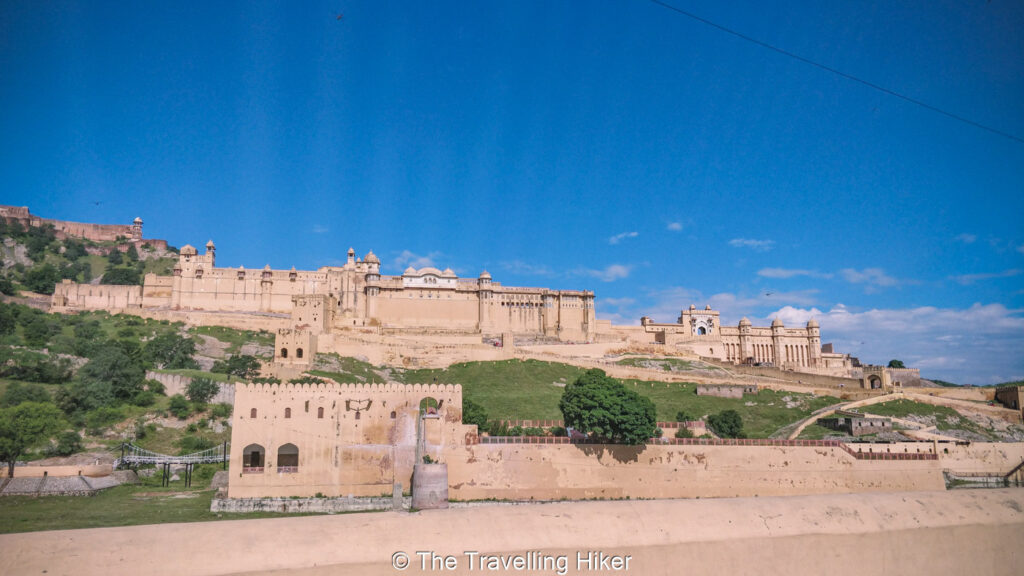
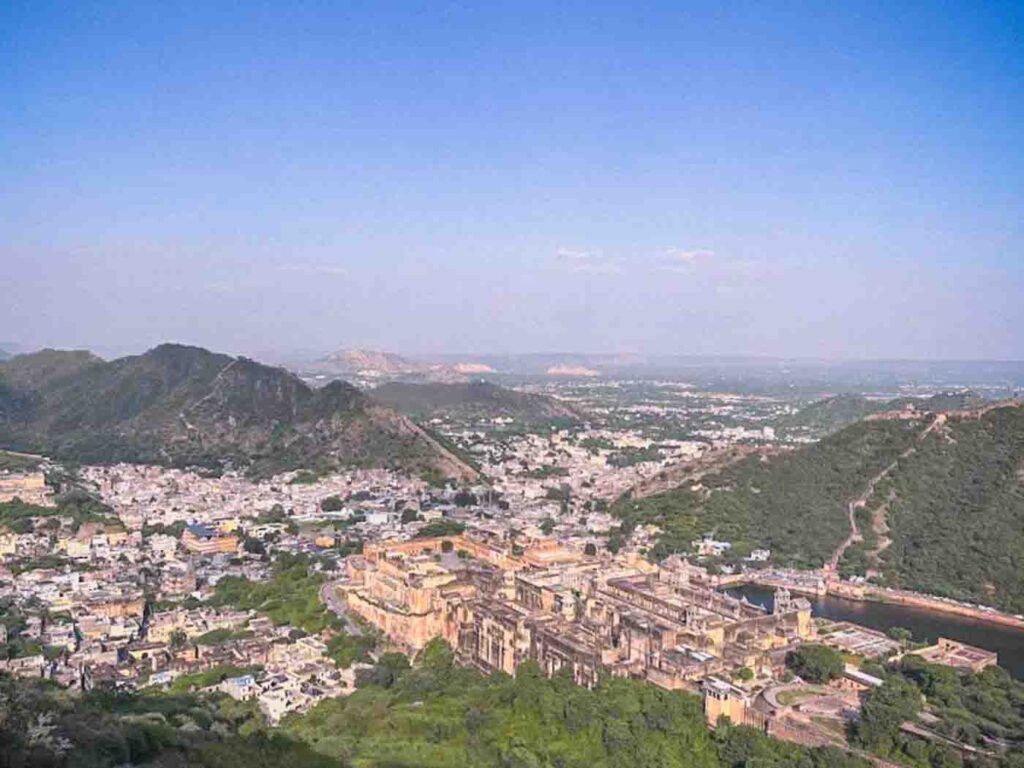
Amber Fort (also known as Amer Fort) is one of Jaipur’s highlight. This fort and palace is set on a hill just outside the city’s main center and above Maota Lake.
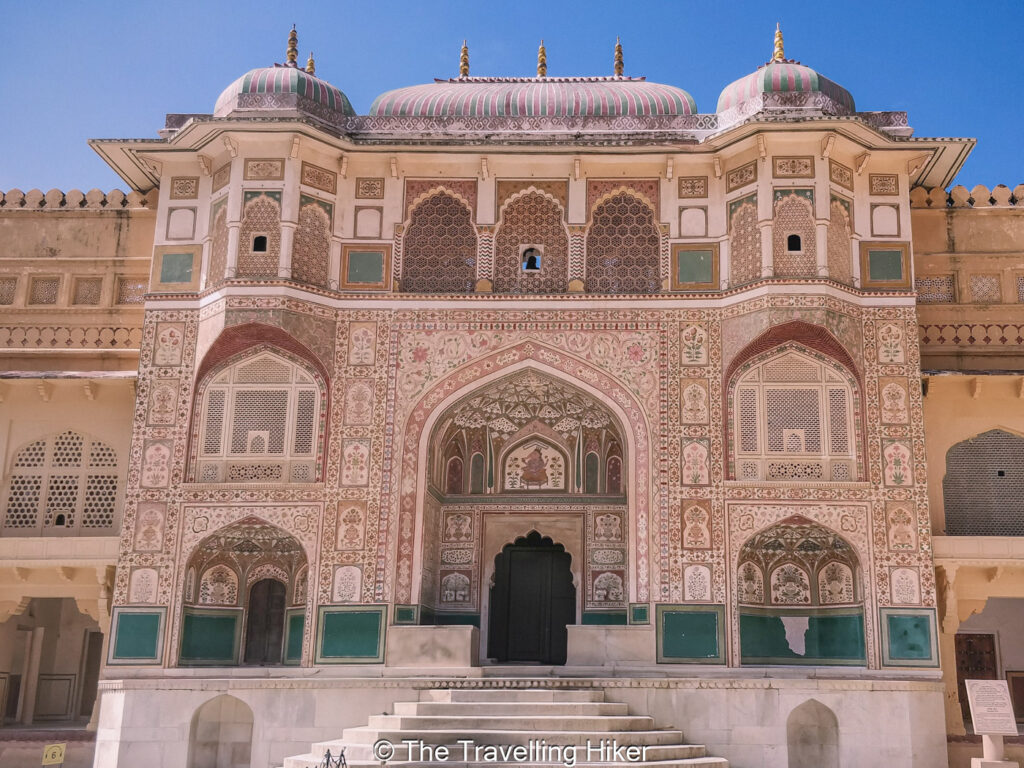
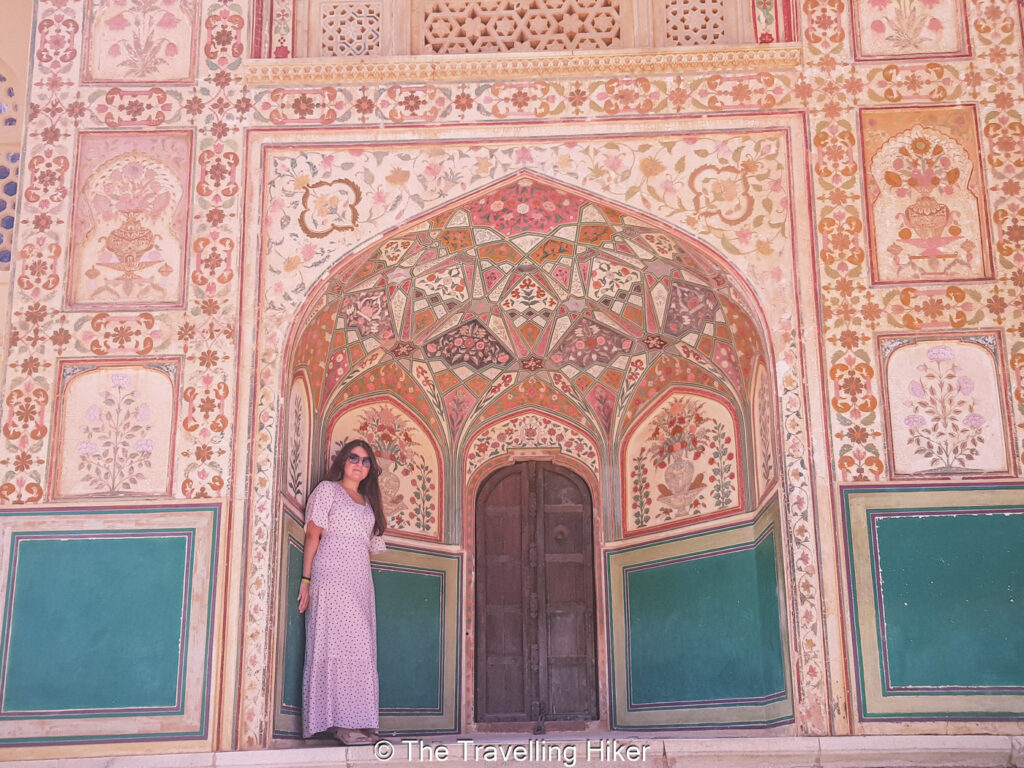
Built in the late 16th century by Raja Man Singh, Amber Fort served as the main residence of the Rajput rulers before the capital moved to Jaipur. The fort is a blend of Rajput and Mughal architecture, with large courtyards, carved gateways, and elegant palaces layered across multiple levels.
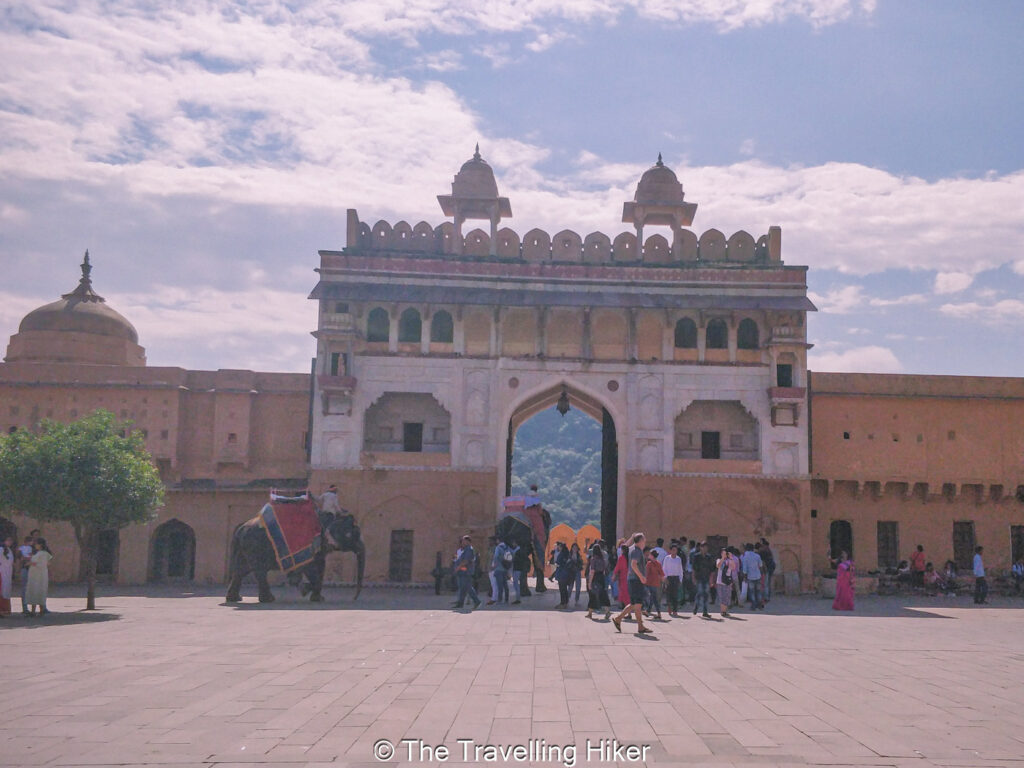
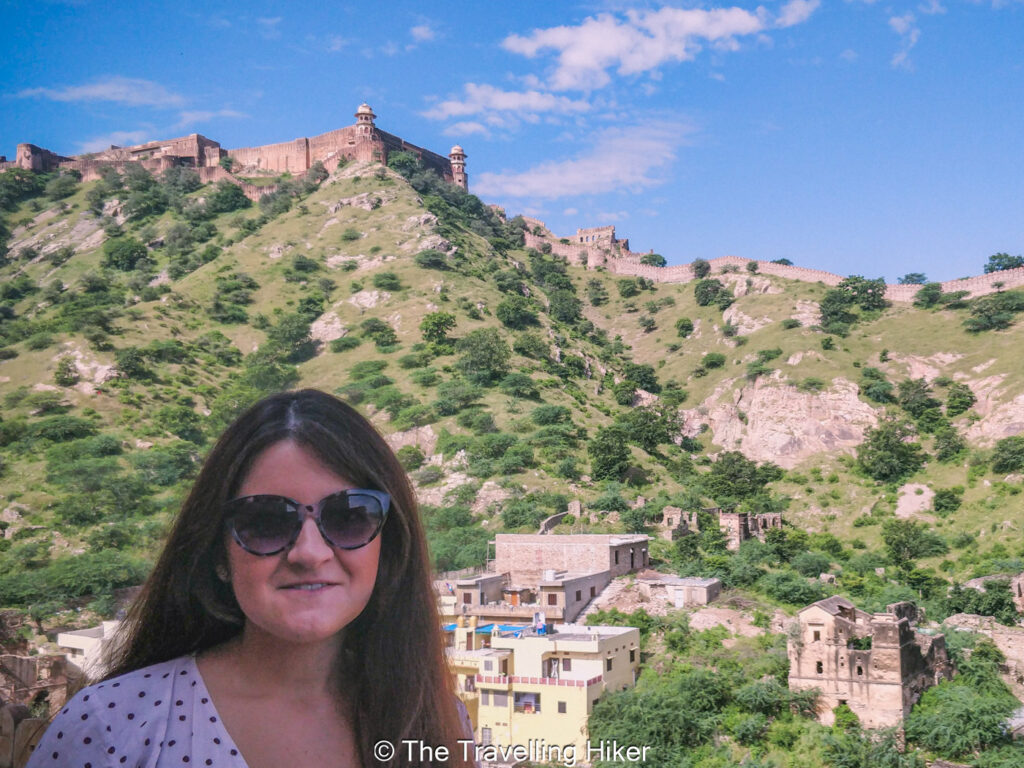
The first thing you will visit are the Chand Pol (Moon Gate) and the Surajpol Dwaar (Sun Gate). From here, you will get beautiful views of Jaigarh Fort in the distance.
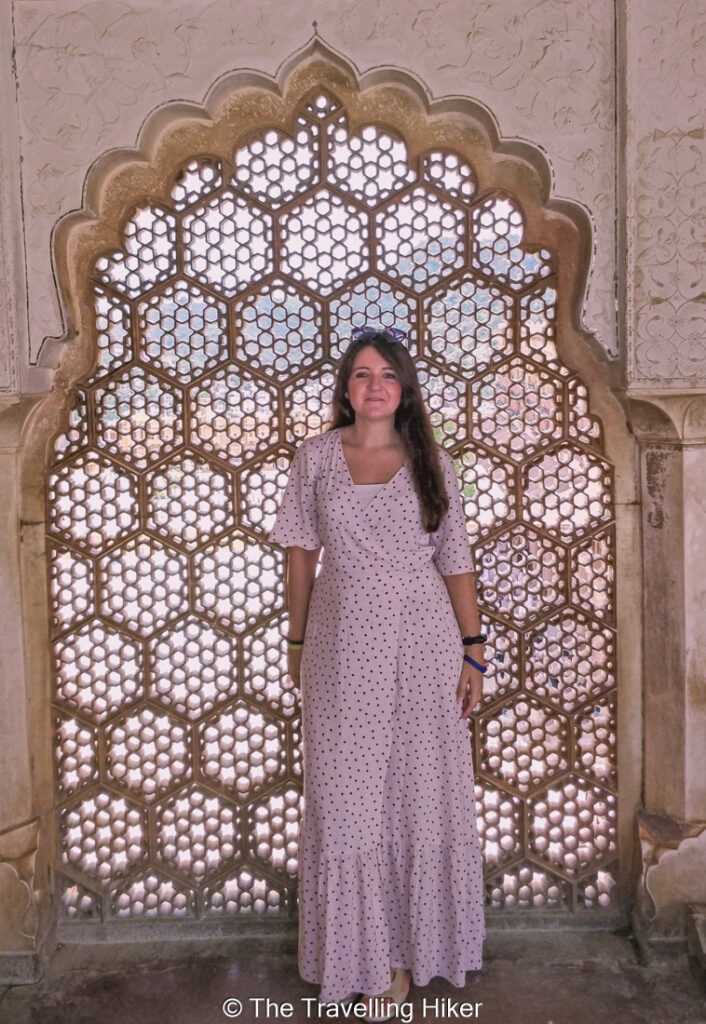
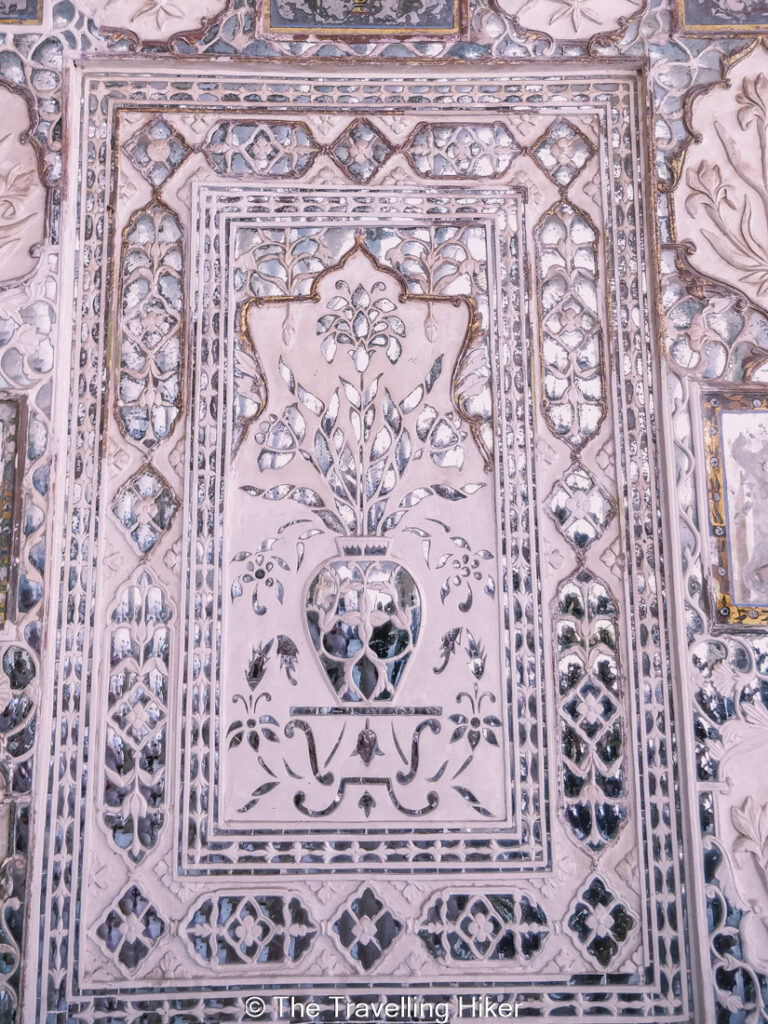
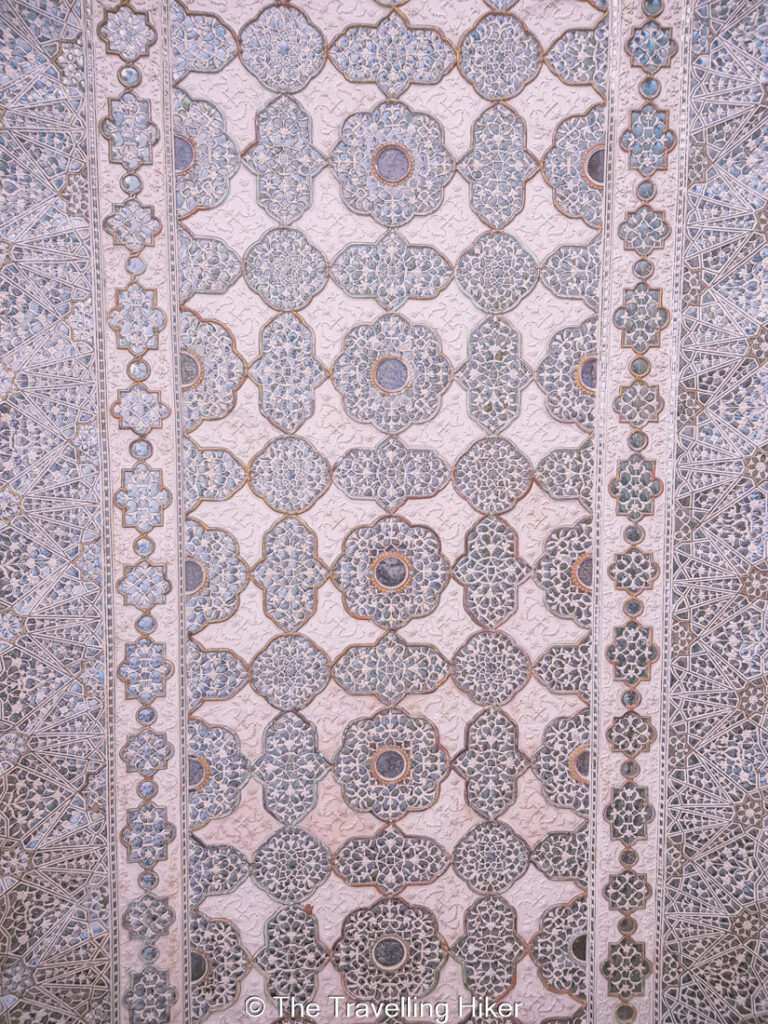
One of the highlights inside Amber Fort is the Sheesh Mahal, or Mirror Palace. Its walls and ceilings are decorated with thousands of tiny mirrors that reflect light in a soft, shimmering way.
Other notable areas include the Diwan-e-Aam, the Diwan-e-Khas, and the peaceful courtyards that once hosted royal gatherings and ceremonies.
Practical information
Price. Tickets to visit Amber Fort cost 500 INR per person (price in 2025).
Opening hours. The fort is open between 7:00 and 21:00.
STOP 3: VIEWPOINT OF AMBER FORT
On your way to your next destination, make sure to stop in front of Maotha Lake, to get a beautiful view of Ambert Fort. This is just a quick stop on your route but the view is absolutely worth it.
STOP 4: JAIGARH fORT
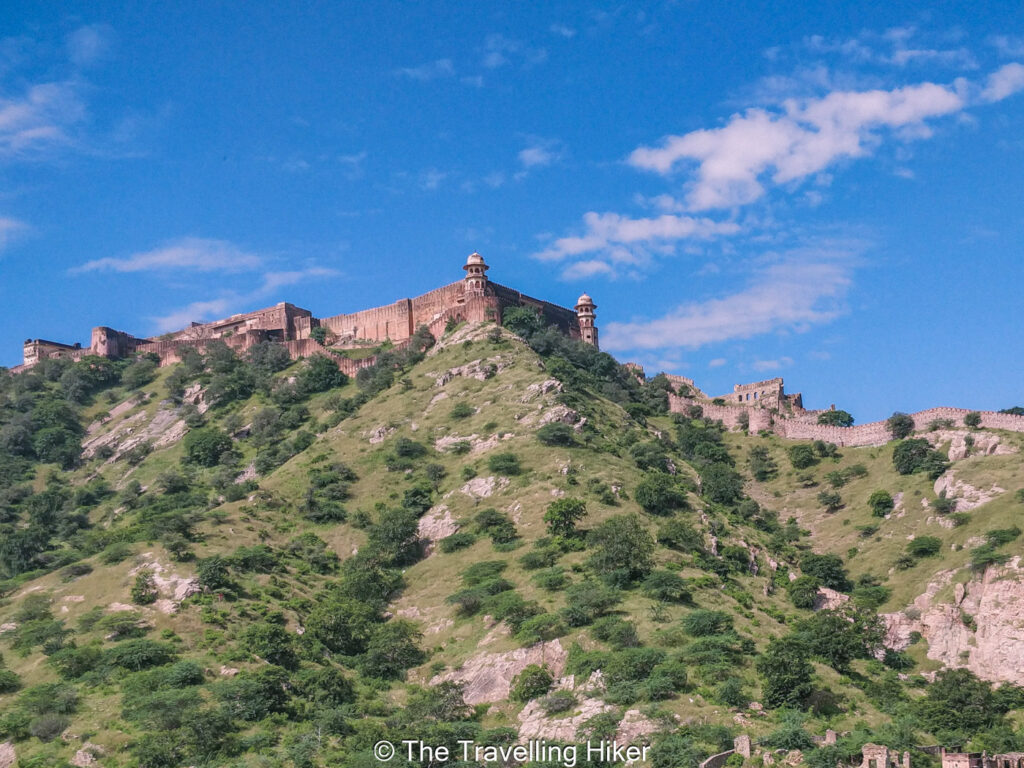
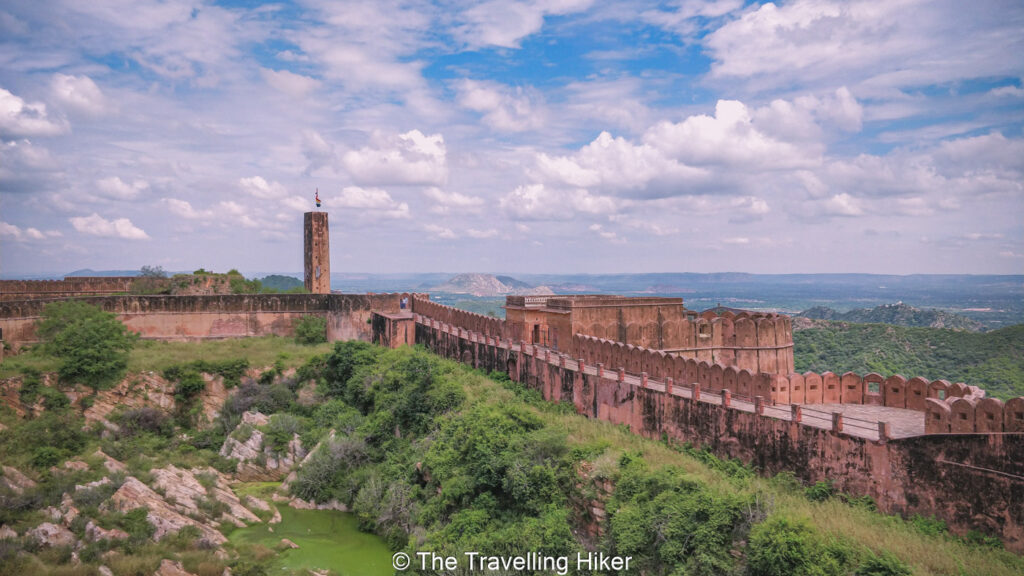
Jaigarh Fort sits high on the hills above Amber Fort and offers a different perspective of the city and its history. It was built primarily for defense, so it is more basic and practical than the beautiful palace we just visited. Its elevated position provides some of the best views over the surrounding hills and Amber Fort.
Maharaja Sawai Singh II ordered the construction of Jaigarh Fort in the early 18th century to protect Amber Palace complex and its treasury. Visiting this fort will allow you to see thick walls, watchtowers, and long ramparts that stretch across the hillside.
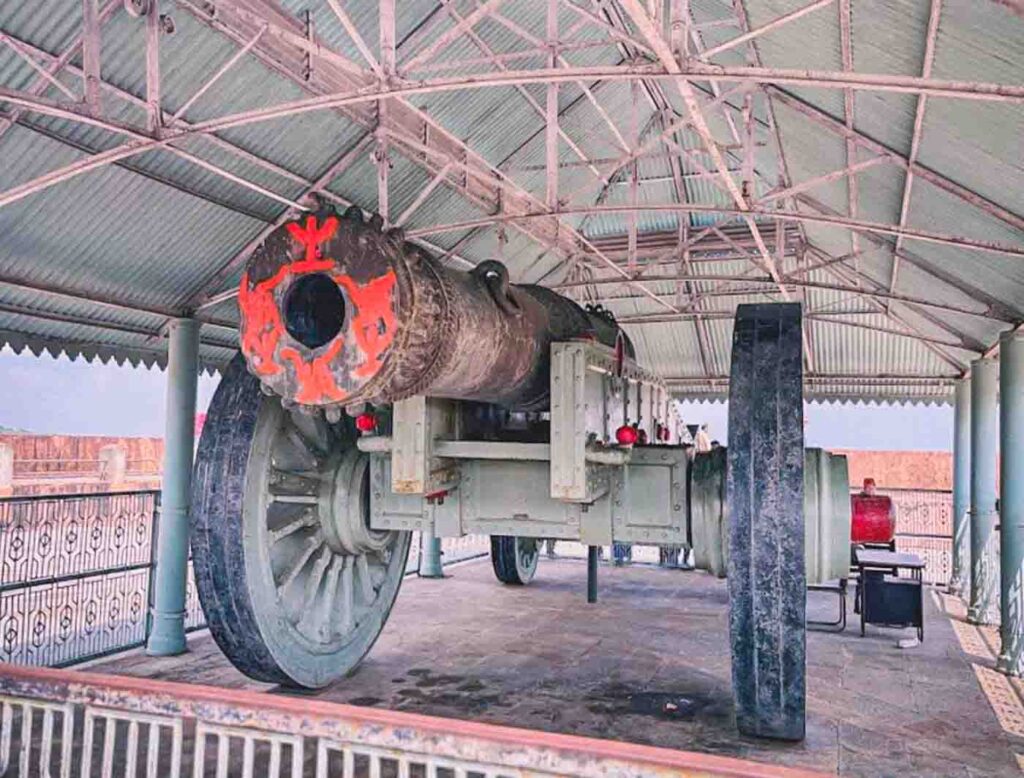
One of the most famous features of Jaigarh Fort is Jaivan, once the largest cannon on wheels in the world. The cannon was never used in battle but remains an impressive sight and a reminder of the fort’s military purpose. But even if you are not interested in military artifacts, the views alone make the visit worthwile.
Practical information
Price. Tickets to visit the fort cost 200 INR per person (prices in 2025).
Opening Hours. Jaigarh Fort is open daily between 9:00 and 18:30.
STOP 5: NAHARGARH FORT
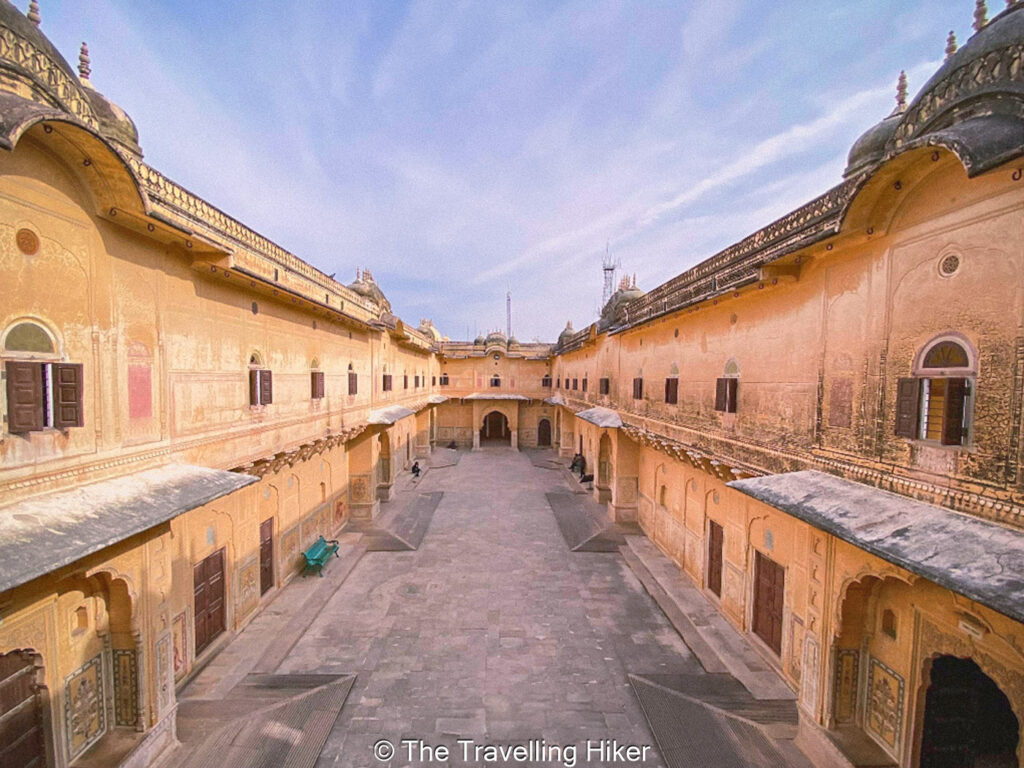
Nahargarh Fort is another impressive fort overlooking Jaipur. It was built in the 18th century by Maharaja Sawai Jai Singh II as part of the city’s defense ring. The fort’s name, which translate as “Abode of Tigers”, hints at its commanding presence and its design beautifully combines strength and style.
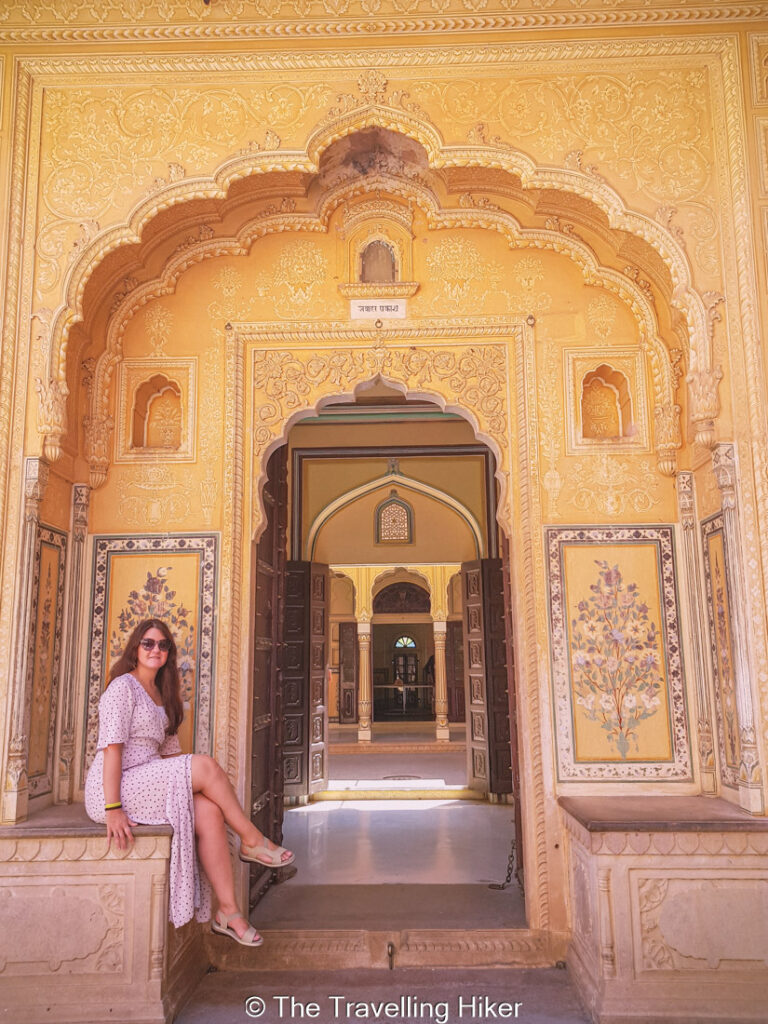
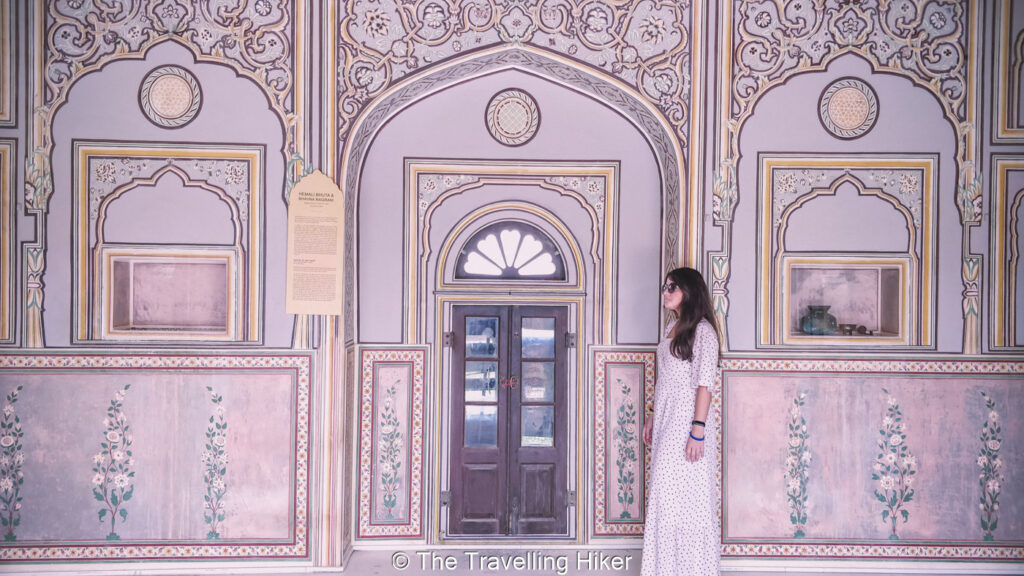
Within its walls are ornate living quarters, including the Madhavendra Bhawan, a series of identical suites built for the king and his queens, all connected by winding corridors and decorated with delicate frescoes. The architecture is both practical and artistic, showcasing the blend of Rajput and European influences that defined Jaipur’s royal era.
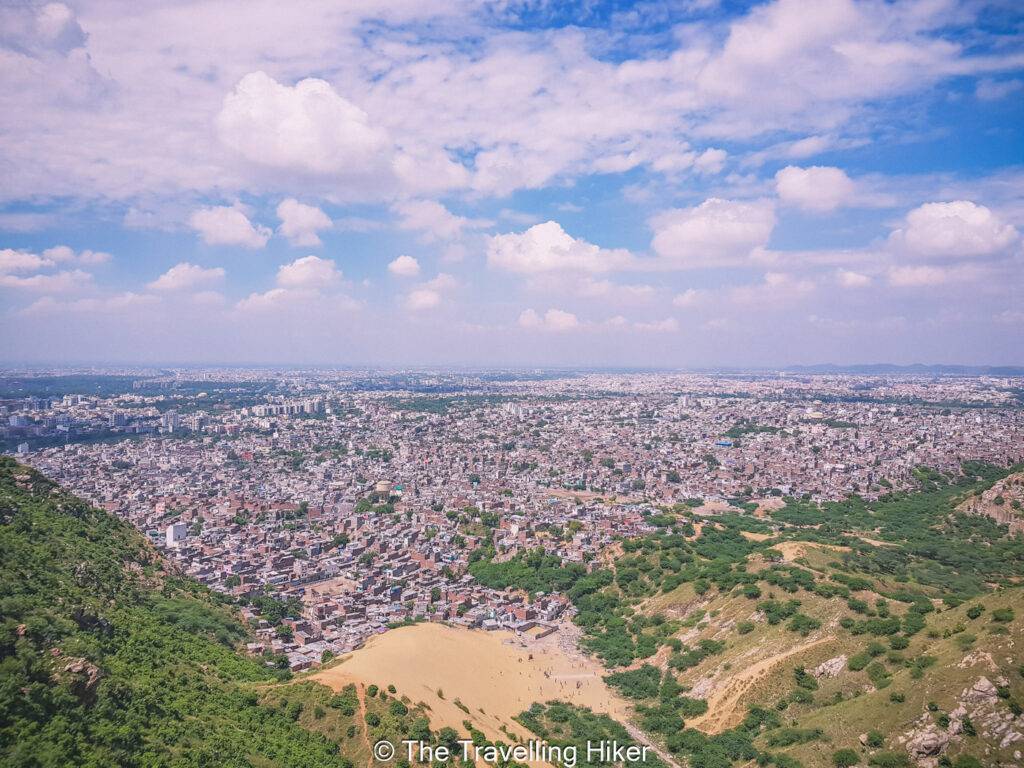
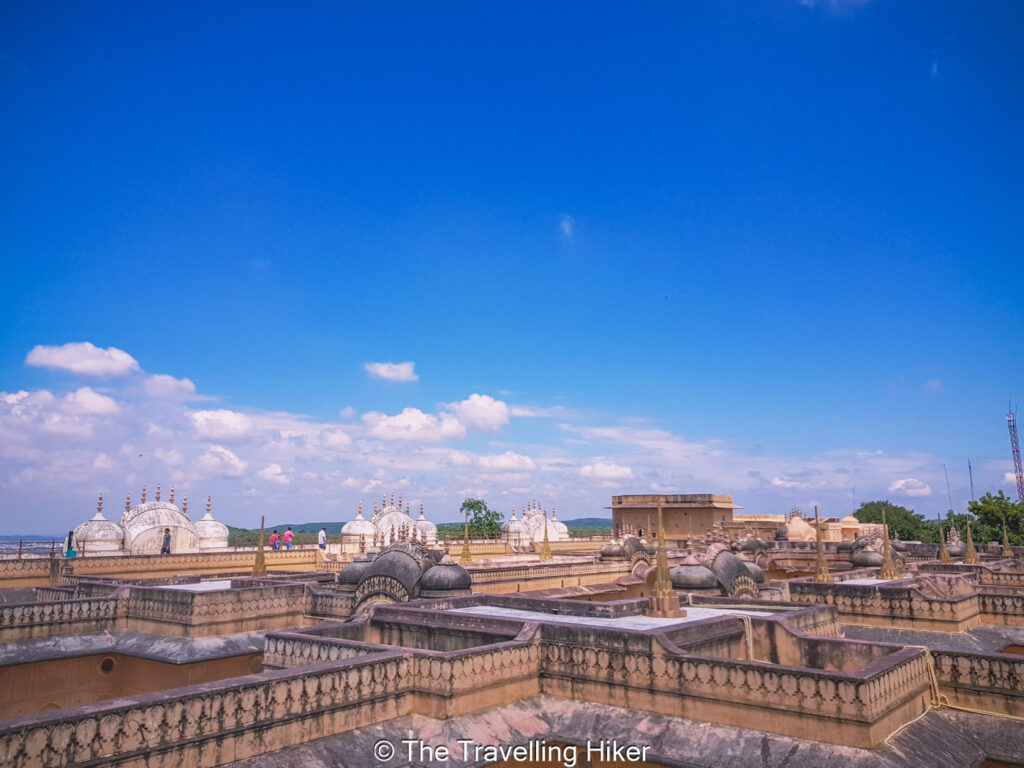
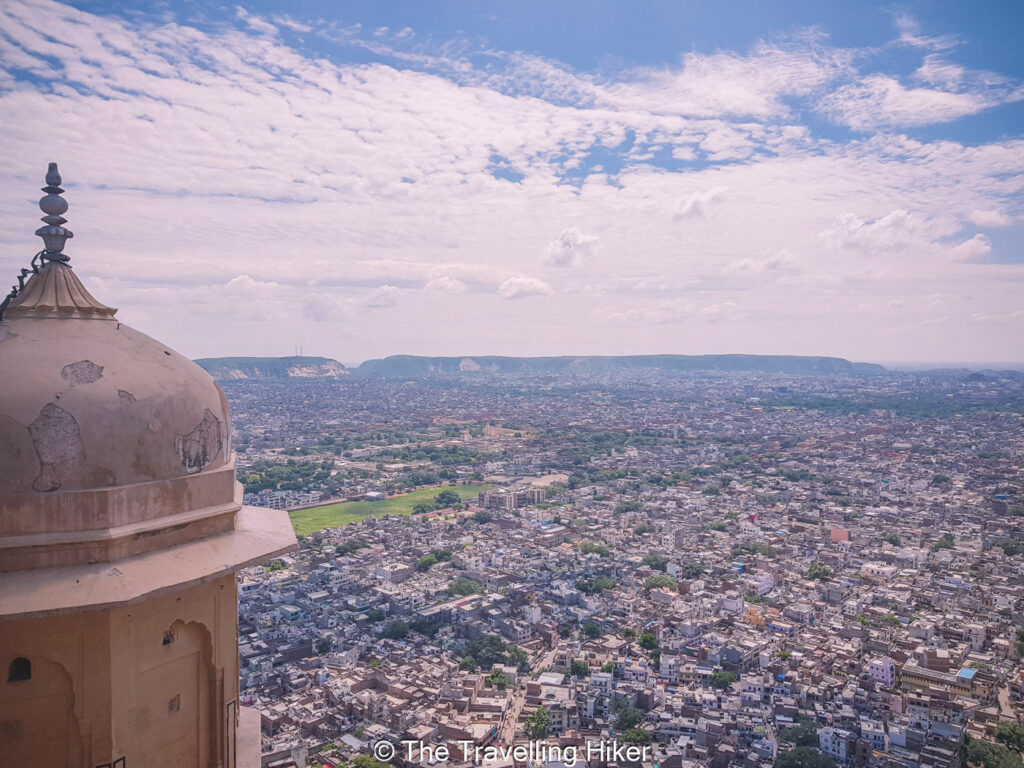
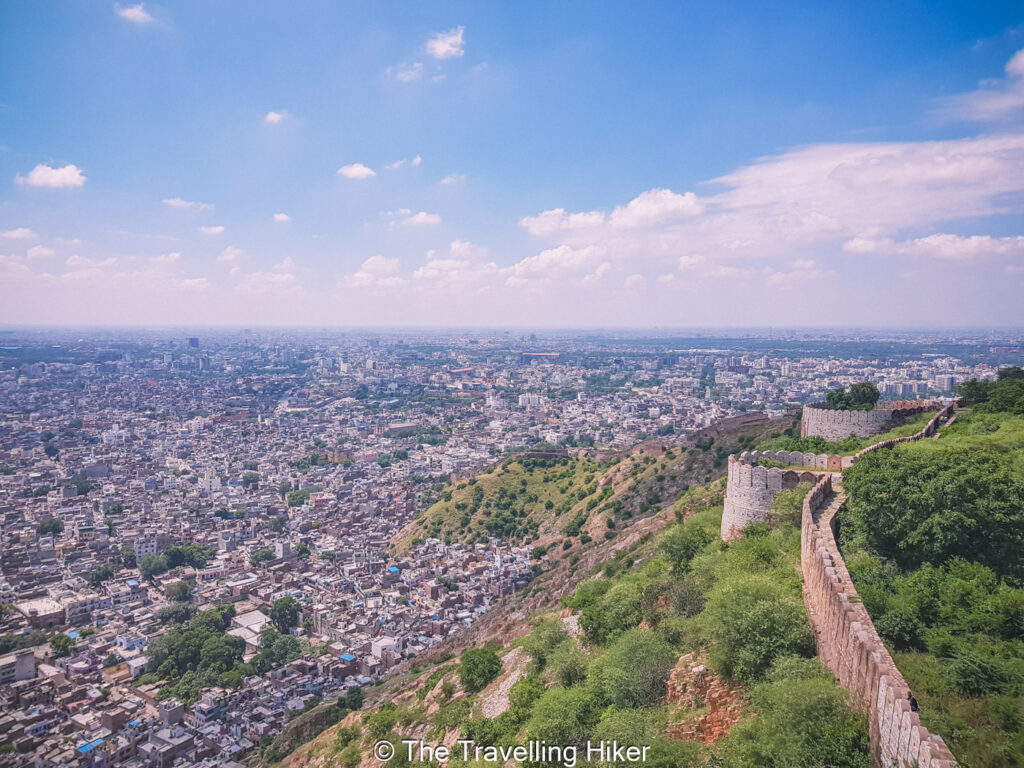
From the top terrace of Madhavendra Bhawan, you will get some of the most amazing views of Jaipur. And if you’re up for a little walk, you can walk to the Balcony terrace to get views of the protective walls and Jaipur.
Practical Information
Price. Tickets to visit the fort cost 200 INR per person (price in 2025).
Opening hours. The fort is open daily between 10:00 and 22:00.
STOP 6: JAL MAHAL
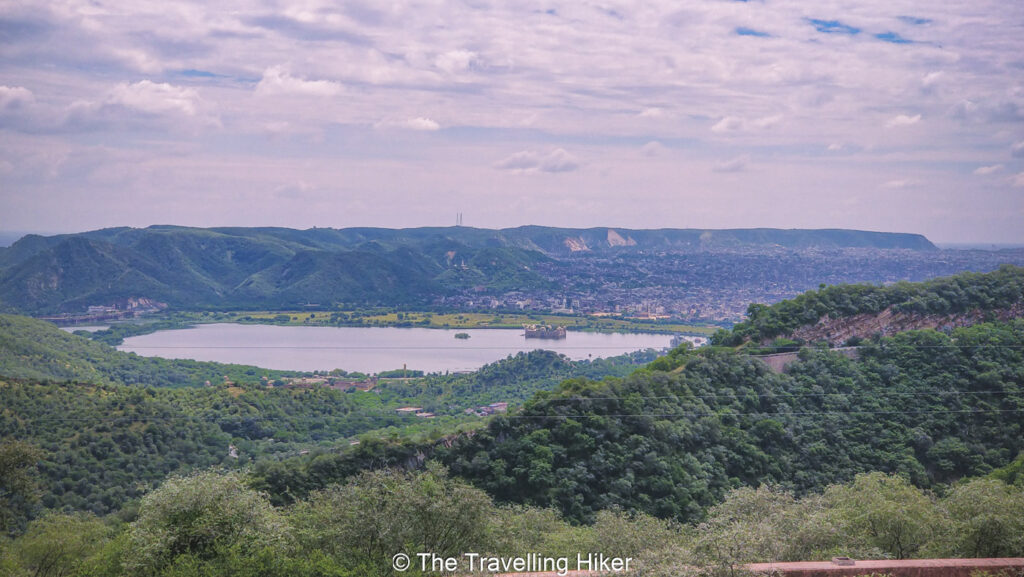
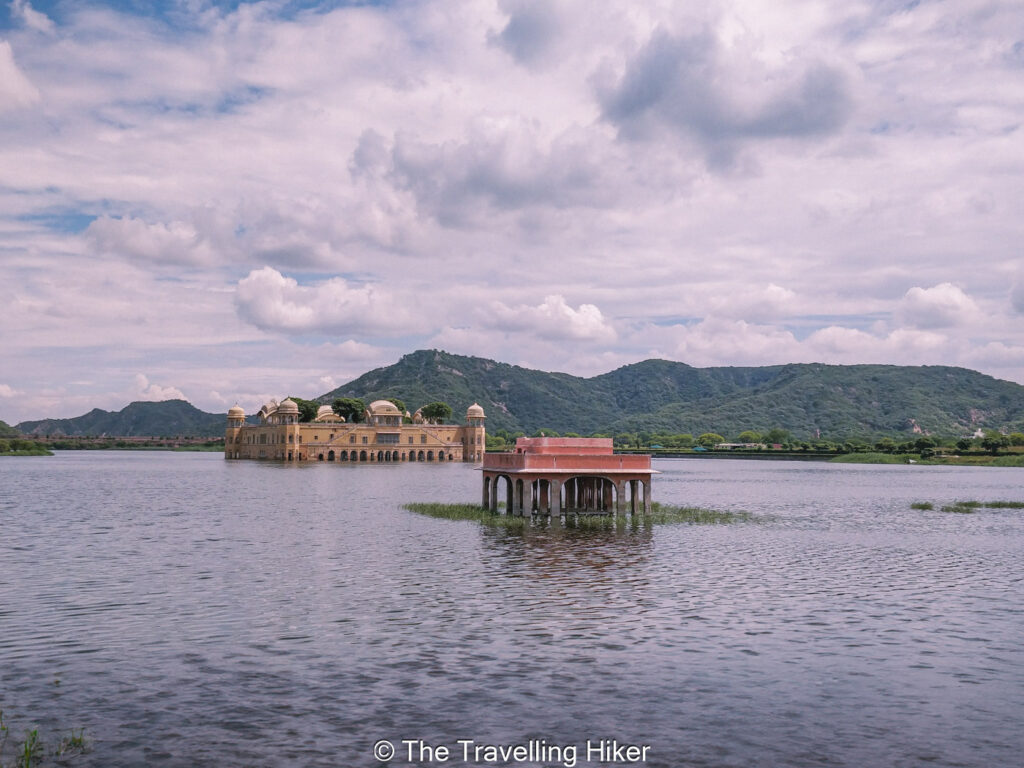
On your way back to Jaipur, make sure to stop at Jal Mahal and Man Sagar Lake. Jal Mahal is a palace built in the middle of Man Sagar Lake in the 18th century by Maharaja Madho Singh I as a royal retreat and hunting lodge. The palace appears to float on the water. When the lake is full, only the top floor is visible, and the lower levels remain submerged.
Unfortunately, it is not possible to enter Jal Mahal, but it is still worth a quick stop and walk a bit along the promenade that borders the lake. Here you can take photos and enjoy the view from different angles.
STOP 7: PATRIKA GATE
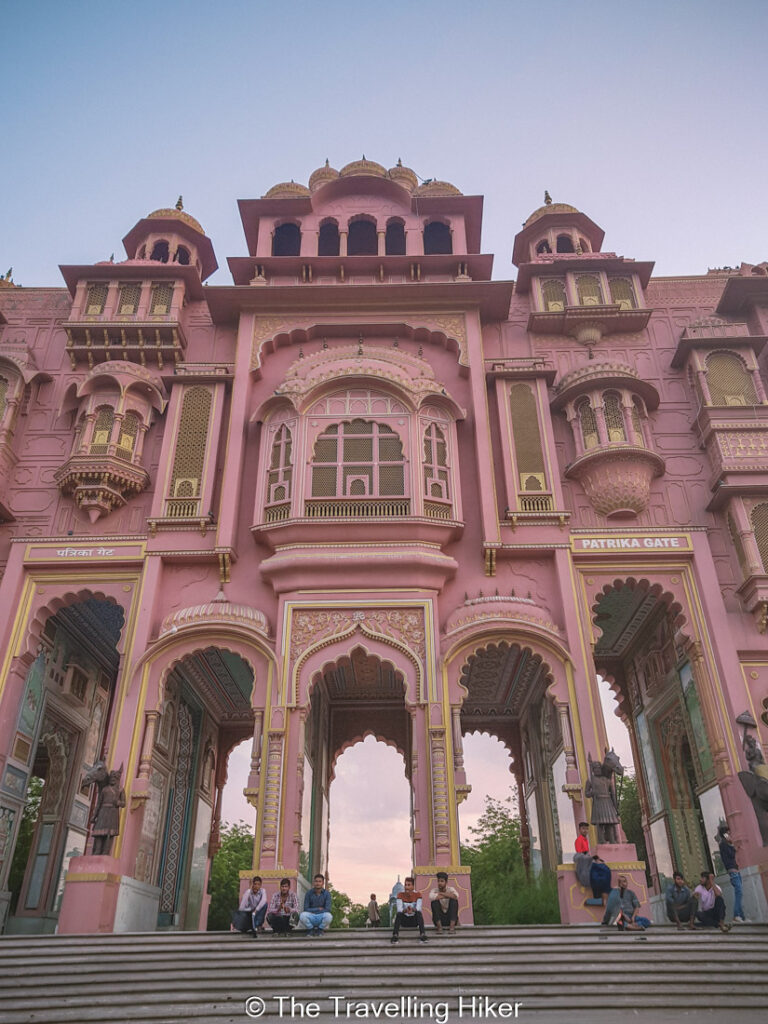
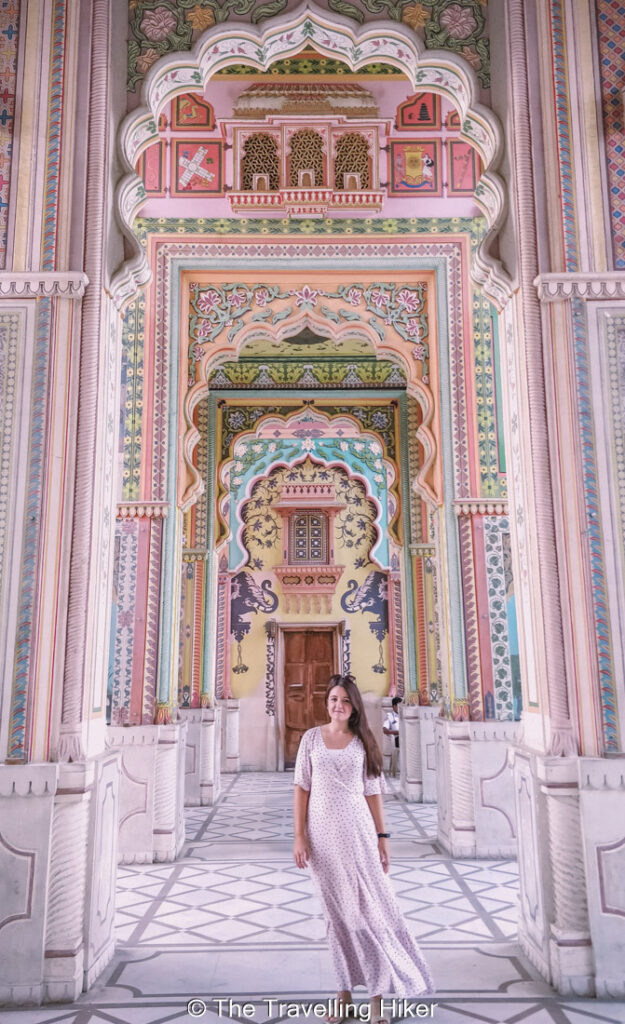
Finish the day by visiting one of Jaipur’s most photogenic landmarks Patrika Gate, located in the Jawahar Circle. Built as a grand gateway celebrating Rajasthan’s heritage, it’s not an ancient monument but feels every bit as majestic. The exterior, with its pink sandstone arches and intricate detailing, mirrors the architectural style that gives Jaipur its nickname,The Pink City.
Step inside, and you’ll find a dazzling corridor of painted archways, each one covered in vibrant murals depicting scenes from Rajasthan’s history, culture, and royal past.
DAY 3 - JAIPUR CITY PALACE
STOP 1: JAIPUR CITY PALACE
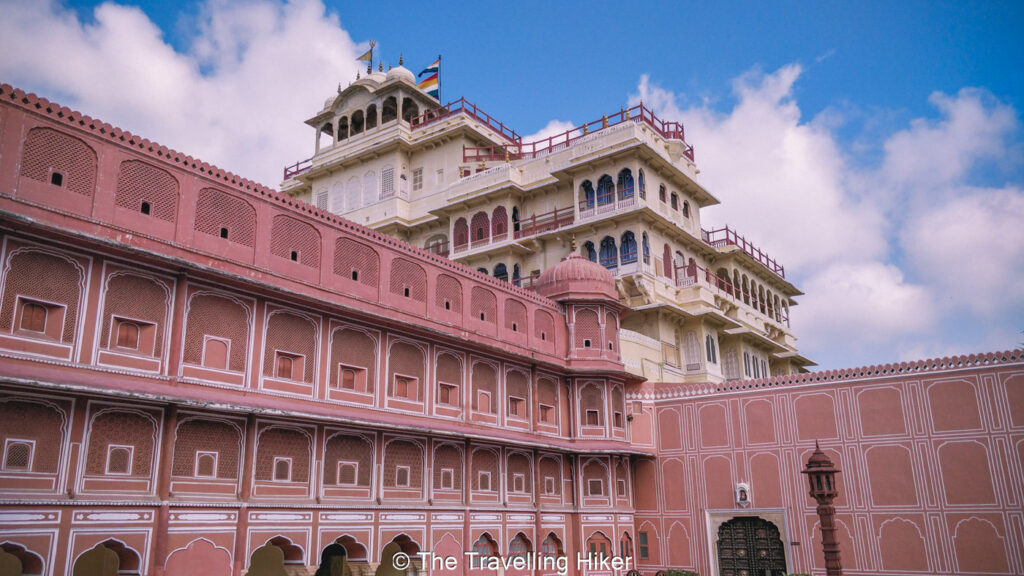
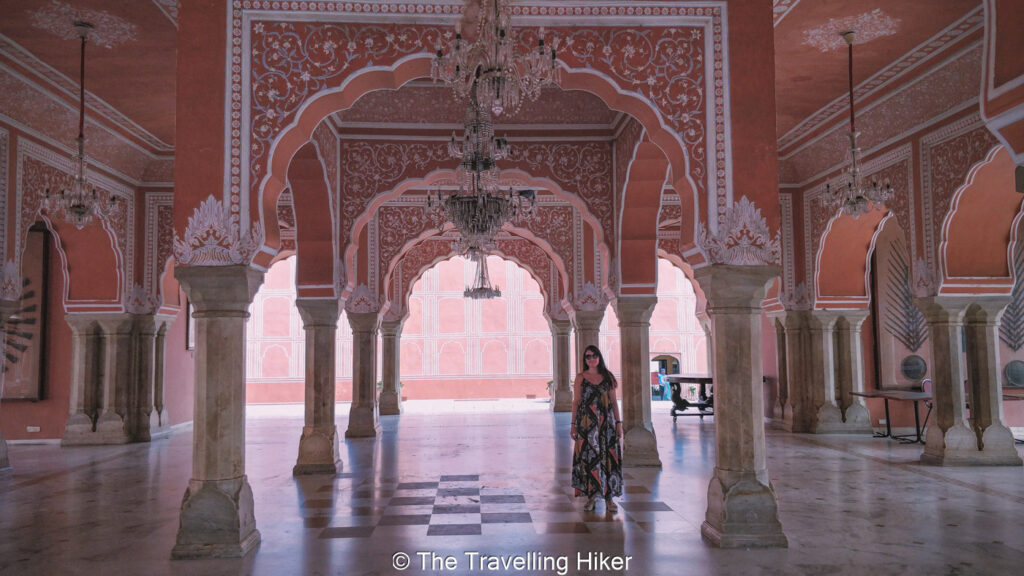
The City Palace is located right in the heart of the Pink City. Built in the 18th century by Maharaja Sawai Jai Singh II, the founder of Jaipur, the palace is a beautiful blend of Rajput, Mughal, and European architectural styles. Its grand courtyards, marble archways, and intricatey painted doorways make it one of the most elegant palaces in Rajasthan. The complex still serves as the residence of Jaipur’s royal family.
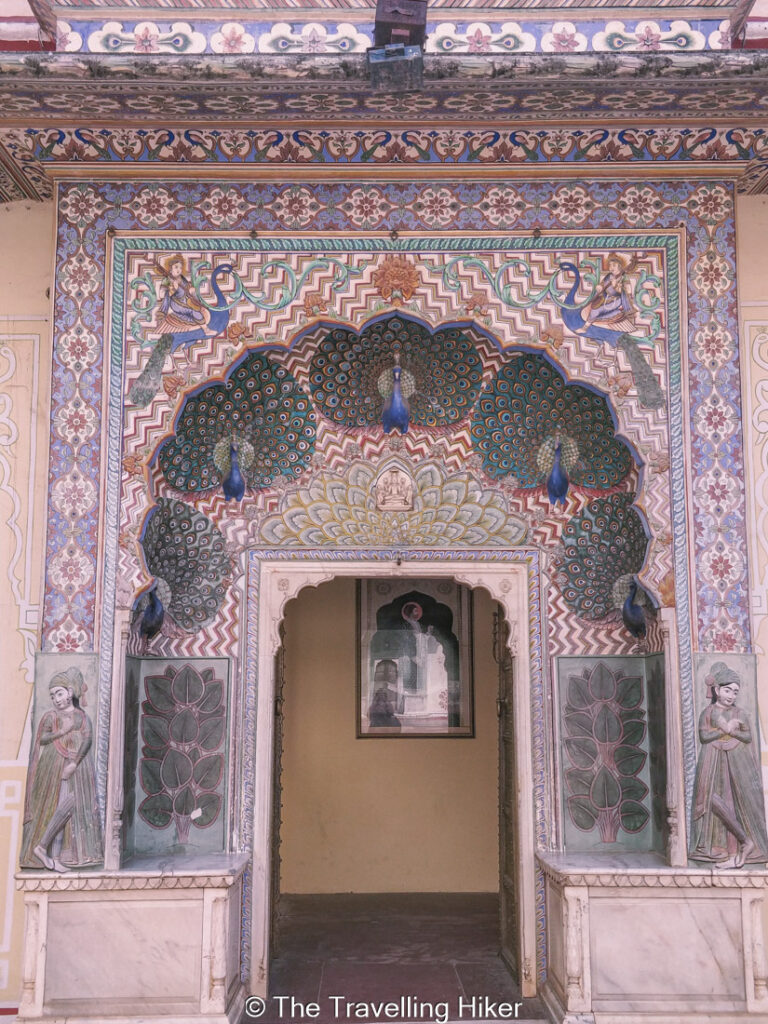
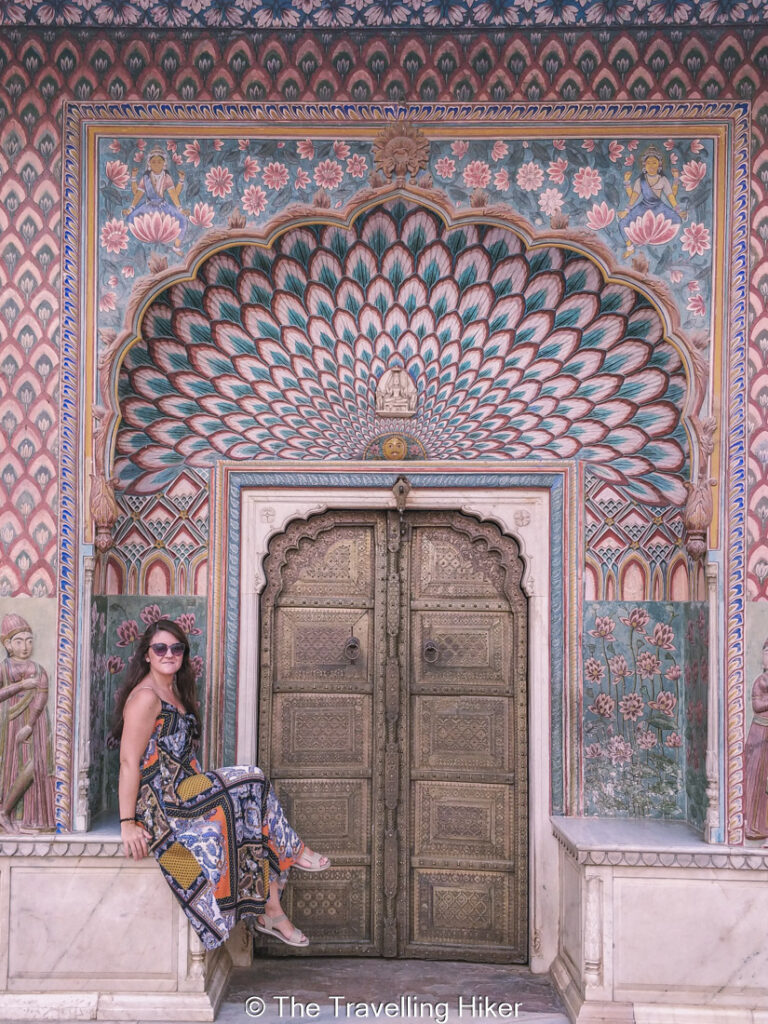
Inside, the palace you can find a display of royal costumes, antique weapons, and delicate handcrafts. The highlights are the Peacock GateandChandra Mahal (the royal family rooms), which showcase incredible craftsmanship and color.
Practical Information
Price. Tickets to visit the Jaipur City Palace cost 1000 INR per person. If you want to visit the Chandra Mahal, you have to book a separate tour that costs 5000 INR.
Opening Hours. The palace is open daily between 9:00 and 17:30.
Book your tickets online. You can buy your tickets online in advance here. Tickets for the Chandra Mahal can only be bought at the entrance.
STOP 2: JANTAR MANTAR
Just a short walk from the City Palace, Jantar Mantaris one of Jaipur’s most intriguing sites. It’s a place where science and art meet under the Rajasthani sun. Built in the early 18th century by the visionary Maharaja Sawai Jain Singh II, this UNESCO World Heritage site is an open-air observatory filled with giant stone instruments designed to measure time, track stars, and predict eclipses.
The sheer precision and scale of these astronomical structures are fascinating, especially when you realize they were created a long before modern technology. Wandering through Jantar Mantar feels a bit like stepping into a giant sundial playground.
STOP 3: LUNCH AT PEACOCK ROOFTOP RESTAURANT
After a full morning of visiting the old city in Jaipur, it is time to relax and have lunch and Peacock Rooftop Restaurant, one of Jaipur most popular restaurants. Located on the rooftop of Hotel Pearl Palace, this restaurant is known for its colorful decor, and laid back atmosphere. The menu at Peacock Rooftop Restaurant is extensive, offering a mix of Indian and international dishes.
The restaurant tends to get busy in the evening but we had no problem getting a table without reservation for lunch.
STOP 4: ALBERT HALL MUSEUM
Albert Hall Museum is one of Jaipur’s most elegant and historic buildings, located in the center of Ram Niwas Garden. It was built in the late 19th century and it is the oldest museum in Rajasthan. The building itself is a highlight, designed in an Indo Saracenic style with domes, arches, and detailed stonework. Take some time to admire the exterior before you step inside the museum.
The Albert Hall Museum houses a diverse collection that includes textiles, paintings, sculptures, and decorative arts from across Rajasthan and India. There are also exhibits featuring weapons, coins, and musical instruments. However, the most popular exhibit is the Egyptian mummy.
Practical information
Price. Entry tickets to Albert Hall Museum cost 300 INR per person (price in 2025).
Opening hours. The museum is open daily between 9:00 and 17:00.
STOP 5: GAITOR KI CHHATRIYAN
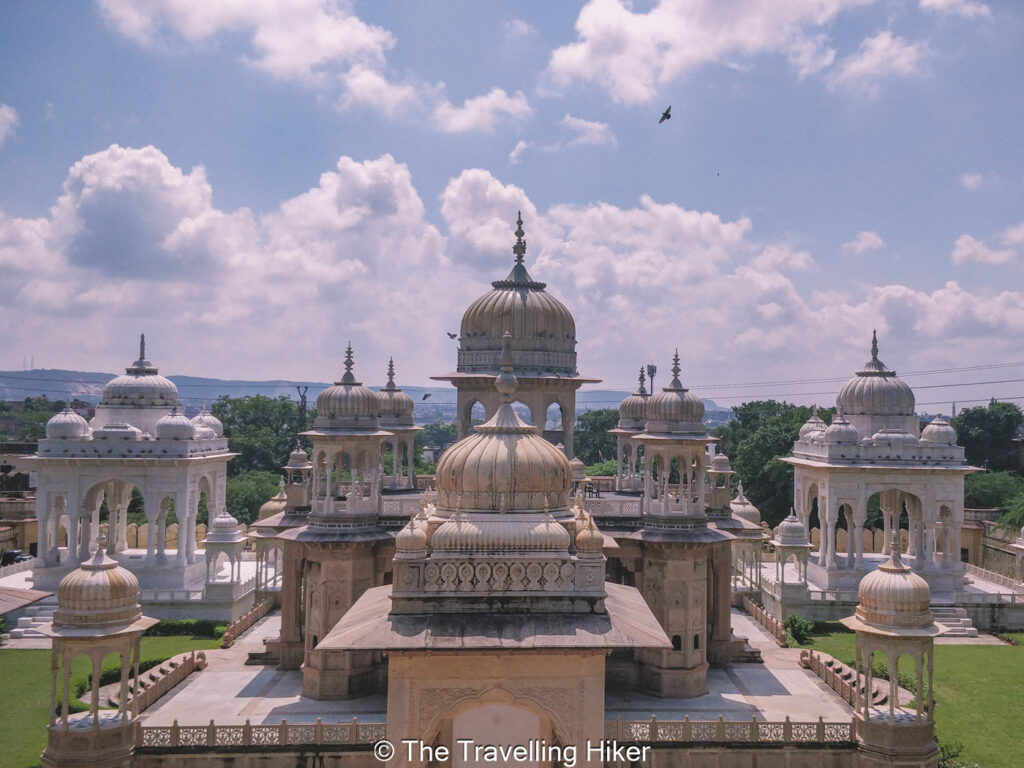
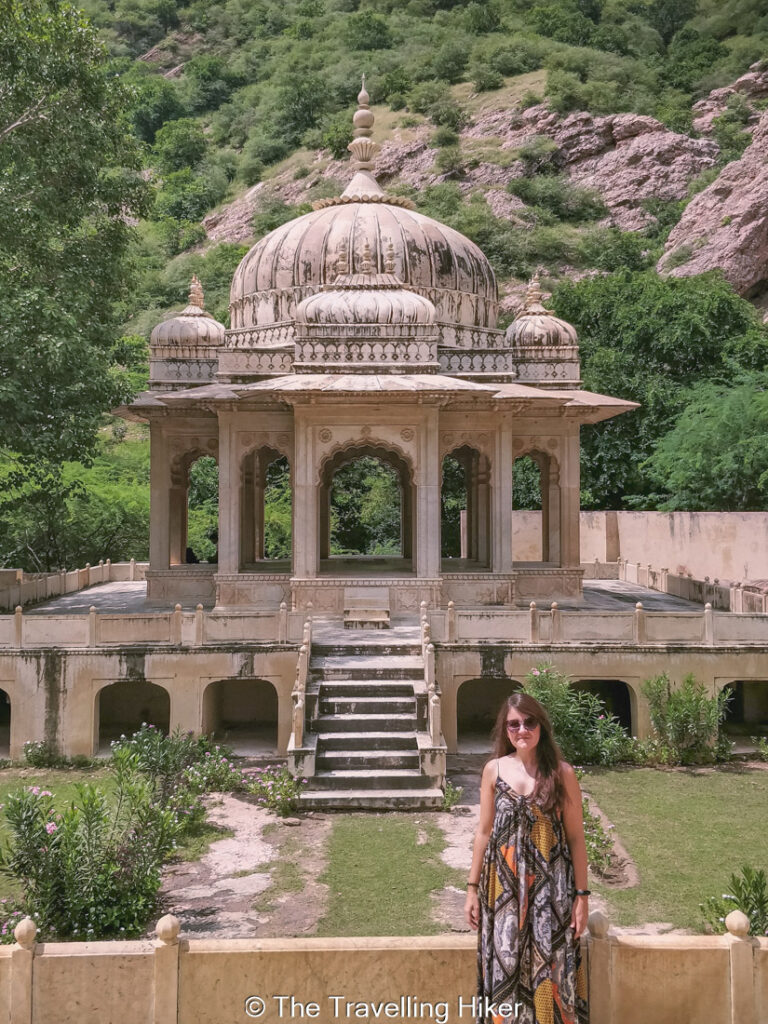
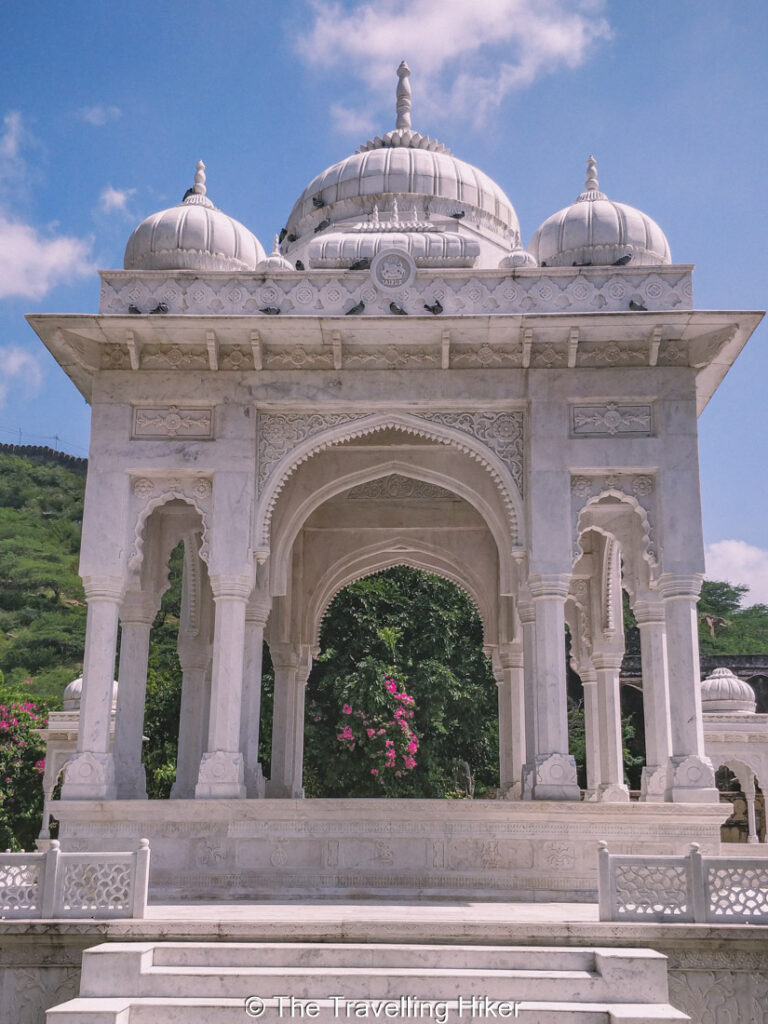
Tucked away on the outskirts of Jaipur, Gaitor Ki Chhatriyanis one of the city’s most peaceful and underrated gems. This royal cremation ground is where the Maharajas of Jaipur were laid to rest, and it’s filled with beautifully carved marble cenotapht (or chhatris) that honor their memory.
Each one is unique, adorned with delicated carvings, domes, and intricate latticework that reflect the artistry of the era. Surrounded by hills and away from the city’s bustle, it’s a wonderfully calm spot to wander, soak in the details, and appreciate the quieter side of Jaipur’s royal history. The view of Nahargarh Fort in the distance only adds to charm, making it a favorite for travelers seeking a mix of history, beauty, and serenity.
ACCOMMODATION IN JAIPUR
Looking for accommodation in Jaipur? Here is the hotel we stayed at, which was amazing.
Arya Niwas Hotel
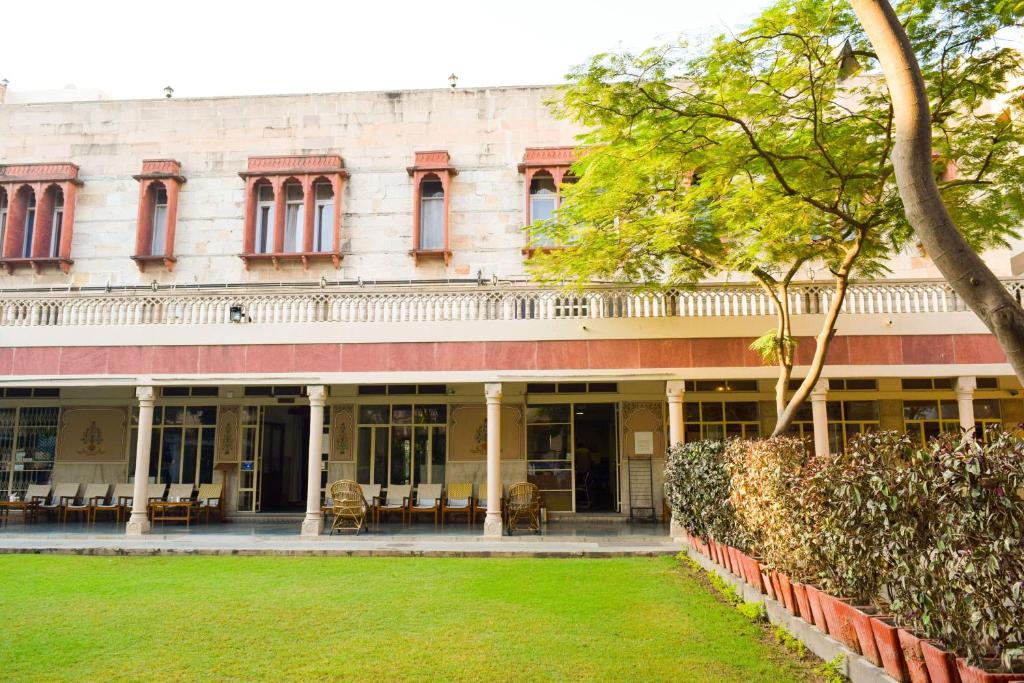
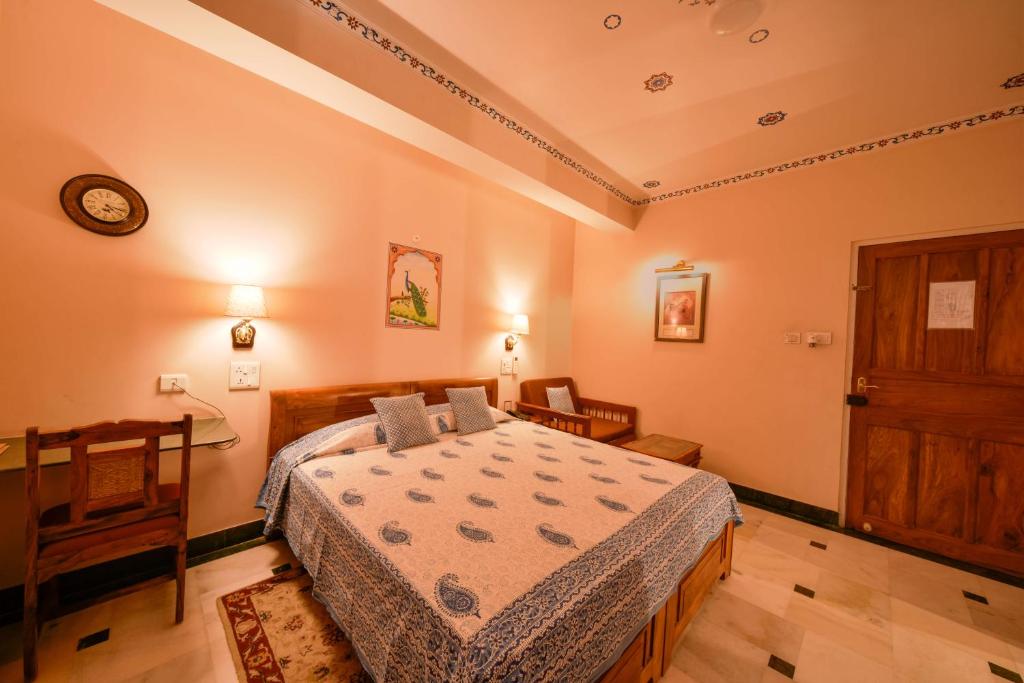
Hotel Arya Niwas is located in a historic building right in the center of Jaipur. The rooms were comfortable and clean and had everything we needed for our stay. Our favorite part of this hotel was the beautiful garden where you could sit and relax in the evenings.
HOW TO USE THIS MAP: Click the star next to the map title to add this map to your google maps account. To view it on your phone while traveling, open Google Maps, click on the menu button and go to “Your Places”, click on Maps and you’ll see this map in your list.
FINAL THOUGHTS
Jaipur was one of my favorite cities I visited in India. It offers a mix modern life with traditions. One moment you are wondering through busy bazaars or admiring the beautiful forts and palaces and the next you are dining a beautiful and modern rooftop restaurant.
Have you been to Jaipur? Did you visit any of the sites mentioned here?
DISCLAIMER: Did you know? This blog uses affiliate partnerships. When you click and book or make a purchase through one of my blog posts, I may receive a small commission (at no extra cost to you). Thank you for supporting The Travelling Hiker!