India is vast, diverse, and endlessly fascinating, Two weeks in India is just enough to scratch the surface but if you can still visit some of the most popular areas and get a good idea of the country. And what is most important, eat some of the most delicious food you have ever tasted. This 2 week India itinerary will help you make the most of your adventure.
India is a land that stirs every sense. You will be able to see a kaleidoscope of colors in its bustling markets, enjoy the aromas of spices in the air, hear the rhythmic chants along the Ganges and admire the grandeur of ancient palaces rising from desert sands. In just 2 weeks, you can journey through some of India’s most captivating regions. You will be able to admire the regal landscapes of Rajasthan, experience the spiritual heart of Varanasi, enjoy Delhi’s energetic chaos, and fall in love with Agra’s timeless beauty.
Are your ready for a journey that blends history, color, and soul? Let’s dive in.
TABLE OF CONTENTS
WHY VISIT INDIA?
If you’re still hesitating whether India should be your next trip destination, here is a list of reasons why you should visit this beautiful country.
India has a tapestry of cultures and traditions. India isn’t just one country, it’s a collection of many worlds under one name. Every state has its own language, cuisine, festivals, and way of life.
You will experience history that comes alive. From the Mughal splendor of the Taj Mahal to the majestic forts of Rajasthan, India’s history feels tangible. You can literally walk through centuries of dynasties, legneds, and architectural brilliance. All withing a few train rides.
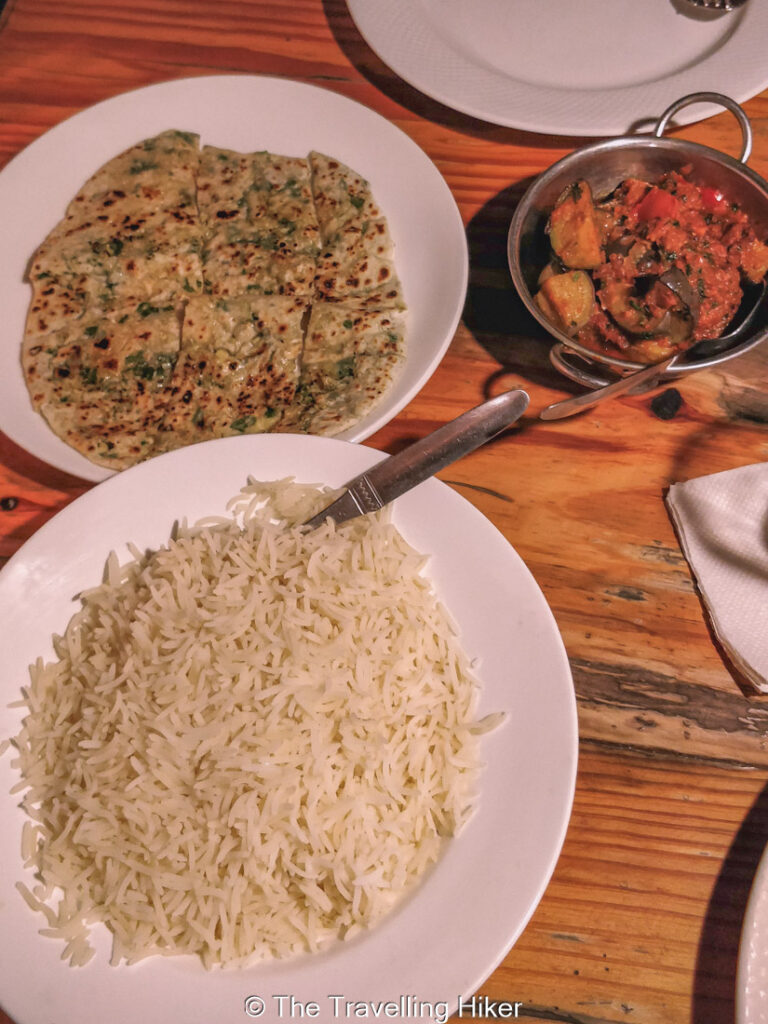
Get ready to experience a feast for the senses (and your stomach!). Food is reason enough to visit India. Every region tells its story through flavor, creamy butter chicke in Delhi, spicy food in Jaipur, or the sweet simplicity of lassi in Varanassi. Eating here isn’t just a meal; it’s a cultural adventure.
Breathtaking landscapes and diversity. In just two weeks, you can go from golden deserts to bustling cities, tranquil rivers, and sacred ghats. India’s landscapes are as varied as its people.
An adventure like no other. Traveling throuhg India is unpredictable, exhilarating, and endlessly rewarding. It challenges and charms in equal measure, turning every day into a story worth telling. If you’re craving a trip that awakens yours senses and shifts your perspective of life, India is calling.
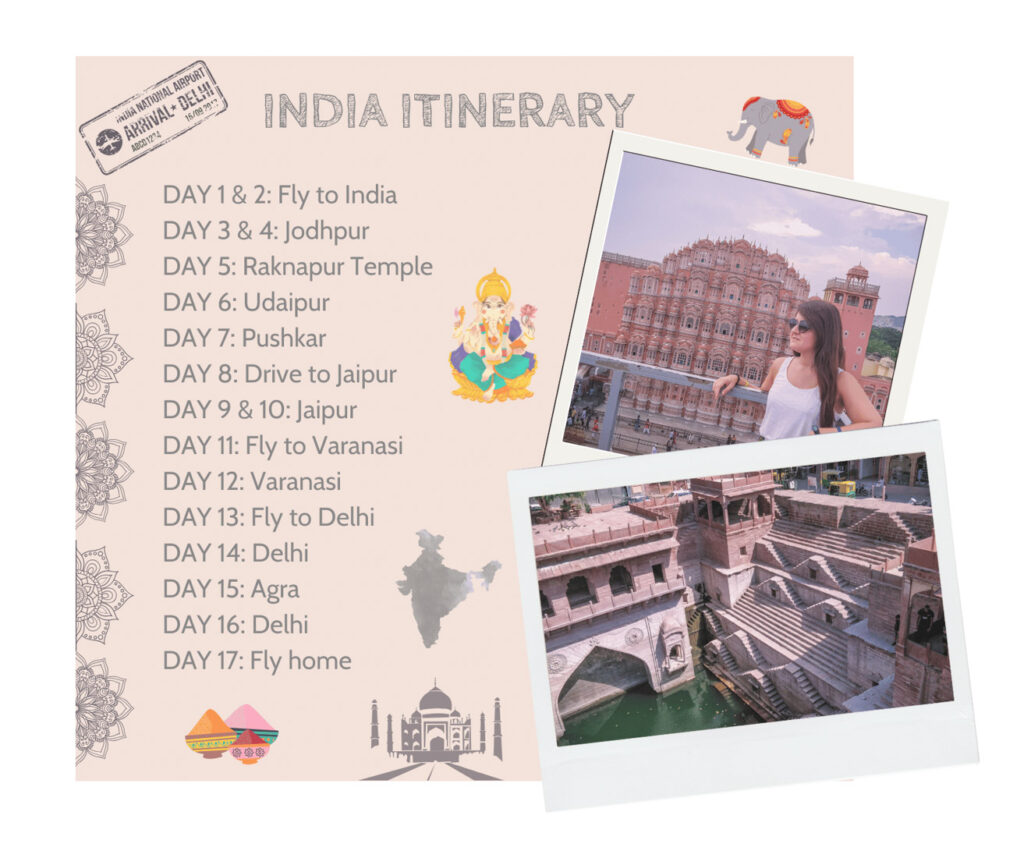
2 WEEKS IN INDIA - THE ULTIMATE ITINERARY
Before I share my India Itinerary, I would like to clarify a few things:
This is the itinerary we did, based on our interests but there are so many options and possibilities when visiting India. You need to make a choice of what you want to do and see because you can’t do it all in just 2 weeks. In our case, we wanted to focus on experiencing the northern and central part of the country.
Travel distances withing India are also huge so take this into consideration when planning your itinerary.
Lately, we are prioritizing slow and conscious travel. We prioritize enjoying the place over trying to visit as many places as possible. This is to say, that if you want, it is possible to add more activities every day. We just chose not to.
The first 2 days of the trip are all about getting to India. But don’t worry, it will not take 48h! This is only because of the time difference! Most probably you will arrive in India through New Delhi’s International Airport (DEL). Once you land, you will have to go through border control and customs check before you enter the country.
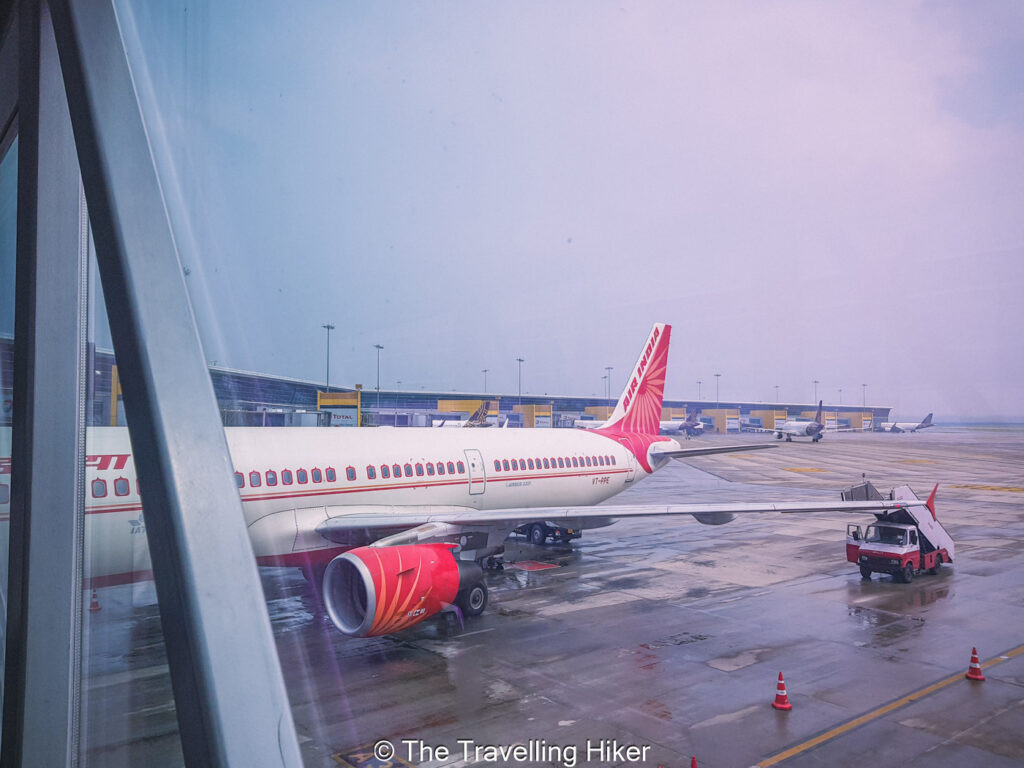
In our case, we arrived in New Delhi somewhere in the morning and instead of staying here, we decided to take a third flight and head directly to Jodhpur (JDH). The flight between Delhi and Jodhpur is only 1 hour and 20 minutes but just to be sure we had no connecting problems, we made sure we had a 4 hour connection in Delhi. We used this time in the airport to get some food, buy some local sims (e-SIMs were not yet available in 2019) and change some money.
STOP 2: GET TO OUR HOTEL IN JODHPUR AND REST
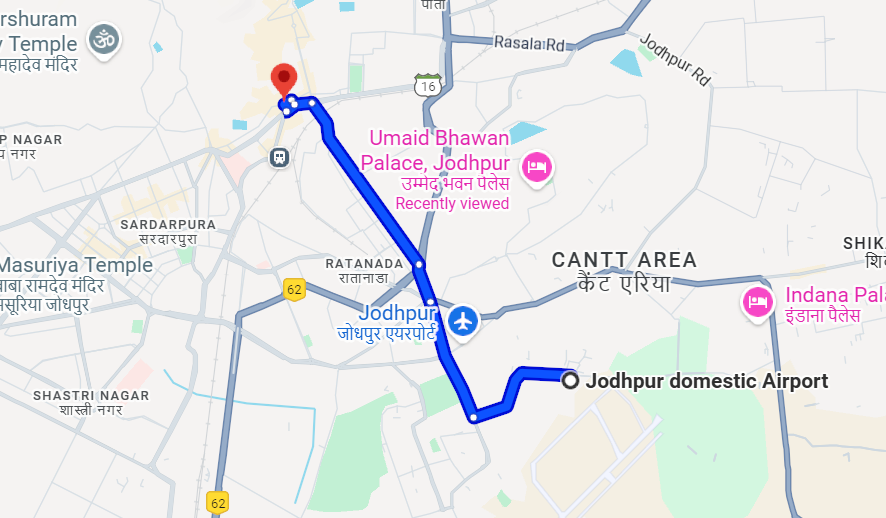
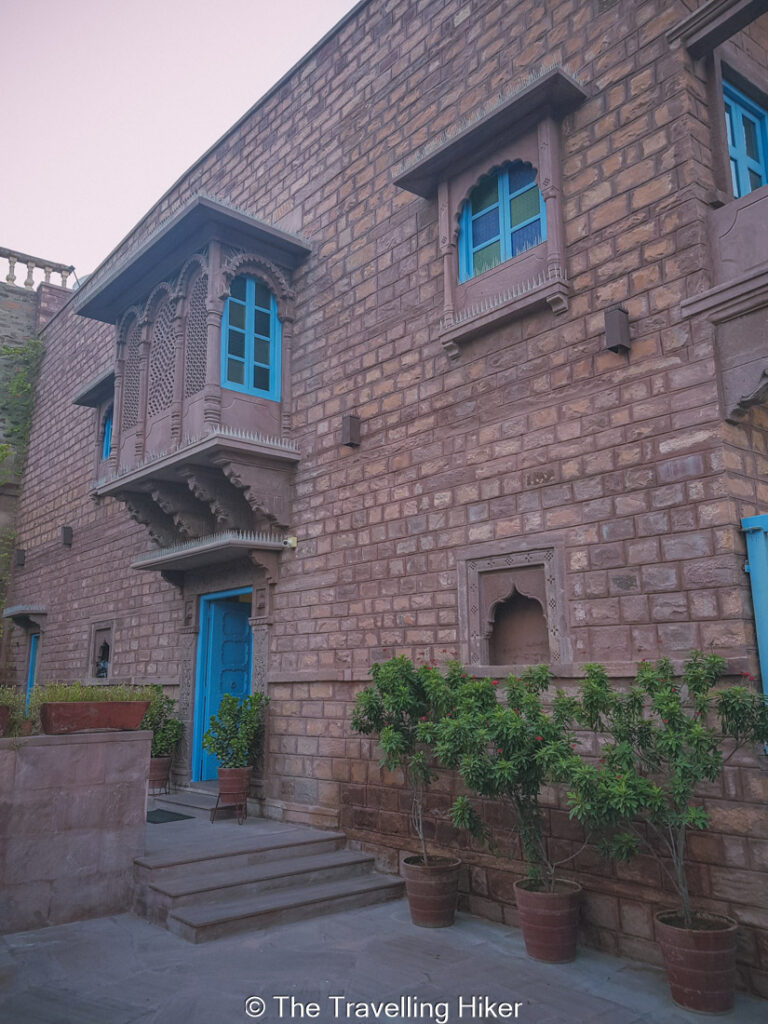
Once we landed in Jodhpur, we called an Uber to take us from the airport to our hotel, Baijoo Niwas, a cute boutique hotel with a very convenient location.
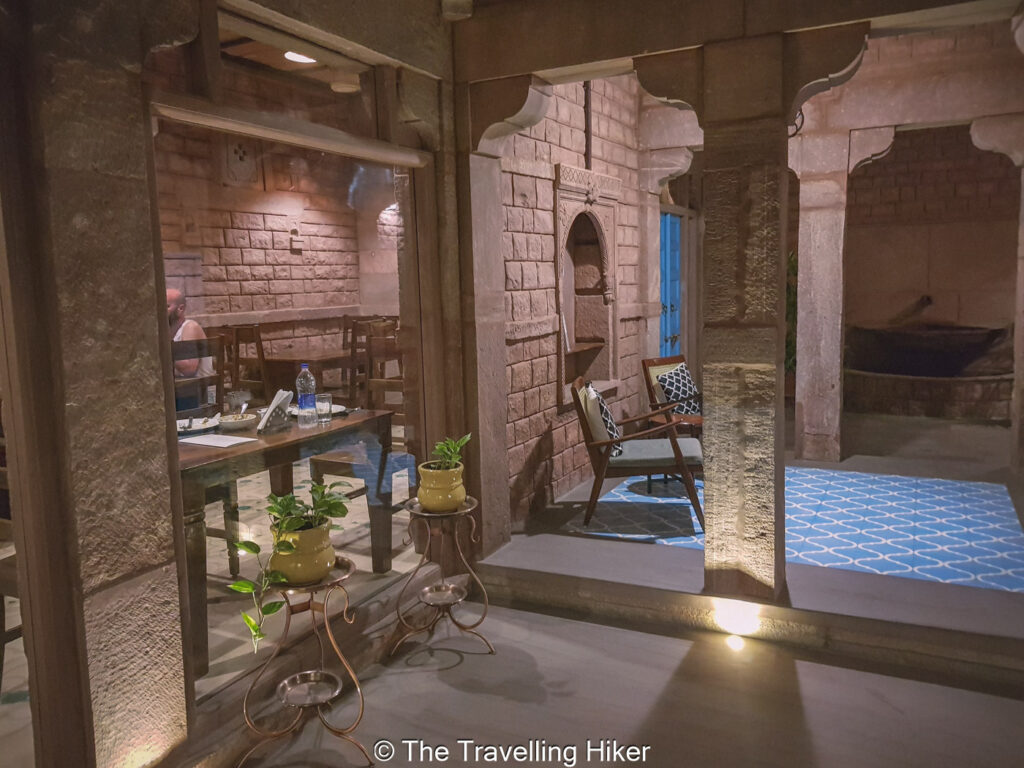
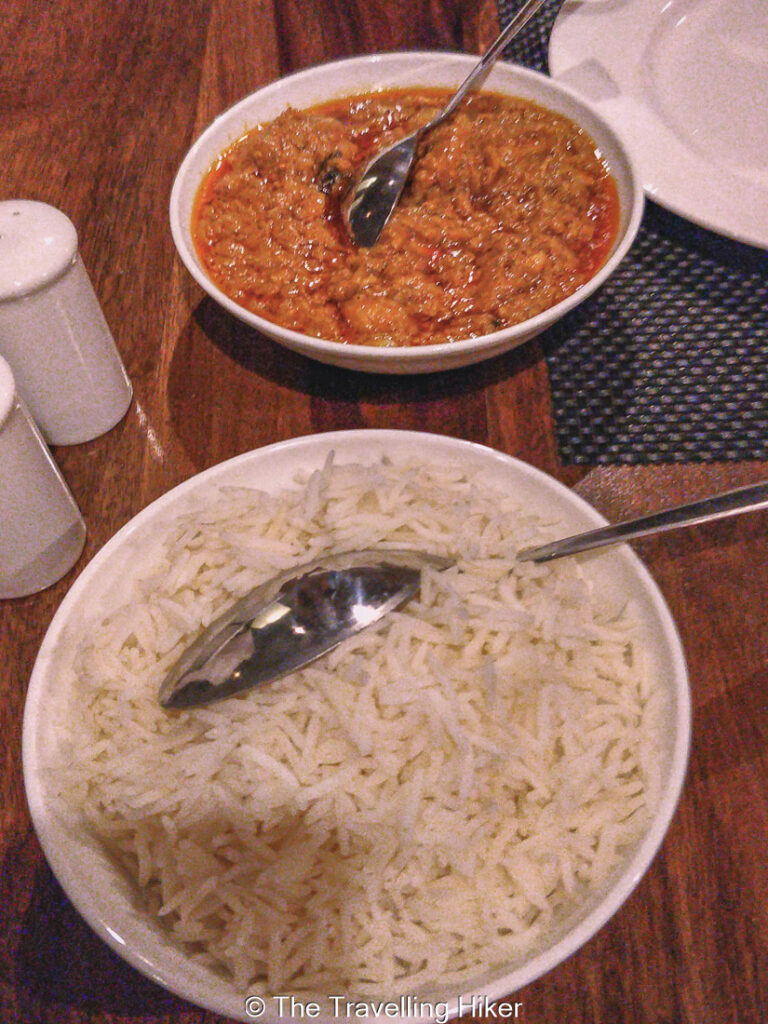
By the time we arrived, it was already mid afternoon and we were quite tired from all the traveling. We decided to just relax and have dinner in the hotel restaurant.
DAY 3 - VISIT JODHPUR
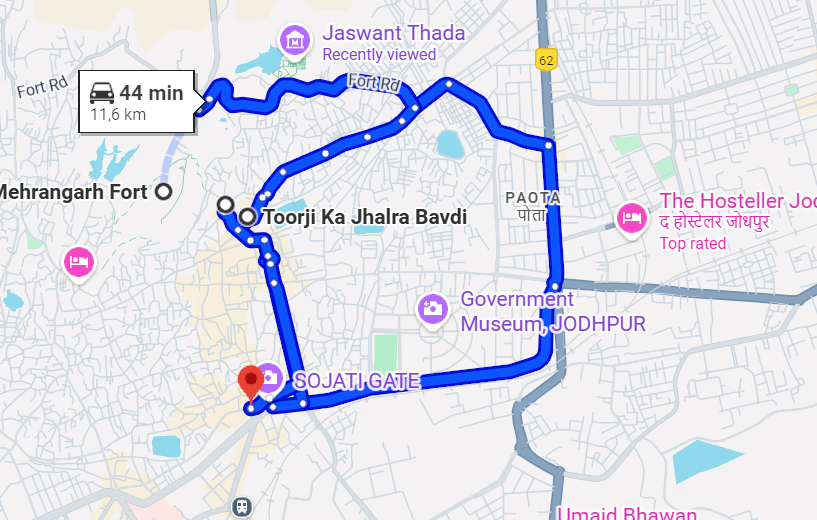
Route: From Hotel to Mehrangarh Fortress and around Jodhpur (Distance: 10,5 km; Time: 35 minutes)
Rise and shine! It is time to finally start visiting India!
STOP 1: MEHRANGARH FORTRESS
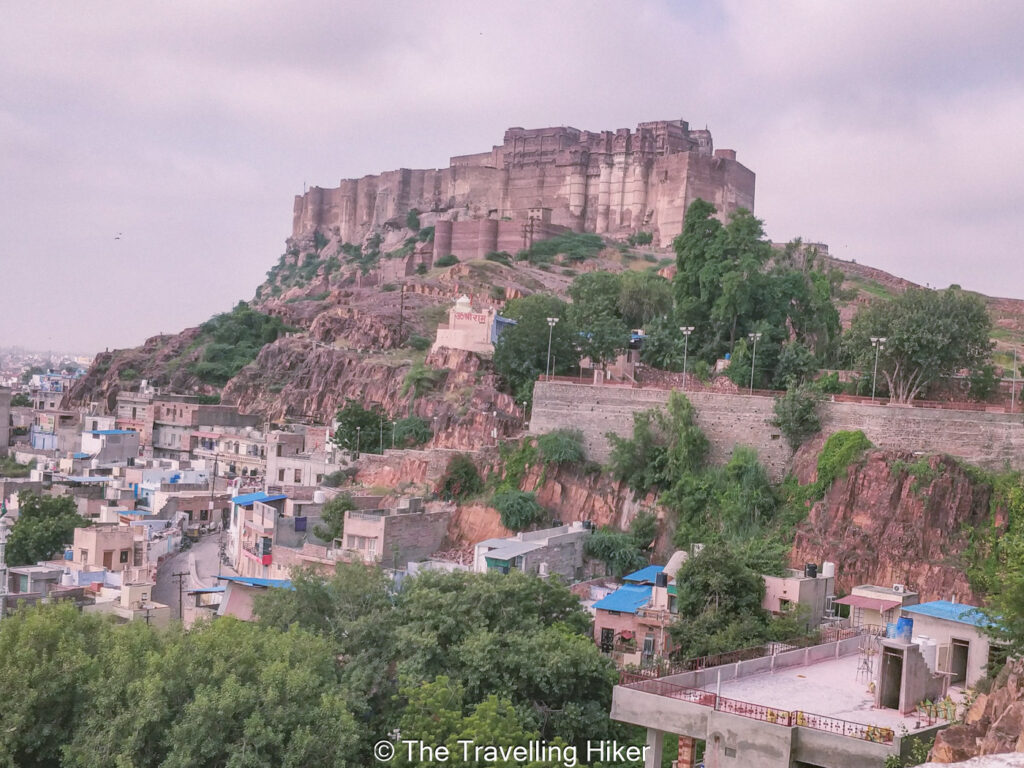
We began our day nice and early and visited the Mehrangarh Fort. This is an impressive 15th-century fort located on top of a hill above the blue-washed city of Jodhpur.
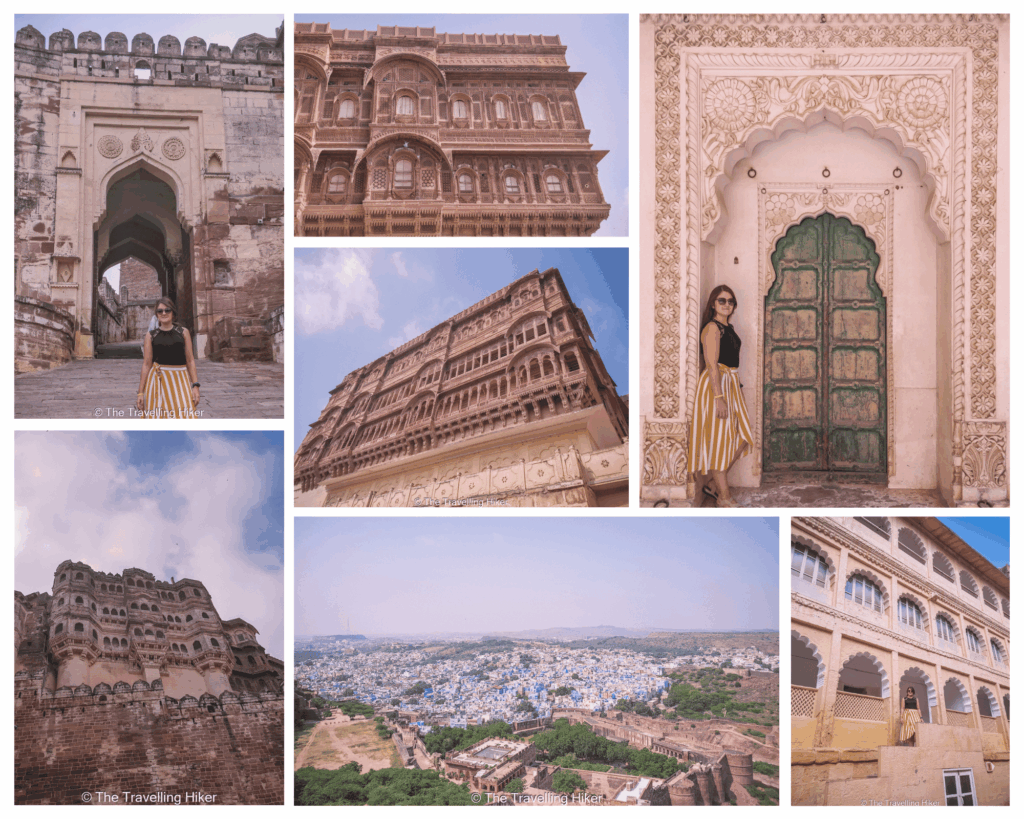
As you walk through its massive gates, you feel the magnificence and opulence that Maharaja’s used to have. The intricate carvings, the beautiful courtyards, and the panoramic views over Jodhpur will leave you speechless.
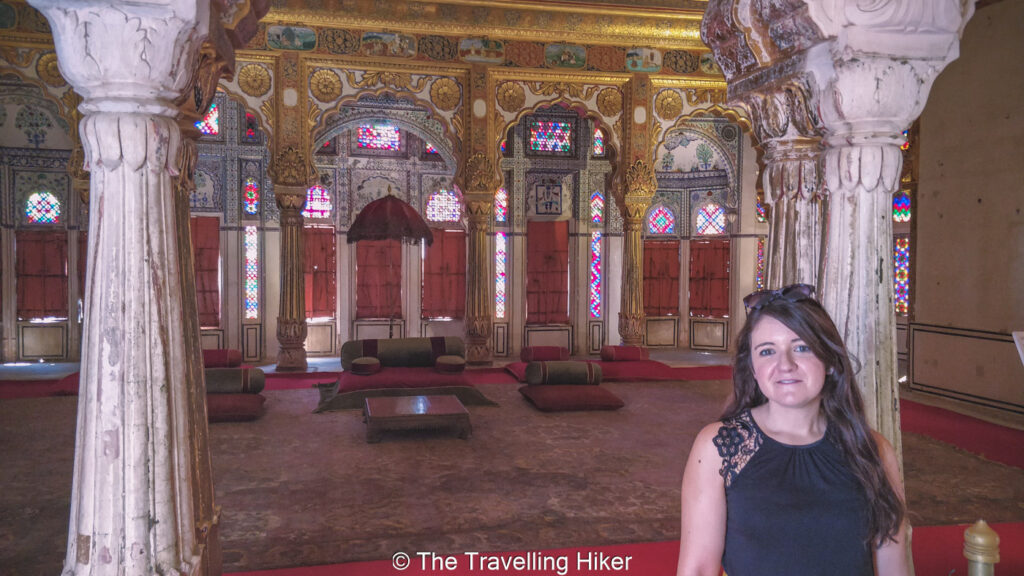
Inside the fort is a treasure trove of Rajput grandeur. Think delicated windows, opulent palaces, and gilded rooms filled with artifacts from another era. The museum is beautifully curated, showcasing everything from royal cradles to armor, and the stories behind them bring Rajasthan’s regal history to life.
Practical information
Price. Entry to Mehrangarh Fort cost 500 INR per person (price in 2025).
Opening Hours. The fort is open between 9:00 and 17:00.
Book your tickets online. It is possible to book your tickets in advance here.
STOP 2: JODHPUR STEPWELL
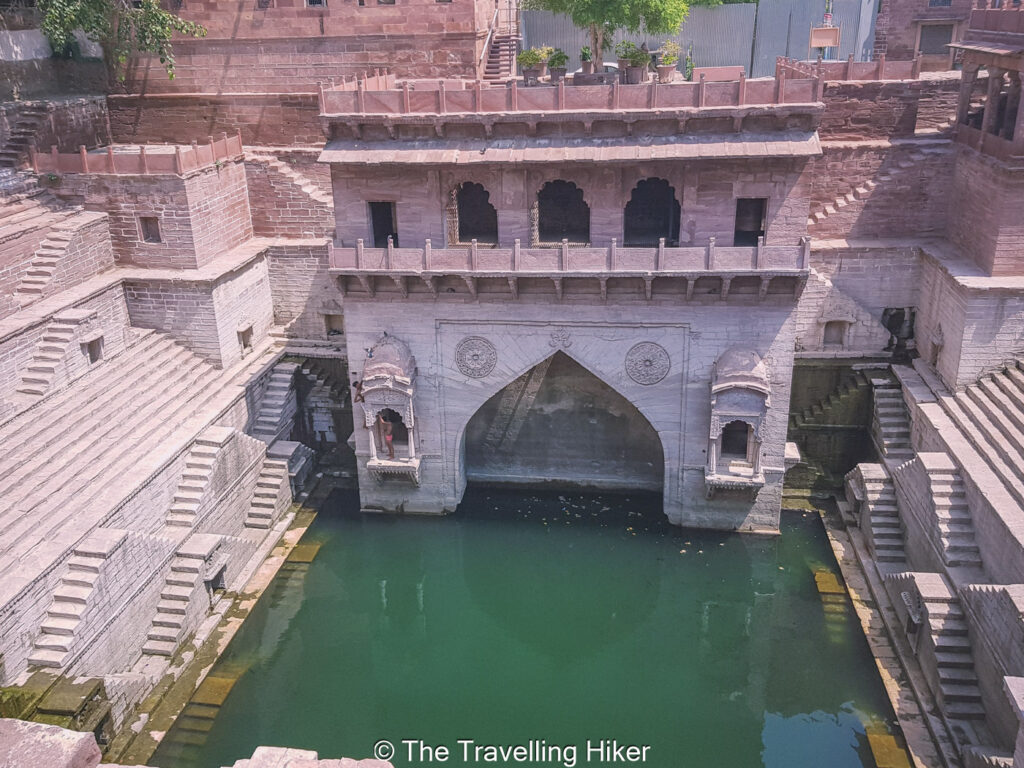
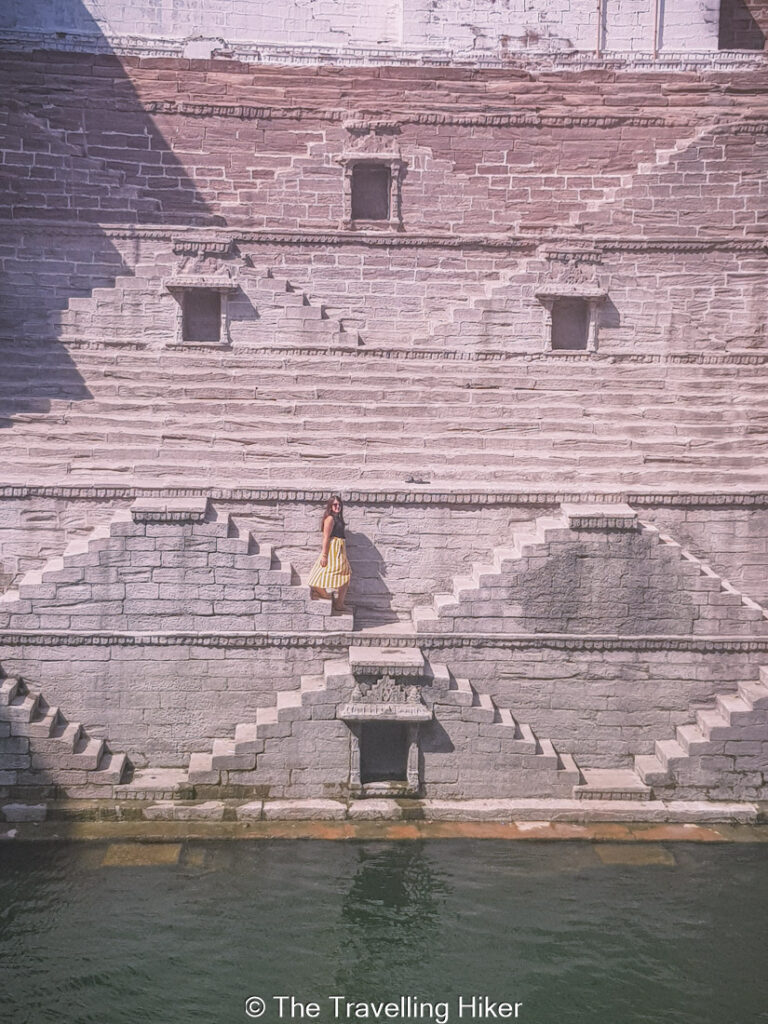
In the heart of Jodhpur’s old town you’ll find Toorji ka Jhalra, or Jodhpur’s stepwell. This place is one of those unexpected gems that perfectly blends history and everyday life. Built in the 1740s, this stunning sandstone structure once served as a vital water source. Today, it’s a peacefull spot where locals like to gather to escape the desert heat. It is very common to find kids jumping into the water from the stairs.
The symmetrical steps descend dramatically into the deep water, creating a mesmerizing geometric pattern that photographers absolutely love.
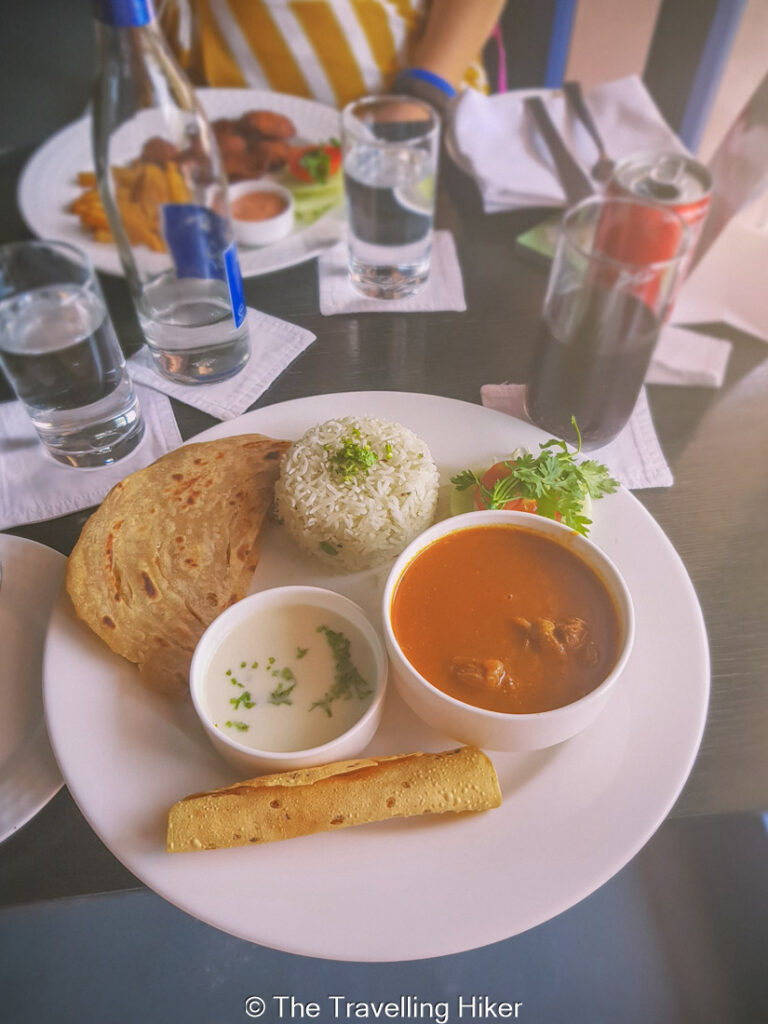
Around it, you’ll find charming cafés and boutiques like the Stepwell Café where we had lunch while we observed the kids play in the well.
STOP 3: EXPLORE JODHPUR'S OLD TOWN
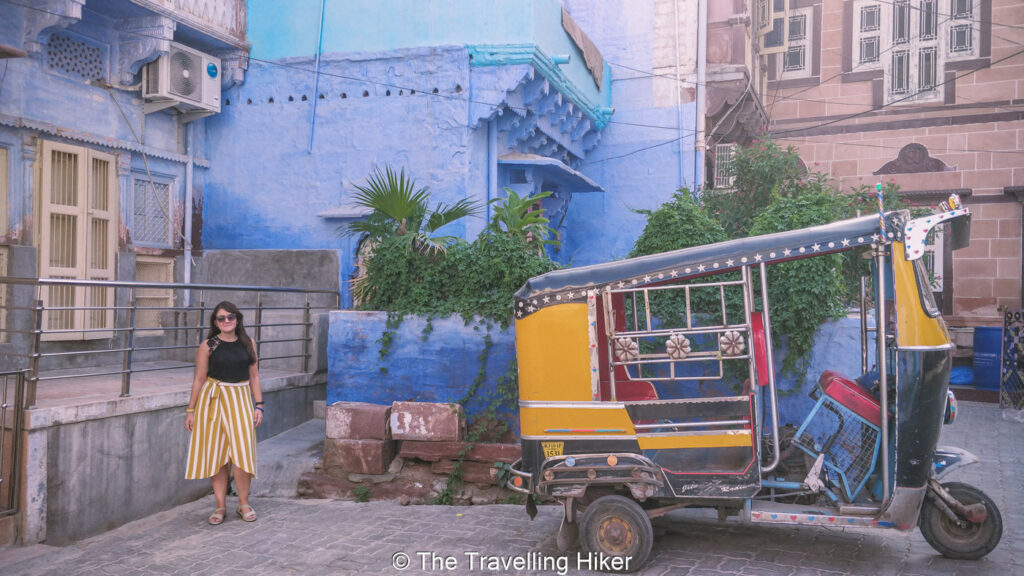
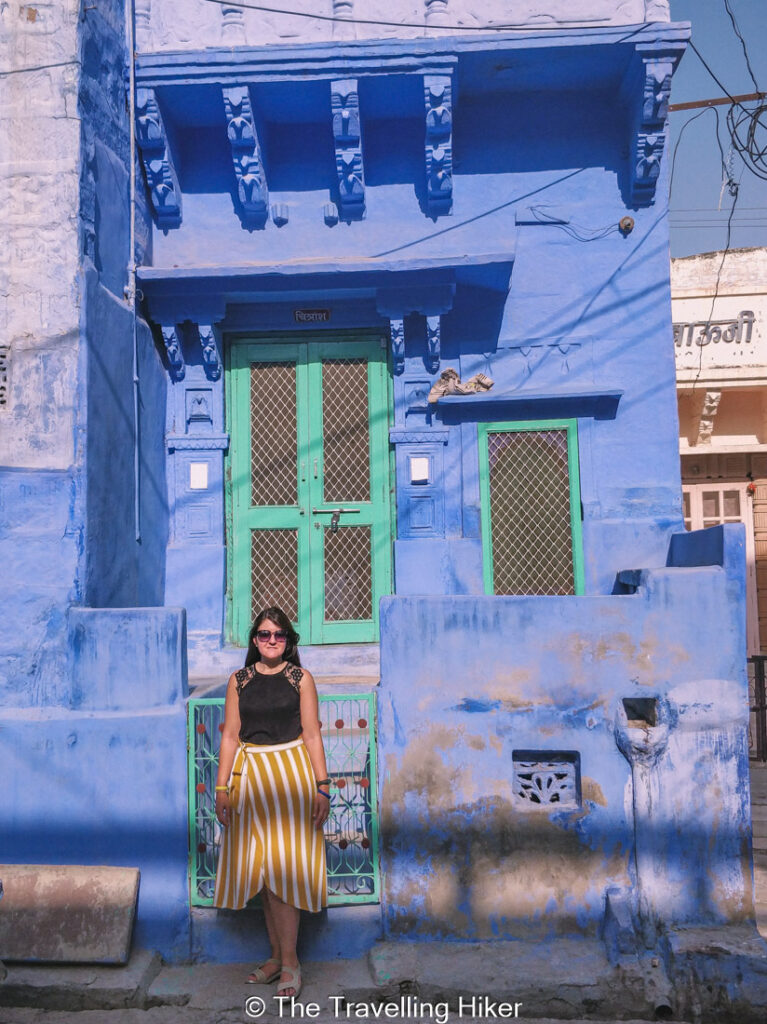
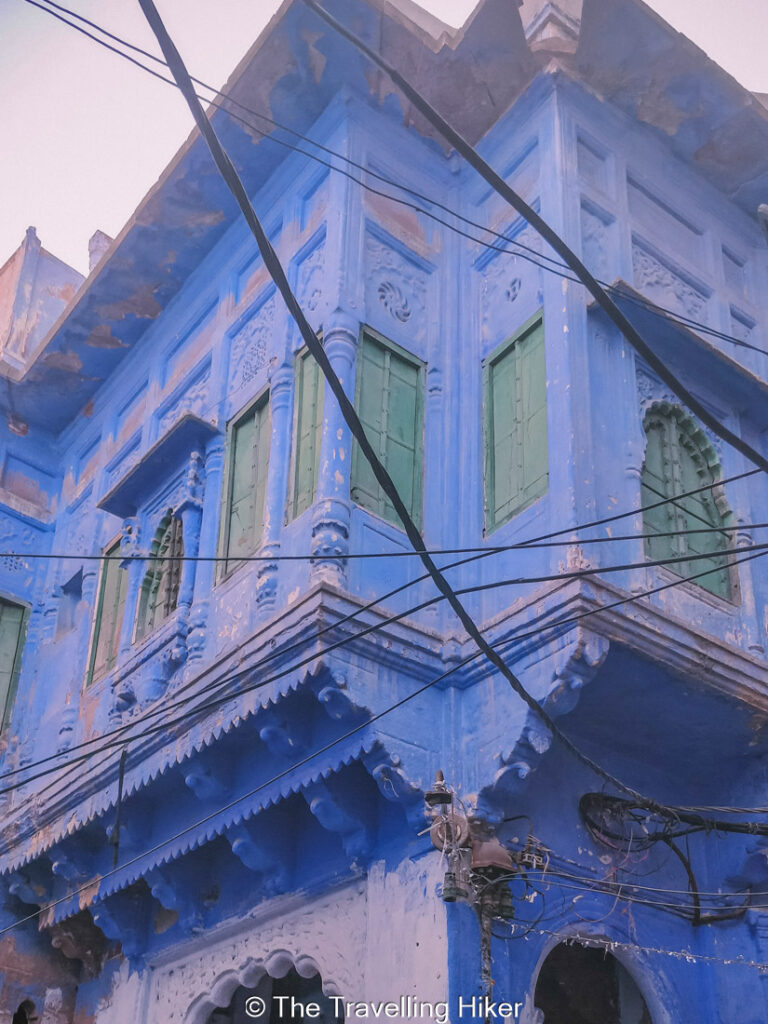
In the afternoon, we decided to join a guided walking tour to explore Jodhpur’s old town and its cute blue houses. The tour was really nice and informative and had a great time exploring and learning why the city is painted blue.
For us, it was the perfect way to get to know the city, since we were still not very familiar with India. Looking back on the trip, we could have perfectly explored the city on our own as it felt quite safe but the tricky part is knowing where to go to see the blue houses and alleys.
STOP 4: DINNER WITH VIEWS OF THE FORT
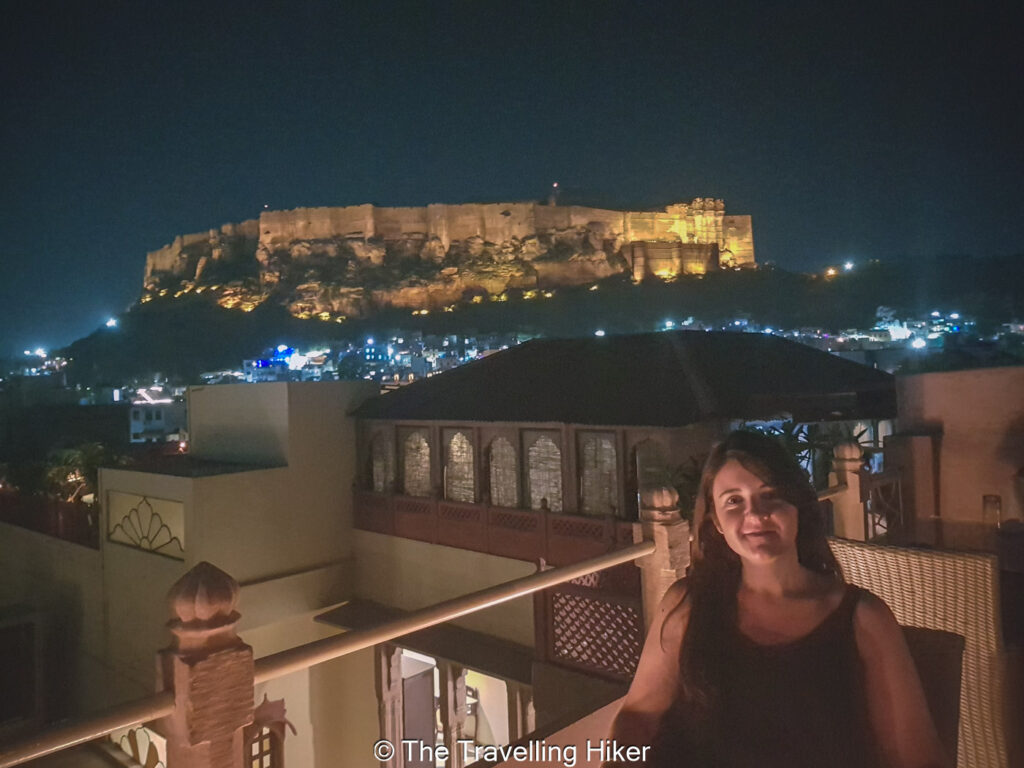
We finished the day with dinner at Indigo rooftop restaurant that had beautiful views over the Mehrangarh Fort and delicious food. It was the perfect way to end our first full day in India.
DAY 4 - VISIT JODHPUR
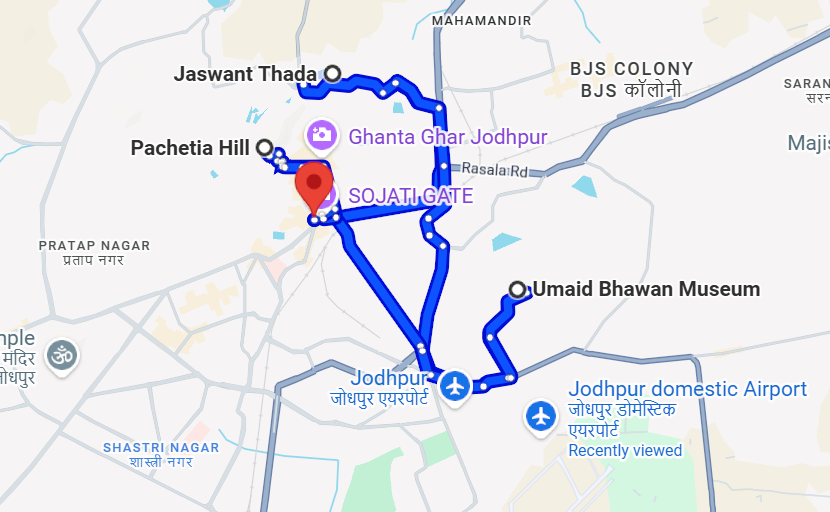
Route: Driving around Jodhpur (Distance: 21,4 km; Time: 1 hour)
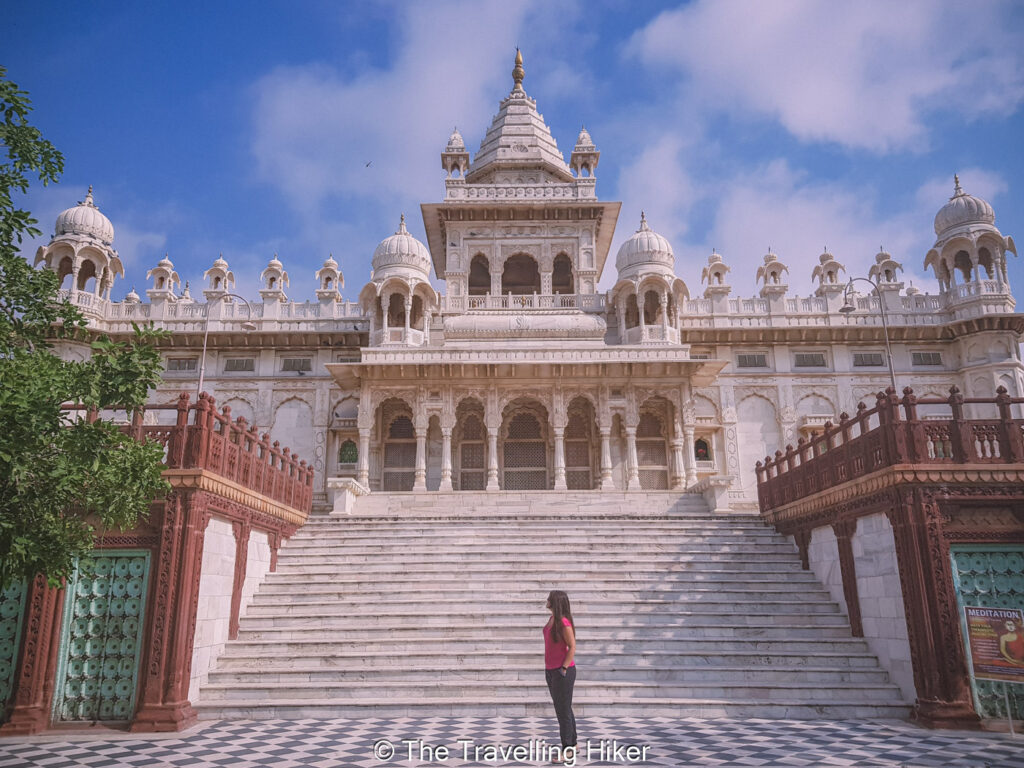
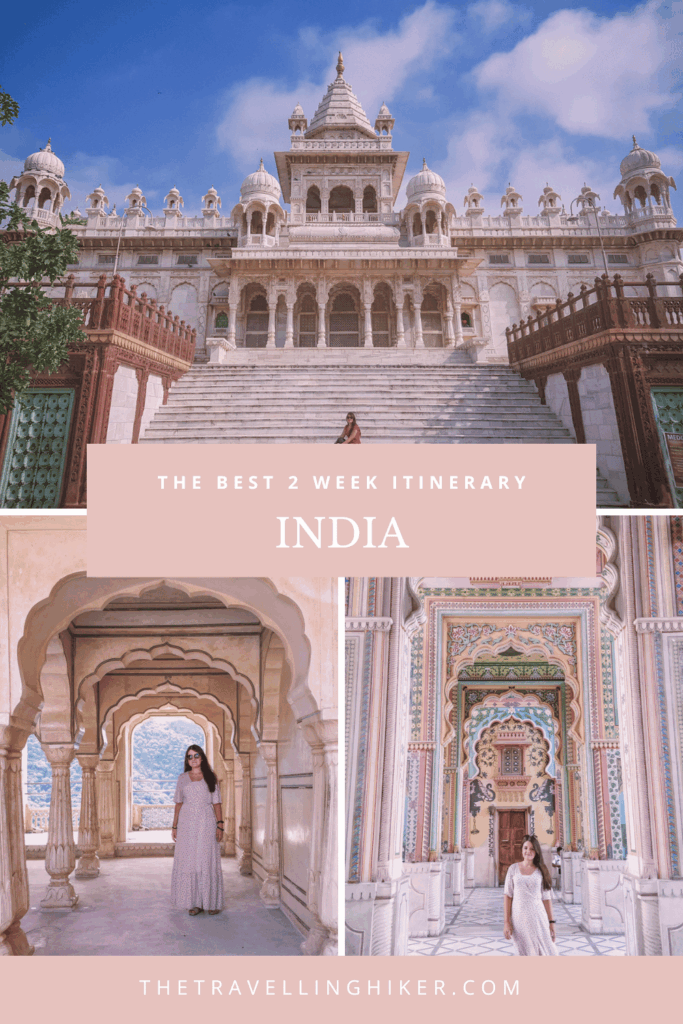
Our second day in Jodhpur will begin by visiting another impressive site in Jodhpur, Jaswant Thada. This beautiful palace is often called the Taj Mahal of Marwar. This is a serene marble cenotaph that feels like a calm breath after the grandeur of Mehrangarh Fort. It was built in memory of Maharaja Jaswant Singh II and its a beautiful construction that glows with a soft pearly light under the Rajasthani sun.
Jaswant Thada is set against the rugged backdrop of the fort and overlooking a peaceful lake. Strolling through its gardens, listening to the gentle rustle of the wind and the distant sounds of the city below, you can’t help but feel a sense of timeless grace. It’s a beautiful place to just pause, reflect, and simply enjoy the slower rhythm of Rajasthan.
Practical information
Price. Entry to Jaswant Thada cost 100 INR per person (price in 2025).
Opening Hours. The fort is open between 9:00 and 17:00.
Book your tickets online. It is possible to book your tickets in advance here.
STOP 2: UMAID bHAWAN PALACE
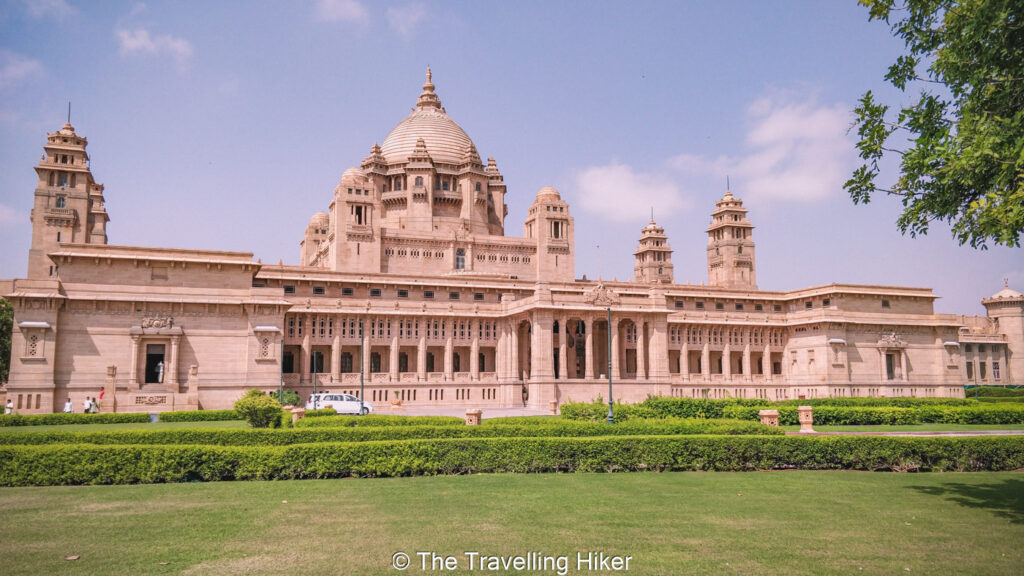
Once you’re done admiring Jaswant Thada, it’s time to hop on another tuk tuk and head to Umaid Bhawan Palace, Jodhpur’s crown jewel. Umaid Bhawan Palace is a stunning blend of royal opulence and Art Deco elegance. Built in the 20th century by Maharaja Umaid Singh, it’s one of the last great palaces ever constructed in India.
These days it is part royal residence, part luxury hotel, and part museum. The museum displays vintage cars, regal artifacts, and portraits that tell the story of a dynasty gracefully bridging the old and new worlds. Even if you’re not staying at the hotel, visiting Umaid Bhawan is worth it for the sheer spectacle and the sweeping views of the Blue City below.
Practical information
Price. Entry to Umaid Bhawan Palace Museum costs 100 INR per person (price in 2025).
Opening hours. The museum is open daily between 9:00 and 17:00.
STOP 3: SUNSET AT Pachetia hill
If you’re chasing the perfect sunset in Jodhpur, Pachetia Hill is the spot to be. Right behind Mehrangarh Fort, this quiet viewpoint offers a panoramic sweep of the Blue City bathed in warm, golden light. As the sun dips below the horizon, the houses glow in shades of indigo and amber, and the fort’s massive walls take on a magical hue.
To make it even more special, on your way to Pachetia Hill, you will see plenty of blue houses and murals. It’s a peaceful escape from the city buzz, and the best way to end your stay in Jodhpur.
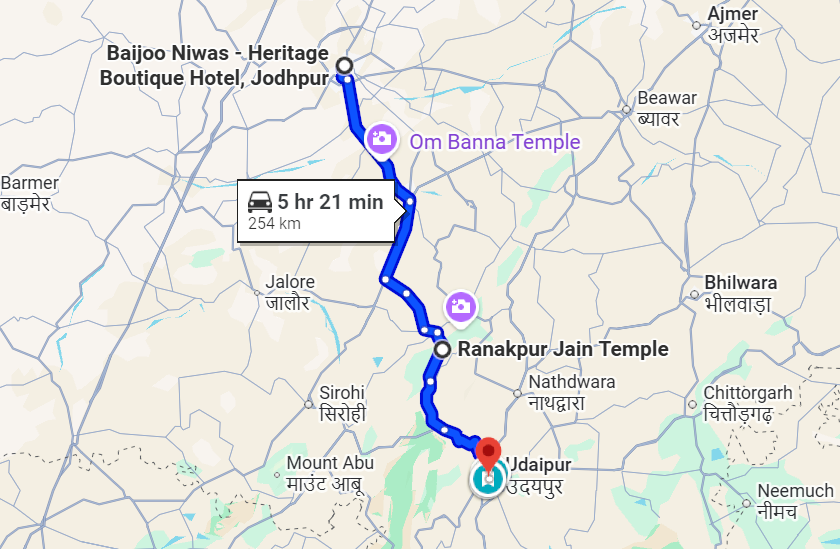
The day begins with a long drive to Ranakpur. The previous day, we had hired a car with a driver to take us from Jodhpur to Udaipur. This is very common and easy to arrange in India. If you want to do so, I have explained how to do so at the end of this post.
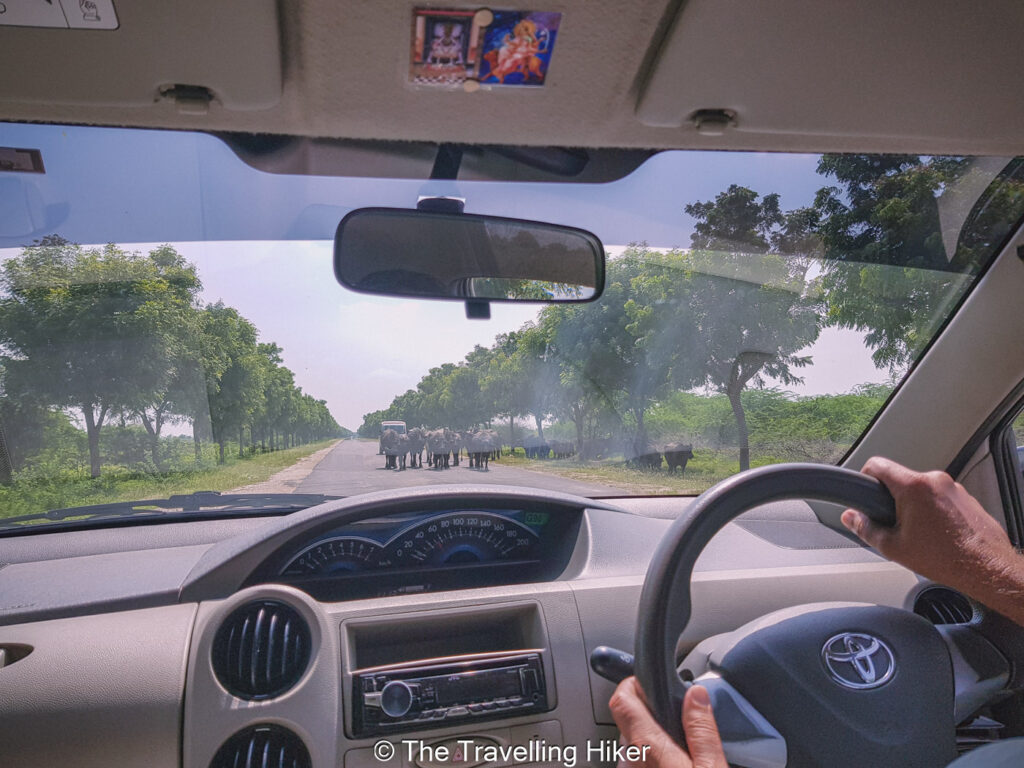
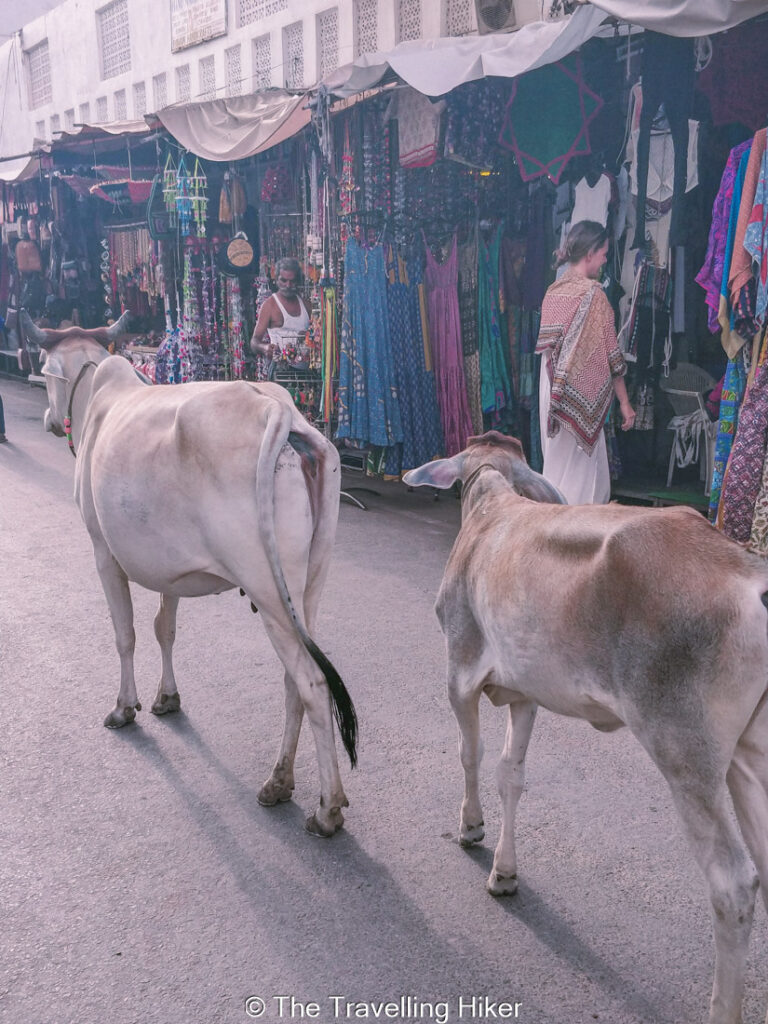
Driving in India was quite an experience for my European standards. I’m not going to sugar code it but it took me a while to get used to the way of driving in India and the many risks they take. It is very common to see cows and other animals in the highways for example and drivers have to avoid them fast. We also did a rookie mistake and forgot to ask a car with seatbelts in the back seat so let’s just say, this first experience was not the easiest.
With that said, our driver was really nice and did explain to us a lot of information about India and the way they live there. He also took us to a very nice restaurant for lunch next to a river.
STOP 2: RANAKPUR JAIN TEMPLE
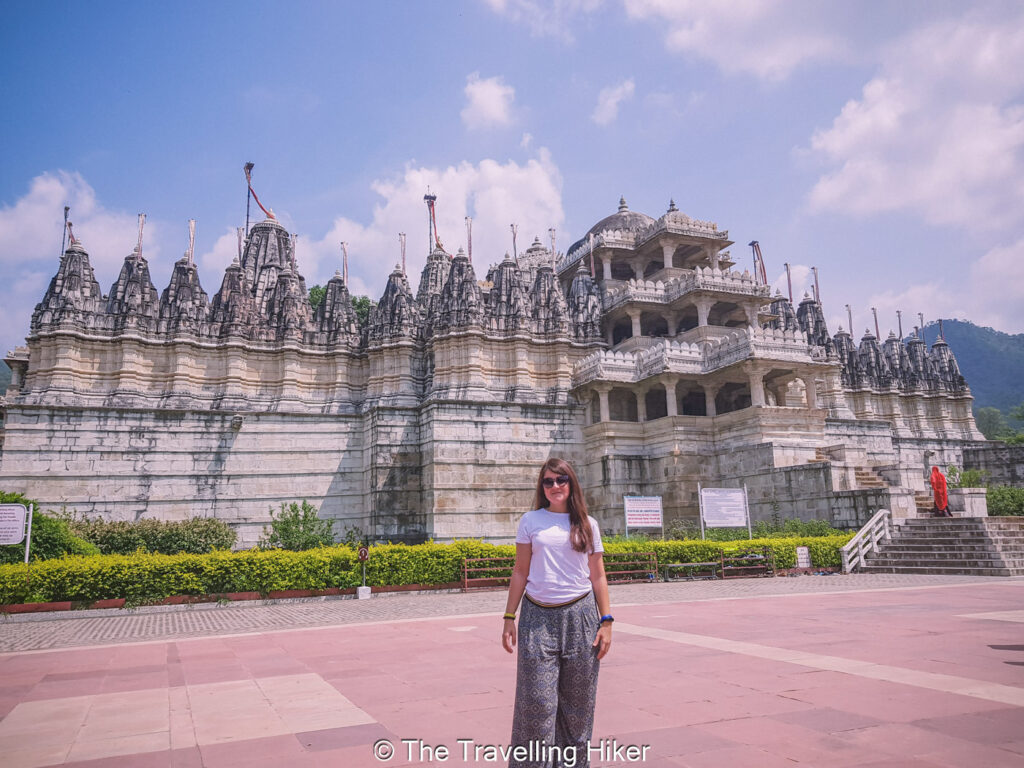
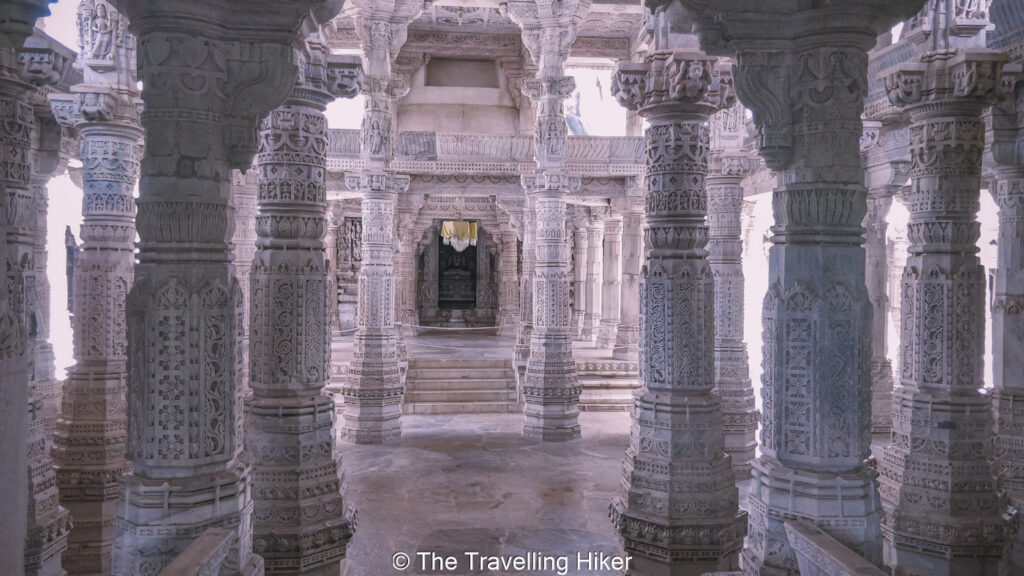
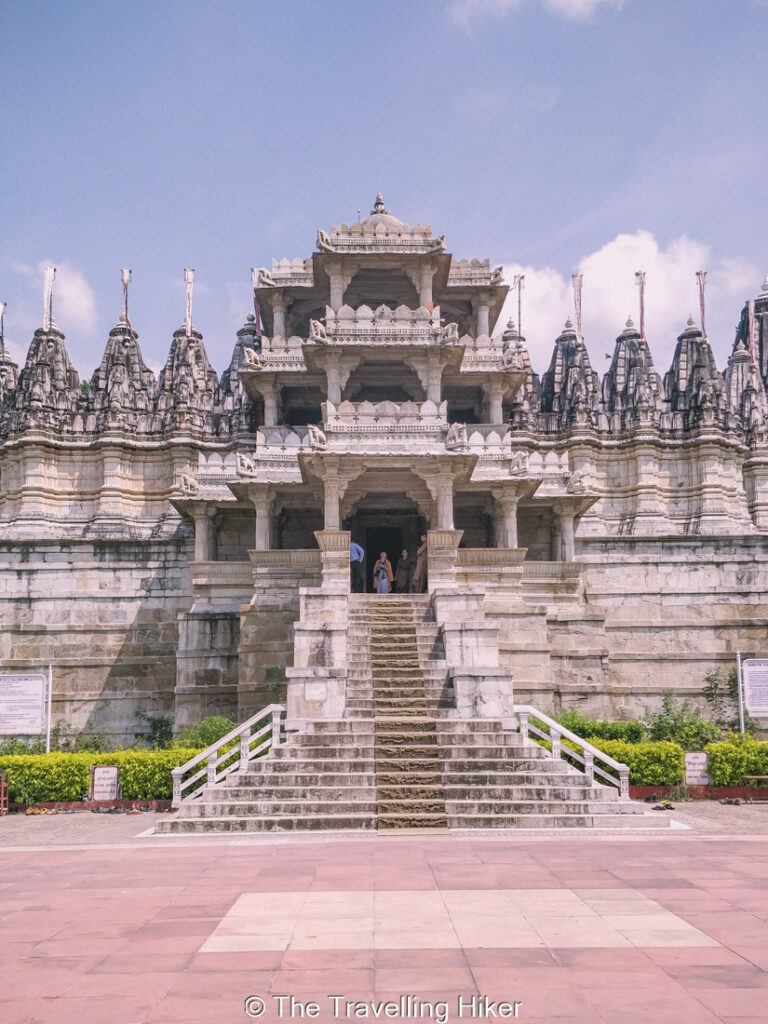
Hidden in the quite Aravalli Hills between Jodhpur and Udaipur, Ranakpur Jain Temple, will leave you speechless. Dedicated to Tirthankara Adinatha, this 15th-century temple is an architectural masterpiece carved entirely from white marble. It’s said to have 1,444 intricately designed pillars, no two alike. Walking through the temple is just amazing, delicate lace-like carvings, graceful domes, and sculptures.
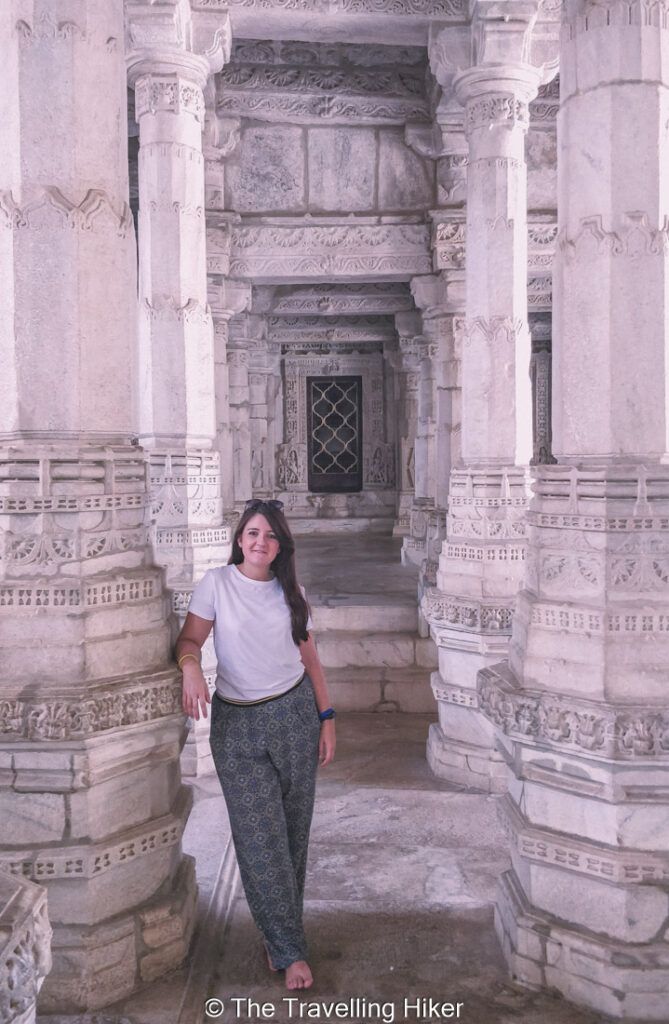
What makes Ranakpur so special isn’t just its beauty but also, its serenity. The temple is not crowded at all and you can explore the temple at your own pace. You can wander barefoot through its cool marble halls, listening to the prayers and the slow sound of the trees outside. It was one of my favorite places to visit in India.
Practical information
Price. Entrance to Ranakpur Jain Temple is completely free but if you want to have a camera or your phone for photos they will charge you 100 INR.
Opening Hours. The temple is open daily between 6:00 and 20:30.
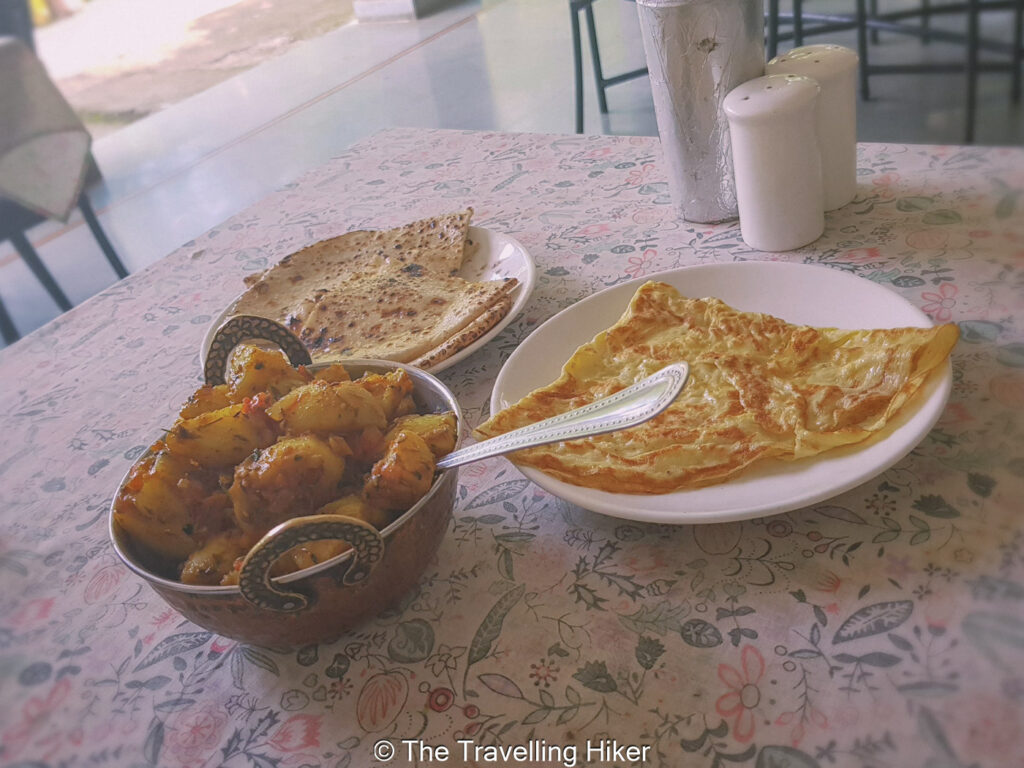
Once we were done exploring the temple, our driver took us for lunch in the rural. The restaurant was really simple and for locals but the food was absolutely delicious. Plus it was set in a super nice place.
After lunch, we drove to Udaipur where he dropped us at our next accommodation.
STOP 4: SUNSET BY pichola LAKE
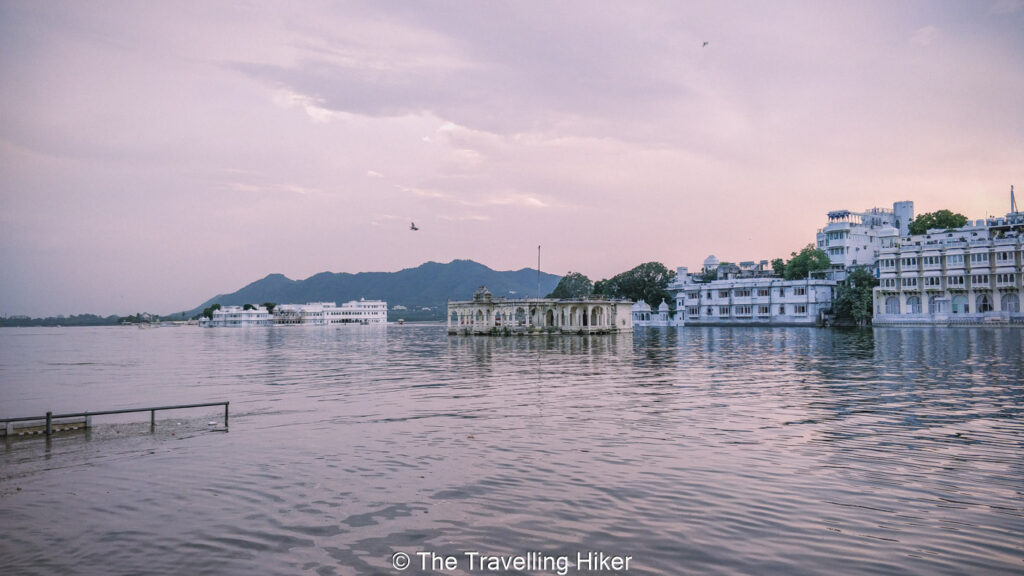
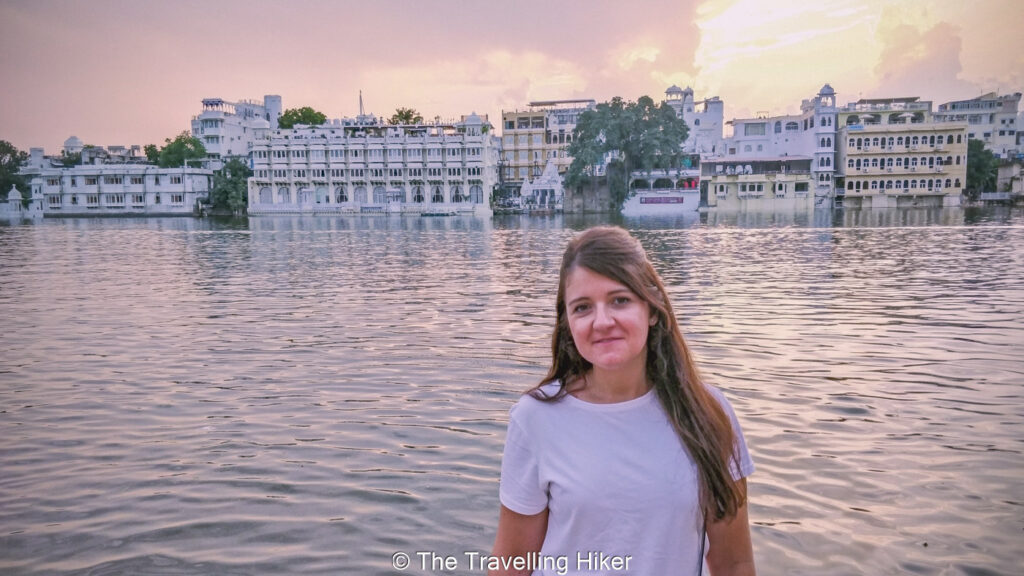
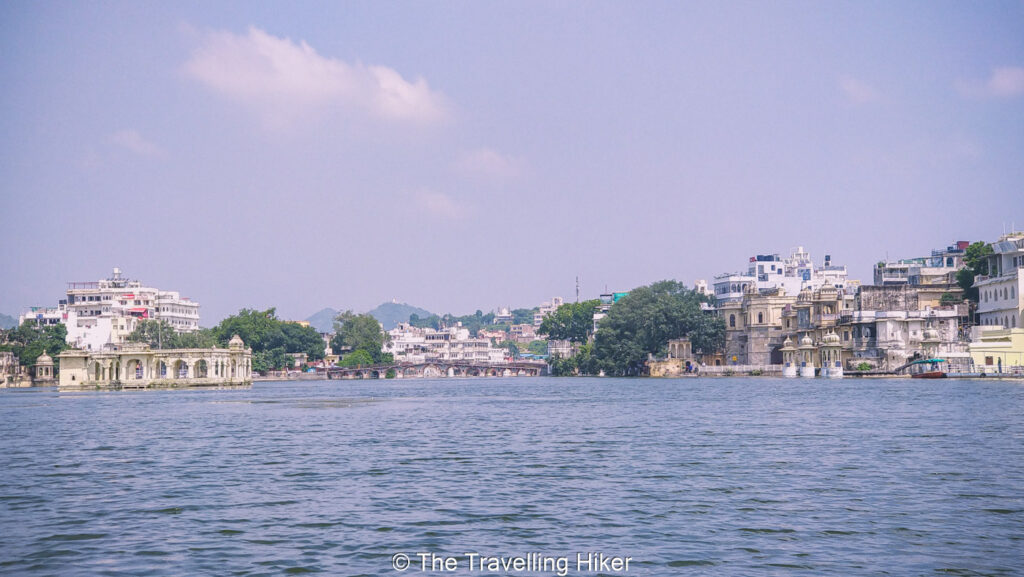
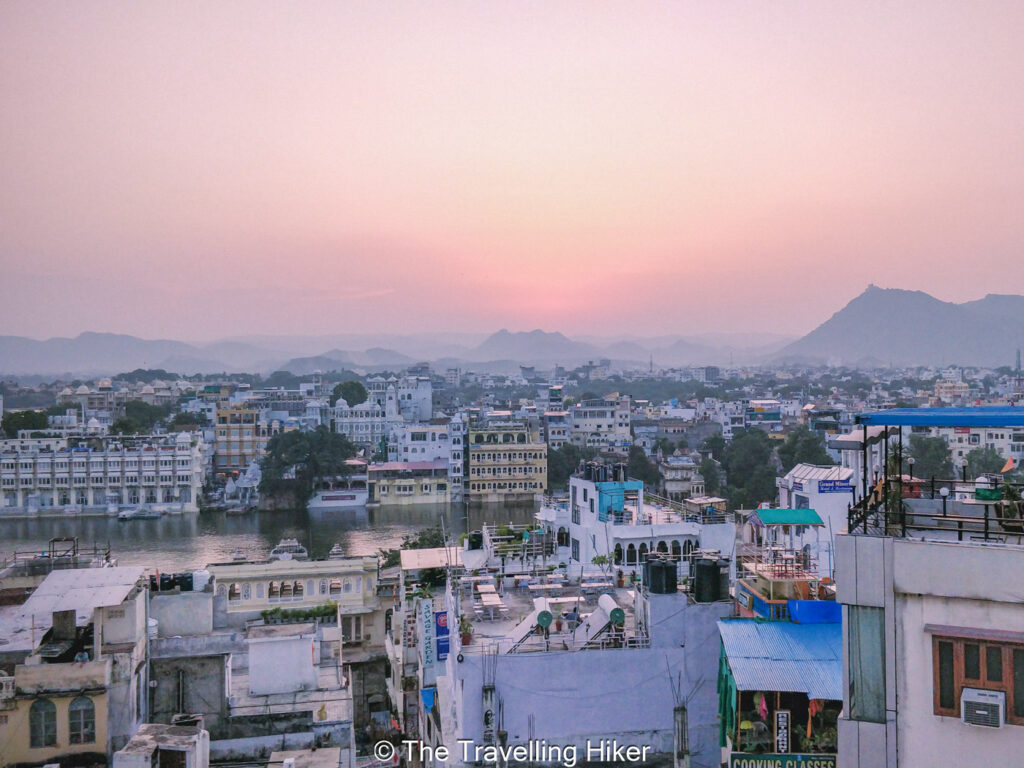
After checking in at our next accommodation, we took a tuk tuk to Pichola Lake to watch sunset. There is something truly magical about watching the sunset over Lake Pichola. The sun sets behind the Aravalli hills and the lake gets hit with gold and pink light making the views beautiful.
After sunset, head to one of the many rooftop restaurants in the city and enjoy a delicious dinner. In our case, we went to the White Terrace Restaurant which also had lake views.
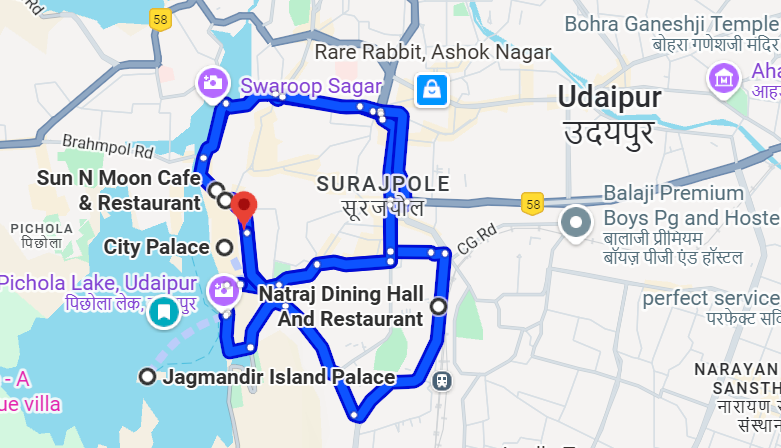
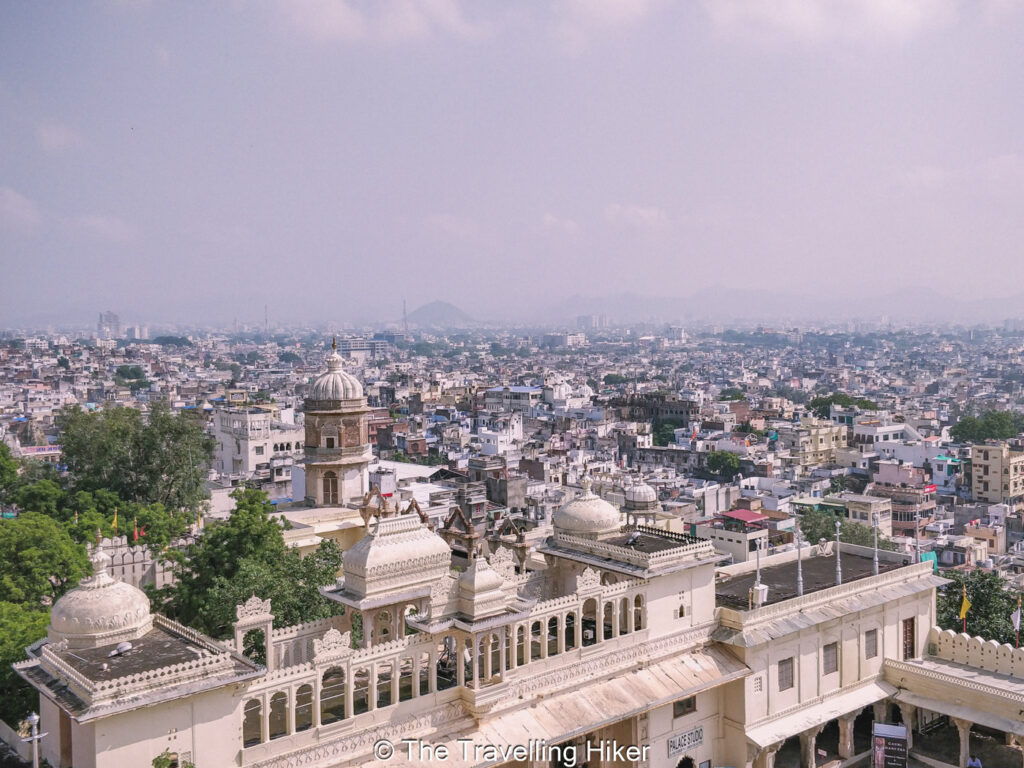
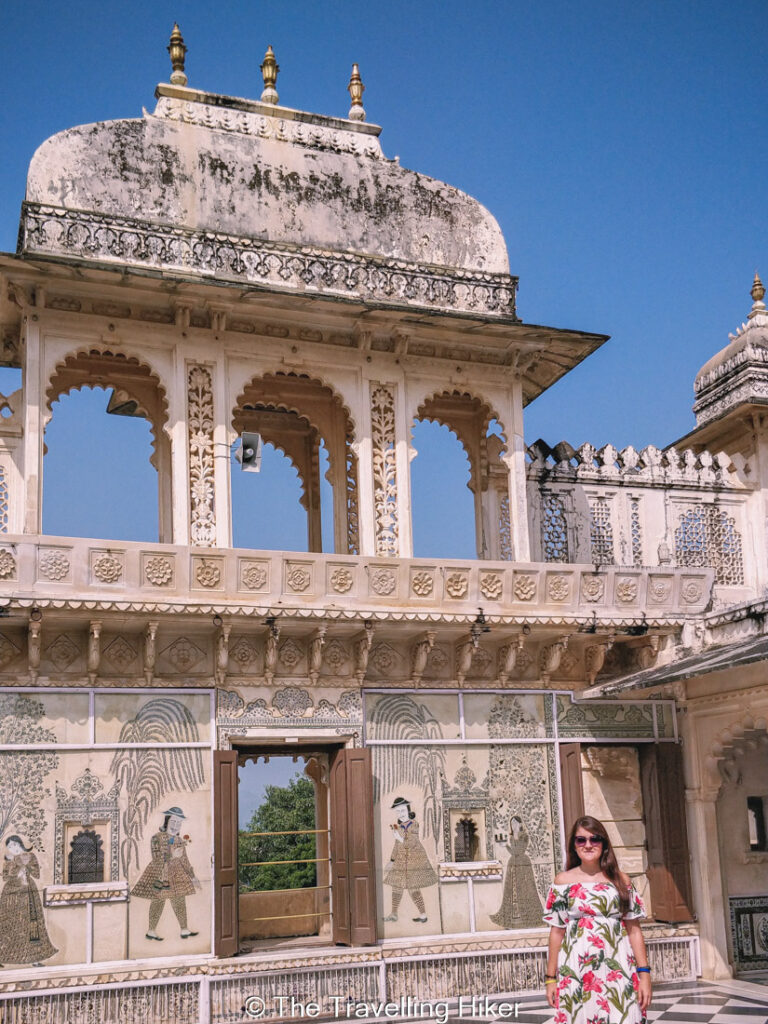
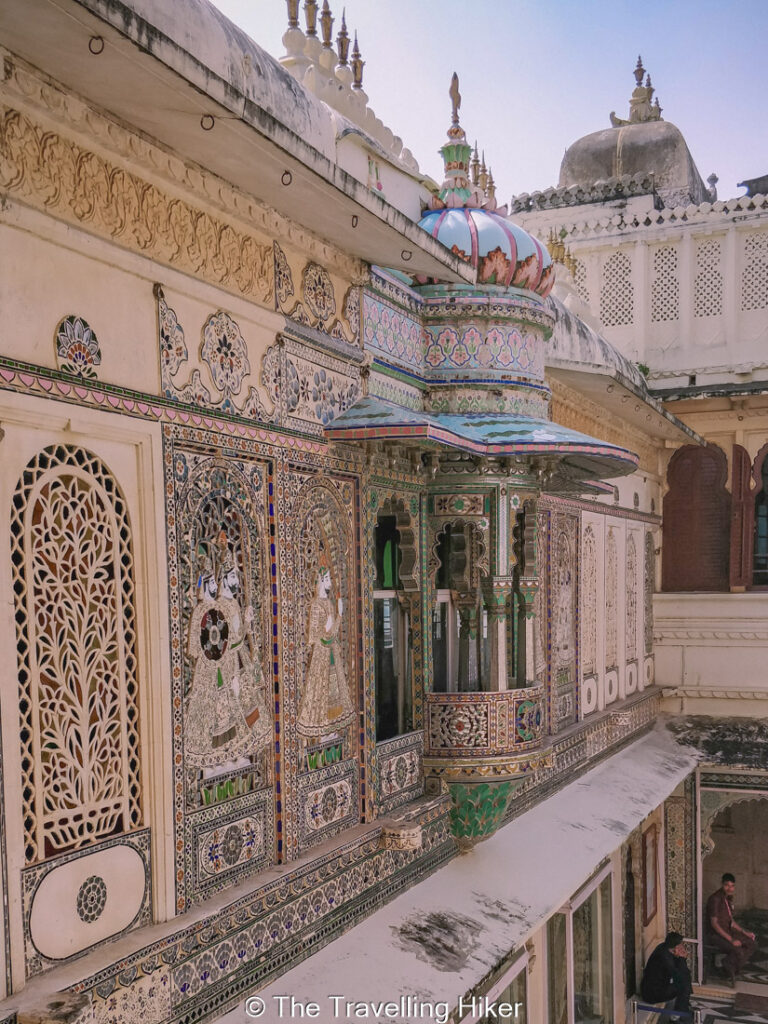
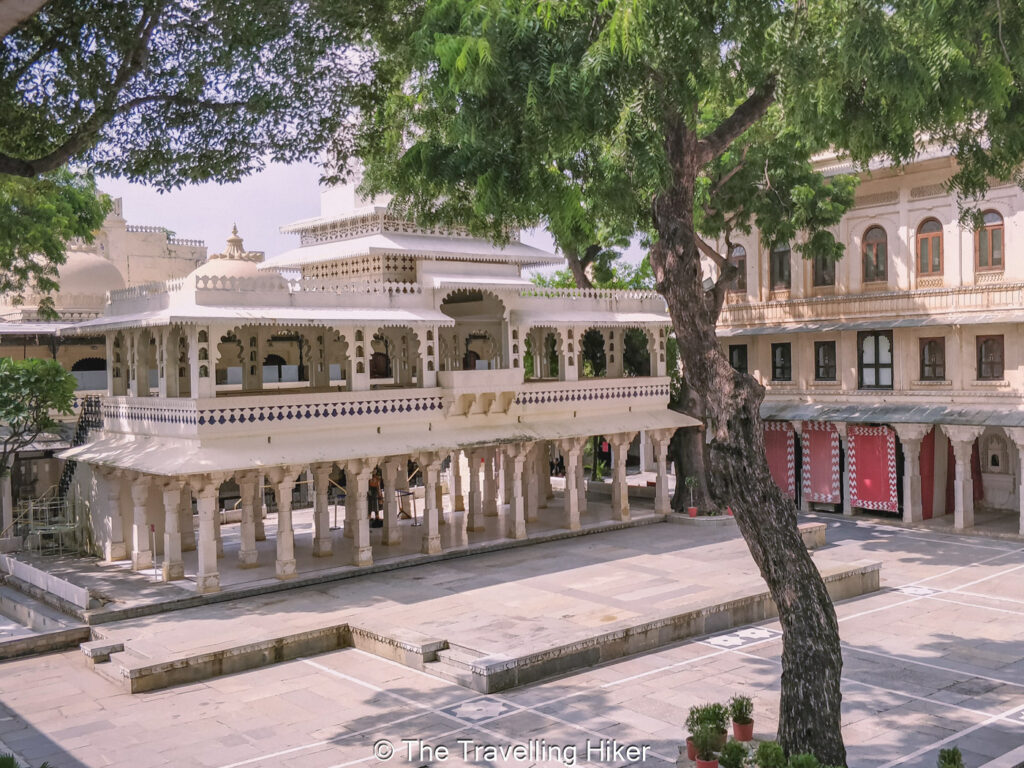
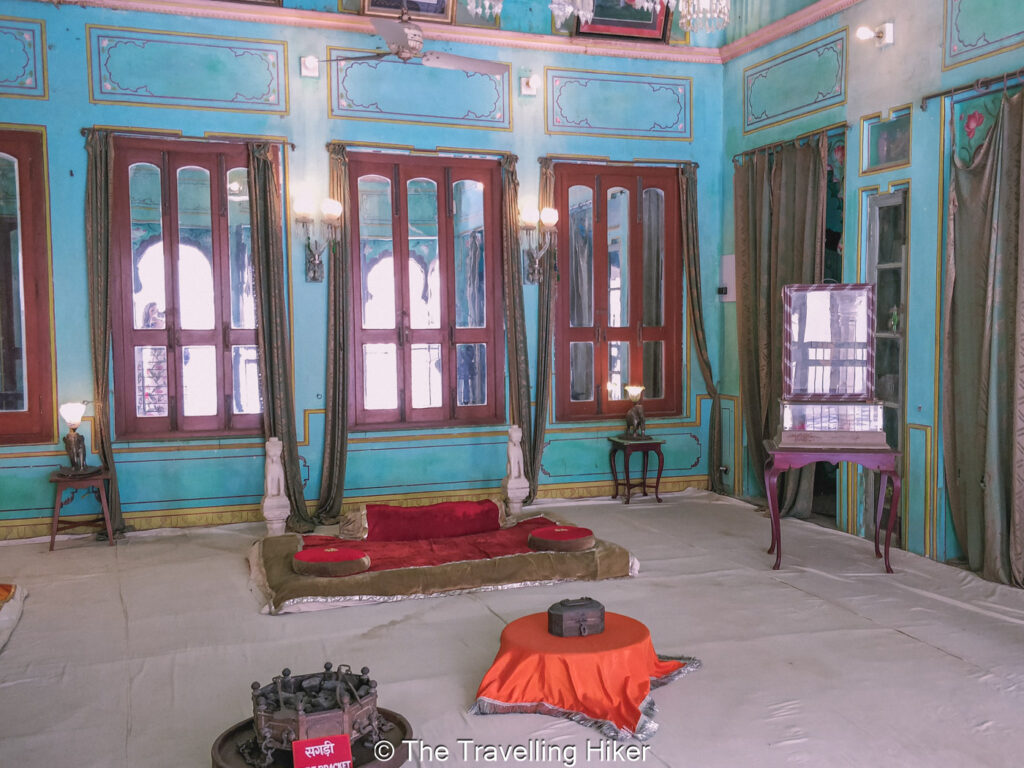
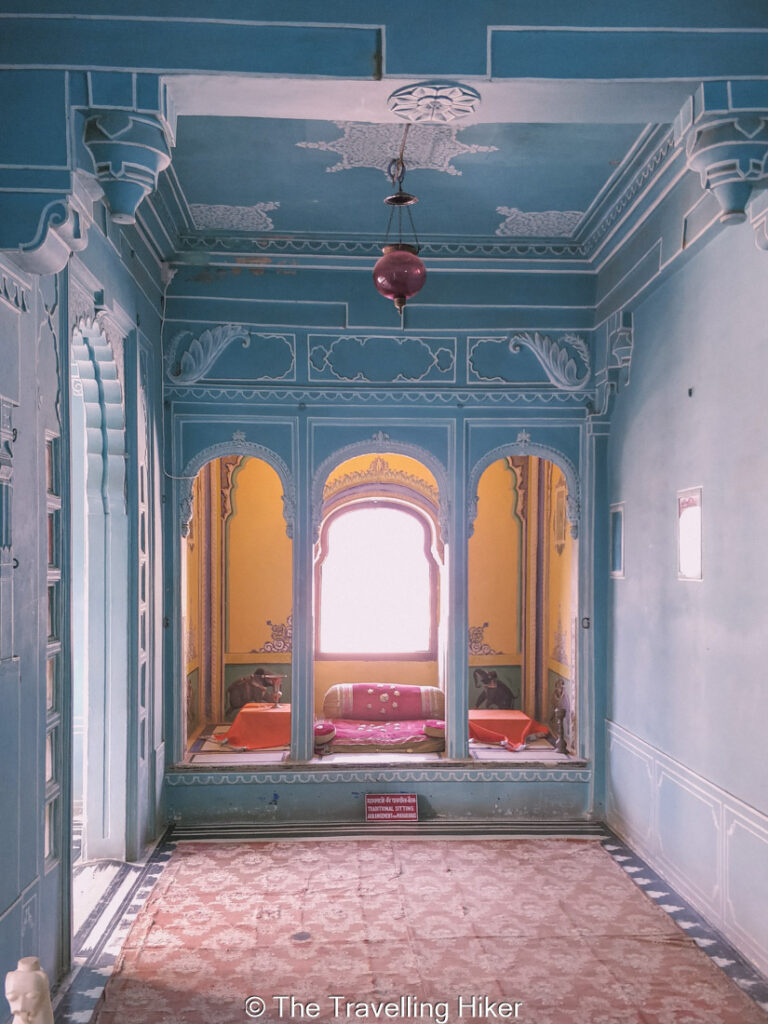
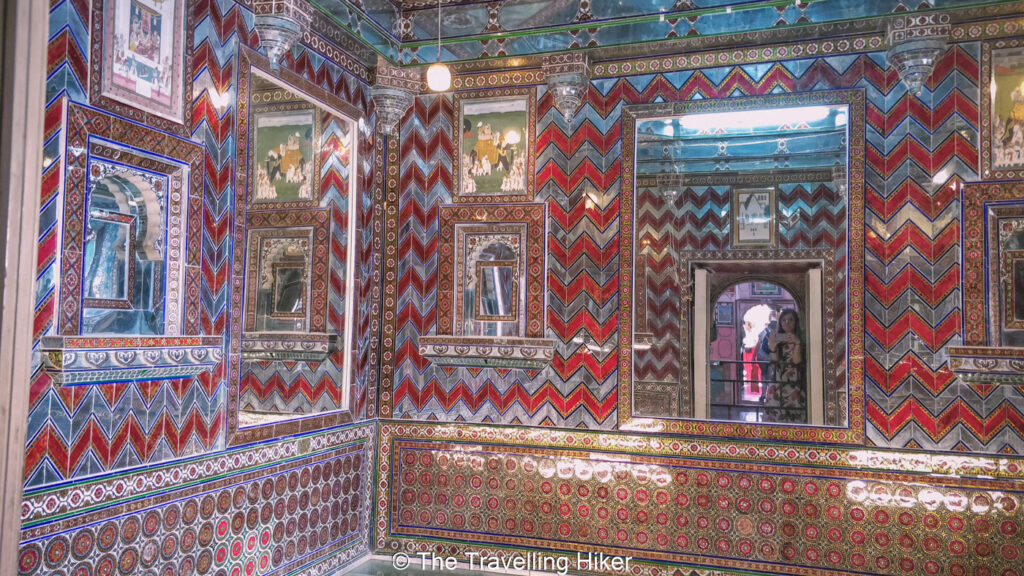
Rising majestically above the shimmering waters of Lake Pichola, Udaipur City Palace is the true heart of Rajasthan’s most romantic city. This sprawling complex of courtyards, balconies, and marble corridors offers a fascinating glimpse into Udaipur’s royal past. Built over several centuries by the Mewar dynasty, the palace beautifully blends Rajput and Mughal architecture, with intricate mosaics, mirrored walls, and sweeping terraces overlooking the lake. It’s an impressive mix of history, art, and incredible craftsmanship that feels grand.
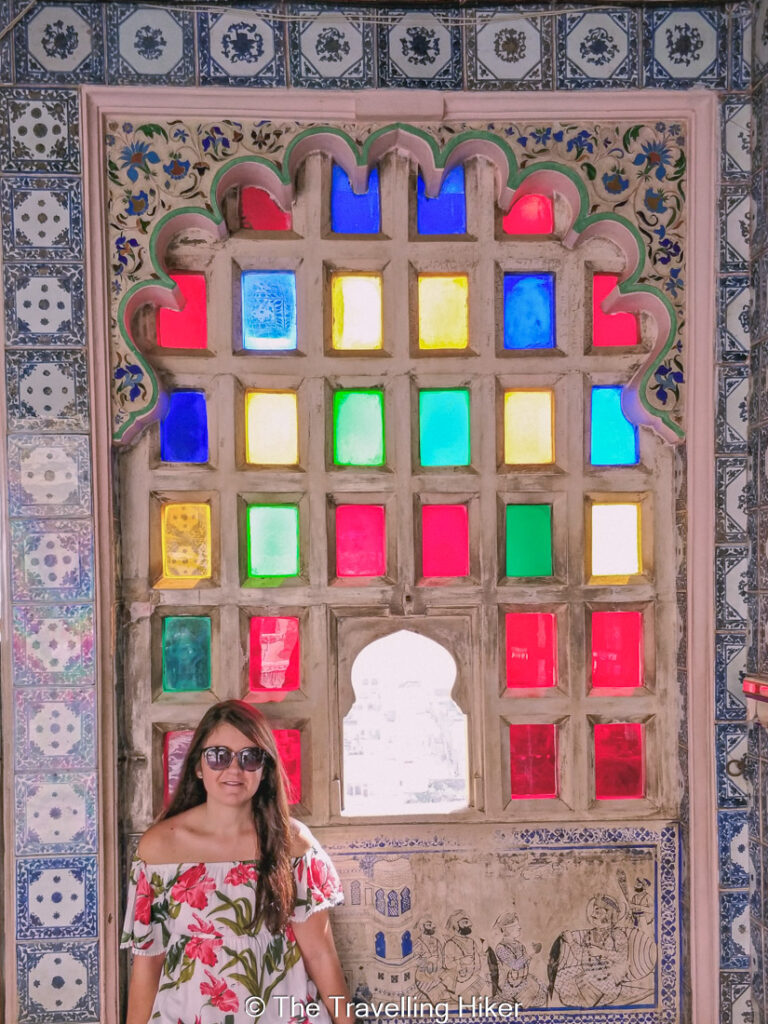
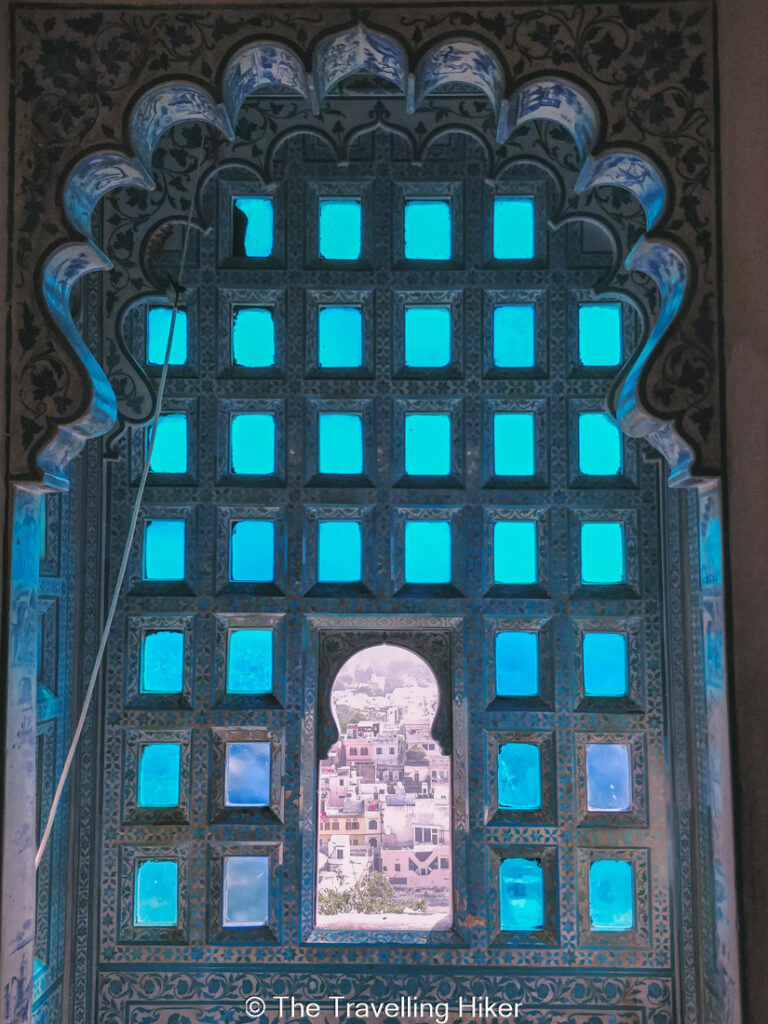
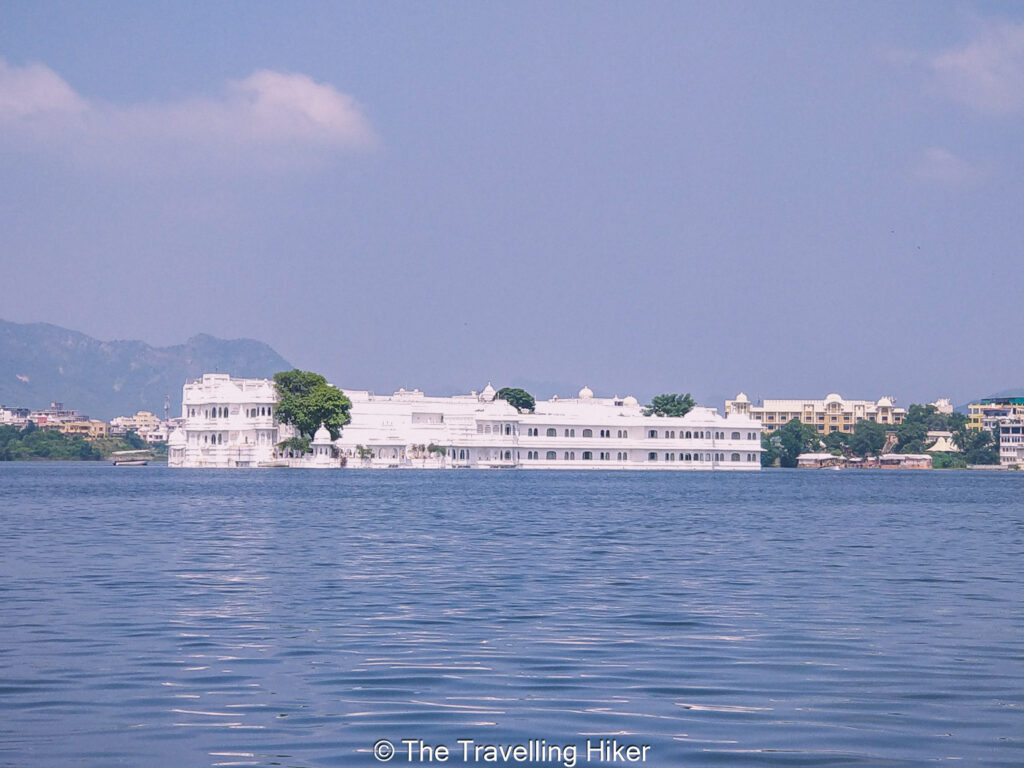
Exploring the palace is like walking through layers of time. The rooms are filled with detailed paintings, colorful glasswork, and well-preserved royal artifacts that brings the city’s heritage to life. Highlights like the Mor Chowk, or Peacock Courtyard, showcase stunning mosaics in deep blues and greens, while the terraces offer some of the best views in Udaipur. Standing there, looking out at the Lake Palace floating on the water, it’s easy to see why the city has captured travelers’ hearts for generations.
Practical Information
Price. Entrance to the palace costs 400 INR per person.
Opening Hours. The palace is open between 9:00 and 21:00.
Buy your tickets online. You can book your tickets online in advance here.
STOP 2: BOAT RIDE TO JAGMANDIR ISLAND PALACE
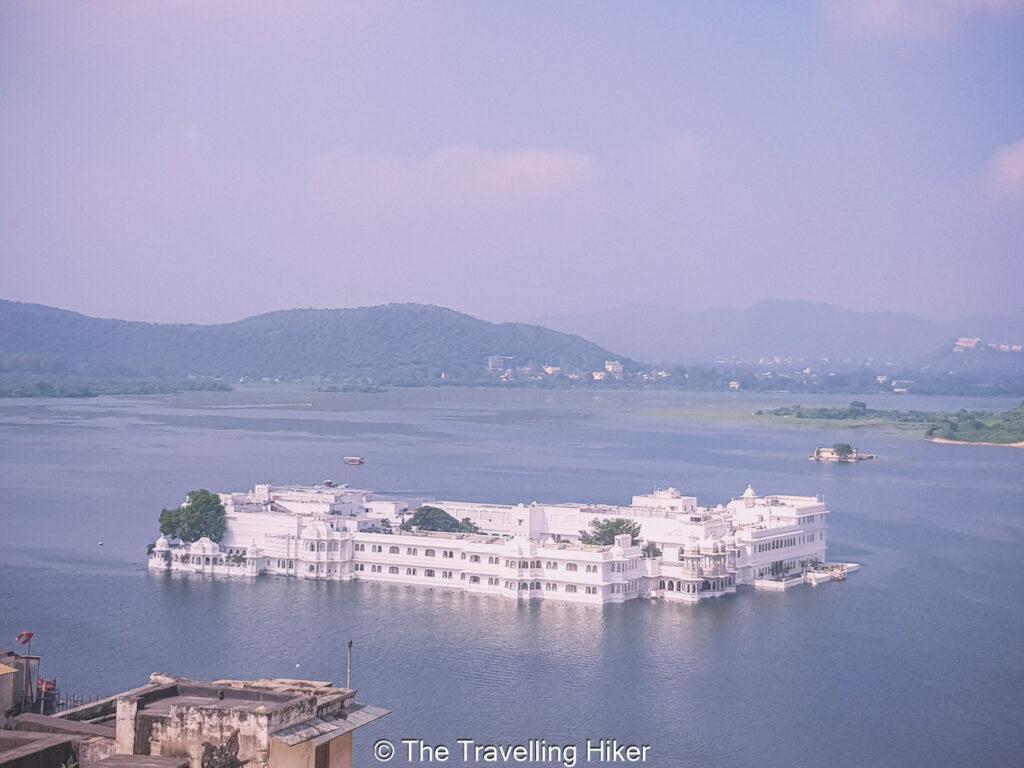
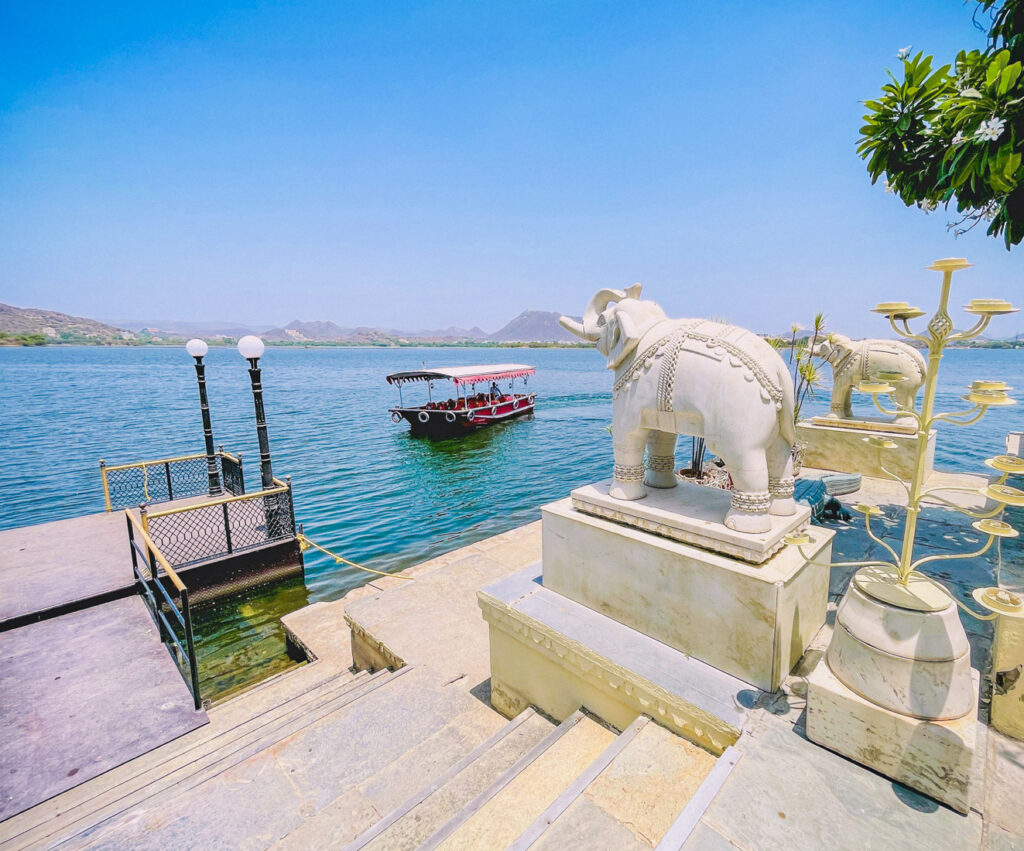
A boat ride to Jagmandir Island Palace is one of those quintessential Udaipur experiences you just can’t miss. As you glide across the calm waters of Lake Pichola, the city unfolds around you. The grand City Palace on one side, the floating Taj Lake Palace shimmering in the distance, and the Aravalli hills framing it all like a painting. It’s the perfect way to soak in Udaipur’s beauty from a different perspective.
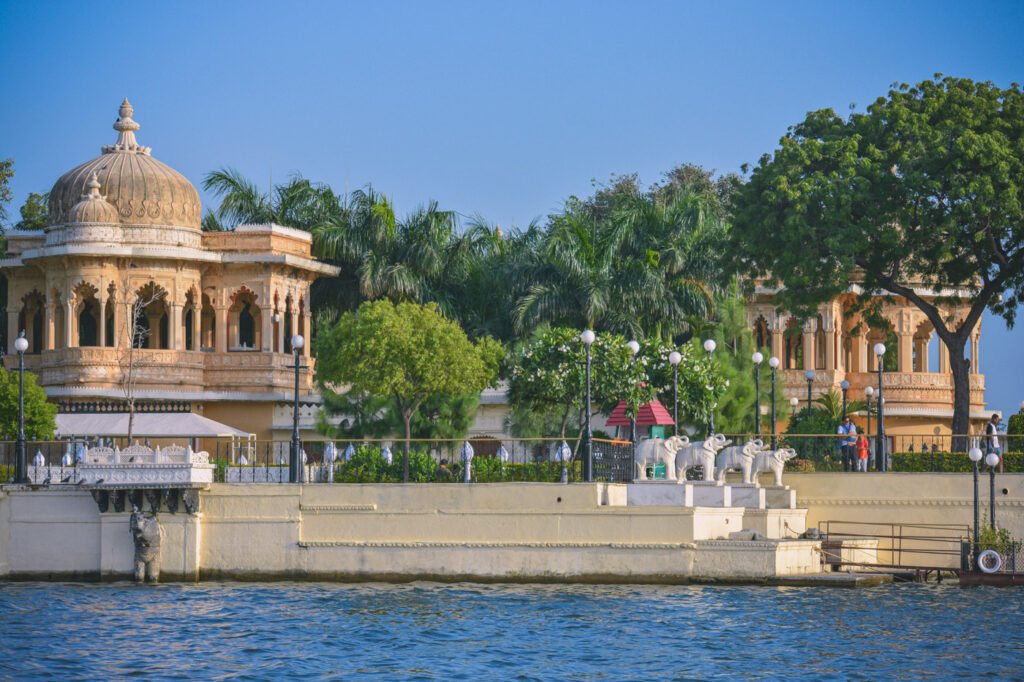
When you arrive at Jagmandir Island Palace you’ll find yourself stepping into a peaceful oasis of marble courtyards, elephant statues, and lakeside gardens. Once a royal retreat, the palace now hosts a lovely café where you can sit back with a drink while yo watch the boat sail by. The views of the city form the island are absolutely stunning.
Price. A boat ride between the Udaipur City Palace and Jagmandir Island Palace costs 600 INR per person before 14:00 and 800 INR after 14:00.
Operating hours. You can take a boat ride between these two palaces between 10:00 and 18:00.
STOP 3: SHOPPING IN THE MARKET & SUNSET IN A ROOFTOP BAR
In the afternoon, just explore the city center of Udaipur and do some shopping in the local markets. There are plenty of things that are carefully made in India and can be very interesting. We got some delicious Chai, some spices, and beautiful shoes.
Before sunset, head to a rooftop bar and enjoy some dinner while you enjoy yet another beautiful sunset.
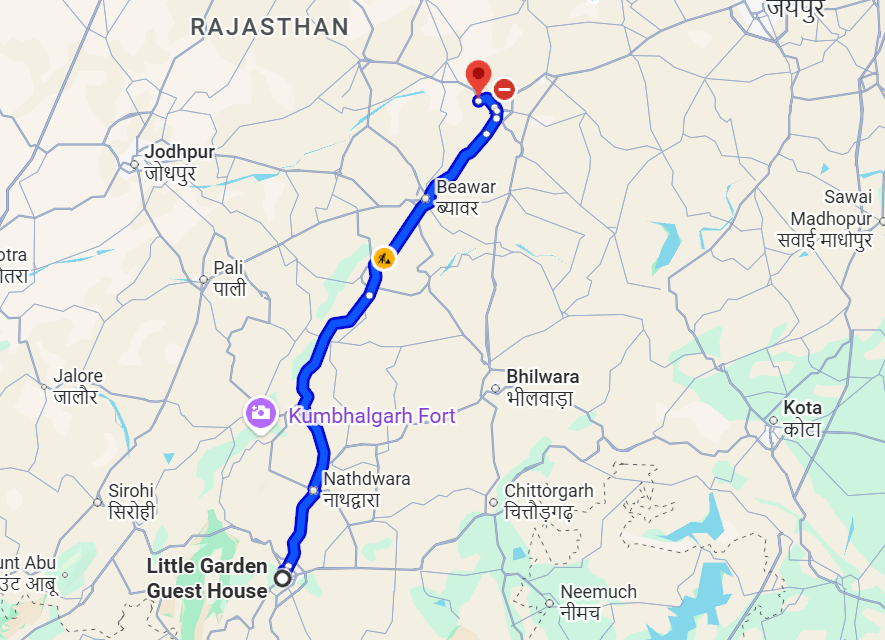
The day will begin again with a long drive to our next destination. The distance between Udaipur and Pushkar is under 300 km, but the roads in India don’t allow you to go very fast, so this drive will take more than 5 hours.
This time, we had learnt our lesson, and our car was equipped with safety belts, so we spent the ride relaxing and enjoying the view from the window.
STOP 2: EXPLORE PUSHKAR
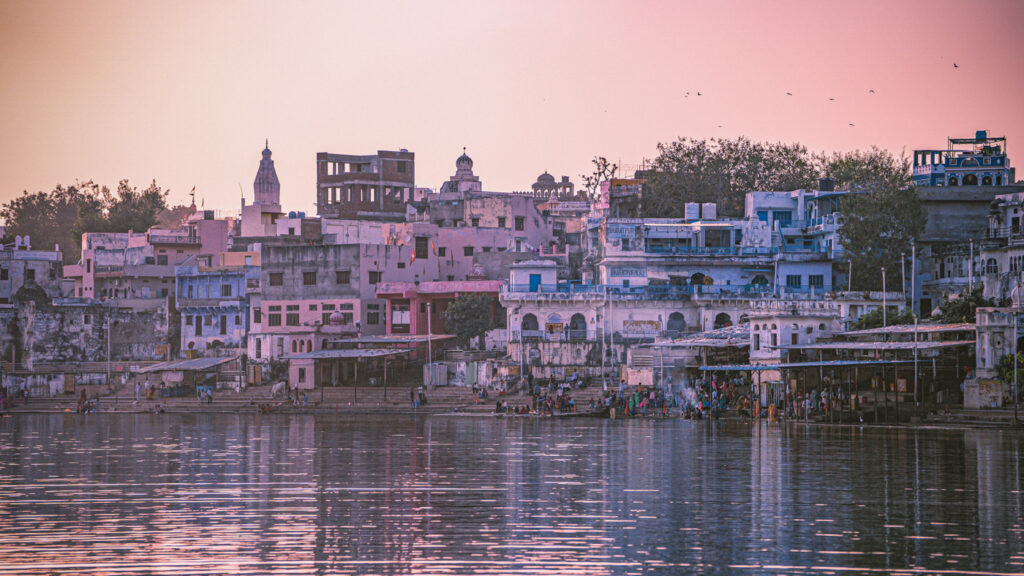
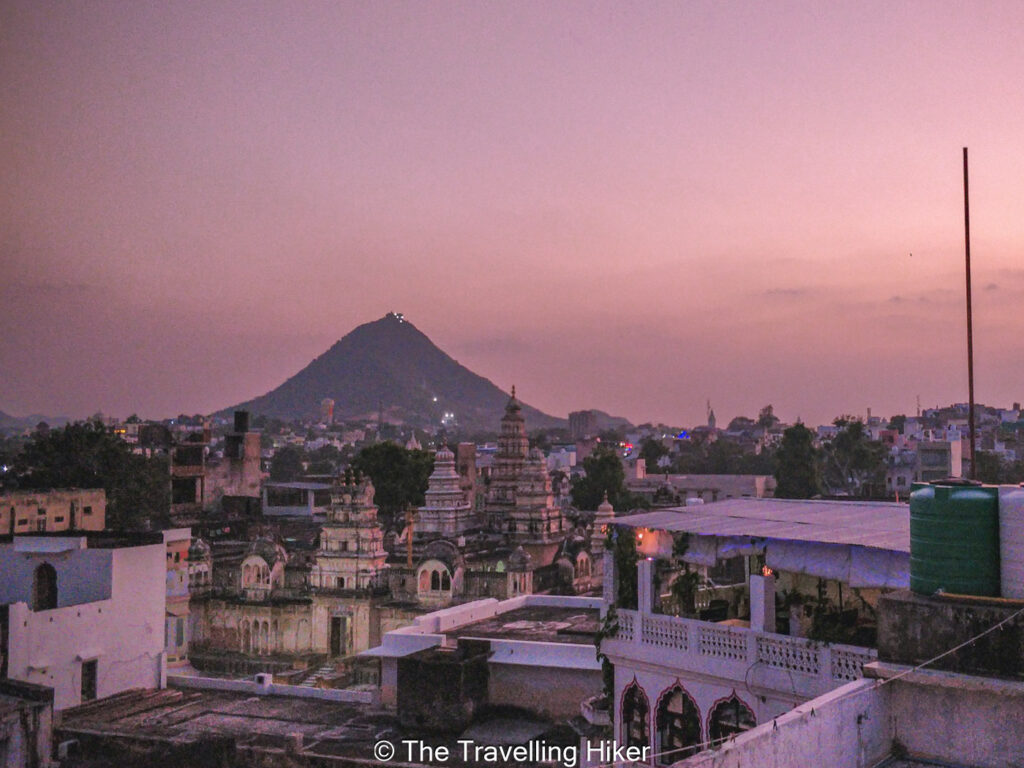
After checking into our hotel, it was time to explore the small city of Pushkar. Located at the edge of the Thar Desert, Pushkar is a small town with a big personality, with equal parts spiritual, bohemian, and wonderfully laid-back. The city is best known for its sacred lake, surrounded by ghats where pilgrims come to bathe and pray, and for being home to one of the few temples in the world dedicated to Lord Brahma. But Pushkar’s charm goes beyond its religious roots. I recommend you wander through its narrow streets, and you’ll find colorful markets filled with handmade jewelry, textiles, and spices.
In the evenings, the town takes on a different rhythm. Locals and travelers gather by the ghats to watch the sunset reflect off the lake, while the sound of temple bells and devotional songs fills the air.
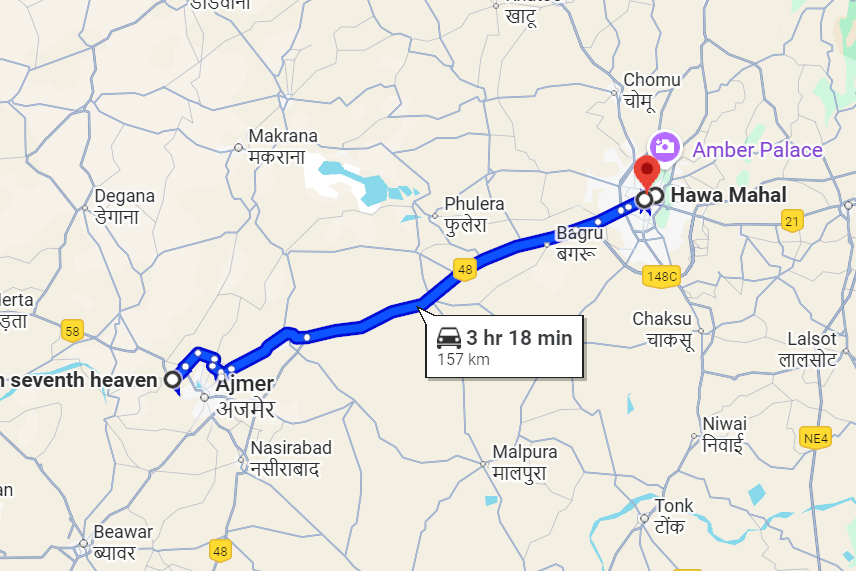
After breakfast, it was time to get in another car and head to Jaipur, also know as the Pink City and the last city we visited in the Rajasthan region. The drive was approximately 3 hours long, and we spent it relaxing or chatting with our driver.
We arrived in Jaipur before noon and went directly to check into our hotel and for a relaxed lunch in one of Jaipur’s rooftop restaurants.
STOP 2: HAWA MAHAL
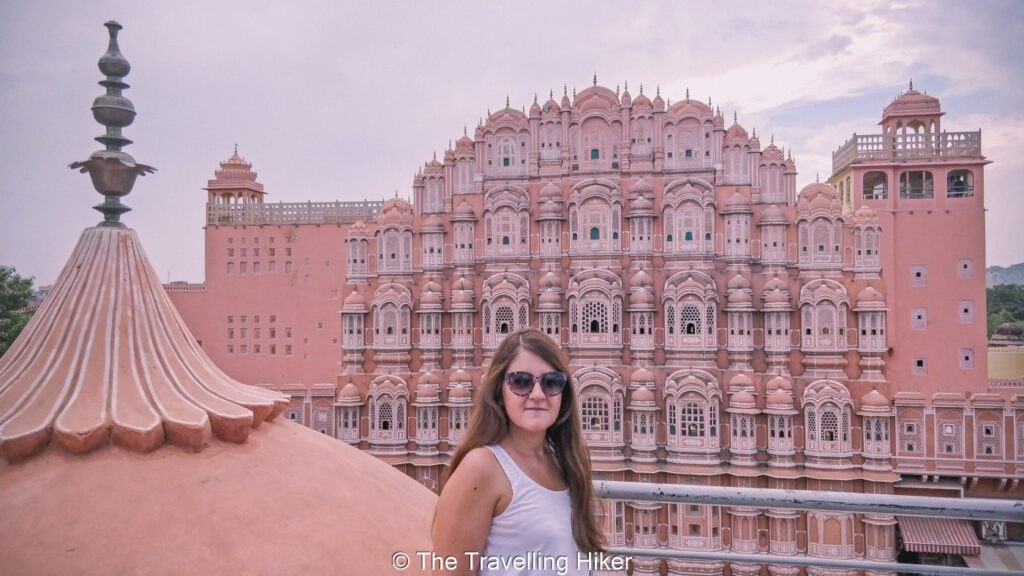
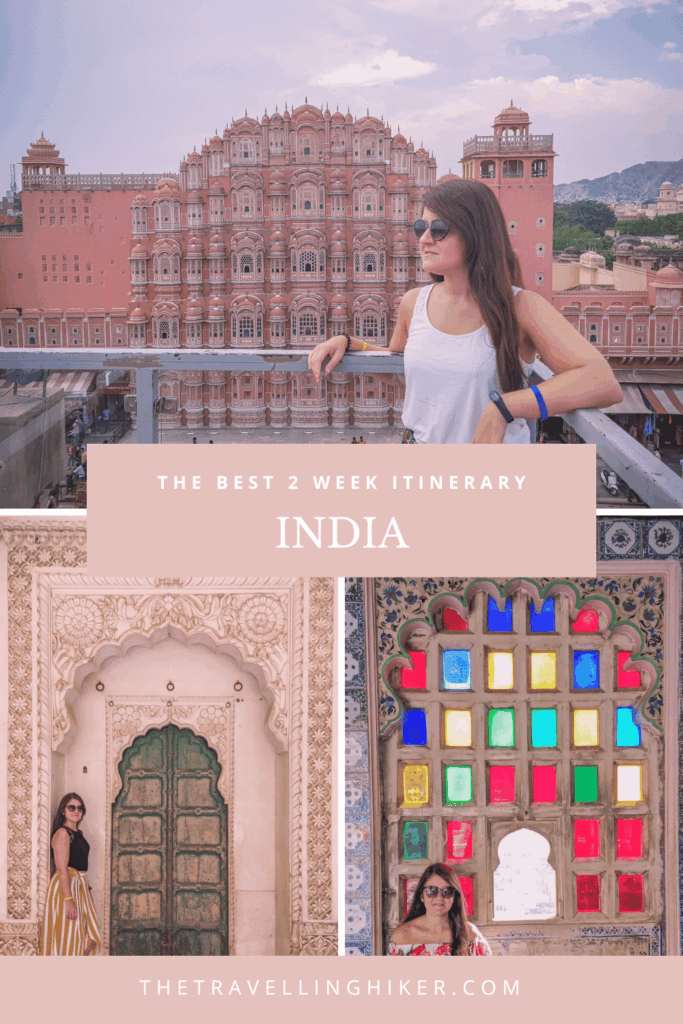
After lunch, we visited the Hawa Mahal, also known as the “Palace of the Winds”, one of India’s most iconic landmarks. It is mostly famous for its honeycomb-like façade of pink sandstone and nearly a thousand tiny windows, which look almost like a delicate piece of lace carved in stone.
Hawa Mahal was built in 1799 and designed so royal women could watch street life and festivals below without being seen, a clever blend of beauty and purpose.
Tip: Before visiting the Hawa Mahal, head to The Tattoo Cafe & Lounge just across the street. From its terrace you will get the best views of the palace.
Inside, you’ll find narrow corridors and breezy passages that live up to the palace’s name. On the upper floors, you’ll get lovely views over Jaipur’s bustling bazaars and the distance City Palace.
Practical information
Price. Tickets to visit the Hawa Mahal cost 500 INR per person.
Opening Hours. The Palace of the Winds is open daily between 9:00 and 16:30.
STOP 3: JAIPUR'S BAZAARS
The rest of our day, we spent it exploring the bazaars in Jaipur. It is fascinating to walk between the different shops and see how people live and shop here.
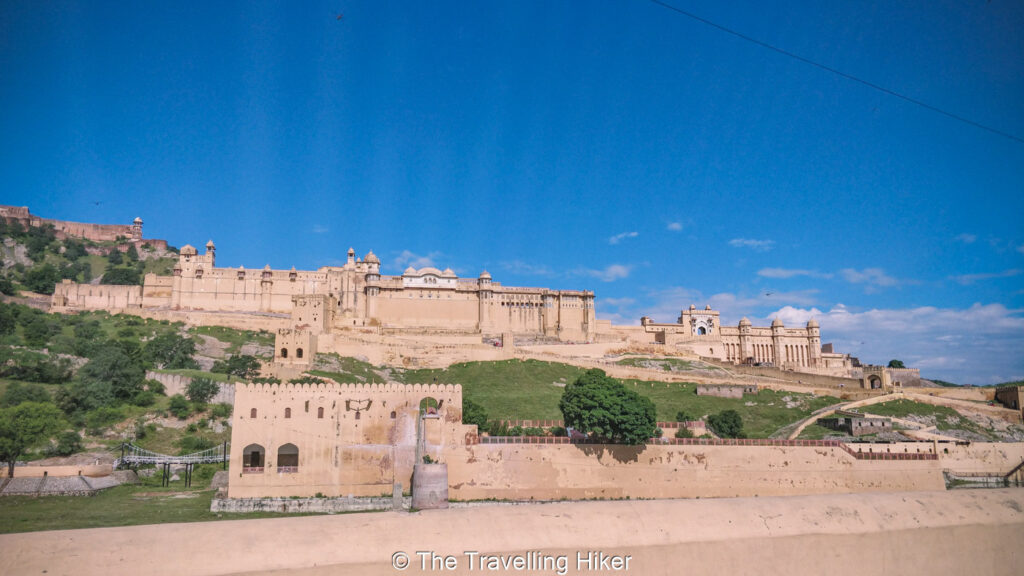
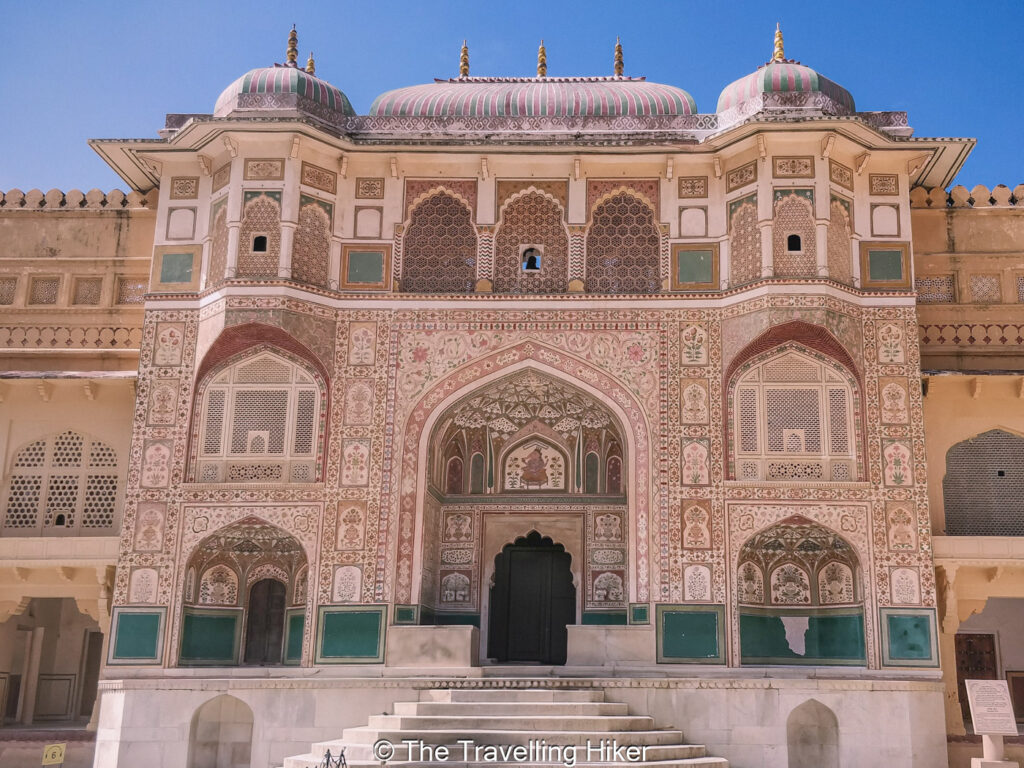
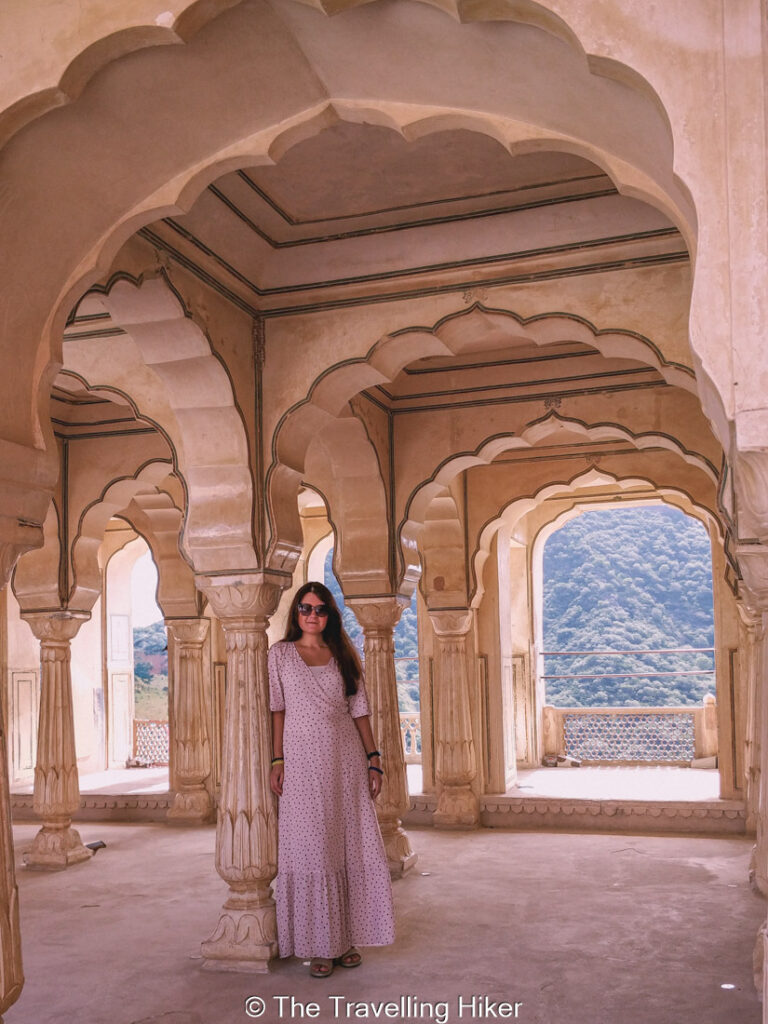
We began our day by visiting the Amber Fort, a masterpiece of Rajput architecture and one of Jaipur’s most fascinating historical sites. It was builts in the 16th century by Raja Man Singh and it served as the main residence of the Rajput rulers before Jaipur was founded. It’s a vast complex of courtyards, palaces, and passageways made of sandstone and white marble. Inside the fort, you’ll find a mix of defensive strength and artistic detail: massive gates and ramparts give way to elegant halls decorated with intricate carvings, frescoes, and latticed windows.
Your visit to the fort will be completed with the breathtaking views of the surrounding hills and the defensive walls snaking across them.
Practical information
Price. Tickets to visit the Amber Fort cost 500 INR per person.
Opening hours. The fort is open between 7:00 and 21:00.
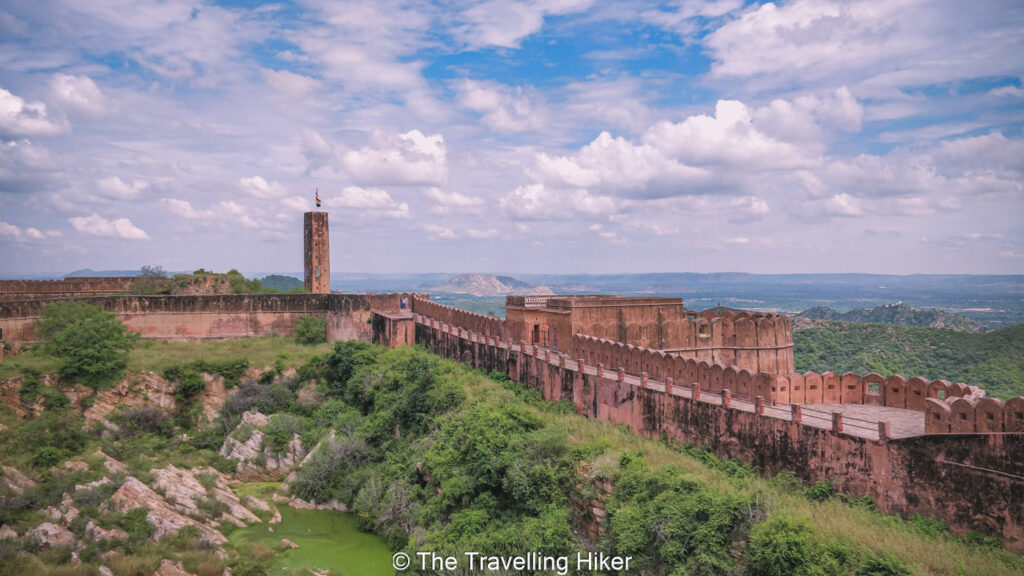
STOP 2: NAHARGARH fort
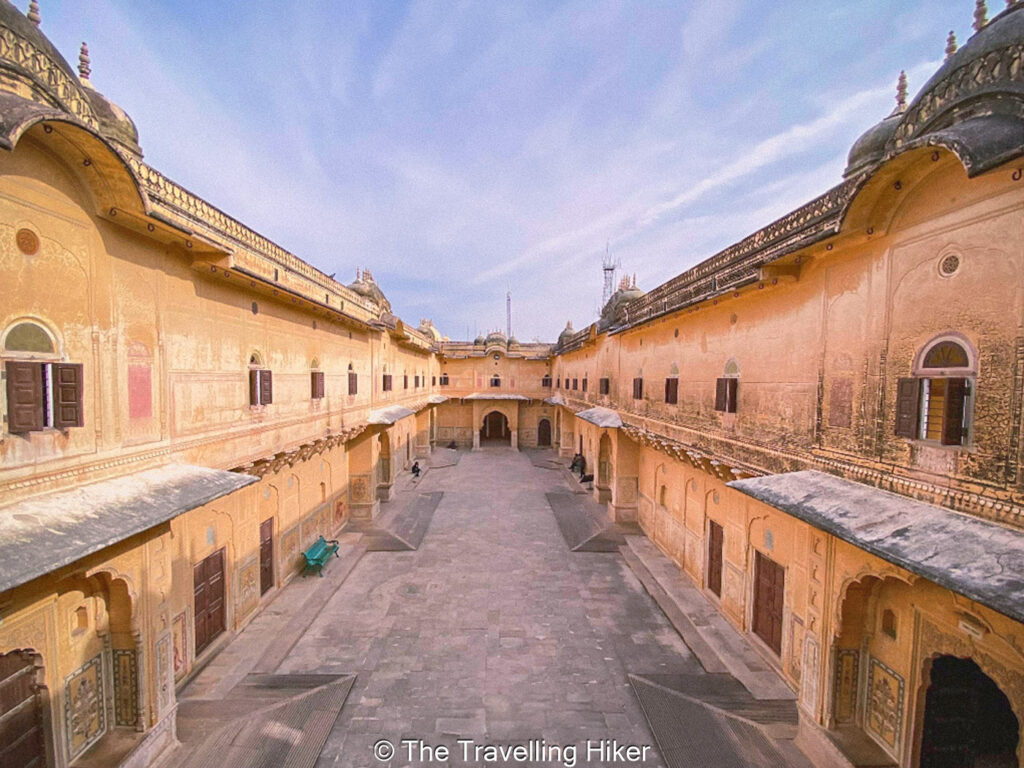
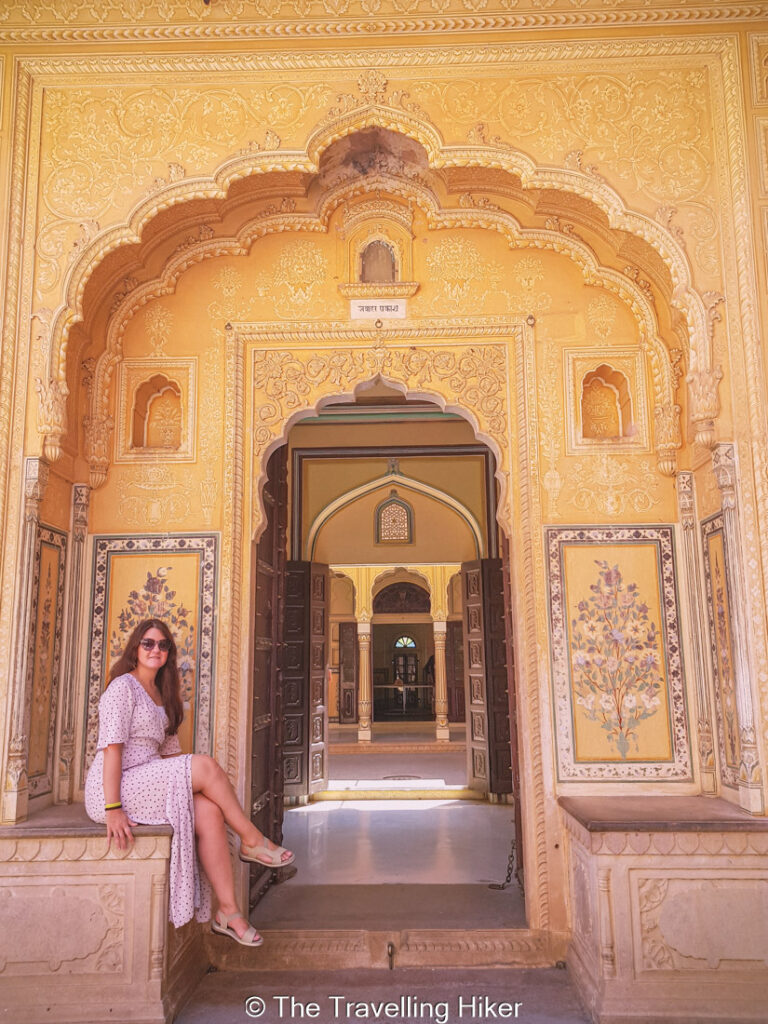
Our next stop was Nahargarh Fort, another impressive fort overlooking Jaipur. It was built in the 18th century by Maharaja Sawai Jai Singh II as part of the city’s defense ring. The fort’s name, which means “Abode of Tigers”, hints at its commanding presence, and its design beautifully combines strength with style.
Within its walls are ornate living quarters, including the Madhavendra Bhawan, a series of identical suites built for the king and his queens, all connected by winding corridors and decorated with delicate frescoes. The architecture is both practical and artistic, showcasing the blend of Rajput and European influences that defined Jaipur’s royal era.
Practical Information
Price. Tickets to visit the fort cost 200 INR per person (price in 2025).
Opening hours. The fort is open daily between 10:00 and 22:00.
STOP 3: PATRIKA GATE
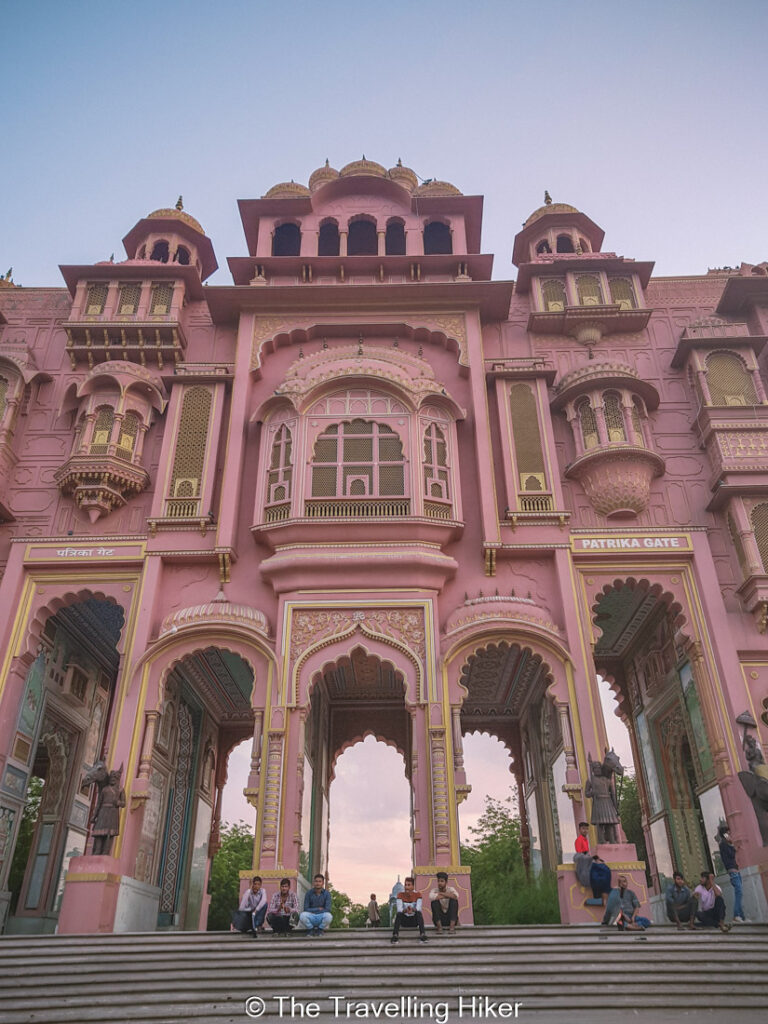
Finish the day by visiting one of Jaipur’s most photogenic landmarks Patrika Gate, located in the Jawahar Circle. Built as a grand gateway celebrating Rajasthan’s heritage, it’s not an ancient monument but feels every bit as majestic. The exterior, with its pink sandstone arches and intricate detailing, mirrors the architectural style that gives Jaipur its nickname, The Pink City.
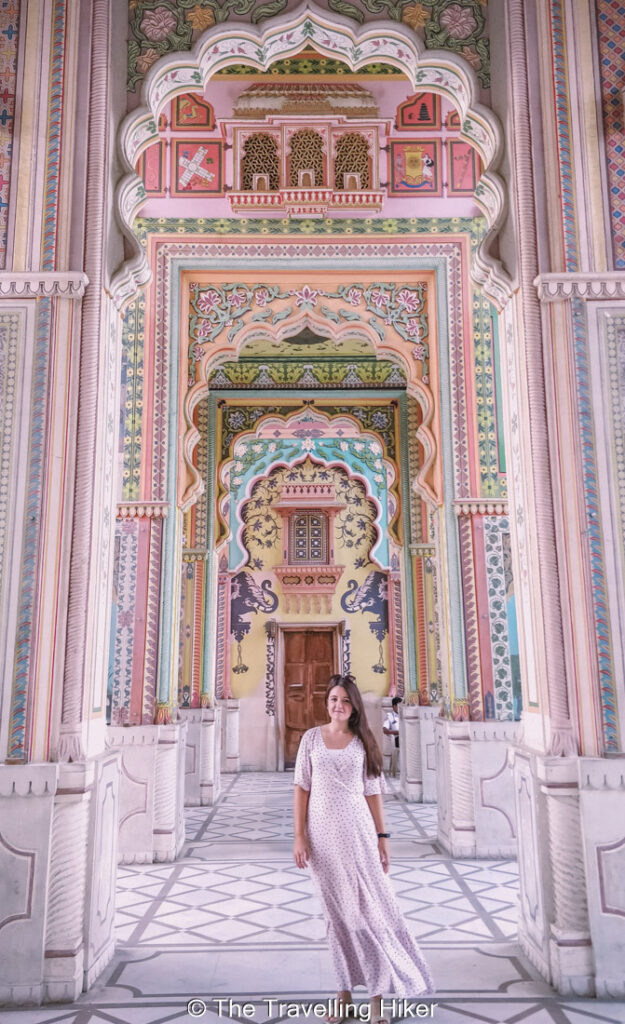
Step inside, and you’ll find a dazzling corridor of painted archways, each one covered in vibrant murals depicting scenes from Rajasthan’s history, culture, and royal past.
DAY 10 - JAIPUR
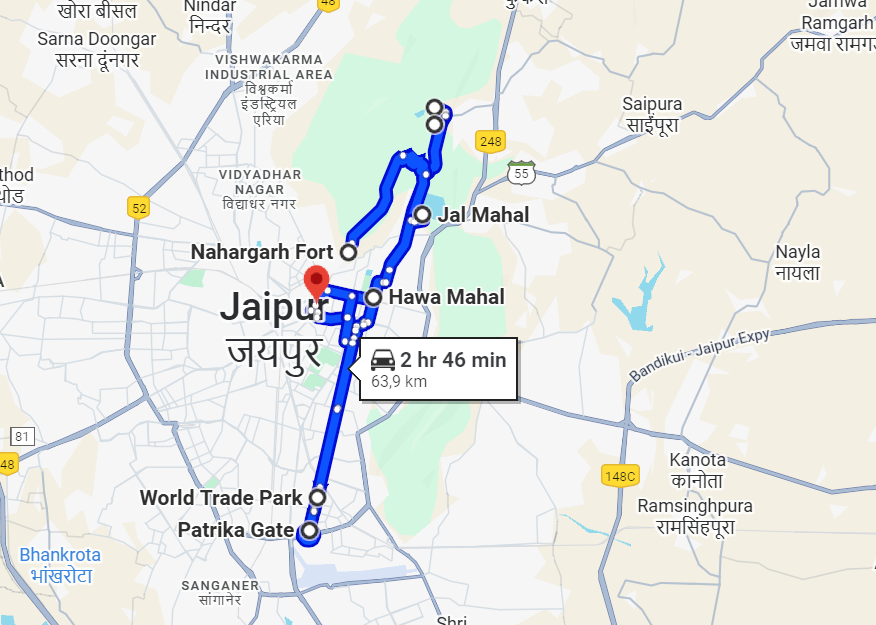
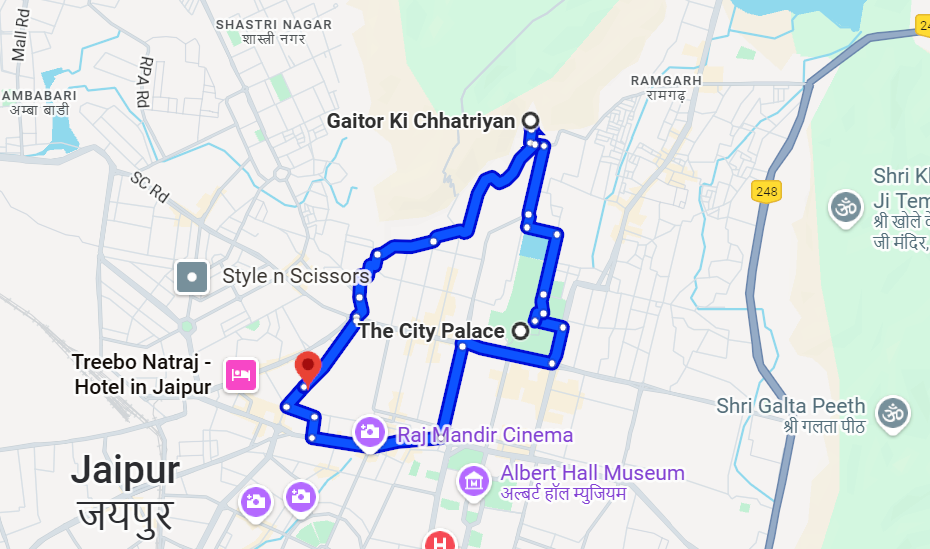
Route: Driving around Jaipur (Distance: 10,4 km; Time: 41 minutes)
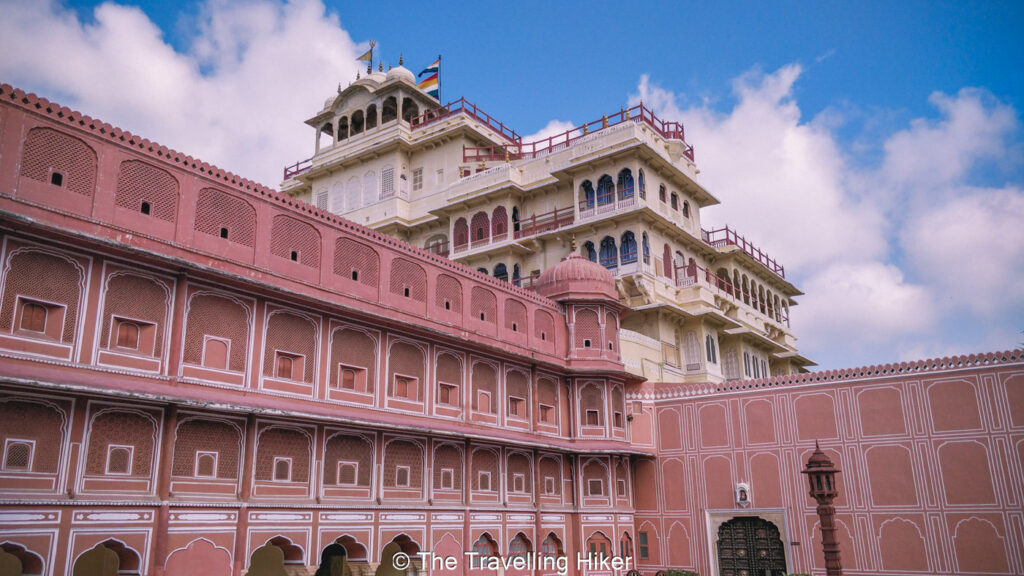
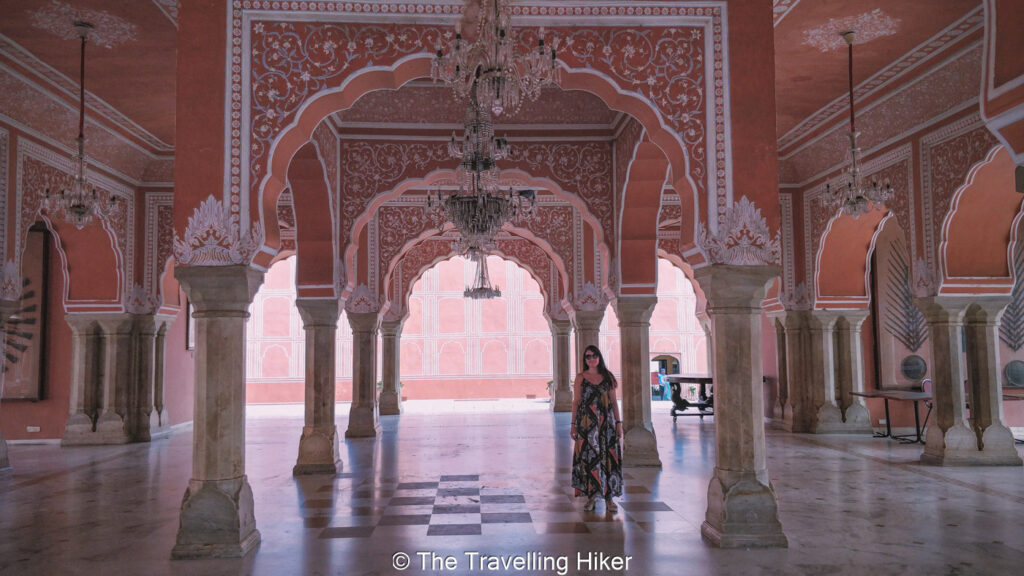
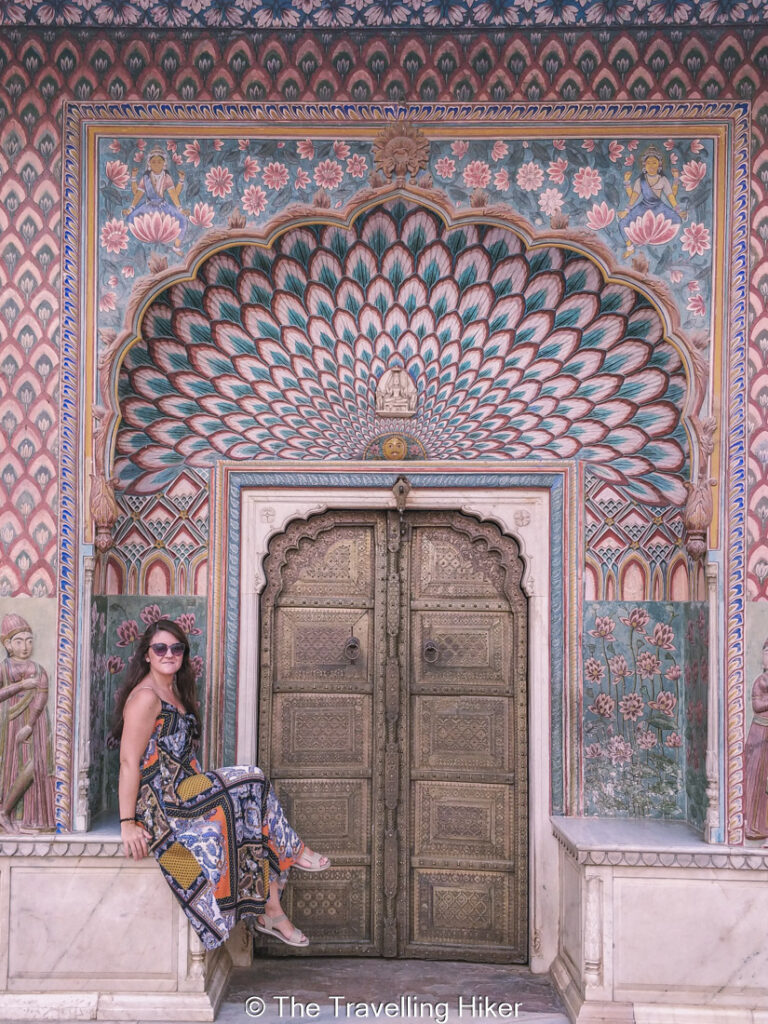
The City Palace is located right in the heart of the Pink City. Built in the 18th century by Maharaja Sawai Jai Singh II, the founder of Jaipur, the palace is a beautiful blend of Rajput, Mughal, and European architectural styles. Its grand courtyards, marble archways, and intricatey painted doorways make it one of the most elegant palaces in Rajasthan. The complex still serves as the residence of Jaipur’s royal family.
Inside, the palace you can find a display of royal costumes, antique weapons, and delicate handcrafts. The highlights are the Peacock Gate and Chandra Mahal (the royal family rooms), which showcase incredible craftsmanship and color.
Practical Information
Price. Tickets to visit the Jaipur City Palace cost 1000 INR per person. If you want to visit the Chandra Mahal, you have to book a separate tour that costs 5000 INR.
Opening Hours. The palace is open daily between 9:00 and 17:30.
Book your tickets online. You can buy your tickets online in advance here. Tickets for the Chandra Mahal can only be bought at the entrance.
STOP 2: JANTAR MANTAR
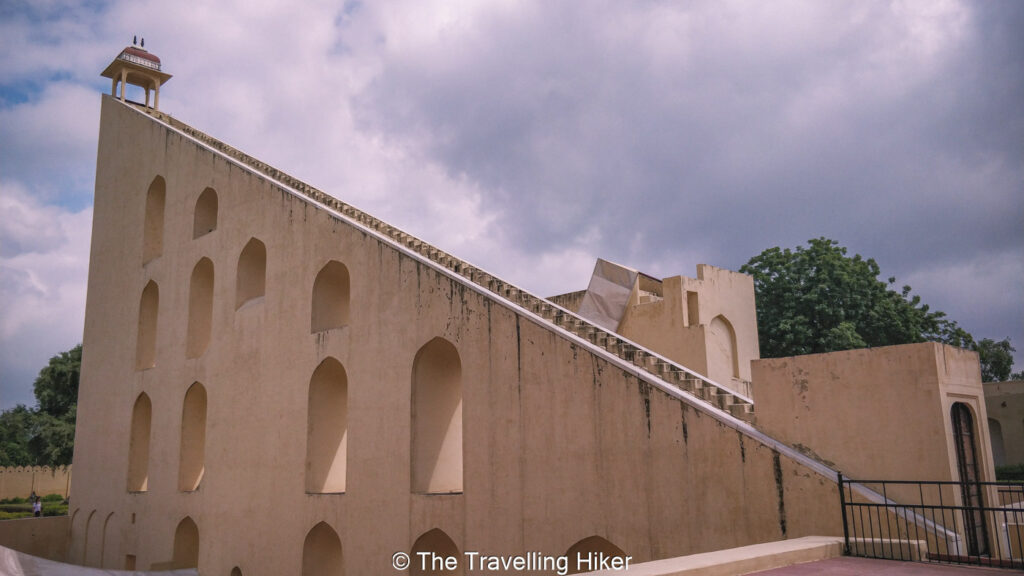
Just a short walk from the City Palace, Jantar Mantar is one of Jaipur’s most intriguing sites. It’s a place where science and art meet under the Rajasthani sun. Built in the early 18th century by the visionary Maharaja Sawai Jain Singh II, this UNESCO World Heritage site is an open-air observatory filled with giant stone instruments designed to measure time, track stars, and predict eclipses.
The sheer precision and scale of these astronomical structures are fascinating, especially when you realize they were created a long before modern technology. Wandering through Jantar Mantar feels a bit like stepping into a giant sundial playground.
STOP 3: GAITOR KI CHHATRIYAN
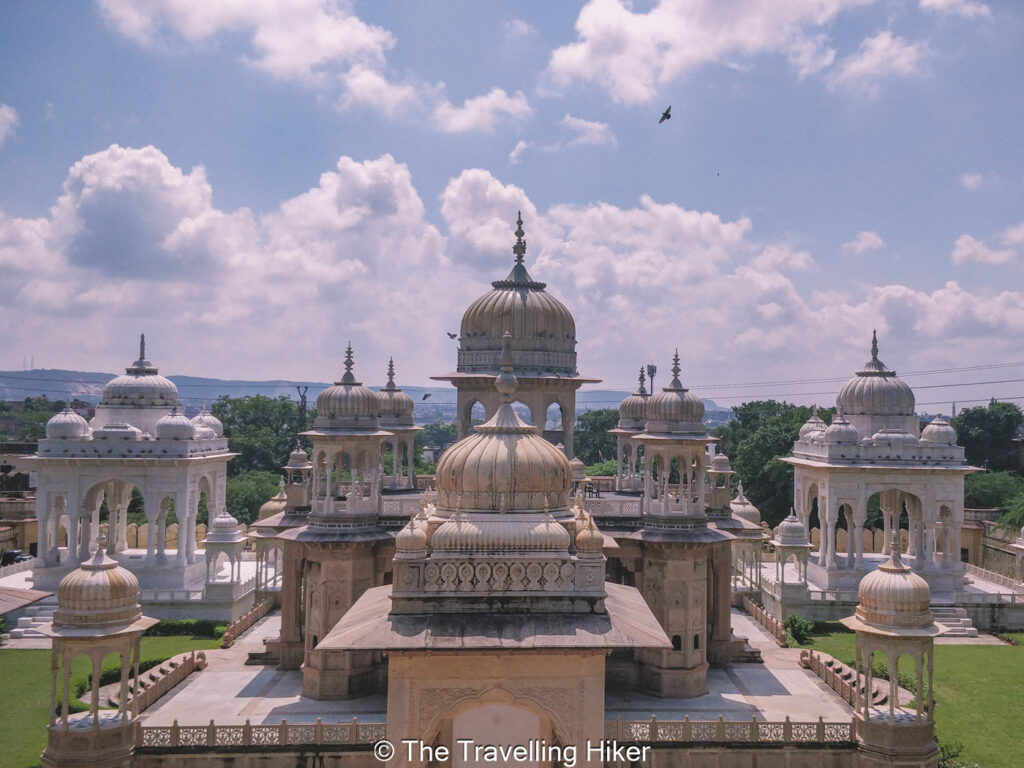
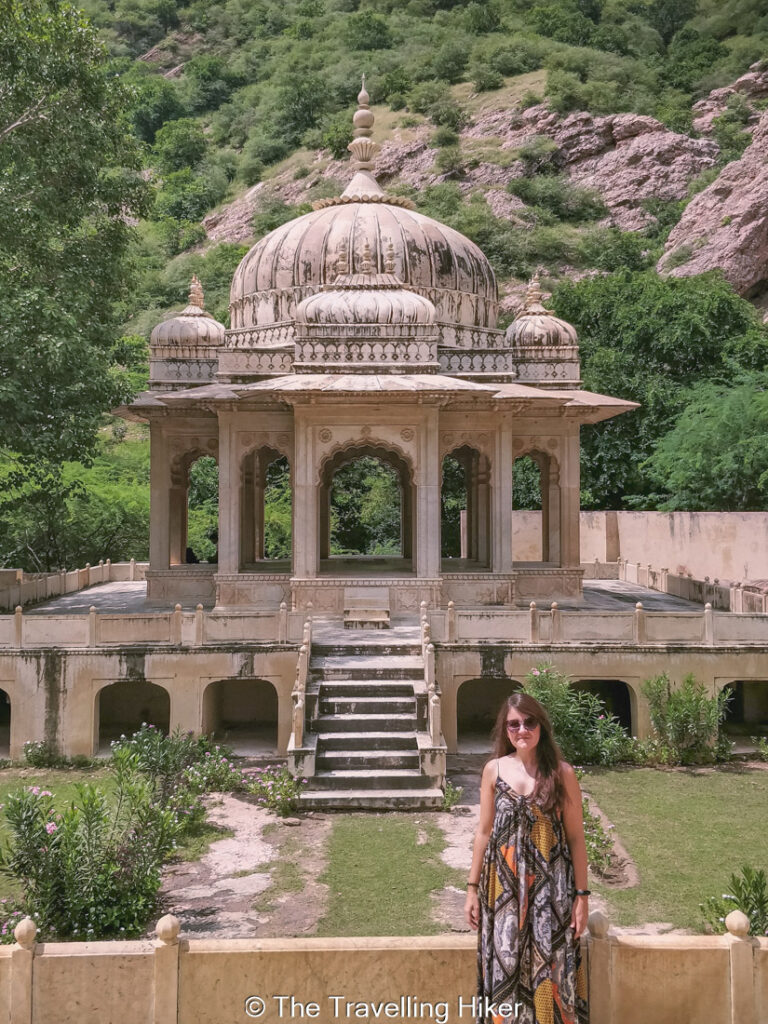
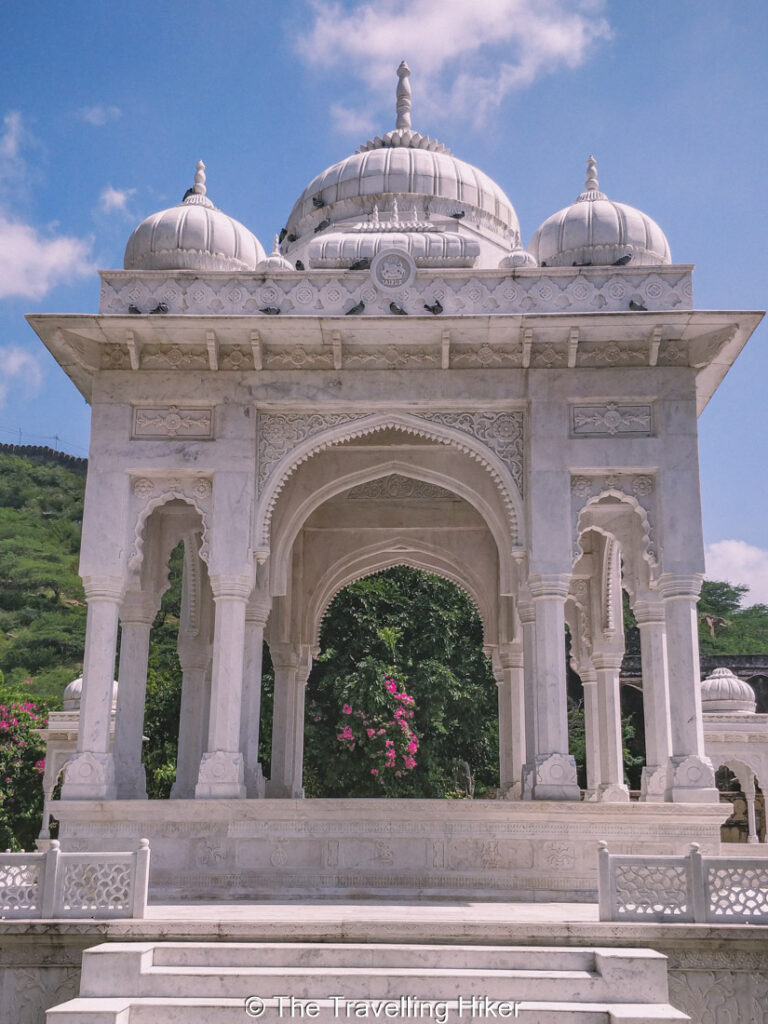
Tucked away on the outskirts of Jaipur, Gaitor Ki Chhatriyan is one of the city’s most peaceful and underrated gems. This royal cremation ground is where the Maharajas of Jaipur were laid to rest, and it’s filled with beautifully carved marble cenotapht (or chhatris) that honor their memory.
Each one is unique, adorned with delicated carvings, domes, and intricate latticework that reflect the artistry of the era. Surrounded by hills and away from the city’s bustle, it’s a wonderfully calm spot to wander, soak in the details, and appreciate the quieter side of Jaipur’s royal history. The view of Nahargarh Fort in the distance only adds to charm, making it a favorite for travelers seeking a mix of history, beauty, and serenity.
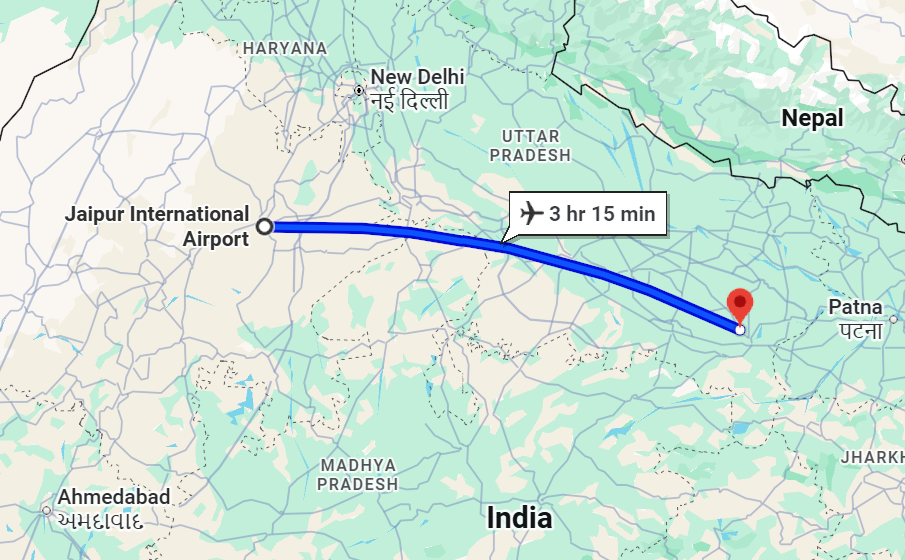
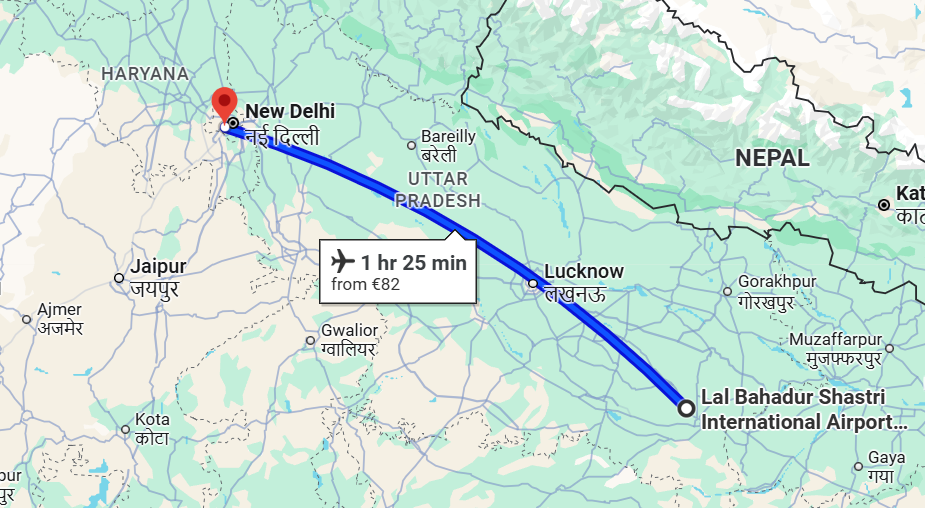
The 10th day of the trip is time to leave Rajasthan and fly to the ancient city of Varanasi. After breakfast in the hotel, it’s time to head to the airport to do the check-in. The flight between Jaipur and Varanasi takes approximately 3 hours so, you’ll spend the morning on the air.
Varanasi, set along the sacred Ganges River, this city is a mesmerizing mix of chaos, color, and deep devotion. From dawn boat rides watching pilgrims perform morning rituals on the ghats to the evening Ganga Aarti, when lamps and chants light up the riverfront, every moment feels rich with tradition and meaning.
STOP 2: GANGA AARTI CEREMONY
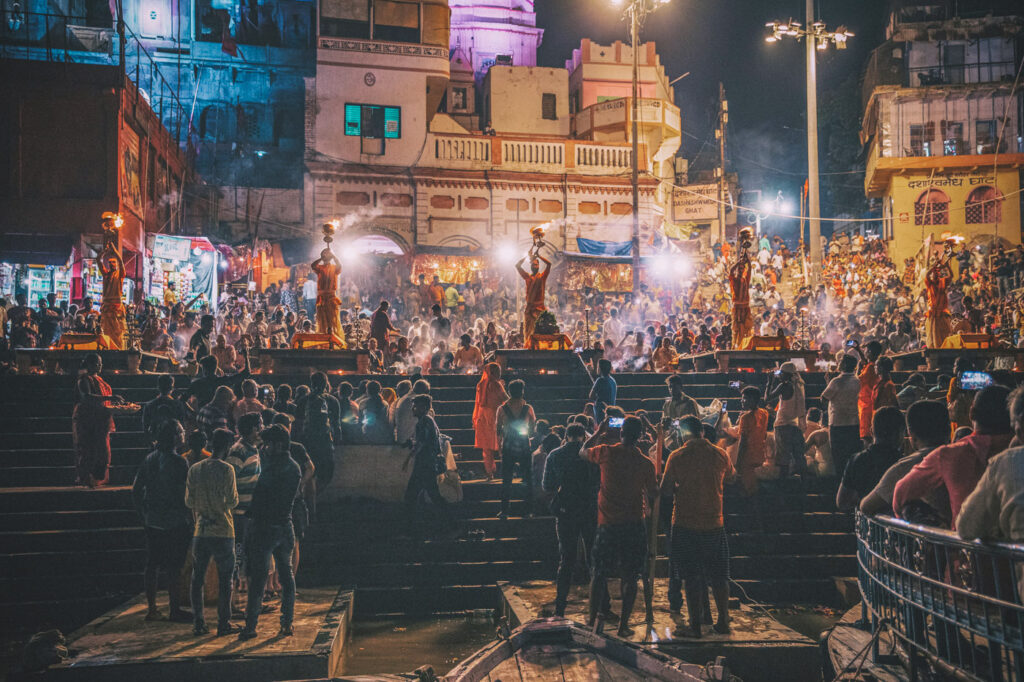
After checking in at the hotel, we headed to the Ganges River to witness the Ganga Aarti ceremony. The Ganga Aarti is a beautiful and deeply spiritual ritual performed every evening along the banks of the River Ganges, especially famous at the Dashashwamedh Ghat in Varanasi. It’s a ceremony that honors the sacred river, considered a goddess in Hinduism, and symbolizes gratitude, purification, and the cycle of life.
As the sun sets, priests dressed in traditional saffron robes takes their places on raised platforms facing the river. They perform a choreograph series of offerings using large brass lamps, incense, conch shells, and rhythmic chants. The air fills with the sound of bells, the scent of flowers and sandalwood, and the glow of hundreds of small oil lamps floating on the water.
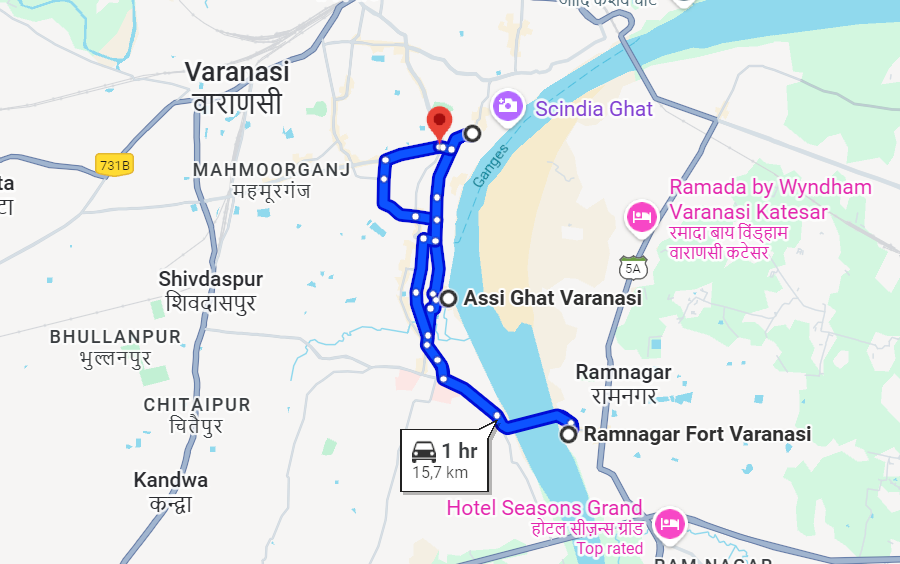
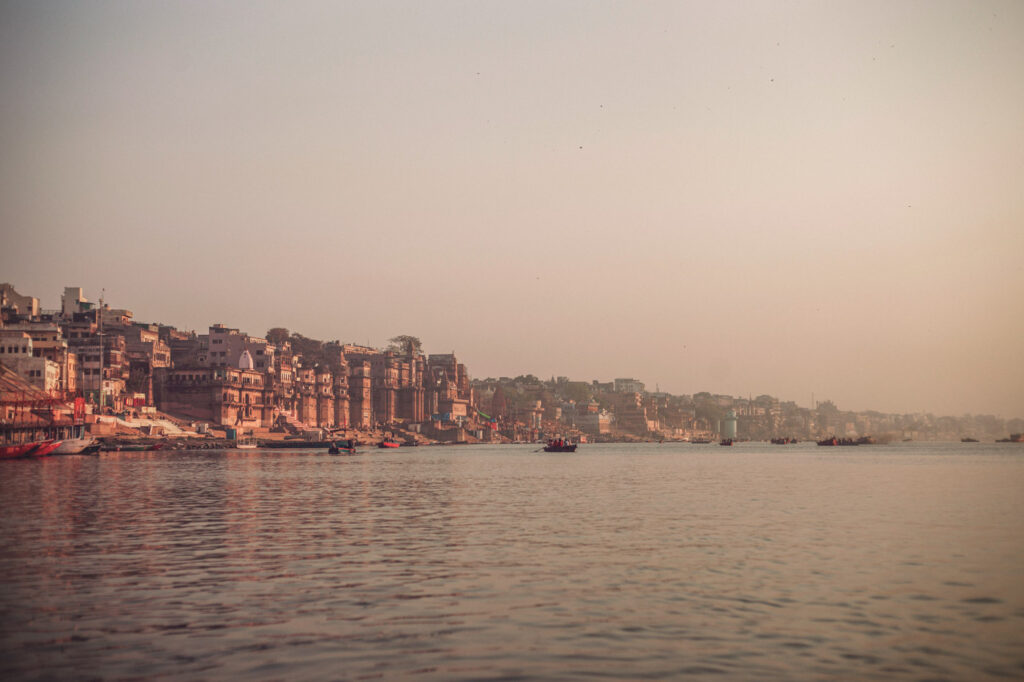
We began our day in Varanasi by going on a sunrise boat tour in the River Ganges. The boat tour starts from the famous Assi-Ghat where every morning the Subah-e-Banaras ceremony takes place (in English “Morning of Banaras“). This is a peaceful and uplifting celebration of life, spirituality, and tradition. Unlike the Ganga Aarti, this ceremony has a calm, meditative atmosphere.
After the Subah-e-Banaras ceremony, you will sail along the Ganges, from where you will be able to see more than 60 ghats, where all the cremation rituals take place.
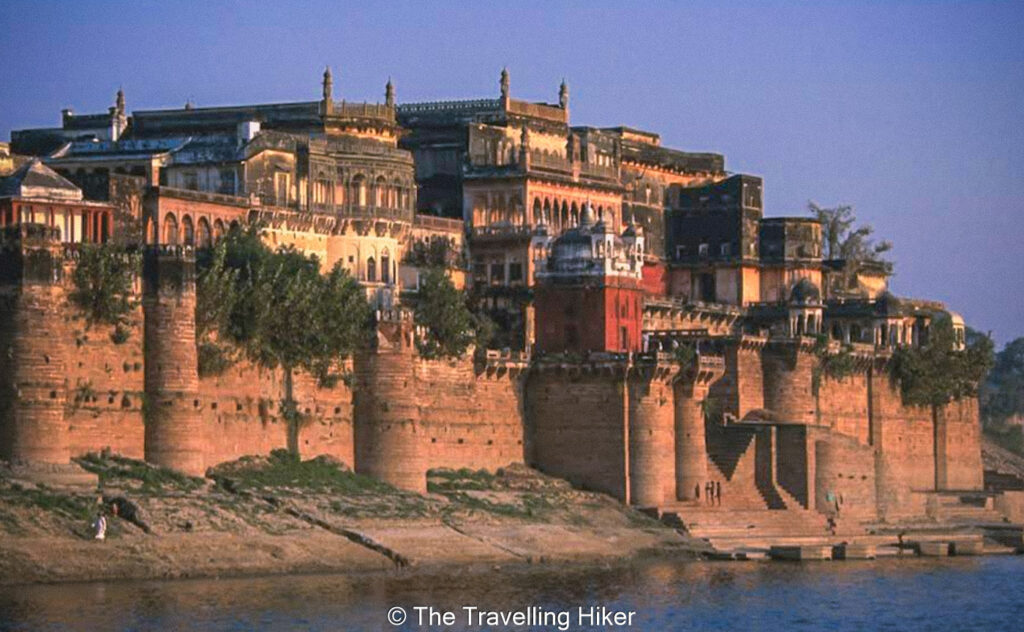
Across the river from the busy ghats of Varanasi stands Ramnagar Fort, a quiet reminder of the city’s royal past. Built in the 18th century by Maharaja Balwant Singh, this sandstone fort was once the official residence of the Kashi Naresh, the king of Varanasi. Its grand courtyards, carved balconies, and vintage charm make it a fascinating place to explore.
From the fort’s riverside walls, you get a peaceful view of the Ganges and the ghats in the distance.
Practical information
Price. The entry ticket to visit the fort costs 150 INR per person.
Opening Hours. The fort is open between 10:00 and 17:00.
STOP 3: Kashi VisHwanath Temple
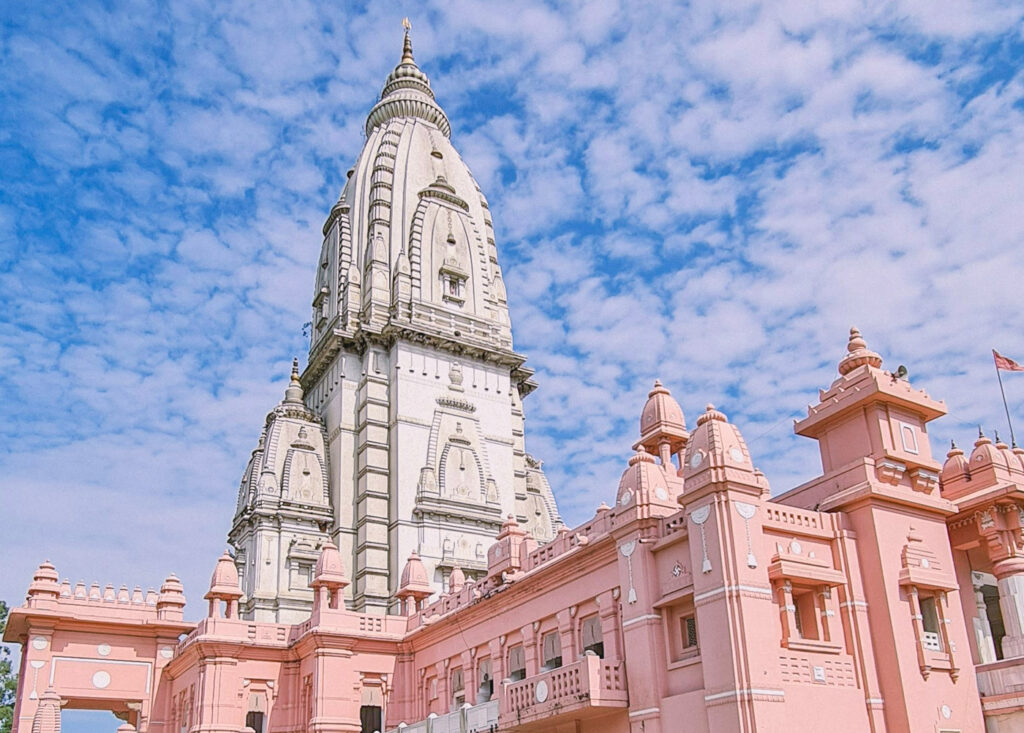
Next head to Kashi Vishwanath Temple, one of the most sacred temples in India and the spiritual center of Varanasi. Dedicated to Lord Shiva, it stands as an architectural gem with its gleaming gold-plated spire and intricate carvings.
Inside the temple, the main shrine houses the Jyotirlinga of Shiva, one of the twelve most sacred in India, attracting devotees who come to perform rituals and offer prayers. Though the temple is often busy, the blend of sacred architecture, rhythmic chants, and flickering oil lamps creates a mesmerizing atmosphere that truly captures the essence of Varanasi’s spiritual legacy.
Practical information
Price. This temple can be visited for free.
Opening hours. The temple is open between 4:00 and 19:00.
It’s a new day and it’s time to hop on another plane to Delhi. The flight from Varanasi takes approximately 2 hours, so after an early morning flight we arrived in Delhi before noon.
We checked into our hotel for one night in Delhi and set into visiting this new city in India.
STOP 2: LOTUS TEMPLE
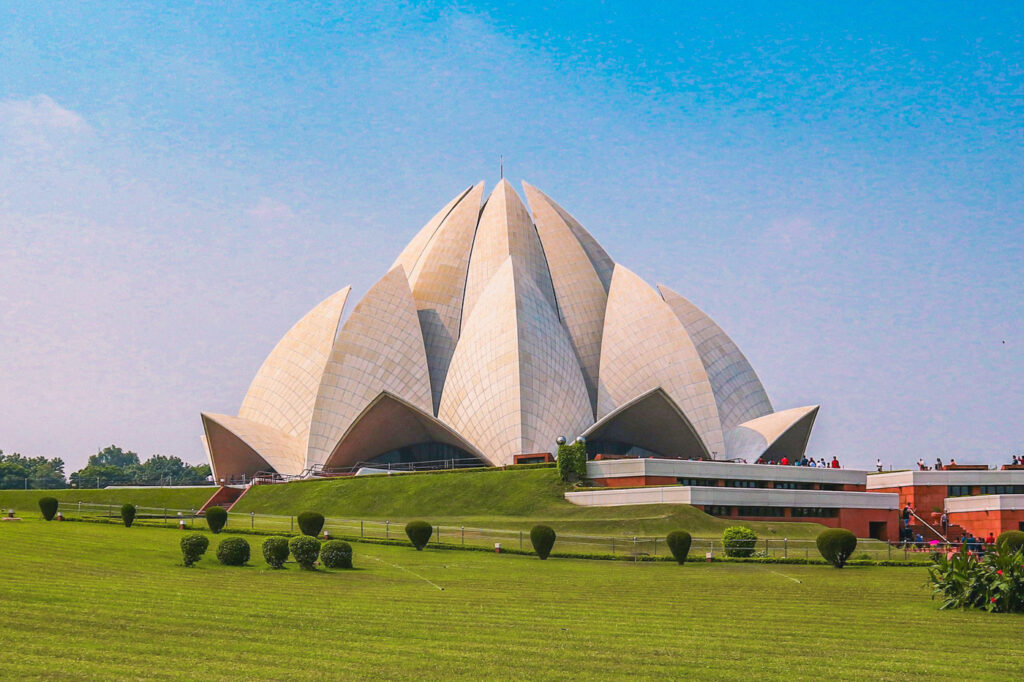
The Lotus Temple is one of the city’s most striking landmarks in Delhi, India’s capital. Known for its unique flower-like architecture, the temple is shaped like a giant lotus with 27 marble “petals” arranged in clusters to create nine sides. Surrounded by serene pools and landscaped gardens, it’s a peaceful oasis amid the city’s bustle. The design is both modern and symbolic, representing purity, beauty, and unity.
The interior is simple yet elegant, no idols, no distractions, just soft natural light and an atmosphere of serenity that makes it easy to pause and breathe.
Practical information
Price. The temple can be visited for free.
Opening hours. The temple is open to visitors from Tuesday to Sunday between 8:30 and 17:00.
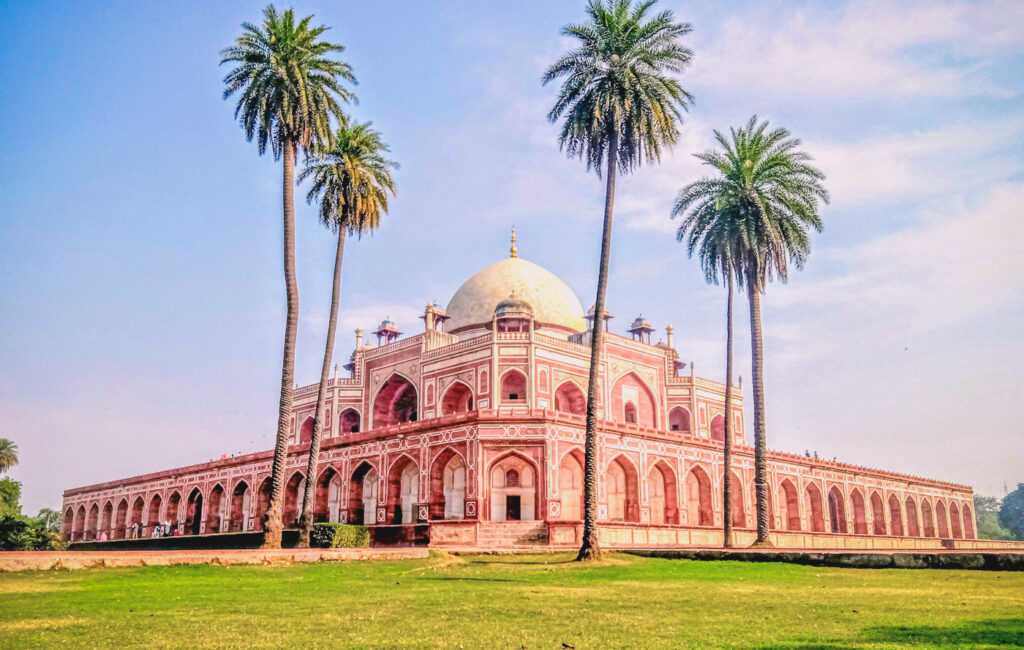
Humayun’s Tomb was built in the 16th century for Emperor Humayun, which is considered a precursor to the Taj Mahal, showcasing the early brillance of Mughal architecture. The tomb is crafted from red sandstone and white marble, with intricate geometric patterns and delicate arches that make it both imposing and elegant. Set within a beautifully laid-out Persian-style garden, the site offers perfectly symmetrical views and peaceful pathways that invite slow, contemplative exploration.
Practical information
Price. Tickets to visit Humayun’s Tomb cost 600 INR per person (price in 2025).
Opening hours. The tomb is open daily between 6:00 to 18:00.
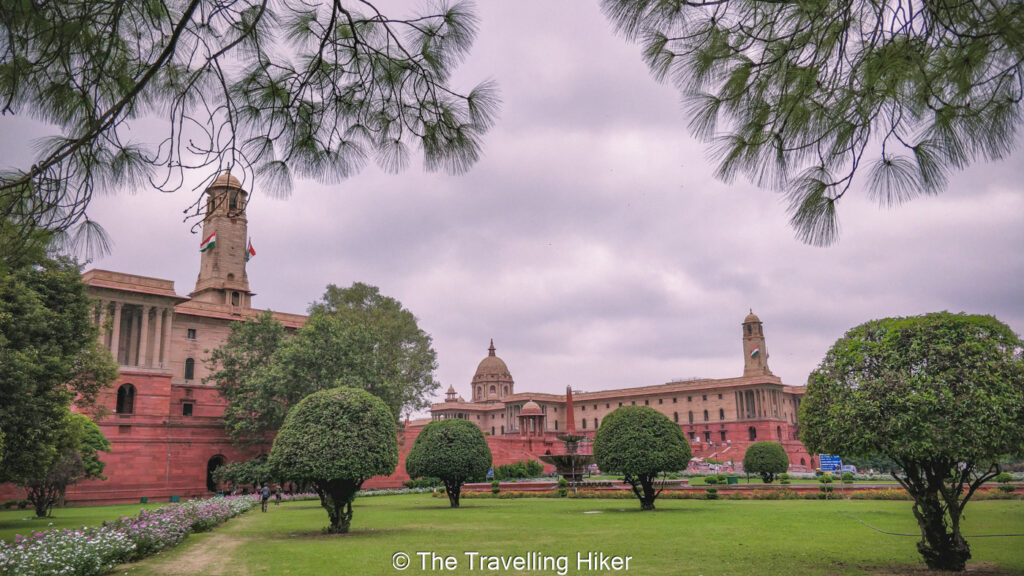
Before leaving Delhi, we wanted to visit a few extra sites in Delhi. Our first stop was Rashtrapati Bhavan, one of the most impressive buildings in India. Originally built as the residence of the British Viceroy, it now serves as the official home of the President of India, a powerfull symbol of the country’s democratic spirit. Designed by architect Sir Edwin Lutyens, the structure blends classical European style with Indian elements like red and cream sandstone, intricate jaali work, and graceful domes.
Beyond its façade, Rashtrapati Bhavan is surrounded by the beautiful Mughal Gardens, now known as Amrit Udyan, which open to the public for a few weeks each year. Unfortunately, they were not open when we visited so we only admired it from afar.
STOP 2: INDIA GATE
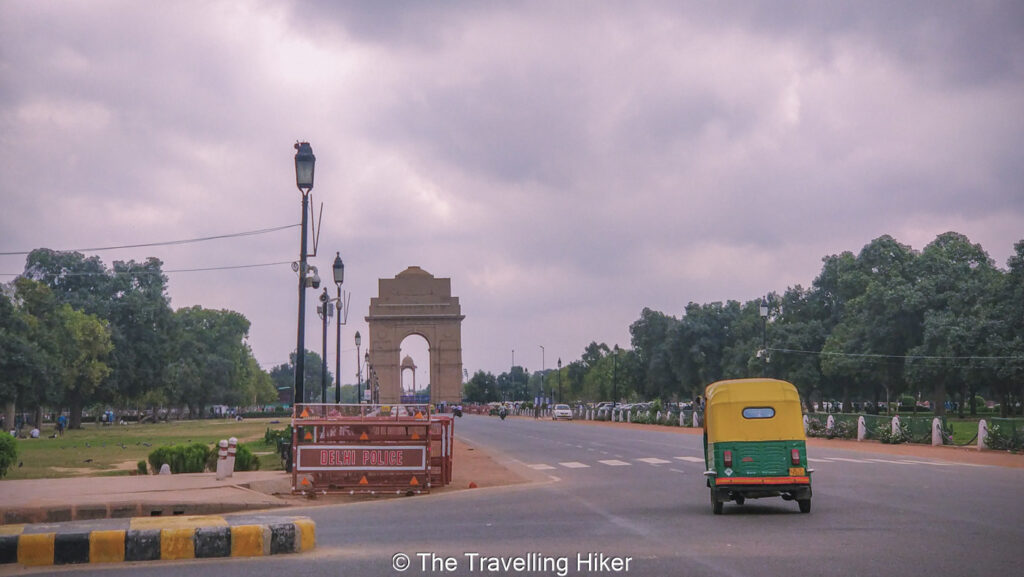
India Gate is one of the city’s most recognizable and beloved landmarks. It’s a 42-meter-high archway that was built in memory of the Indian soldiers who lost their lives during World War I, and its grandeur is both moving and majestic. Beneath the arch burns the Amar Jawan Jyonti, an eternal flame that honors India’s fallen soldiers.
STOP 3: TRAIN TO AGRA
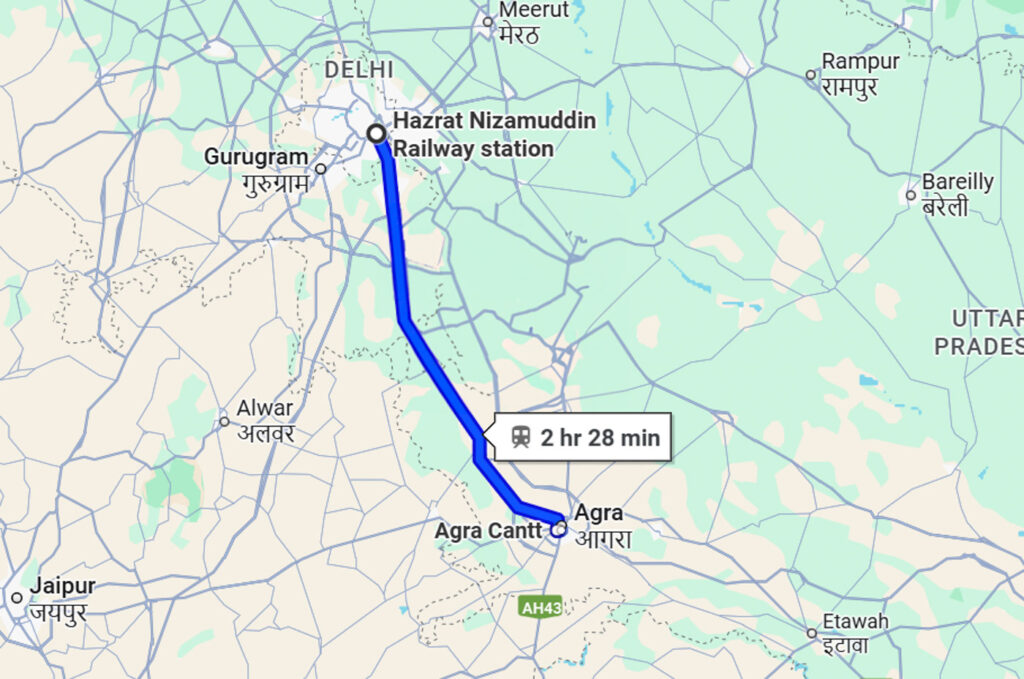
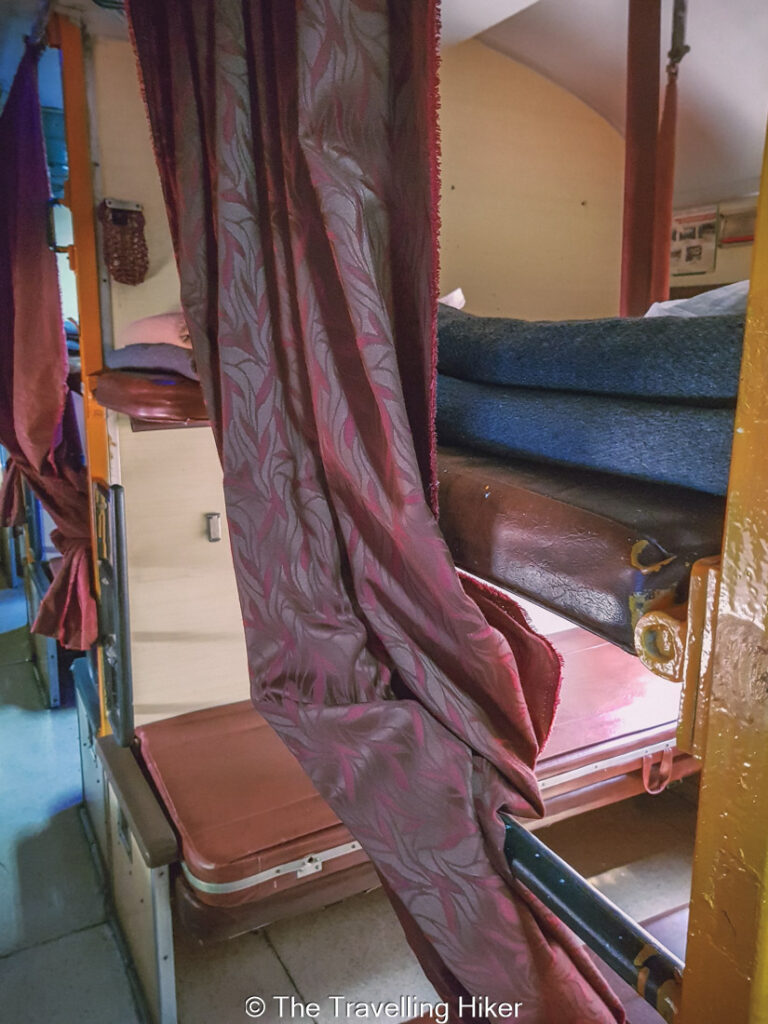
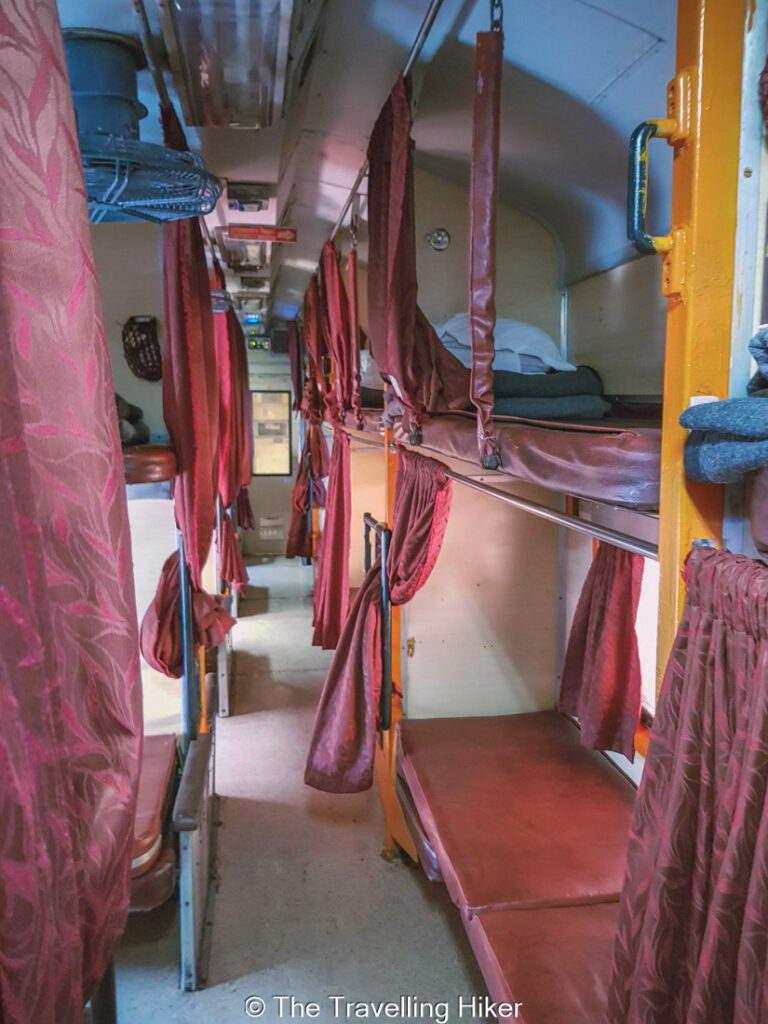
In the afternoon, it was time to leave Delhi and this time we opted for the train, which was another interesting experience. The train had beds for each passenger, similar to a sleeper train so it was an interesting experience to lie down while the train was moving.
The train ride to Agra was supposed to be 3 hours but it stopped for quite a while and in the end it took more than 4 hours. Nevertheless, it was an interesting experience.
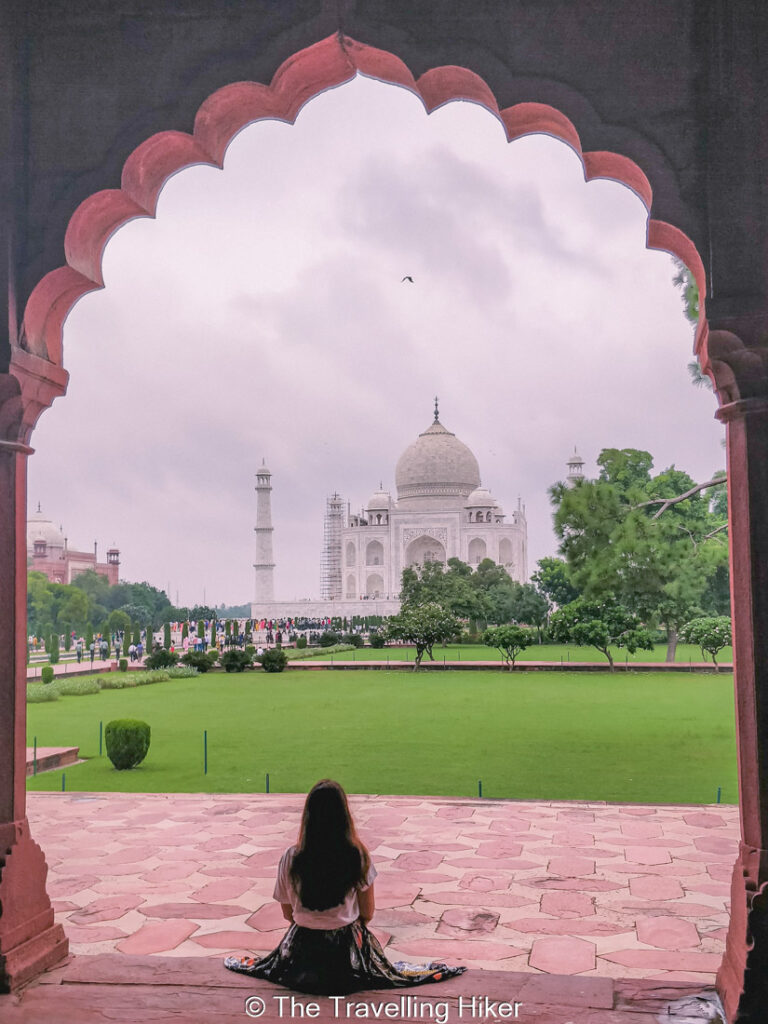
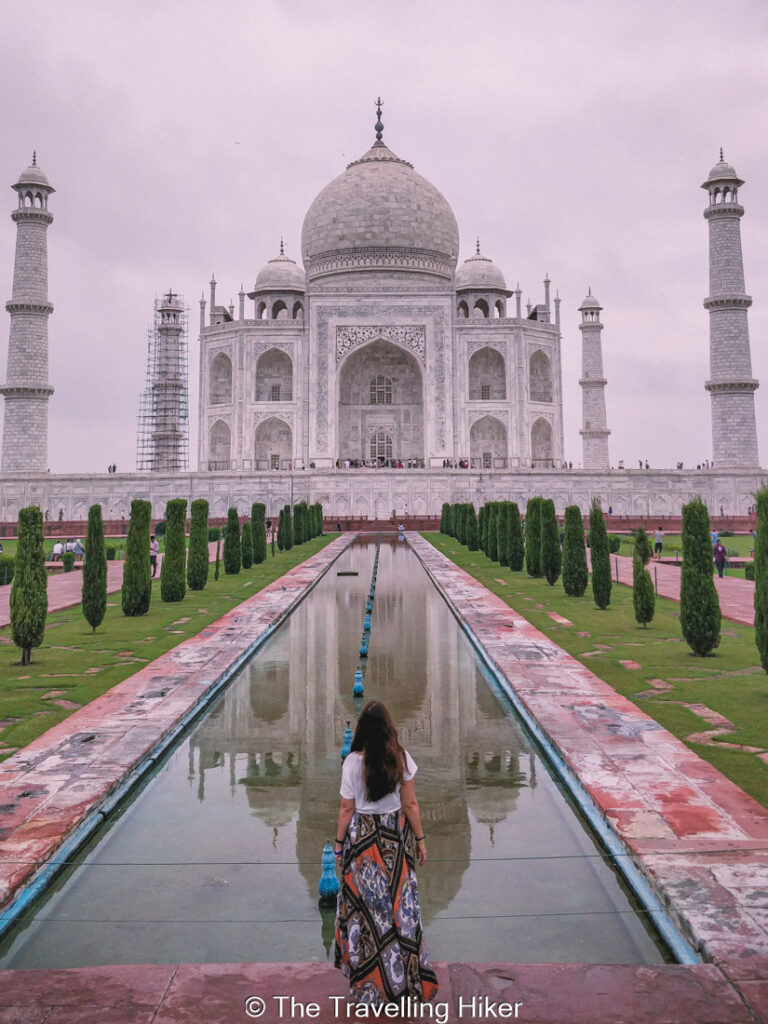
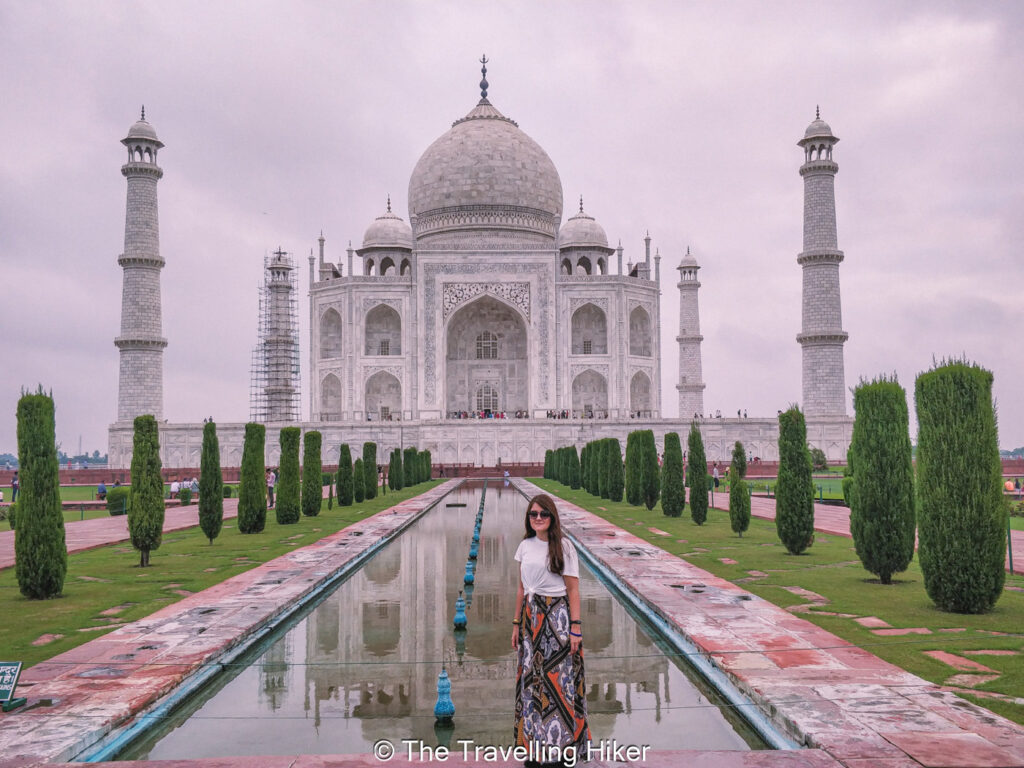
No matter how many times you’ve seen it in photos, nothing compares to the moment you first lay eyes on the Taj Mahal. Rising gracefully from its lush gardens on the banks of the Yamuna River, this world-famous monument is even more breathtaking in person. Built in the 17th century by Emperor Shah Jahan in memory of his beloved wife Mumtaz Mahal, it’s a masterpiece of Mughal architecture, perfectly symmetrical, intricately carved, and glowing in white marble that changes hues with the light.
Early morning is the best time to visit, right when it opens, when the crowds are thinner and the soft sunrise gives the monument a warm, golden sheen (if not completely clouded like the day we visited). But it doesn’t matter the weather you get, it’s one of those rare places that truly lives up to the hype. You’ll definitely want to spend several hours here, admiring its beauty from every possible angle.
Practical information
Price. Tickets to visit the Taj Mahal cost 1100 INR per person (price in 2025) with an additional 200 INR if you want to visit the mausoleum.
Opening hours. The Taj Mahal is open from sunrise to sunset. It is closed on Fridays.
Book tickets online. It is recommended to book your tickets online in advance to save time here.
STOP 2: AGRA FORT
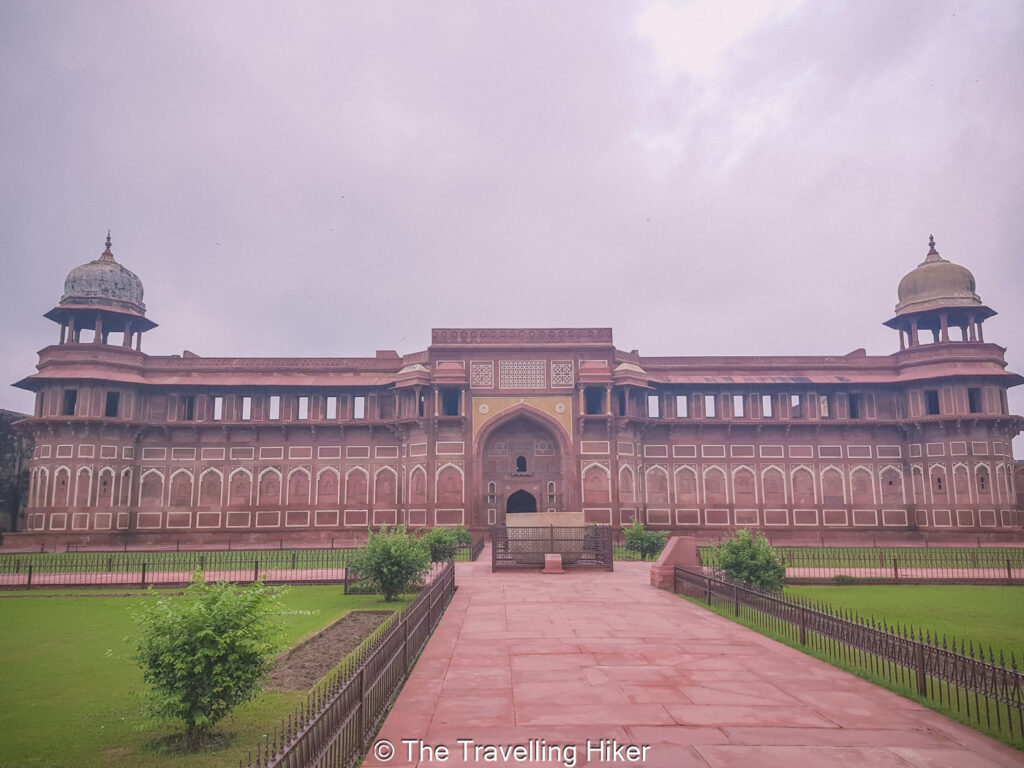
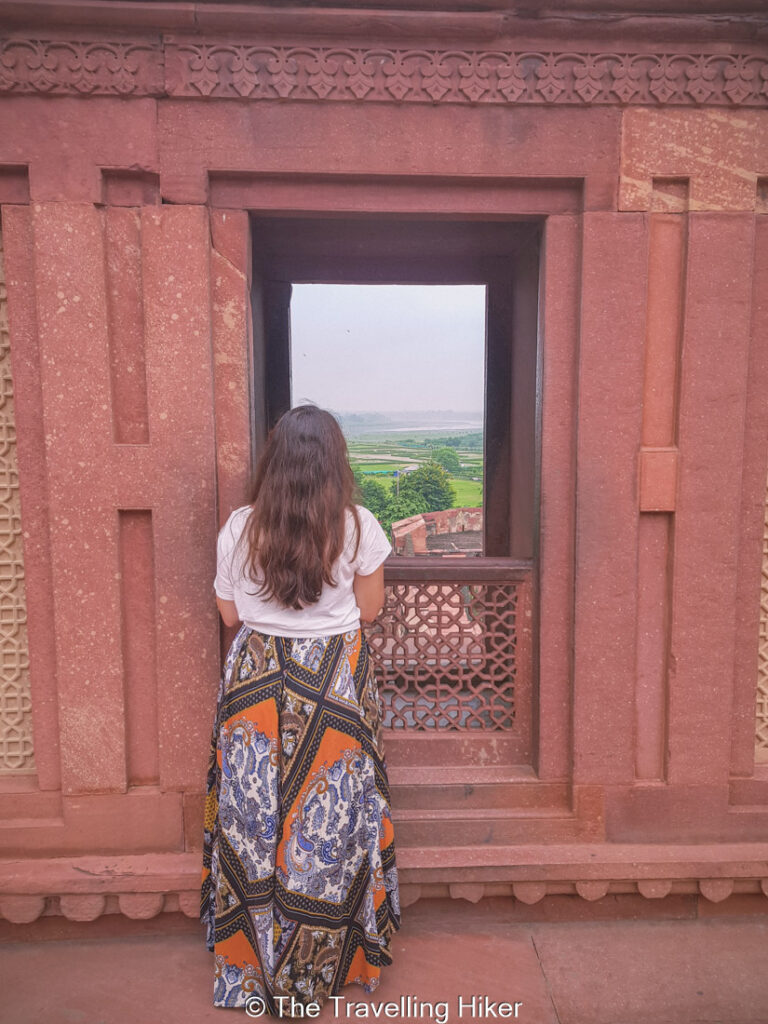
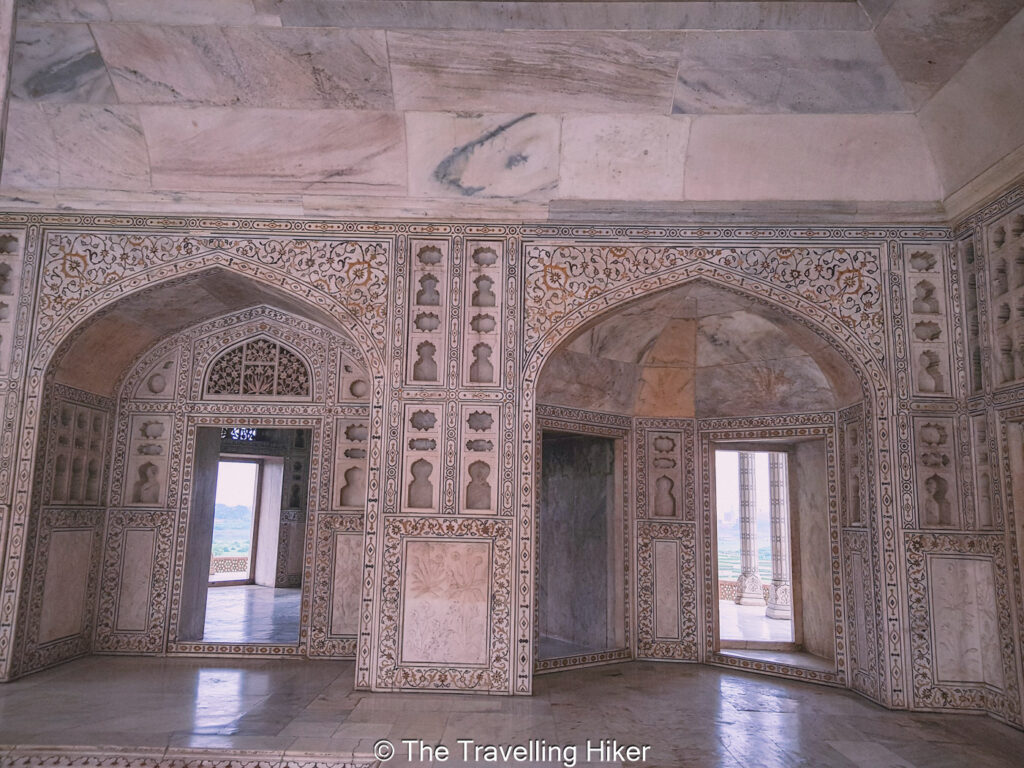
The Agra Fort is a massvie red sandstone fortress that once served as the main residence of the Mughal emperors. Built in the 16th century by Emperor Akbar, it’s both a fort and a palace, filled with beautiful courtyards, halls, and gardens. Walking through its grand gates, you can easily imagine the power and splendor of the Mughal era. The fort’s design combines thick walls for defense on the outside, and inside, graceful marble rooms where emperors held meetings, enjoyed, music, and lived their royal lives.
One of the most touching parts of the fort is the Mussaman Burj, a white marble tower with a lovely view of the Taj Mahal. It’s said that Emperor Shah Jahan spent his final years here, gazing at the monument built for his wife.
Even though it is less visited than the super famous Taj Mahal, the Agra Fort is a must-visit site to include in your itinerary through Agra.
Practical information
Price. Tickets to visit the Agra Fort cost 650 INR per person (price in 2025).
Opening hours. The Agra Fort is open between sunrise and sunset. It is closed on Fridays.
Buy your tickets online. You can book your tickets in advance here.
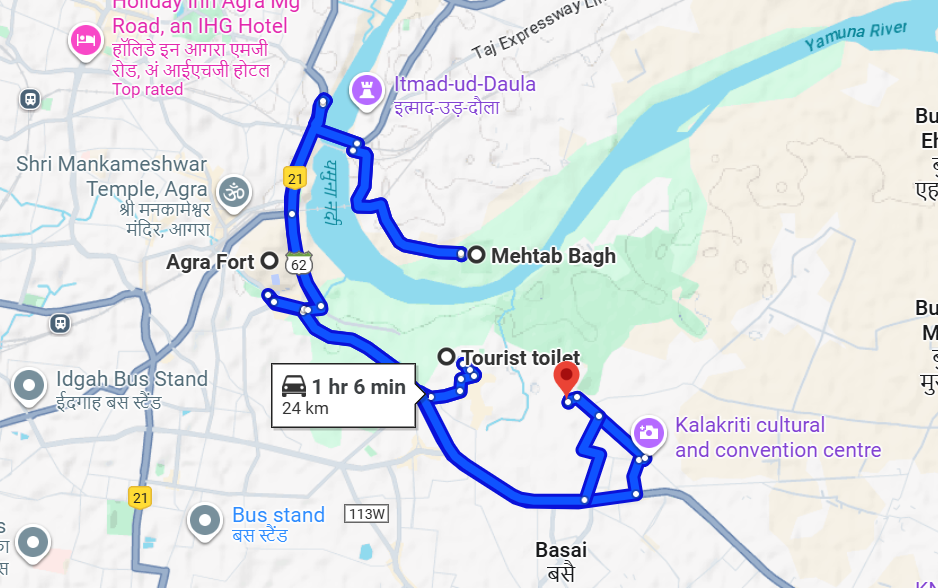
STOP 3: MEHTAB BAGH
In the afternoon, head to Mehtab Bagh, a beautiful garden that sits just across the Yamuna River from the Taj Mahal. It was built in the 1600s as part of the Mughal garden layout, designed to line up perfectly with the Taj. Teh symmetry is amazing. When you stand in the center, the monument looks perfectly framed against the sky. From here, it is also possible to go on a boat ride along the Yamuna River to see the Taj Mahal from the water.
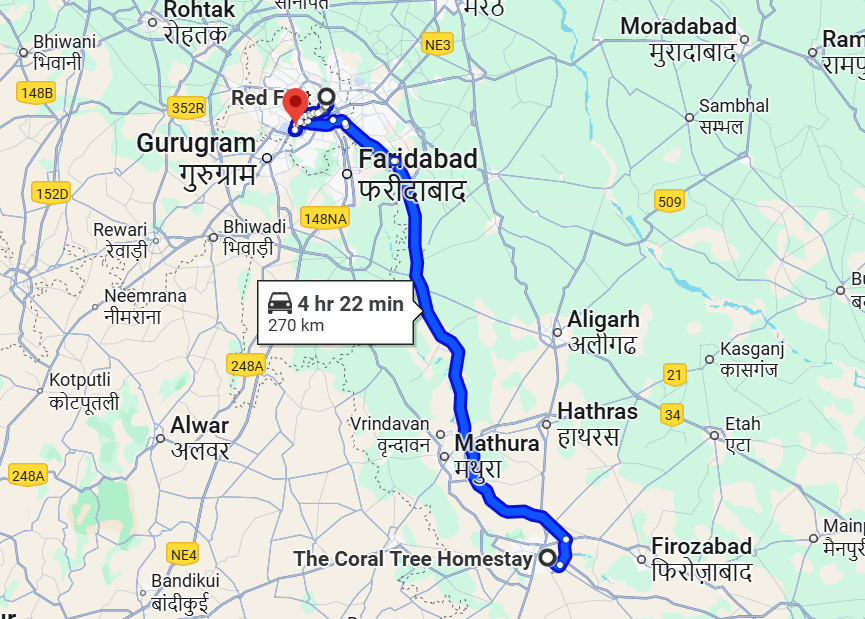
On our last full day in India, it was time to drive back to Delhi. Since we were not happy with the train experience to go to Agra, we decided to not risk it, an got another car with a driver to get us back to Delhi. Since we booked the car last minute (initially we had planned to do this journey by train too), our driver didn’t speak any English, which made the communication with him a bit difficult. But apart from that, the drive back to Delhi was quite fast.
We asked the driver to drop us at our hotel near the airport (we had an early flight the next morning), checked in and dropped our suitcases, and set off to explore Delhi and do some last shopping before we returned home.
STOP 2: RED FORT
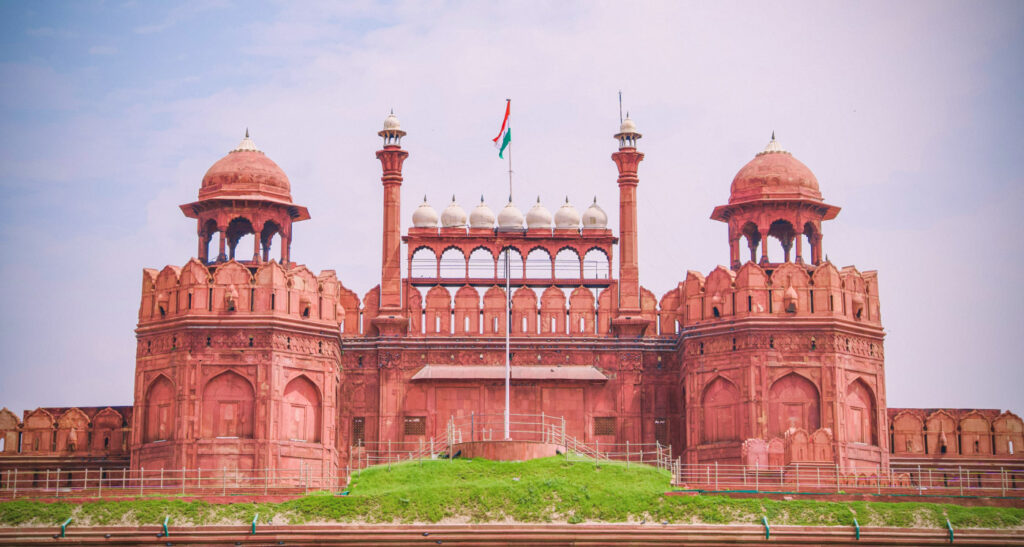
The Red Fort in Delhi is one of the most famous monuments in India. Emperor Shah Jahah built it in the 1600s when he moved his capital from Agra to Delhi. The fort gets its name from the red sandstone used to build its massive walls, which stretch for over two kilometers.
Inside, you’ll find beautiful gardens, arches, and marble halls that show the richness of Mughal design. The main highlights are the Diwan-i-Aam or Hall of Public Audience and the Diwan-i-Khas or Hall of Private Audience. You can also visit the royal baths, the mosque, and the quarters where the emperor once lived.
The Red Fort was the perfect last monument to visit in India, and a fantastic way to end our trip.
Practical information
Price. Tickets to visit the Red Fort cost 500 INR per person (price in 2025).
Opening hours. The fort is open from Tuesday to Sunday between 9:30 and 16:30. It is closed on Mondays.
Buy your tickets online. It is possible to book your ticket online in advance here.
To finish our trip, we did some shopping in the area around Connaught Place where there was a market with many stalls. We managed to find some nice things to bring back home as a souvenir.
DAY 17 - FLY HOME
Route: Fly Home (2 Flights: Delhi – Dubai – Brusslls)
Home
The last day of the trip is all about going back home. For us, it meant 2 flights since we were flying with Emirates. It was a long traveling day but we were so tired that slept almost all the way.
ACCOMMODATION IN INDIA
Accommodation in India is not very expensive so if you’re traveling on a budget, finding affordable accommodation will not be an issue. However, I do recommend that you always check the ratings and other travelers opinions before you book your stay. In our case, we were very lucky and satisfied with the hotels we booked but we always booked hotels that had really good ratings. Here is a summary of the hotels we stayed at.
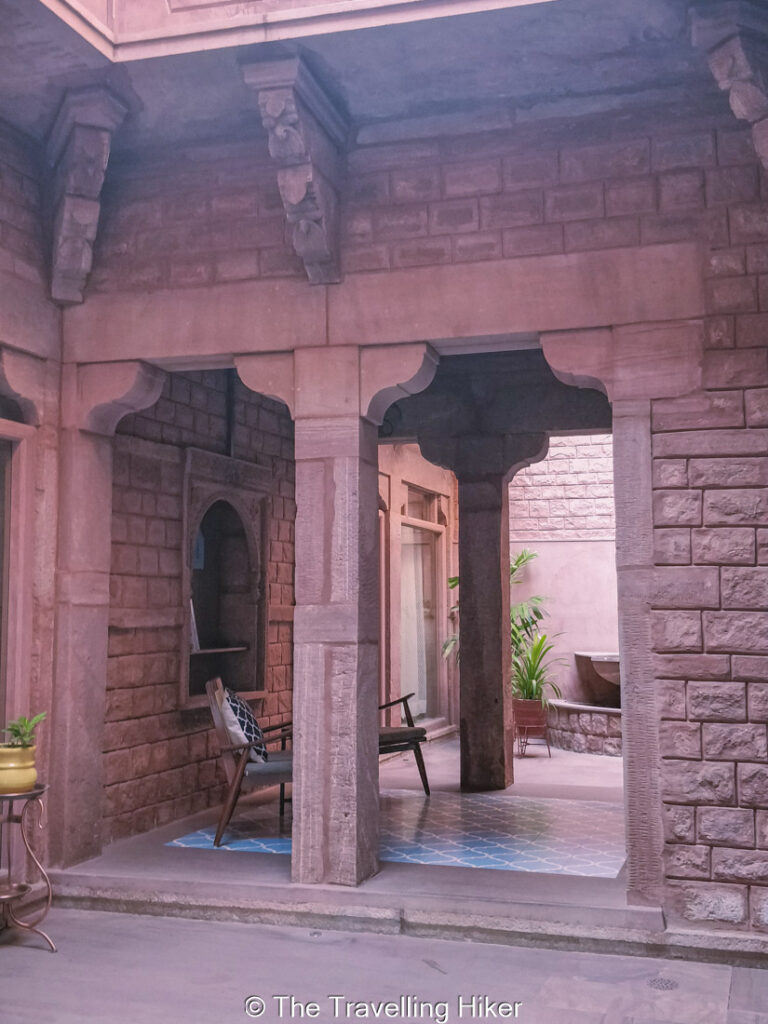
Jodhpur - Baijoo Niwas Boutique Hotel
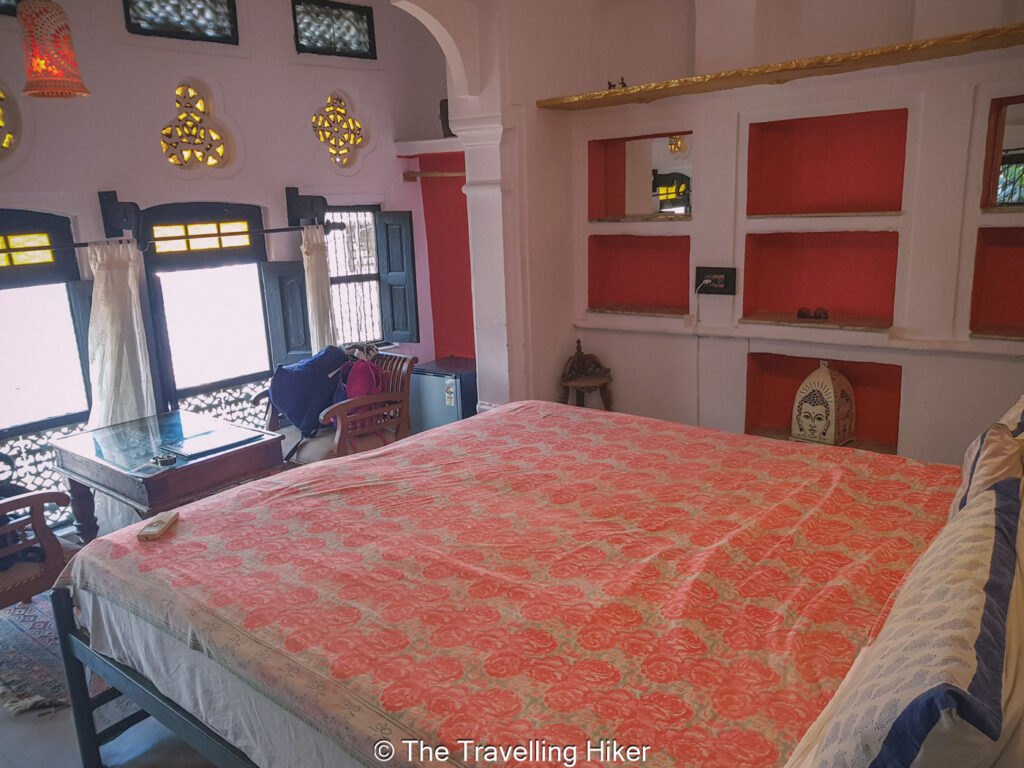
Baijoo Niwas is a very cute boutique hotel located in a prime spot in Jodhpur. The hotel is very nicely decorated and the rooms are spacious and comfortable. The staff was also very helpful with plenty of recommendations and they helped us book the car with a driver to take us to our next destination. I definitely recommend staying in this hotel if you visit Jodhpur.
Little Garden Guesthouse is another super cute hotel that is very well located within Udaipur. The room was again very clean and spacious but the best part of this hotel was, without the views on the rooftop terrace. You could see the Udaipur City Palace from it!
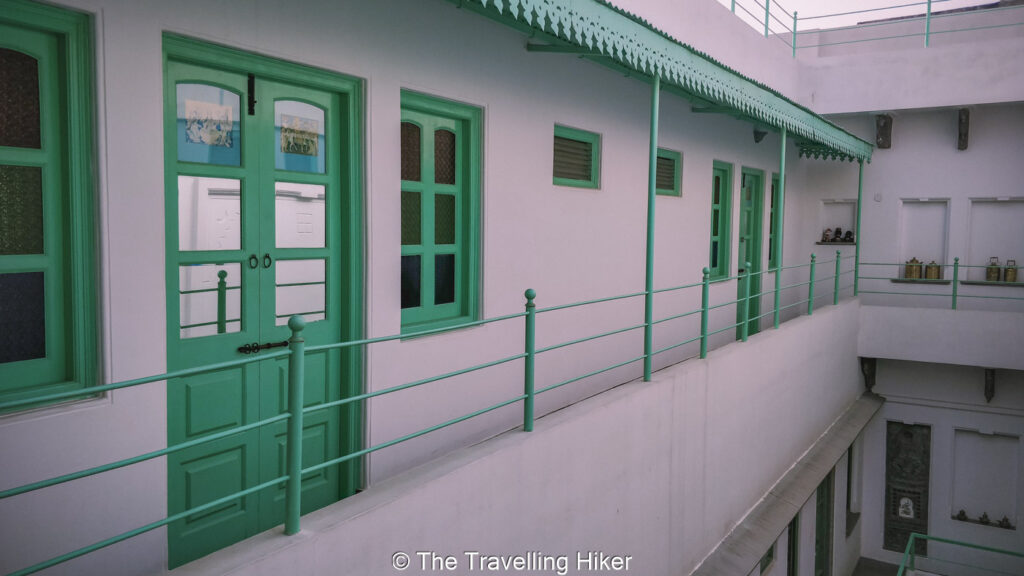
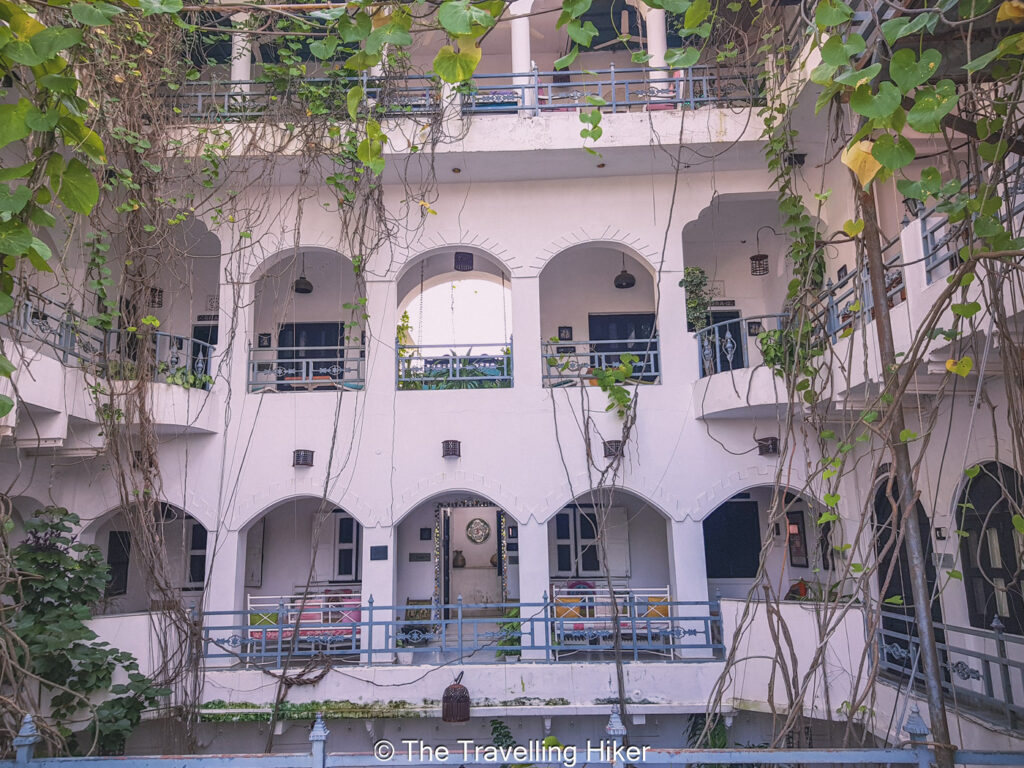
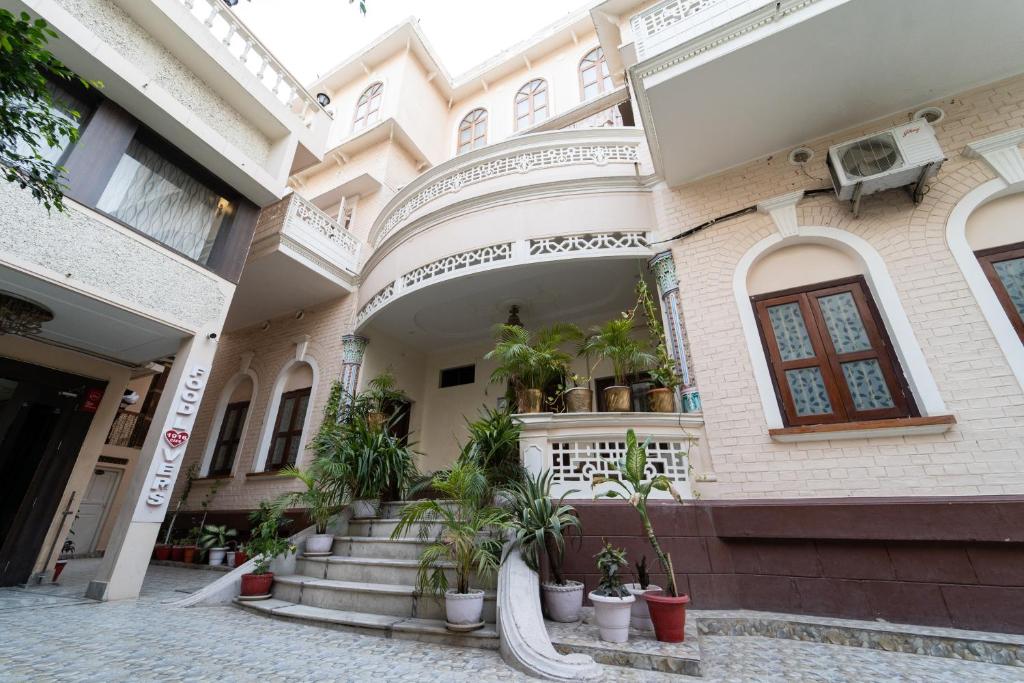
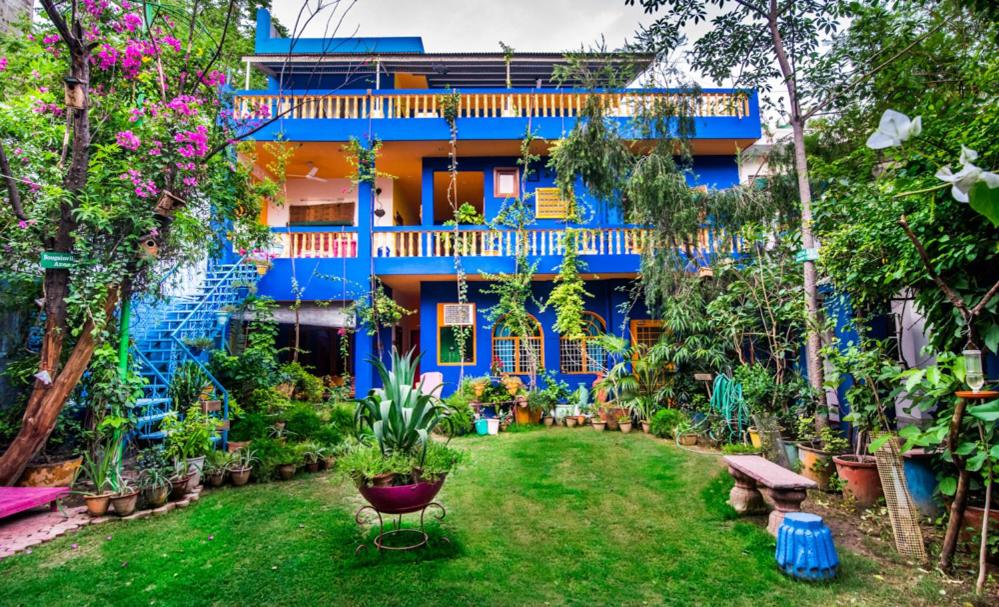
Inn Seventh Heaven is literally an oasis in the middle of Pushkar. From the outside, you can’t really tell the gem that is this hotel. The hotel features an inner court full of plants and places to seat and relax. Every floor has balconies that overlook this inner court.
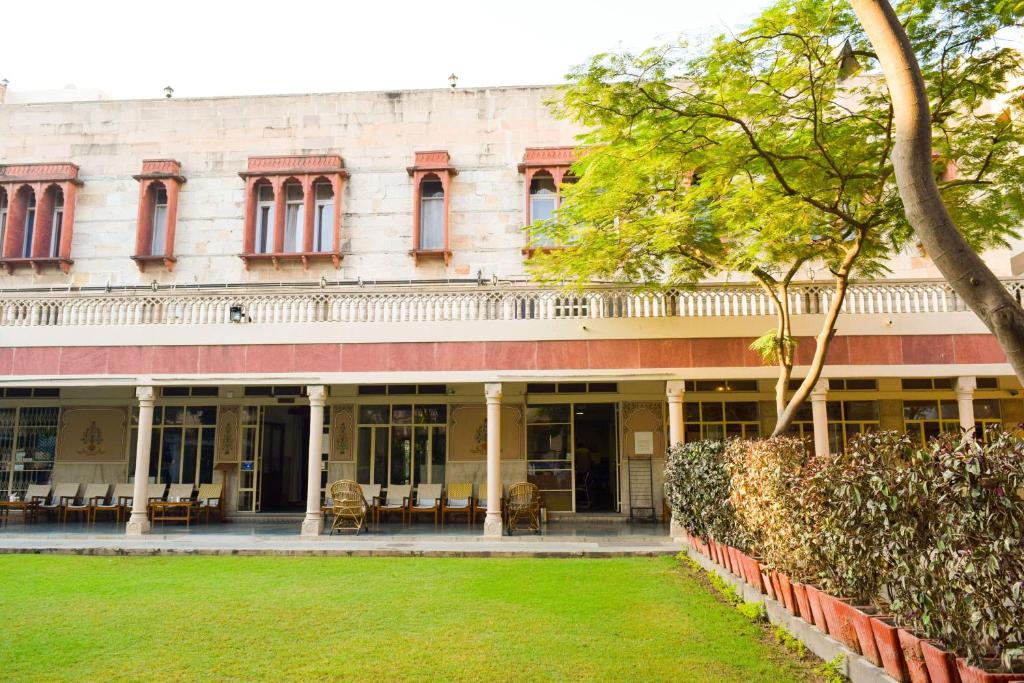
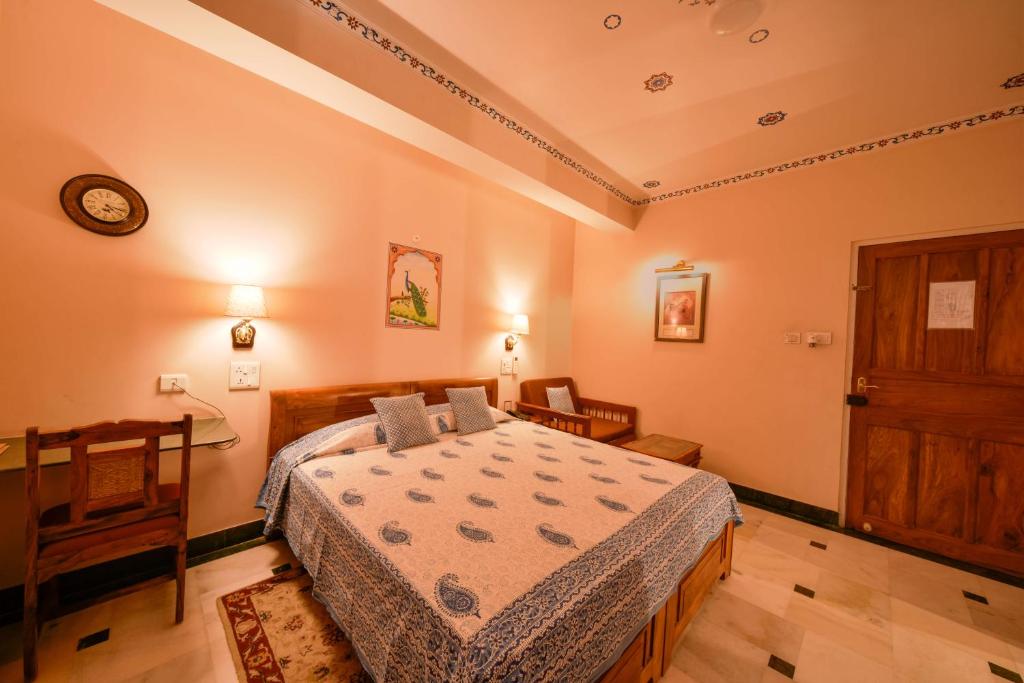
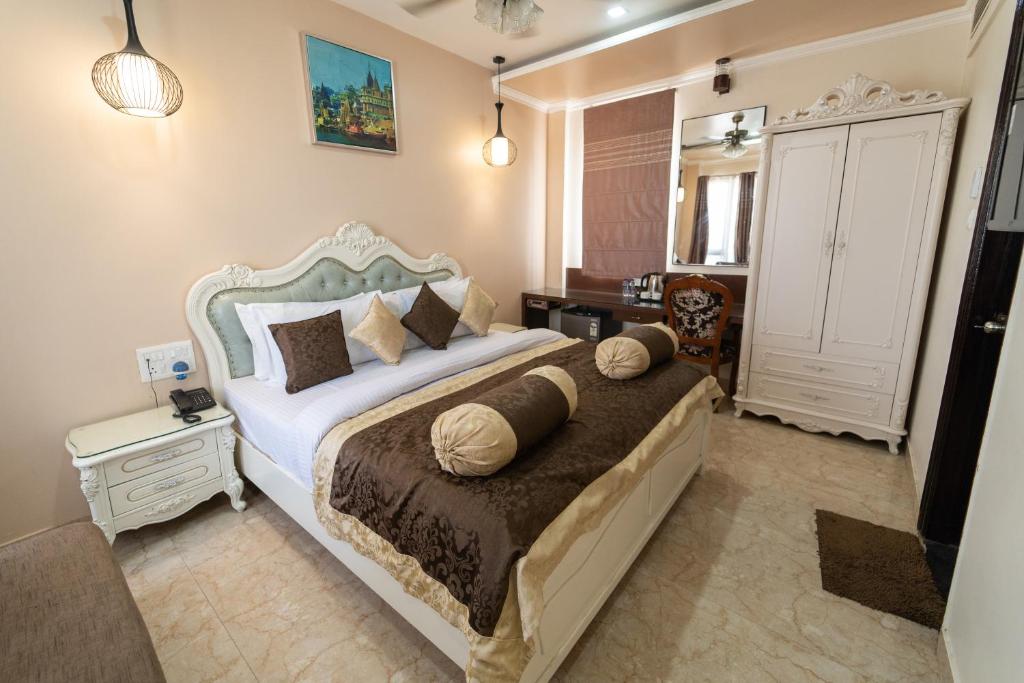
Hotel Arya Niwas is located in a historic building right in the center of Jaipur. The rooms were comfortable and clean and had everything we needed for our stay. Our favorite part of this hotel was the beautiful garden where you could sit and relax in the evenings.
Shree Ganesha Palace was a comfortable and really good option in Varanasi. It is located within walking distance of the ghats and the Ganges but it is surprisingly not loud at all. We had a very pleasant stay in this hotel.
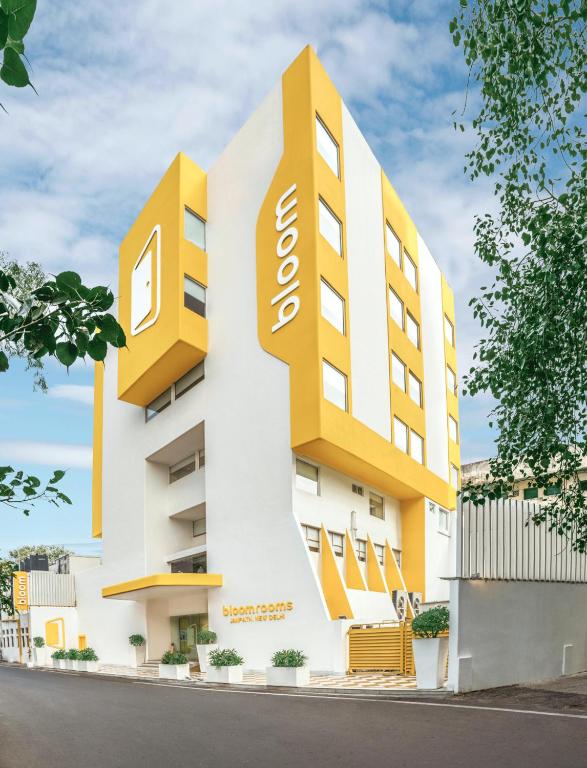
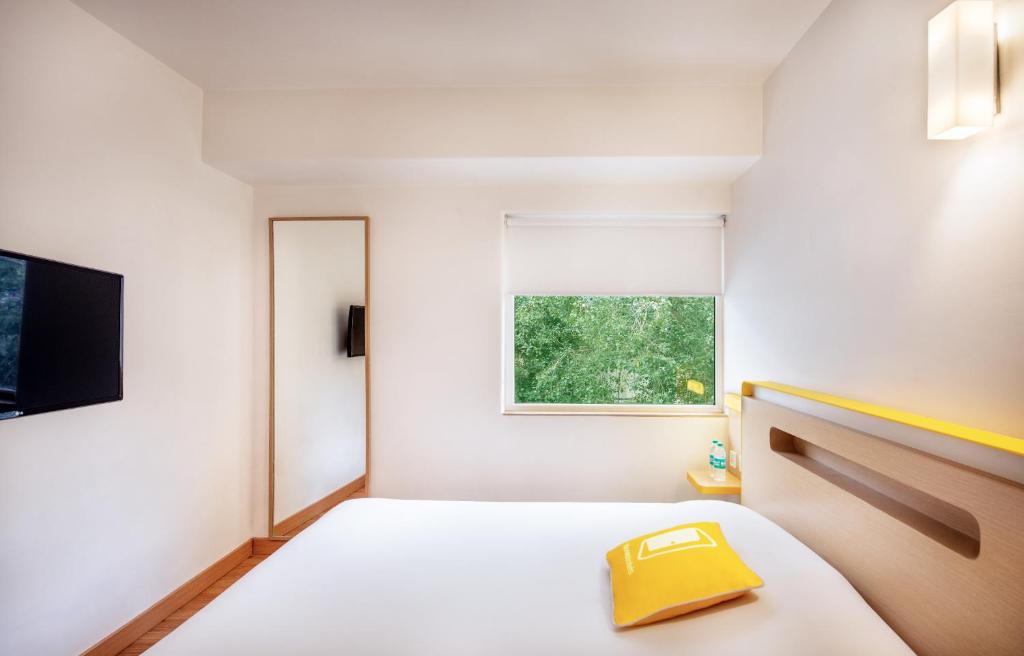
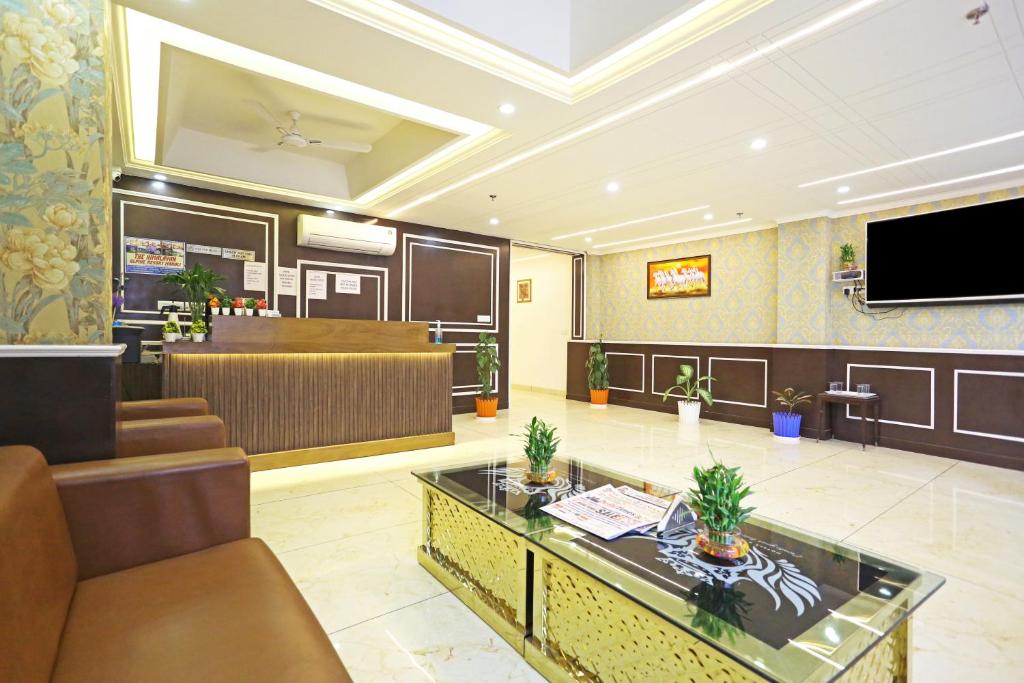
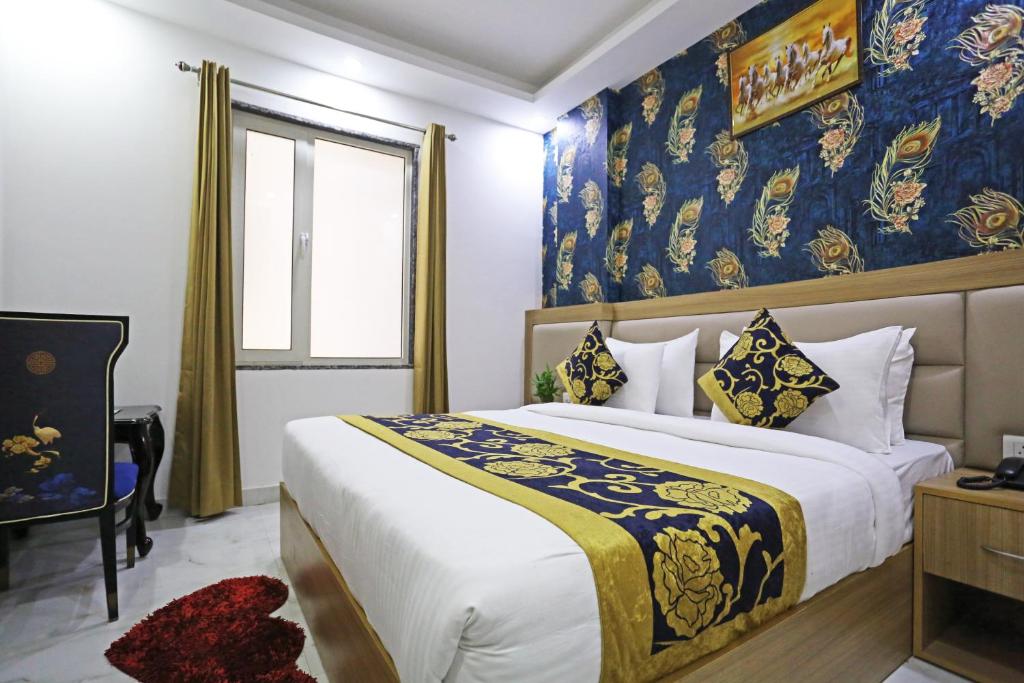
Bloomrooms is a very modern hotel with a European style. The rooms are equipped with all modern amenities you can imagine and they were really comfortable.
Convenient 4 star hotel located next to Delhi Airpot. This comfortable hotel is the perfect place to stay if you have an early flight leaving from Indira Ghandi International Airport, since it is located right next to it.
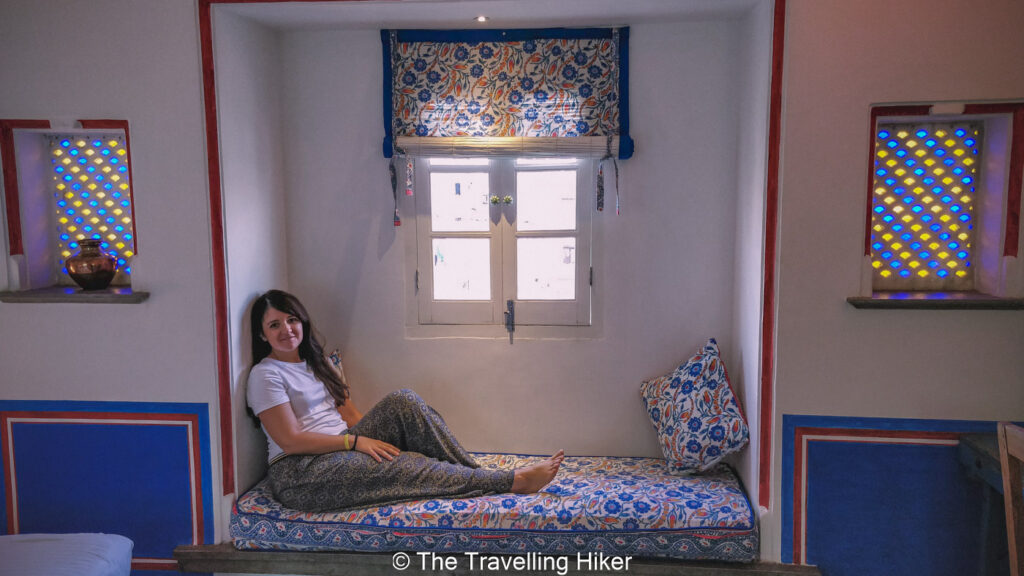
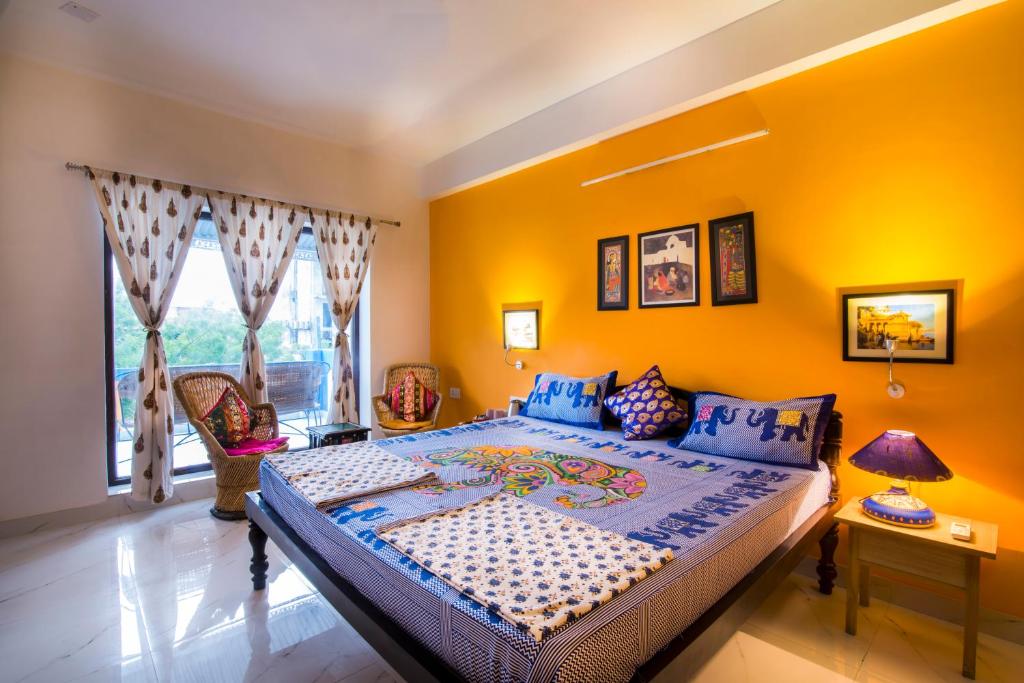
The Coral Tree Boutique Homestay is a beautiful oasis near the Taj Mahal. This colorful accommodation in Agra was the perfect place to spend two nights. The rooms were comfortable and clean, the hotel staff was very kind and the dinner was delicious!
Moving around India can be intimidating at first, but it is quite simple. It all depends on your budget, your time, and where you want to go.
BY PLANE
Flights are a great option if you need to cover big distances fast. India has many budget airlines, and flying can save you hours on long routes. Big cities like Delhi or Varanasi have frequent connections to smaller destinations.
We did the following journeys with internal flights:
Delhi – Jodhpur
Jaipur – Varanasi
Varanasi – Delhi
You can book your flights ahead of time with Skyscanner.
BY TRAIN
Trains are one of the best ways to see India. They connect almost every city in India, and they give you a glimpse of local life along the way. When booking your tickets, you can choose between different classes, from basic seats to air-conditioned sleepers.
Booking tickets in advance is a good idea, especially for popular routes like Delhi to Agra or Jaipur to Udaipur. Book your tickets with 12Go.
BY CAR WITH A PRIVATE DRIVER
Hiring a car with a private driver is another super convenient way to travel around India. This was actually our preferred way of exploring the country, and I have to say it was quite comfortable and very affordable.
Tip: When booking your car, make sure to insist that the car has seatbelts installed.
We mostly booked our car the day before at the local offices, which made it quite affordable and flexible. However, if you prefer to have it more organised, it is also possible to book it in advance at 12Go.
BY TUK-TUK, TAXI OR SIMILAR
In cities, getting around is super easy with taxis, tuk-tuks, and ride apps like Uber and Ola. If you want to avoid scams, always agree on a price before starting your ride if you are not using an app.
MAP WITH ALL LOCATIONS
To help you plan your trip, I have compiled all the places mentioned in this blog in the following map. Each day is identified with a different color.
HOW TO USE THIS MAP: Click the star next to the map title to add this map to your google maps account. To view it on your phone while traveling, open Google Maps, click on the menu button and go to “Your Places”, click on Maps and you’ll see this map in your list.
CONCLUSION
I hope you enjoyed my blog with The Ultimate 2 Week Itinerary in India and that it inspired you to visit this fascinating country.
No matter which itinerary you choose, India is a country that will not leave you indifferent. It is full of contrasts, colors, and surprises. All you need to do is relax, get rid of your pre-existing judgements, and enjoy the experience.
DISCLAIMER: Did you know? This blog uses affiliate partnerships. When you click and book or make a purchase through one of my blog posts, I may receive a small commission (at no extra cost to you). Thank you for supporting The Travelling Hiker!



Nice trip